Lindholm Høje, North Jutland Travel Guide
Wind-swept Viking burial hill and insightful museum, where nearly 700 stone-marked graves and rich exhibits bring Iron Age and Viking life by the Limfjord into focus.
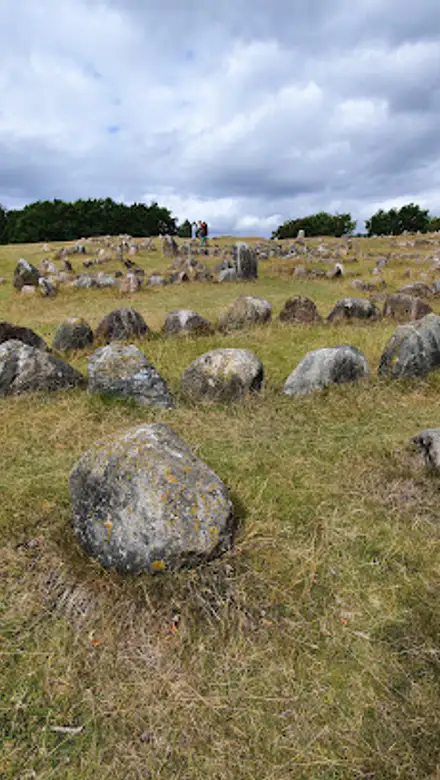
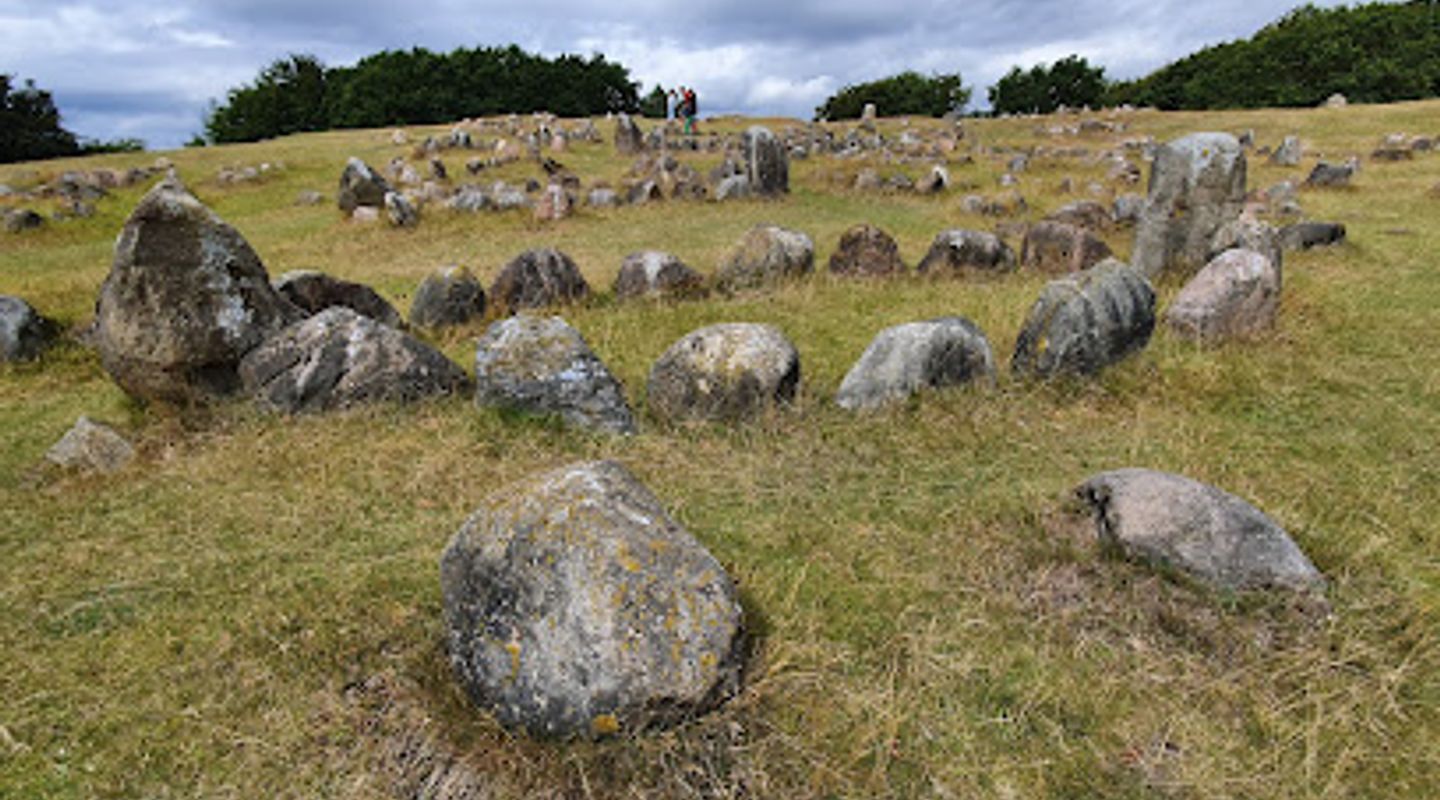
Set on a windy hilltop above the Limfjord in Nørresundby, Lindholm Høje is Denmark’s largest Viking Age burial ground, paired with an engaging museum. Nearly 700 stone-marked cremation graves from the Iron Age and Viking era spread across the slope, forming ship-shaped settings and geometric patterns. Inside, imaginative exhibitions, artifacts, and interactive displays bring everyday Viking life, farming, trade, and burial customs around Limfjorden vividly to life.
A brief summary to Lindholm Høje
- Vikingevej 40, Norresundby, 9400, DK
- Click to display
- Duration: 1.5 to 3 hours
- Mid ranged
-
 Mixed
Mixed
- Mobile reception: 4 out of 5

Know before you go
Hi, I'm Eve. Here are a few practical things to know before exploring Lindholm Høje.
- Combine time outdoors and indoors: explore the burial ground first, then warm up in the museum galleries to deepen what you have just seen on the hill.
- Wear sturdy shoes and windproof layers, as the hilltop is exposed and paths can be uneven or damp in cooler months.
- Plan at least 1.5–2 hours to walk the stone settings at a relaxed pace and visit both main exhibitions inside the museum.
- If travelling with children, seek out the interactive elements such as the virtual Viking helmet and boat displays to keep younger visitors engaged.
- Photography is especially atmospheric in low, slanting light on clear mornings or late afternoons, when the stone ship outlines cast long shadows.
Do you manage this location?
Take control to get all the benefits, like improved information, better appearance, and stronger visibility across AI-powered discovery. Learn more about listing your business on Evendo
Activate your presenceOther nearby places you may find interesting
The closest places of the same kind, if this one is not quite what you had in mind.
Explore Lindholm Høje on the Map
A handpicked selection of must-see spots near Lindholm Høje, mapped for you.
Getting There
-
City bus from central Aalborg
From central Aalborg, take a local city bus (for example line 12 toward Nørresundby/Vangen) to the stop closest to Lindholm Høje; the ride typically takes 15–20 minutes and buses run several times per hour during the day. A standard adult ticket within the city fare zones usually costs around 20–30 DKK and can be bought via ticket machines or mobile apps. The walk from the bus stop to the museum area is a few minutes uphill on paved paths, suitable for most visitors but with a noticeable incline.
-
Taxi from Aalborg center
A taxi from Aalborg’s central districts to Lindholm Høje usually takes about 10–15 minutes depending on traffic. Typical fares range roughly between 120 and 200 DKK one way for a standard car, with higher prices in evenings and on weekends. Taxis can drop passengers close to the museum entrance, which is convenient for those with limited mobility or travelling in small groups.
-
Car from the wider North Jutland area
Arriving by car from elsewhere in North Jutland, allow 10–20 minutes from central Aalborg and 30–60 minutes from many regional towns, depending on distance. Access roads are paved and well signed, and there is free parking at the museum area, including designated spaces for visitors with disabilities. The car park sits slightly below the burial hill and museum, with short, gently sloping paths leading up to the entrance.
-
Cycling from Aalborg and nearby suburbs
Cyclists can follow local roads and bike-friendly routes from Aalborg across the Limfjord to Nørresundby, reaching Lindholm Høje in roughly 20–35 minutes from the city center, depending on starting point and pace. The approach includes some uphill sections near the site, and wind can be a factor on exposed stretches. Bicycle racks are typically available near the museum area, making this a practical low-cost option in milder weather.
For the on-the-go comforts that matter to you
-
 Restrooms
-
 Drink Options
-
 Drinking Water
-
 Food Options
-
 Seating Areas
-
 Sheltered Areas
-
 Picnic Areas
-
 Trash Bins
-
 Information Boards
-
 Visitor Center
Discover more about Lindholm Høje
A hilltop of stones and stories above the Limfjord
Perched on a rise overlooking Aalborg and the Limfjord, Lindholm Høje feels both exposed to the elements and deeply anchored in time. The grassy slope is scattered with hundreds of stone formations, some arranged in ship outlines, others in neat ovals or triangles. These are not random boulders: each marks a cremation grave dating from around 400 AD to just before the year 1000, when this hill was an important cemetery for the surrounding settlement.Walking among the stones, you see how the site follows the contours of the terrain, with views stretching across the water and over modern Aalborg. It is easy to imagine why people chose this height as a final resting place, and how processions may once have climbed the hill carrying the dead to be burned and buried here.Viking lives revealed in the museum galleries
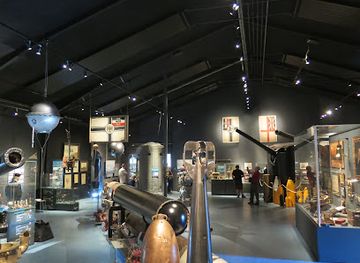
Beneath the burial ground, the modern museum brings the community behind these graves into focus. Exhibitions built around archaeological finds from Lindholm Høje reconstruct daily life in the settlement that once lay just below the hill. Tools, jewelry, animal bones and household objects show how people combined farming with craftwork and trade along the Limfjord.Large illustrations and models depict timber longhouses, fields marked out in the surrounding landscape, and families going about tasks such as weaving cloth, preparing food or tending livestock. Rather than focusing solely on warriors and longships, the displays emphasize the routines and skills that sustained life here over centuries and formed the backbone of the Viking world.From fire and sand to preservation
Lindholm Høje is a cremation cemetery, and the burnt bone fragments and grave goods once lay beneath the very pyres on which the dead were placed. Over time, drifting sand from the surrounding area gradually covered the hill. This sand, which forced people to abandon the nearby farms, also protected the graves from later disturbance, creating the remarkable preservation visible today.Excavations in the 20th century uncovered around 700 graves and the outlines of the vanished village. The museum explains how archaeologists carefully recorded each stone and bone, piecing together patterns of status, age, gender and changing burial customs across six centuries of use.Immersive details and interactive touches
Alongside glass cases and text panels, the museum uses sound, light and digital elements to bring the past close. You may find a virtual Viking helmet to try on or a simulation of rowing a Viking boat, designed to convey movement and effort rather than pure spectacle. Seasonal imagery and changing light sequences hint at how the landscape would have looked across the year, from low winter sun to bright summer evenings.Another section broadens the story to cover ancient times around the eastern Limfjord region, linking Lindholm Høje to other settlements and ritual sites. Together, they sketch a wider picture of how waterways, fertile soils and strategic crossings shaped human activity long before the modern city grew up nearby.Planning your visit on the hill and indoors
The outdoor cemetery is an open, exposed space where wind and weather play a big role, so sturdy footwear and layered clothing are useful when following the paths between the stones. Information boards on the hilltop summarize the main periods and explain key grave types, while the detailed context waits inside the museum below.Indoors you will find restrooms, a small café for lunch or coffee, and a museum shop selling books, wool products and replicas of jewelry discovered at Lindholm Høje. Many visitors split their time between a slow circuit of the burial ground and an hour or more in the galleries, allowing the two parts of the site to complement each other: the raw landscape above, and the carefully interpreted finds below.












Your all‑in‑one travel companion app
Explore expert travel guides, compare and book tours, experiences, hotels, and more—all from the palm of your hand. Download now for seamless trip planning wherever your wanderlust takes you.


Explore More of North Jutland
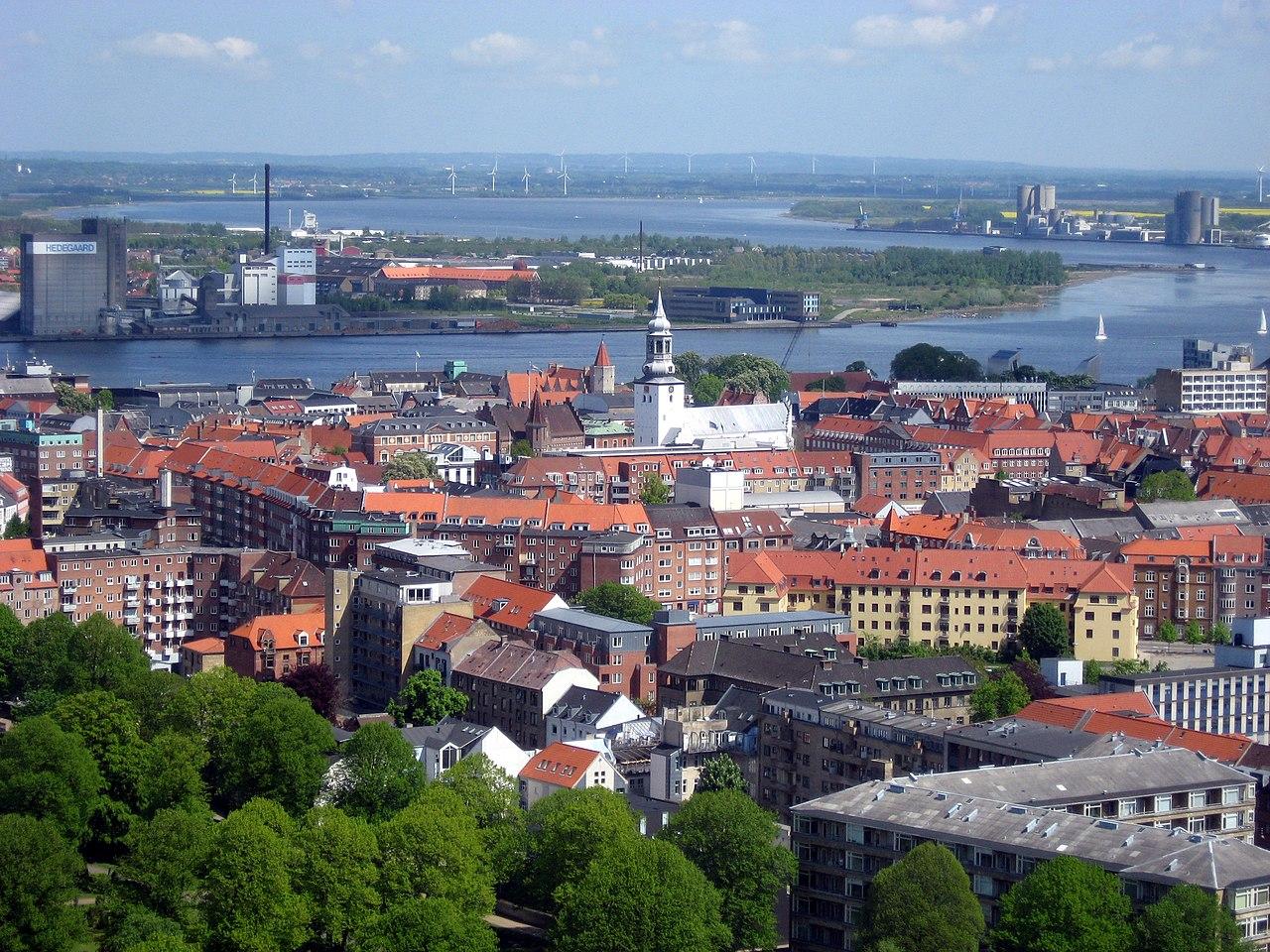
Looking beyond Lindholm Høje? Discover North Jutland for broader travel guides, local hot-spots, and regional highlights.
Explore North Jutland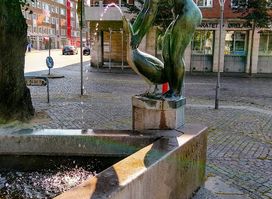
A small bronze girl and her unruly goose bringing poetic calm to busy Vesterbro, Gåsepigen is Aalborg’s charming 1937 fountain sculpture and urban landmark.
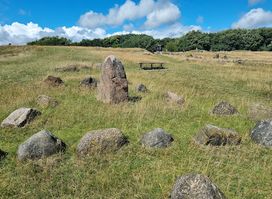
Evocative Viking Age burial grounds and an immersive archaeological museum overlooking the Limfjord, where stones, artefacts and storytelling bring Nordic prehistory close.