
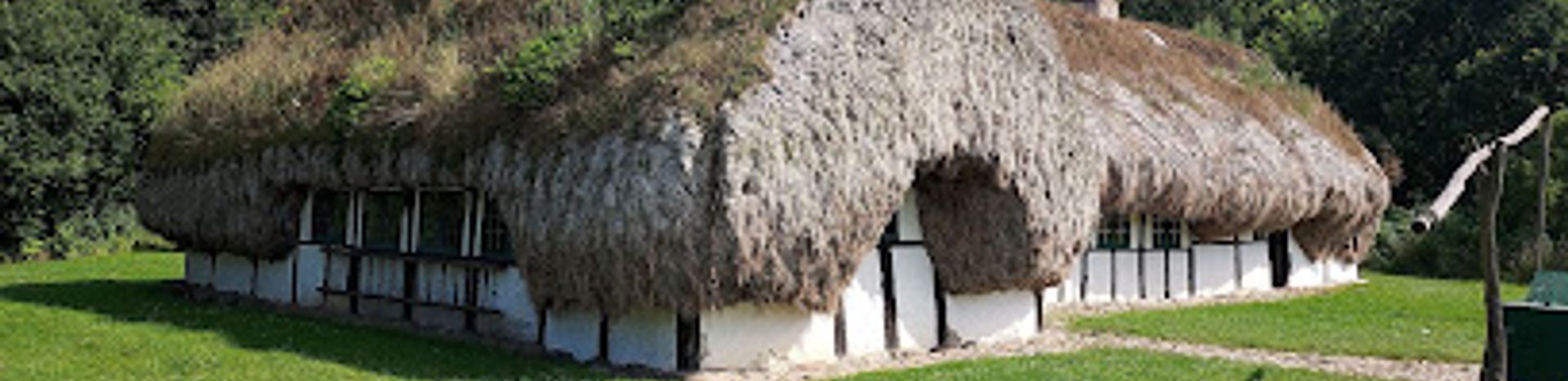
Open Air Museum (Frilandsmuseet), Kongens Lyngby
One of the world’s largest open‑air museums, Frilandsmuseet gathers centuries of Danish rural life into a single village of farms, mills, animals and gardens.
Spread across sweeping fields north of Copenhagen, the Open Air Museum (Frilandsmuseet) lets you wander through 300 years of rural life in Denmark and former Danish lands. More than 50 historic farms, mills and cottages from 1650–1940 have been dismantled and rebuilt here, complete with gardens, animals and cobbled lanes. It feels like a full village in the countryside, yet remains an easy half-day escape from central Copenhagen.
A brief summary to Open Air Museum
- I. C. Modewegs Vej, Lyngby, 2800, DK
- +4533134411
- Visit website
- Duration: 3 to 6 hours
- Mid ranged
-
 Outdoor
- Mobile reception: 4 out of 5
- Tuesday 10 am-4 pm
- Wednesday 10 am-4 pm
- Thursday 10 am-4 pm
- Friday 10 am-4 pm
- Saturday 10 am-4 pm
- Sunday 10 am-4 pm
Local tips
- Wear comfortable shoes and dress for the weather; the grounds are extensive and mostly outdoors, with gravel paths, grass and some uneven surfaces.
- Pick up a site map at the entrance and choose a few themed areas or time periods to focus on; trying to see every building in detail can be overwhelming in one visit.
- Bring water and snacks or a picnic, especially with children; although there are food options on site, breaks in the gardens or meadows are part of the experience.
- Check the museum’s current programme in advance if you are interested in carriage rides, craft demonstrations or seasonal events, as these are not offered every day.
- If visiting in cooler months, consider gloves and a hat; you will be walking between buildings in the open air even when exploring indoor interiors.

For the on-the-go comforts that matter to you
- Restrooms
- Drink Options
- Drinking Water
- Food Options
- Seating Areas
- Sheltered Areas
- Picnic Areas
- Trash Bins
- Information Boards
- Visitor Center
Getting There
-
S-train and short walk
From central Copenhagen, take S-train line E towards Hillerød and ride to Sorgenfri Station; the journey typically takes 20–25 minutes. From the station, it is about a 10–15 minute walk on mostly paved, level paths to the museum’s main area. Standard single tickets within the Copenhagen zones are usually in the range of 24–36 DKK depending on your starting point and ticket type. Trains run frequently throughout the day, and this option is suitable for most visitors with basic mobility.
-
Bus from Copenhagen area
Regional buses such as lines 184 and 194 connect the northern suburbs with a stop near the museum’s main entrance on Kongevejen. From areas like Nørreport or central Copenhagen, plan on 35–50 minutes total travel time, including a possible short transfer to reach the correct line. A bus ticket within the metropolitan fare zones generally costs around 24–36 DKK one way, or is covered by most travel passes. Buses usually have low-floor access, but they can be busy at commuting times and schedules are reduced in late evenings and on some holidays.
-
Car or taxi from central Copenhagen
Driving from central Copenhagen to the Open Air Museum typically takes 20–30 minutes in normal traffic, following main arterial roads toward Kongens Lyngby. There is parking available near the museum, but spaces can be in high demand on sunny weekends and during school holidays. Taxi fares from the city centre commonly range from about 250–350 DKK one way, depending on traffic and exact starting point. This is the most flexible option for families with small children, those carrying picnic gear, or visitors with limited mobility who prefer to minimise walking.
Open Air Museum location weather suitability
-
 Clear Skies
-
 Mild Temperatures
-
 Hot Weather
-
 Cold Weather
-
 Any Weather
Discover more about Open Air Museum
Stepping Into Old Denmark
The Open Air Museum in Kongens Lyngby is one of the world’s oldest and largest open‑air museums, laid out like a patchwork of rural Denmark through the centuries. Instead of galleries, you stroll lanes and meadows, moving between full‑size farms, barns and workshops that once stood in real villages. Each building has been painstakingly dismantled from its original site and re‑erected here, so the thatched roofs, timber frames and stone foundations all carry genuine wear from generations of use. As you wander, the landscape shifts subtly. A low whitewashed farmhouse from Zealand gives way to a sturdier Jutland heath farm, then to cottages that once stood in Skåne or the Faroe Islands. The result is a kind of open‑air atlas, where architectural details and building techniques reveal how families adapted to local climate, soil and resources.Historic Homes, Mills and Farmyards
Within the museum’s 80‑plus acres, you find more than 50 houses, farms and mills spanning roughly 1650 to 1940. Interiors are fully furnished, from painted chests and box beds to cast‑iron stoves and heavy farmhouse tables set for a midday meal. Kitchen shelves hold period utensils, while parlours display lace, portraits and tiled stoves that once signalled status and comfort. Scattered around the grounds are imposing windmills and quietly turning watermills, each placed within a recreated landscape of fields, ponds and hedges. Many farmyards include barns, stables and workshops, offering a sense of how closely work and home life intertwined. The museum’s historic gardens, planted with old varieties of vegetables, herbs and flowers, add colour and seasonal scent to the experience.Living Traditions and Seasonal Activities
Although the buildings are old, the museum feels anything but static. On many days you may encounter staff or volunteers in period dress tending animals, demonstrating crafts or working the land with traditional tools. Horse‑drawn carriages sometimes roll along the tracks, and small railway facilities evoke the arrival of modern transport in rural communities. Throughout the season, the site hosts themed days and historic events: harvest activities in late summer, atmospheric autumn and winter programs, and family‑oriented storytelling or theatre rooted in 19th‑century life. These touches emphasise how customs, superstitions and celebrations once structured the year in the countryside.Animals, Gardens and Open Landscapes
Between the buildings lie open fields, orchards and grazing paddocks, home to historic breeds of horses, cattle, sheep and goats. Their presence gives a sense of scale to the farms and reminds visitors that these were working environments rather than preserved showpieces. Children are often drawn to the stables and pens, where some animals can be observed at close range. The museum maintains around two dozen historic gardens, each illustrating different approaches to kitchen crops, medicinal plants and ornamental borders. In spring and summer, fruit trees blossom and vegetable beds are carefully laid out; later in the year, drying racks, stacked firewood and harvested bundles appear, underlining how self‑sufficient rural households needed to be.Planning Your Visit Among the Farmsteads
The site is expansive, and paths between clusters of buildings can feel like gentle countryside walks. Benches and grassy areas invite breaks with a picnic or a snack from on‑site food outlets, while shaded corners under old trees provide quiet spots to pause. Information panels near major buildings explain their origin, former location and the families who once lived there. A visit can be as brief or as in‑depth as you choose: some visitors focus on a single region or time period, while others spend most of a day circling the full grounds. Either way, the museum offers a rare chance to experience Danish rural history not as a display behind glass, but as a three‑dimensional village that you move through at your own pace.For the vibe & atmosphere seeker
- Scenic
- Fun-filled
- Relaxing
- Tranquil
- Unique
- Casual
For the design and aesthetic lover
- Vintage Styles
- Rustic Designs
For the architecture buff
- Historic
- Landmarks
- Parks & Gardens
- Heritage Neighborhoods
For the view chaser and sunset hunter
- Iconic Views
- Panoramas
- Sunset Spots
For the social media creator & influencer
- Instagrammable
- Photo Spots
- Selfie Spots
- Reel-Friendly
- Architectural Shots
- Aesthetic Corners
For the eco-conscious traveler
- Low Impact
- Public-Transport Accessible
- Locally Managed
- Wildlife Habitat
For the kind of experience you’re after
- Cultural Heritage
- Photowalk
- Adventure Photo Shoot
- Day Trip
- Roadtrip Stop
- Mindfulness
For how adventurous you want the journey to be
- Easy Access
Location Audience
- Family Friendly
- Child Friendly
- Teen Friendly
- Senior Friendly
- Solo Friendly
- Couple Friendly
- LGBT Friendly
- Solo Female Friendly
- Wheelchair Access


