Kunsthal Aarhus
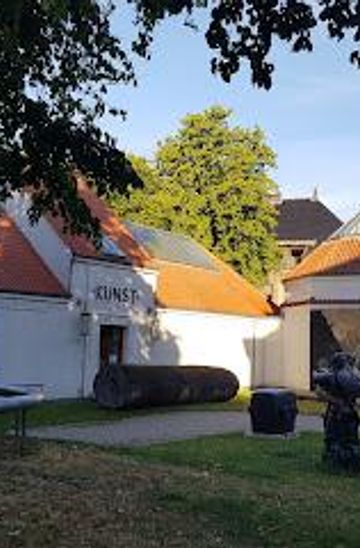
A historic art hall turned experimental hub, Kunsthal Aarhus blends light-filled galleries, a sculpture park and ever-changing contemporary art in the city’s cultural core.
Kunsthal Aarhus is a pioneering contemporary art centre in the heart of Aarhus, housed in light-filled galleries surrounded by a small sculpture park on J. M. Mørks Gade. Founded in 1917, it is one of Europe’s oldest art halls, now dedicated to experimental, international contemporary art across installation, video, performance and sculpture. With free entrance, changing exhibitions and a relaxed café atmosphere, it is an easy, rewarding stop on any Aarhus culture walk.
A brief summary to Kunsthal Aarhus
- J. M. Mørks Gade 13, Aarhus, Aarhus C, 8000, DK
- Click to display
- Click to display
- Duration: 1 to 3 hours
- Free
-
 Mixed
Mixed
- Mobile reception: 5 out of 5
- Tuesday 11 am-6 pm
- Wednesday 11 am-6 pm
- Thursday 11 am-8 pm
- Friday 11 am-6 pm
- Saturday 11 am-6 pm
- Sunday 11 am-6 pm

Know before you go
Hi, I'm Eve. Here are a few practical things to know before exploring Kunsthal Aarhus.
- Entrance is free, so treat Kunsthal Aarhus as a flexible stop you can dip into more than once during your stay in the city.
- Check current exhibitions and event listings in advance; talks, performances and evening openings can add depth to your visit.
- Allow time for the outdoor sculpture park and courtyard, which offer a quieter space to reflect between indoor galleries.
- Visit on a Thursday if possible, when extended evening hours create a different atmosphere in the galleries and café.
- Bring a notebook or sketchbook if you like to respond to art; the calm galleries and seating areas lend themselves to slow reflection.
Do you manage this location?
Take control to get all the benefits, like improved information, better appearance, and stronger visibility across AI-powered discovery. Learn more
Activate your presenceOther nearby places you may find interesting

Getting There
-
On foot from Aarhus H central station
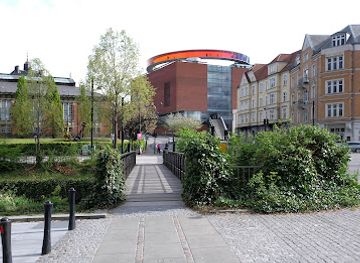
From Aarhus H, allow about 10–15 minutes on foot to reach Kunsthal Aarhus. The route is flat and paved, passing through central streets and the city’s cultural district, so it is suitable for most visitors and wheelchairs. Walking is often the fastest option in the compact centre and avoids the need to navigate traffic or parking.
-
City bus within Aarhus
Several city bus lines run between the wider Aarhus districts and the central area around Park Allé and the main station, from where it is a short walk of roughly 5–10 minutes to Kunsthal Aarhus. Typical bus journeys from outer neighbourhoods take 10–25 minutes and a single adult ticket usually costs around 24–30 DKK, purchasable via ticket machines or mobile apps. Buses are frequent during the day and generally accessible, with low-floor entry.
-
Bicycle within the city
Aarhus is bicycle-friendly, and cycling to Kunsthal Aarhus from most inner neighbourhoods generally takes 5–15 minutes. Dedicated bike lanes lead toward the city centre, and you can park your bike in racks near the art hall. Public bike-share and rental options are available at various points in the city, typically costing from about 30–80 DKK for a short rental period, depending on provider and duration.
-
Car or taxi from greater Aarhus area
Driving from suburban Aarhus districts or nearby towns usually takes 10–25 minutes, depending on traffic. Public parking garages and street parking zones are located within walking distance of Kunsthal Aarhus; fees commonly range from about 15–30 DKK per hour in the central zones. Taxis from the central station area reach the art hall in around 5 minutes under normal conditions, with fares typically starting near 50–70 DKK for such a short trip.
For the on-the-go comforts that matter to you
-
 Restrooms
-
 Drink Options
-
 Food Options
-
 Seating Areas
-
 Trash Bins
-
 Information Boards
Discover more about Kunsthal Aarhus
A century-old art hall with a contemporary pulse
Kunsthal Aarhus sits just south of Aarhus’ compact centre, an airy complex that bridges its 1917 origins with a decidedly contemporary programme. Founded as one of Denmark’s earliest exhibition halls for art, it has evolved into a dedicated space for contemporary practice while still carrying the quiet authority of its long history.The institution operates as a laboratory for ideas as much as a white-cube venue. Curators regularly commission new works, host thematic exhibition series and collaborate with artists, researchers and local communities. The result is a space where you are just as likely to encounter a subtle, conceptual installation as a room-filling, immersive environment.Architecture of light, space and quiet corners
The building’s character is defined by light. Original volumes by architect Høeg-Hansen were expanded in the late 20th century, creating broad, flexible galleries with high ceilings and generous windows. Natural light is carefully managed, filtering into some rooms while others remain deliberately enclosed for video and sound pieces.Circulation is intuitive: you drift through a sequence of rooms that range from intimate side galleries to larger central halls. Polished concrete, white walls and simple lines foreground the works while still allowing you to appreciate the architecture itself. Between exhibitions the space is often reconfigured, so repeat visits can feel surprisingly different.Inside the galleries: from tactile objects to digital experiments
Exhibitions at Kunsthal Aarhus span many media, but they share a focus on the questions contemporary artists are asking now. You might move from a room of sculptural objects exploring material and form, into a multi-channel video installation dealing with migration, climate or the body, then on to a participatory work inviting you to contribute.Large-scale international projects sit alongside Danish artists and recurring formats such as biennials and themed series. Works are frequently accompanied by concise wall texts in English and Danish that provide entry points without over-directing your interpretation. It is a place that rewards slow looking, with seating or open floor space that encourages you to pause.The sculpture park and city-facing courtyard
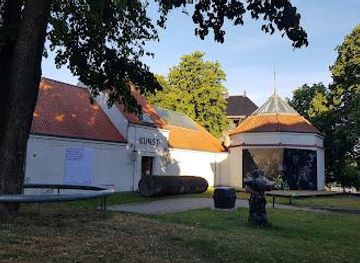
Stepping outside, a modest sculpture park wraps around parts of the building, linking the art hall to the surrounding green space. Contemporary sculptures, flags and temporary outdoor pieces create a dialogue between art and everyday city life; you might glimpse joggers, cyclists and families moving through the park while you explore.The courtyard functions as an informal threshold between street and exhibition hall. In good weather, this is where visitors linger with a coffee, children explore artworks at their own pace, and the boundary between institution and city blurs. Seasonal projects sometimes extend outside, making the facade and lawn part of the curatorial canvas.Café culture, learning and events
Inside, a small café and seating area add to the welcoming feel. Here you can browse art books, pick up printed programmes or simply sit and process what you have just seen over a drink. Free entrance lowers the barrier to spontaneous visits, whether you stay half an hour or an entire afternoon.Kunsthal Aarhus also dedicates significant energy to mediation and learning: talks, workshops, guided tours and collaborations with schools and universities regularly animate the galleries. Evening openings on selected days introduce a different rhythm, when lectures, performances or screenings draw a more nocturnal crowd into the light-filled halls.Planning your visit in the Aarhus art district
The art hall’s central location makes it easy to fold into a broader day of culture in Aarhus. It stands within walking distance of other major institutions and the city’s riverside cafés, yet feels calm once you step through the entrance. Typical visits range from a focused hour with a single exhibition to several hours exploring multiple shows, the sculpture park and the café.Because programmes change throughout the year, each visit can present a completely new encounter. Checking current exhibitions before you come helps you decide whether to prioritise immersive installations, thematic group shows or outdoor works, but the essence of the place remains: an open, evolving platform for contemporary art at the heart of the city.Explore the best of what Kunsthal Aarhus has to offer















More about East Jutland
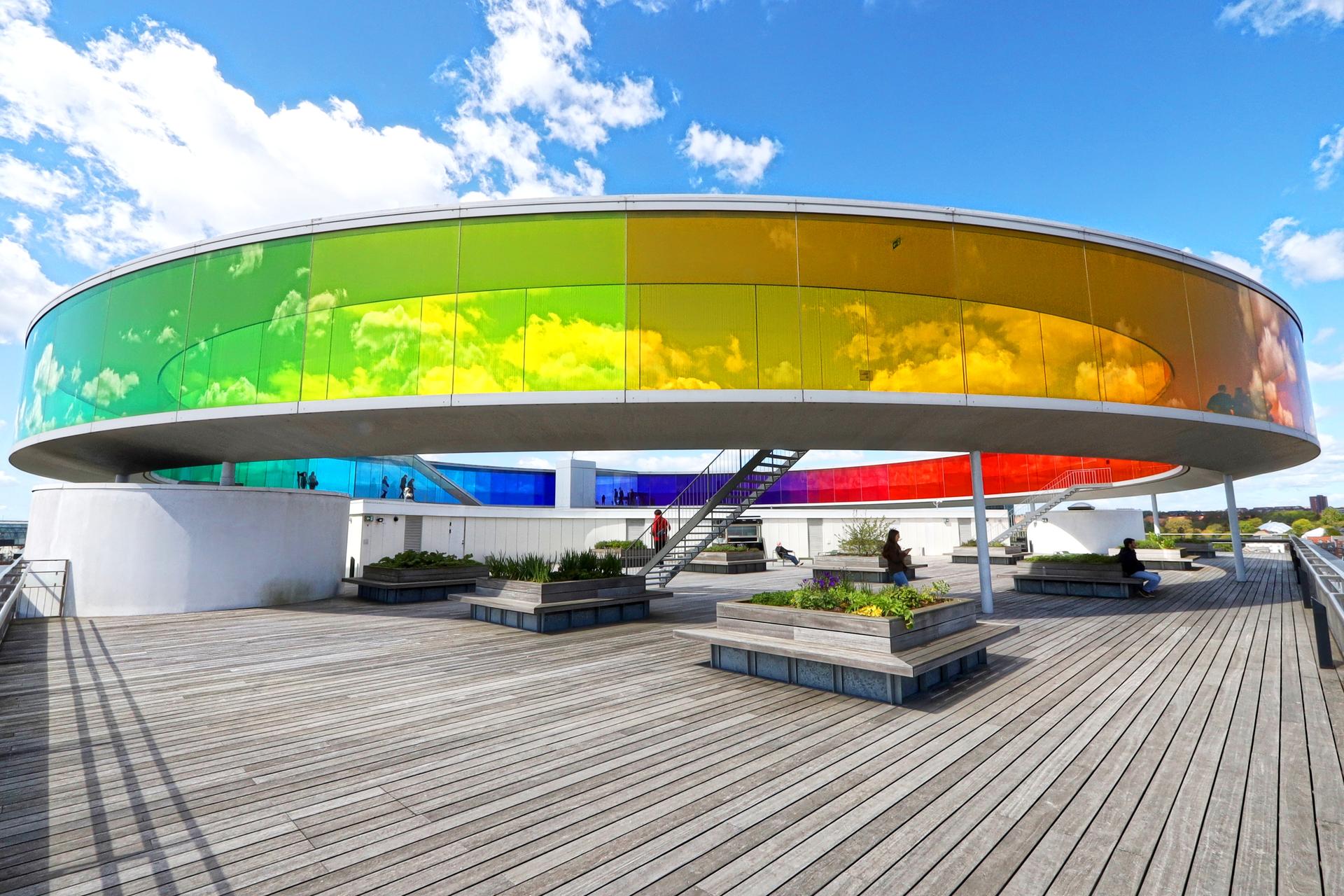
Discover East Jutland, Denmark's enchanting region blending vibrant cities, rich history, and stunning natural landscapes, perfect for every type of traveler.
Tell me more about East Jutland
Historic hilltop observatory in Aarhus offering hands-on astronomy, guided stargazing, and a unique glimpse into Denmark’s pioneering scientific past.
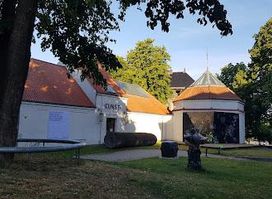
Historic art hall turned contemporary laboratory, with light-filled galleries, a small sculpture park and ever-changing cutting-edge exhibitions in central Aarhus.