
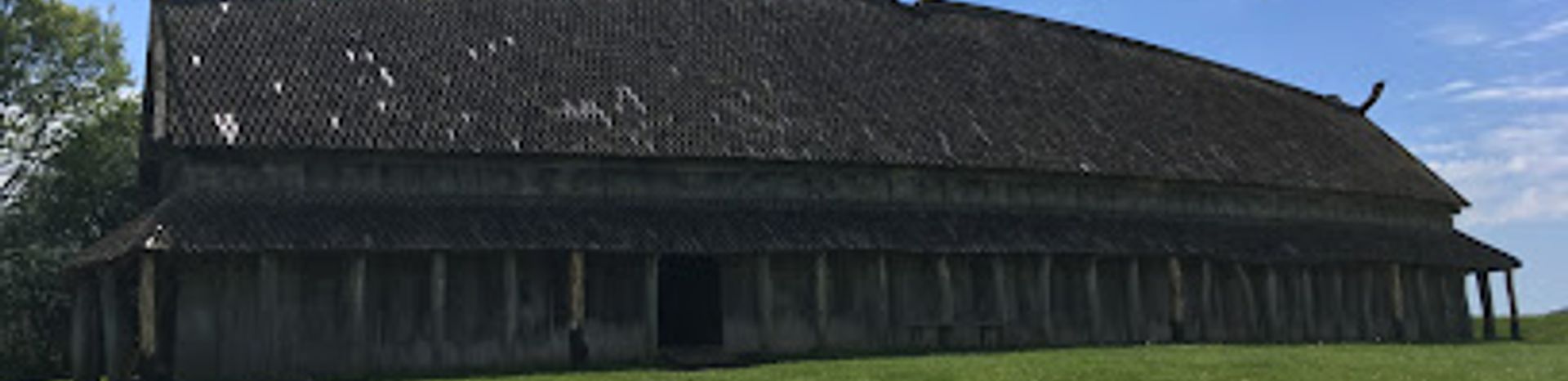
Trelleborg – Museum of the Viking Age
A thousand-year-old Viking ring fortress where Harald Bluetooth’s warriors, longhouses and legends still shape the windswept fields of West Zealand.
On a gentle hill outside Slagelse, Trelleborg brings the Viking Age vividly to life. This UNESCO-listed ring fortress, built around 980 by King Harald Bluetooth, is one of Denmark’s great circular strongholds, with earth ramparts, traces of longhouses and an engaging museum that showcases weapons, jewellery and everyday objects. Reconstructed buildings, seasonal living-history activities and wide, sheep-grazed fields make it a rare place where archaeology, storytelling and West Zealand’s quiet landscape blend into a powerful time‑travel experience.
A brief summary to Trelleborg - Museum of the Viking Age
- Trelleborg Alle 4, Slagelse, 4200, DK
- +4541206399
- Visit website
- Duration: 2 to 4 hours
- Mid ranged
-
 Mixed
Mixed
- Mobile reception: 4 out of 5
- Tuesday 10 am-5 pm
- Wednesday 10 am-5 pm
- Thursday 10 am-5 pm
- Friday 10 am-5 pm
- Saturday 10 am-5 pm
- Sunday 10 am-5 pm
Local tips
- Plan at least two to three hours so you can walk the full circuit of the ring ramparts and still have time for the museum and reconstructed longhouse.
- Check seasonal schedules in advance; living-history activities and the Viking festival are concentrated in spring and summer, while winter visits focus on the outdoor earthworks.
- Wear sturdy shoes and windproof layers; the exposed embankments can be breezy and slightly steep, especially after rain when the grass is slippery.
- Bring water and a snack or picnic for the fortress interior, then use the café for coffee or a more substantial meal with views of the surrounding landscape.
- Families should look out for hands-on stations like archery, bread baking or craft workshops, which are ideal for children interested in Viking stories.

For the on-the-go comforts that matter to you
- Restrooms
- Drink Options
- Drinking Water
- Food Options
- Seating Areas
- Sheltered Areas
- Picnic Areas
- Trash Bins
- Information Boards
- Visitor Center
Getting There
-
Train and local bus from Copenhagen
From Copenhagen, take a regional train toward Slagelse; the journey typically takes 1 to 1.25 hours with frequent departures throughout the day and standard adult one‑way fares starting around DKK 120–170 depending on ticket type and time. From Slagelse station, transfer to a local bus toward Hejninge or routes serving Trelleborg Allé; the bus leg usually takes 15–25 minutes and costs roughly DKK 24–30. Services can be less frequent in the evening and on weekends, so check departure times in advance and allow extra time for connections.
-
Car from Slagelse and West Zealand
Travelling by car from central Slagelse takes about 10–15 minutes along local country roads through farmland. There is typically free parking near the museum entrance, but spaces may fill quickly during the annual Viking festival and school holidays, when overspill areas are used and short walks across grass may be required. Roads are generally straightforward year‑round, though visibility can be reduced in winter fog or heavy rain, so plan a little extra time in poor weather.
-
Regional bus within West Zealand
If you are already staying in West Zealand towns such as Korsør or Skælskør, you can use regional buses that connect via Slagelse to stops near Trelleborg. Typical total travel times range from 40 minutes to just over an hour depending on the routing and waiting time between buses, with single tickets usually between DKK 30 and 60. Services run less often on weekends and late in the day, and some routes may only operate on weekdays outside the main summer season, so check current timetables before setting out.
Trelleborg - Museum of the Viking Age location weather suitability
-
 Clear Skies
-
 Mild Temperatures
-
 Any Weather
-
 Cold Weather
-
 Windy Conditions
Discover more about Trelleborg - Museum of the Viking Age
A royal ring fortress in the Danish countryside
Trelleborg sits in the rolling landscape of Tude Ådal, its great circular earth ramparts still clearly etched into the terrain more than a thousand years after they were first raised. Built around 980 by King Harald Bluetooth, it formed part of a network of strategically placed ring fortresses that symbolised a newly consolidated Danish kingdom. From above, the site forms a near-perfect circle, once fortified with timber palisades and guarded gates. Within this circle archaeologists have traced the outlines of longhouses arranged with geometric precision, revealing a carefully planned military and administrative centre rather than a loose village. Walking the grassy embankments today, you follow in the footsteps of warriors, craftspeople and traders who once moved between barracks, workshops and storerooms under royal command.Inside the museum: objects, stories and discoveries
The modern museum beside the fortress interprets the site through carefully selected artefacts and reconstructions. Finds from the excavations – including tools, weapon fragments, jewellery, gaming pieces and domestic utensils – illuminate how people here dressed, fought, worshipped and worked. One highlight is Denmark’s only preserved Viking shield, an evocative survivor that hints at the martial purpose of the stronghold. Exhibition texts and models explain how the fortress was built, how the moat and rampart system functioned, and how archaeologists pieced together the layout using postholes and soil traces. Scale models and atmospheric illustrations help you visualise timber halls with carved gables, ship arrivals on nearby waterways and the everyday logistics of feeding and equipping a garrison in the late 10th century.Reconstructed longhouse and living Viking environment
Just beyond the museum, a reconstructed longhouse gives physical form to the abstract ground plans. Stepping inside, you see how a single space could serve as sleeping quarters, workshop and feasting hall, organised around the long central hearth. Benches, hanging equipment and simple furnishings create a tangible sense of domestic life behind the fortress walls. Nearby, a small Viking-style village evokes outlying farmsteads that would have supported royal strongholds. At certain times of year the area fills with costumed interpreters demonstrating crafts such as blacksmithing, textile work, woodcarving and cooking over open fires. Smoke, wool, tar and baking bread add scent to the experience, underlining that this was a working landscape as much as a military installation.Seasonal festivals and hands-on activities
During school holidays and especially the annual Viking festival, Trelleborg becomes a stage for immersive activities. Re-enacted battles on the surrounding fields showcase shield walls and tactics, while archery ranges, warrior training and games allow visitors to try skills that once meant survival. Craft tents might offer simple jewellery casting or flatbread baking, connecting you directly to methods used a millennium ago. Storytelling sessions and thematic demonstrations delve into trade routes, law-making, beliefs and the transition from Norse gods to Christianity under Harald Bluetooth. These events highlight Trelleborg’s dual role as both fortress and symbol – a place where political power, religion and military strength were displayed to allies and rivals alike.Landscape, walking routes and quiet moments
Even outside peak season, the fortress has a compelling atmosphere. The broad ring of ramparts encloses open pasture, often shared with grazing sheep, and offers elevated views across West Zealand’s farmland. Simple paths follow the line of the old defences and cut across the interior, making it easy to grasp the scale of the construction during a leisurely circuit. Informative signs around the grounds outline key features such as the gates, moat and longhouse rows, so you can explore independently at your own pace. On a clear day the interplay of big sky, green embankments and distant fields lends the site a calm, meditative quality that contrasts with its martial origins, inviting you to linger, sit on a slope and imagine sails on rivers that once linked Trelleborg to the wider Viking world.UNESCO recognition and ongoing research
Trelleborg forms part of the group of Viking Age ring fortresses recognised on the UNESCO World Heritage List, underscoring both its rarity and its importance to understanding early Scandinavian state formation. Researchers continue to refine interpretations of why these fortresses were built so uniformly, how long they were in use and what triggered their eventual abandonment. The museum regularly updates displays to reflect new findings from excavations and scientific analyses, such as dendrochronological dating of timbers or isotopic studies of human remains from associated cemeteries. For visitors, this means Trelleborg is not just a preserved monument but an active research landscape where fresh insights into the Viking Age are still emerging beneath the turf.For the vibe & atmosphere seeker
- Scenic
- Tranquil
- Unique
- Fun-filled
- Adventurous
For the design and aesthetic lover
- Rustic Designs
For the architecture buff
- Historic
- Landmarks
- Parks & Gardens
- Heritage Neighborhoods
- Sacred Sites
For the view chaser and sunset hunter
- Iconic Views
- Panoramas
- Sunset Spots
For the social media creator & influencer
- Instagrammable
- Photo Spots
- Selfie Spots
- Reel-Friendly
- Architectural Shots
For the eco-conscious traveler
- Low Impact
- Protected Area
- Public-Transport Accessible
- Leave-No-Trace Critical
- Locally Managed
- Wildlife Habitat
For the kind of experience you’re after
- Cultural Heritage
- Photowalk
- Adventure Photo Shoot
- Day Trip
- Mindfulness
- Myth & Legends
For how adventurous you want the journey to be
- Easy Access
Location Audience
- Family Friendly
- Child Friendly
- Teen Friendly
- Senior Friendly
- Solo Friendly
- Couple Friendly
- Solo Female Friendly
- Vegetarian Friendly
- Vegan Friendly


