
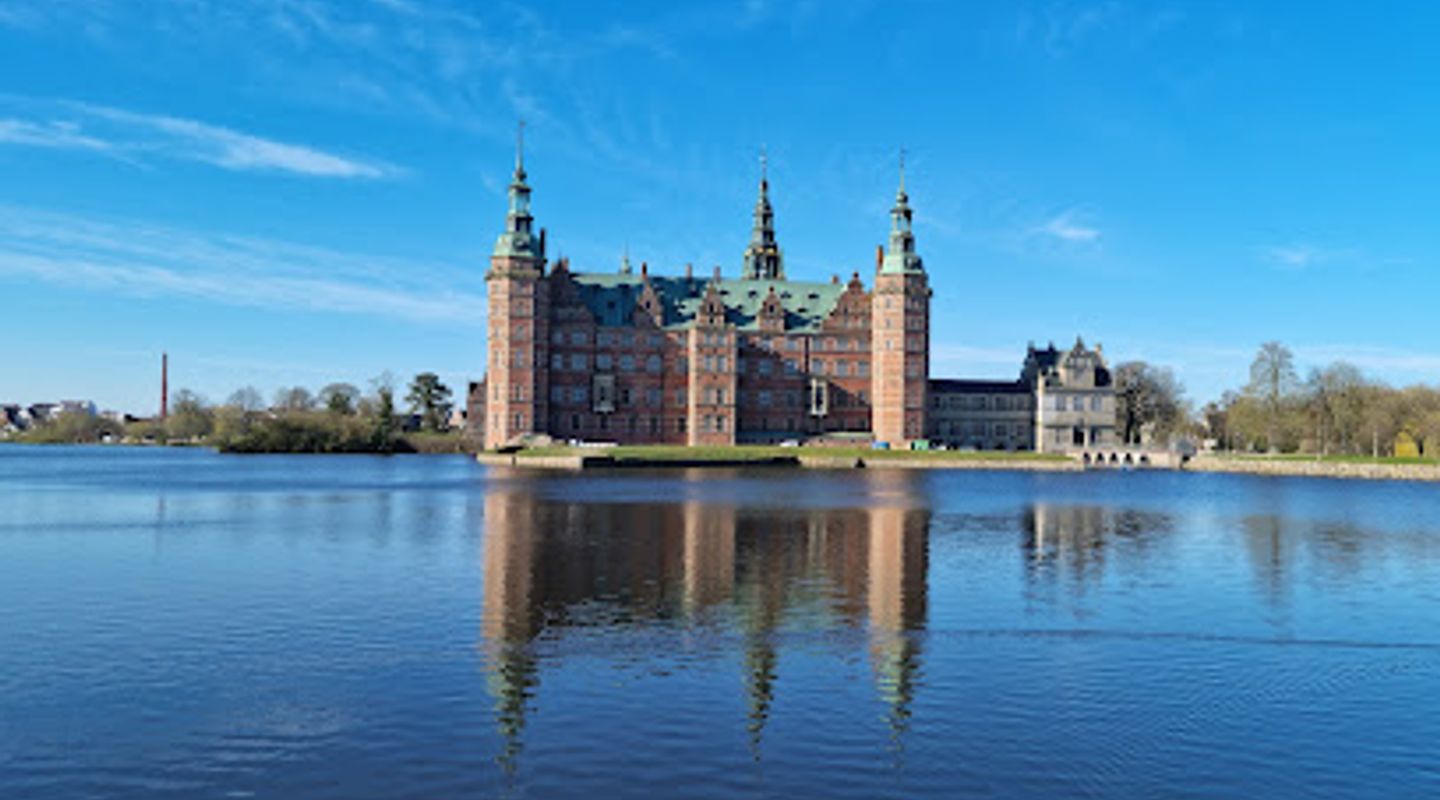
Frederiksborg Castle, South Zealand Travel Guide
A grand Renaissance island palace north of Copenhagen, Frederiksborg Castle blends royal drama, national history and sculpted gardens in one unforgettable lakeside setting.
Rising from the waters of a tranquil lake in Hillerød, Frederiksborg Castle is Denmark’s grand Renaissance showpiece and home to the Museum of National History. Built mainly under King Christian IV in the early 1600s, the red-brick palace occupies three small islands linked by bridges and courtyards, framed by ornate towers, copper spires and sculpted gables. Inside, lavish halls, the preserved royal chapel and Denmark’s national portrait collection trace the story of the Danish kingdom. Outside, formal Baroque parterres and romantic landscape gardens complete one of Scandinavia’s most atmospheric castle ensembles.
A brief summary to Frederiksborg Castle
- Frederiksborg Slot 10, Hillerød, 3400, DK
- Click to display
- Click to display
- Duration: 2 to 4 hours
- Mid ranged
-
 Mixed
Mixed
- Mobile reception: 4 out of 5
- Monday 10 am-5 pm
- Tuesday 10 am-5 pm
- Wednesday 10 am-5 pm
- Thursday 10 am-5 pm
- Friday 10 am-5 pm
- Saturday 10 am-5 pm
- Sunday 10 am-5 pm

Know before you go
Hi, I'm Eve. Here are a few practical things to know before exploring Frederiksborg Castle.
- Allow at least 2–3 hours to combine the castle interiors with a stroll through both the Baroque terraces and the romantic landscape gardens.
- Check seasonal opening hours in advance; winter visiting times are shorter, and interior light is more atmospheric but dimmer for photography.
- Consider using the Copenhagen Card, which typically covers both admission and public transport from Copenhagen to Hillerød.
- In summer, take the small lake ferry for a short cruise that gives striking views of the castle’s façades and the Baroque garden axis.
- Wear comfortable shoes; floors inside are often historic wood or stone, and exploring the multi-level gardens involves gentle slopes and steps.
Do you manage this location?
Take control to get all the benefits, like improved information, better appearance, and stronger visibility across AI-powered discovery. Learn more about listing your business on Evendo
Activate your presenceOther nearby places you may find interesting
The closest places of the same kind, if this one is not quite what you had in mind.
Explore Frederiksborg Castle on the Map
A handpicked selection of must-see spots near Frederiksborg Castle, mapped for you.
Unlock the Best of Frederiksborg Castle
Buy tickets
-
No tickets available
Book tours with entry


Getting There
-
Train from central Copenhagen
From central Copenhagen, take S-train line A towards Hillerød; the ride typically takes 35–40 minutes. From Hillerød Station it is about a 15-minute level walk through town or along the lake to the castle. Standard single tickets covering the zones between Copenhagen and Hillerød usually cost around 50–75 DKK one way, and trains run several times per hour during the day.
-
Regional bus within North Zealand
If you are already in North Zealand, regional buses connect nearby towns such as Helsingør and Gilleleje with Hillerød in about 30–60 minutes depending on the route. From Hillerød bus terminal, it is a short onward walk to the castle. Bus fares within the region generally fall in the 24–50 DKK range per journey, with services running more frequently on weekdays than late evenings and weekends.
-
Car or taxi from Copenhagen area
Driving from the Copenhagen area to Hillerød usually takes 35–50 minutes, depending on traffic. Paid parking is available close to the castle, with additional free spaces a little farther out in the park area; check local signs for time limits. A metered taxi from central Copenhagen typically costs in the region of 600–900 DKK one way, varying with traffic and exact starting point.
For the on-the-go comforts that matter to you
-
 Restrooms
-
 Drink Options
-
 Drinking Water
-
 Food Options
-
 Seating Areas
-
 Sheltered Areas
-
 Picnic Areas
-
 Trash Bins
-
 Information Boards
-
 Visitor Center
Discover more about Frederiksborg Castle
A royal island palace on the castle lake
Frederiksborg Castle sits like a mirage on three low islands in Slotssøen, the Castle Lake, its copper spires and sandstone ornaments mirrored in the still water. Conceived as a statement of power and prestige, it was largely created in the early 17th century by Christian IV, Denmark’s great builder-king. The approach leads you across bridges and through gateways into a sequence of cobbled courtyards, dominated by richly decorated façades and the central Neptune Fountain, a symbol of royal control over the seas.The castle’s red-brick walls are laced with pale sandstone, reliefs and coats of arms, blending North European Renaissance forms with local craftsmanship. Multiple wings and towers enclose intimate inner courts, so even in a large complex you often find sheltered corners with views across the lake or up towards intricate rooflines. In every direction, sculpted figures, heraldic beasts and Latin inscriptions remind you this was as much a political manifesto as a residence.From royal residence to reborn national symbol
Frederiksborg replaced a more modest hunting lodge owned by Frederik II and quickly became the preferred royal residence and ceremonial backdrop for the Oldenburg dynasty. For generations, Danish monarchs were crowned and anointed in the castle chapel, underscoring its role at the heart of state ritual. In 1859, a devastating fire destroyed much of the interior, leaving only the outer walls and a few key spaces standing.The castle’s rebirth is a story in itself. Industrialist J. C. Jacobsen, founder of Carlsberg Breweries, financed a meticulous reconstruction that respected the original Renaissance outlines while updating the interiors. At the same time, the concept of a Museum of National History took shape here, turning a once-private palace into a public chronicle of Denmark. Today, wandering its galleries, you move through centuries of political intrigue, royal reforms, wars and cultural change, all housed within this carefully restored monument.Gallery of a nation: art, portraits and interiors
Inside, Frederiksborg functions both as a palace and a museum. The Great Hall stretches under carved beams and glittering chandeliers, its walls hung with vast history paintings depicting key scenes from Danish history. Nearby, the Audience Chamber and richly inlaid Marble Gallery conjure court life in the 17th century, with gilded ornament, painted ceilings and polished floors that still echo with the sense of ceremony.The Museum of National History holds Denmark’s main national portrait collection, from stern kings in ruffs to modern political figures and cultural icons. As you move from room to room, portraits are interwoven with furniture, tapestries and decorative arts, so the storyline of the country unfolds in both faces and objects. The chapel, remarkably spared by the fire, preserves original Renaissance woodwork and gilded galleries; it is still used for royal ceremonies, a living link between past and present.Baroque geometry and romantic parkland
Step outside the palace walls and the experience continues in the gardens. On one side, strict Baroque terraces descend towards the lake, their clipped hedges, parterres and royal monograms forming intricate patterns best appreciated from the upper levels. Water cascades down a central axis, and long, straight paths frame carefully controlled vistas of the castle and its reflections.Beyond this formal set-piece, a romantic landscape garden spreads out with winding paths, groves of mature trees and viewpoints that reveal the palace from more intimate angles. Here you might stumble upon the smaller Bathhouse Castle tucked among greenery, or pause on a bench to watch the little ferry glide across the lake in summer. Between the sculpted terraces and the freer parkland you get two very different expressions of garden art in a single visit.Exploring, seasonal moods and practical rhythm
Frederiksborg rewards unhurried exploration. It is easy to spend several hours moving between grand state rooms, quieter museum galleries and the open air of the gardens. Seasonal changes add their own character: low Nordic winter light slants through tall windows, while in summer the courtyards buzz gently with activity and the gardens are at their greenest. Spring blossoms and autumn colours make the lakeside paths particularly photogenic.Despite its scale, there are plenty of smaller details to seek out: carved doorframes with tiny mythological scenes, inscriptions tucked above archways, or perspectives where the towers align just so over the water. Exhibitions rotate within the museum, so the narrative of Danish history is periodically refreshed, but the core architectural experience remains constant: a complete royal complex where palace, chapel, galleries and gardens weave into a single, immersive historic landscape.












Your all‑in‑one travel companion app
Explore expert travel guides, compare and book tours, experiences, hotels, and more—all from the palm of your hand. Download now for seamless trip planning wherever your wanderlust takes you.


Explore More of South Zealand
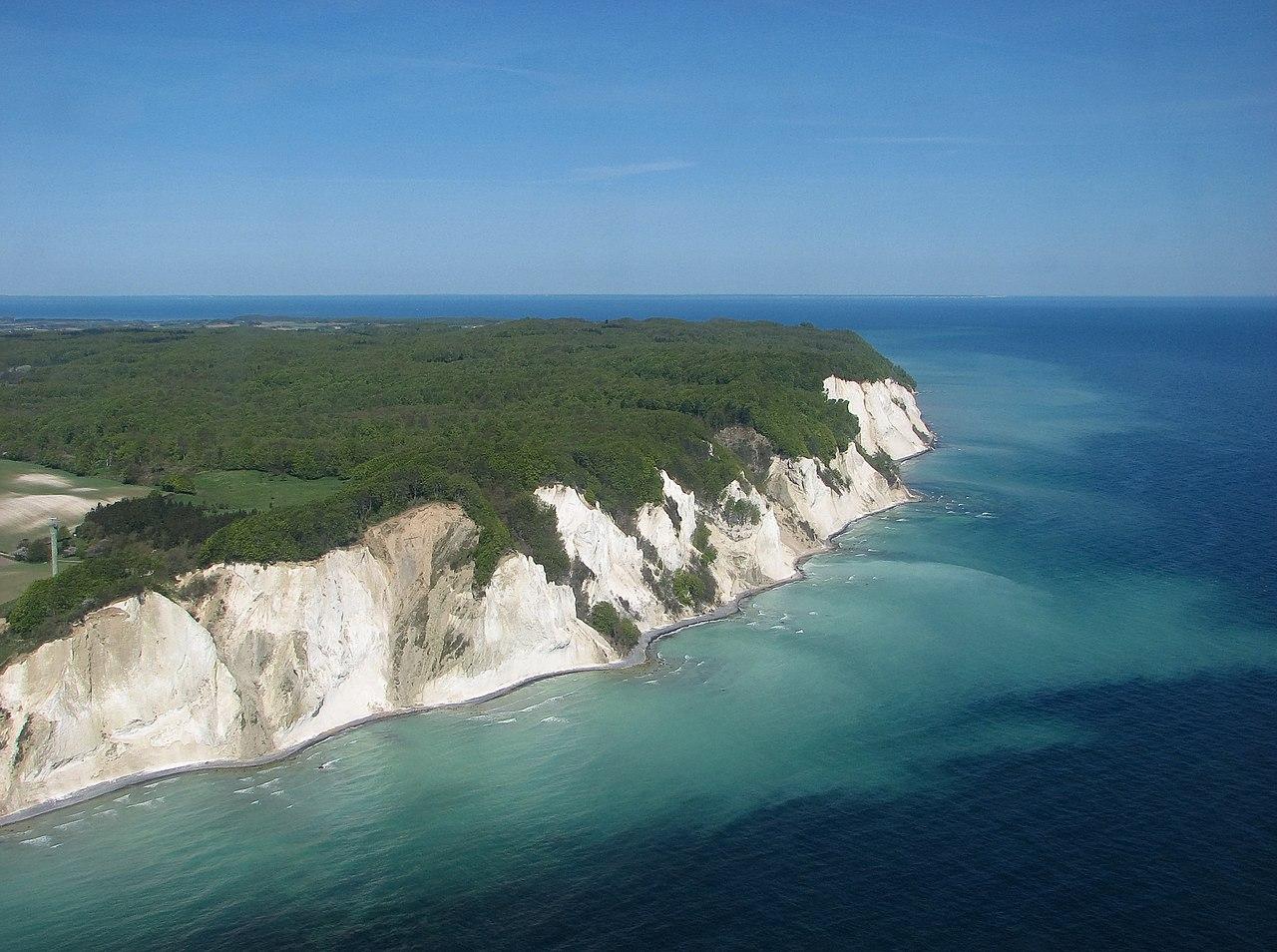
Looking beyond Frederiksborg Castle? Discover South Zealand for broader travel guides, local hot-spots, and regional highlights.
Explore South Zealand
Small riverside viewpoint in North Zealand where reintroduced beavers, wetlands and birds turn an everyday path by Pøle Å into a quietly wild nature stop.
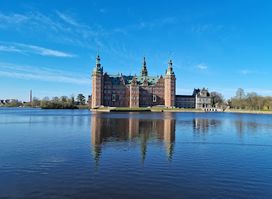
A grand Renaissance island castle in Hillerød, home to Denmark’s Museum of National History and framed by baroque terraces, romantic parkland and a mirror-still lake.
