

Stevns Kridtbrud Travel Guide
Free Guide: A raw chalk quarry on the Stevns peninsula, where bright white walls, industrial cuts and coastal light reveal the geology that underpins the Stevns Klint landscape.


A brief summary of Stevns Kridtbrud
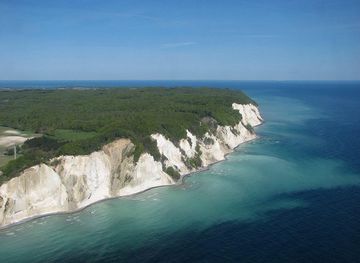
A raw chalk quarry on the Stevns peninsula, where bright white walls, industrial cuts and coastal light reveal the geology that underpins the Stevns Klint landscape.
Stevns Kridtbrud near Store Heddinge is an active chalk quarry on the Stevns peninsula, part of the wider Stevns Klint UNESCO landscape. Here towering white walls, industrial machinery and a stony shoreline reveal the geological layers that helped write the story of Earth’s past. It is a raw, working landscape best suited to curious geology lovers and photographers seeking dramatic contrasts of bright chalk, blue sky and sea rather than a manicured nature walk.
On-site amenities
 Trash bins
 Information boards
- Address
- Hærvejen 58, 4660 Store Heddinge
Getting there
Car from Store Heddinge
Regional bus plus short walk
Bicycle from Store Heddinge
Discover more about Stevns Kridtbrud
Chalk, cliffs and a working landscape
Stevns Kridtbrud sits just inland from Stevns Klint, in a landscape defined by bright white chalk, low farmland and the Baltic Sea beyond. This is not a polished viewpoint but a raw industrial site where chalk has been extracted for decades, forming steep, pale walls and broad terraced pits. You come here to sense how the ground beneath Stevns has been carved away, revealing the same chalk layers that make the famous cliff so distinctive.The quarry is still in operation, so you may hear distant engine noise or see heavy machinery at work on weekdays. That activity is part of the atmosphere: a reminder that the chalk under your feet is both a geological treasure and an everyday resource. Views vary depending on your vantage point, but expect vistas across open pits, settling ponds and the gently rolling countryside that frames the site.
Layers of time beneath Stevns Klint
The chalk here formed from countless microscopic marine organisms that settled on the seabed more than 60 million years ago. In the wider Stevns area these layers, together with a thin band of darker clay, record the dramatic period around the end of the age of dinosaurs. At Stevns Kridtbrud the extraction cuts down through these deposits, so a visit gives a tangible sense of the thickness and consistency of the chalk that underlies the entire peninsula.While Stevns Klint’s seaward face is the star of the UNESCO story, the quarry reveals the same material from a different angle. The bright, almost glaring white surfaces reflect the light strongly on sunny days, and after rain the chalk can feel surprisingly soft and slippery underfoot. It is a good place to appreciate how the local churches, farm buildings and even road edges have long been shaped by the availability of this stone.
Experience on foot and by the water
Visitor access is limited because of ongoing extraction, so experiences focus on viewpoints, paths at the edge of the site and the nearby shoreline where chalk fragments and flint litter the stony beach. The terrain is uneven, with loose stones and occasional steep sections, rewarding those with sturdy footwear and steady balance. This is more of a low-key exploration than a structured attraction, and you should expect minimal signage or formal facilities directly inside the quarry area.From selected vantage points you can trace the geometry of the cut faces and follow the lines where different layers intersect. The contrast between white slopes, dark machinery and the muted greens of surrounding fields makes this an interesting spot for photography, especially in angled morning or late-afternoon light. In calm conditions the combination of quarry, sea horizon and big sky can feel unexpectedly expansive.
Part of the broader Stevns story
Although Stevns Kridtbrud stands on its own as a stark industrial landscape, it makes most sense when combined with other sites along Stevns Klint. The Stevns Klint Experience centre, nearby chalk pits such as Holtug and the small coastal villages all share the same underlying stone and history of extraction. Together they show how geology, local industry and daily life are tightly interwoven here.A visit to the quarry can easily be paired with more developed viewpoints, historic churches built of chalk blocks, or the interpretive exhibitions at Stevns Klint Experience. Seen in that wider context, Stevns Kridtbrud becomes one chapter in a larger story: from ancient seabed to raw material, from industrial pit to evolving landscape at the edge of the Baltic.
Evendo Review Centre
 Google
Guest reviews
Best time to go
Quietest: Jan, Feb & Dec · before 7am or at 8pm
Busy times are Evendo estimates for a typical year, to help you plan. Actual crowds vary with events, school holidays and the weather.
Explore Stevns Kridtbrud on the map
A handpicked selection of must-see spots near Stevns Kridtbrud, mapped for you.
Get your free copy of our complete guide to Stevns Kridtbrud, delivered straight to you.
Everything on this page, from opening hours and how to get there to Eve’s tips and the best time to go, in one PDF you can read offline, print or share.
Already have an account? Sign in
Your Stevns Kridtbrud guide is ready.
We'll send it to · Not you? Sign out

Getting your guide ready…
We are putting together a fresh copy of the Stevns Kridtbrud guide. This can take up to a minute.
This can take a few moments. If your browser asks, choose Allow so the download can start. You'll find the guide in your Downloads folder.
Nothing happened? Download it again
Sorry, the guide is taking longer than usual. Please try again in a minute, or get it by email instead.
Other nearby places you may find interesting
The closest places of the same kind, if this one is not quite what you had in mind.
-
Stevns Klint UNESCO World Heritage Stand on the edge of a white Danish cliff where a thin dark band in the rock marks the asteroid impact that ended the dinosaurs and reshaped life on Earth.
-
Roneklint Fyr Small historic lighthouse at the mouth of Præstø Fjord, with shallow child‑friendly beaches, rich snorkelling waters and tranquil coastal scenery.
-
Stevns Lighthouse Historic lighthouse on the edge of Stevns Klint, blending maritime heritage with wide Baltic Sea views and windswept chalk‑cliff scenery near Store Heddinge.
-
Gjorslev One of Denmark’s oldest inhabited medieval castles, Gjorslev combines Gothic stonework, moats and beech forest walks in a quietly atmospheric manor landscape.
-
Kalvehave Labyrintpark A 20,000 m² outdoor maze park of puzzles, illusions and giant games, turning a day in rural South Zealand into relaxed, brain-teasing fun for all ages.
Swipe for more places
More to explore near Stevns Kridtbrud

 Best experiences near Stevns Kridtbrud
 Best hotels near Stevns Kridtbrud
 Best landmarks near Stevns Kridtbrud
 Best attractions near Stevns Kridtbrud
 Best shops near Stevns Kridtbrud
 Best restaurants near Stevns Kridtbrud
 Best bars near Stevns Kridtbrud
Do you manage this location?
Take control to get all the benefits, like improved information, better appearance, and stronger visibility across AI-powered discovery.
Explore more
Explore more of South Zealand
Discover South Zealand, where dramatic cliffs, historic castles, and charming coastal towns create the perfect Danish escape.
Explore South Zealand
Explore more of Denmark
Discover Denmark: A perfect blend of history, modern design, and the cozy concept of hygge. Explore vibrant cities, serene landscapes, and world-class cuisine.
Explore Denmark
