
Vallø Castle, South Zealand Travel Guide
A red-brick Renaissance castle in a tranquil park south of Køge, where noble history, towers and moat reflections meet open lawns and quiet woodland paths.
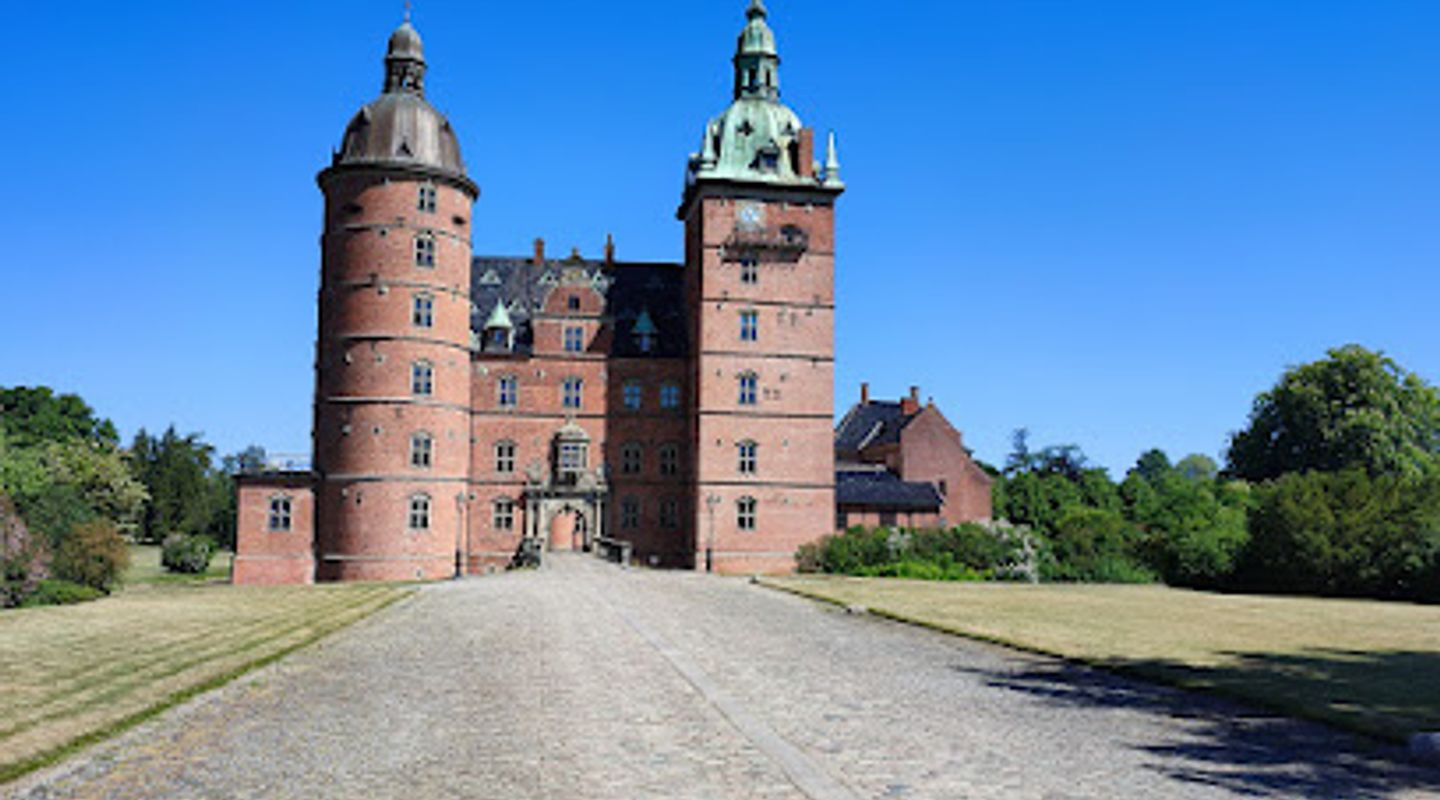
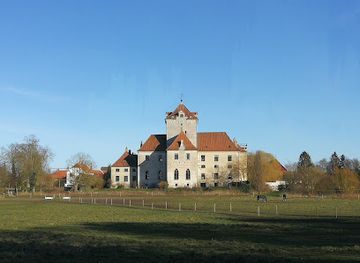
Vallø Castle rises above gentle countryside south of Køge, its red-brick towers and copper spires reflected in a broad moat and framed by a landscaped park. Originally a grand Renaissance manor from the late 1500s, it later became a royal convent for noblewomen and still serves as the heart of Vallø Estate. While the castle interior is not generally open to casual visitors, the surrounding grounds, lakes, and avenues offer a serene escape, with long vistas, historic architecture and a strong sense of Danish aristocratic history.
A brief summary to Vallø Castle
- Slotsgade 4, Køge, 4600, DK
- Click to display
- Click to display
- Duration: 1 to 3 hours
- Free
-
 Outdoor
- Mobile reception: 4 out of 5

Know before you go
Hi, I'm Eve. Here are a few practical things to know before exploring Vallø Castle.
- Allow time to walk the full loop around the moat and through the parkland; the most atmospheric views of the castle come from slightly farther out across the water.
- Visit in the early morning or later afternoon for softer light on the red brick and calmer paths, especially if you plan to take photos from the avenues and bridges.
- Wear comfortable shoes suitable for grass and gravel paths; much of the experience is outdoors and can be damp underfoot after rain.
- Bring water and a snack, as on-site services are limited; the nearest cafés and shops are in the surrounding villages and in Køge.
- Check locally for any special openings or events, as interior access is otherwise restricted due to the castle’s role as a private residential institution.
Do you manage this location?
Take control to get all the benefits, like improved information, better appearance, and stronger visibility across AI-powered discovery. Learn more about listing your business on Evendo
Activate your presenceOther nearby places you may find interesting
The closest places of the same kind, if this one is not quite what you had in mind.
Explore Vallø Castle on the Map
A handpicked selection of must-see spots near Vallø Castle, mapped for you.
Getting There
-
Regional train and local bus from Copenhagen
From central Copenhagen, take a regional train toward Næstved or Rødvig and get off at Køge; the journey typically takes 35–45 minutes. From Køge Station, continue by local bus toward the Vallø area, with travel times of around 15–25 minutes depending on route and wait. A combined one-way trip usually costs in the range of 70–110 DKK within the capital region ticket system. Services run frequently during the day but can be reduced in the evening and on weekends, so check departure times in advance.
-
Train and bicycle from Køge
If you enjoy cycling, bring or rent a bike in Køge and ride through the gently rolling countryside to Vallø Castle. The trip generally takes 25–40 minutes at a relaxed pace on mostly paved roads and cycle-friendly routes. The terrain is easy with only mild inclines, making it accessible for most reasonably fit riders. There is no extra cost beyond any bike rental and a small bicycle supplement on the train if you are coming from Copenhagen. Be prepared for wind and changeable weather along the open stretches.
-
Car from Køge and wider Zealand
Travelling by car from Køge town centre to Vallø Castle usually takes around 10–20 minutes, depending on traffic. From other parts of Zealand, allow 45–60 minutes from Copenhagen and similar regional hubs. There is typically free or low-cost parking in the vicinity of the estate, but spaces can fill up on fine-weather weekends and holidays. The final approach is on narrow country roads, so drive slowly and be aware of cyclists, pedestrians and agricultural vehicles, especially in high season.
For the on-the-go comforts that matter to you
-
 Restrooms
-
 Seating Areas
-
 Trash Bins
-
 Information Boards
Discover more about Vallø Castle
Renaissance towers in the Køge countryside
Vallø Castle sits just inland from Køge Bay, where flat fields and woodland give way to a striking red-brick fortress mirrored in a wide moat. Built in the late 16th century as a powerful Renaissance manor, the castle is all turrets, gables and copper-green roofs, its tall tower dominating the low landscape. Approaching along the tree-lined avenue, you get a first impression of symmetry and quiet grandeur rather than military might.The complex gathers several wings around an inner courtyard, their façades decorated with sandstone portals and ornamented brickwork. The water around the castle adds a reflective calm, while stone bridges link the island-like core to the outer grounds. Even from outside, you can read centuries of Danish architectural history in the mix of Renaissance massing, later Baroque adjustments, and the careful reconstruction after a devastating 19th-century fire.From noble estate to royal convent
Vallø’s story began as a noble estate, but its destiny changed when it was drawn into the orbit of the Danish crown. In the 18th century it was transformed into a royal convent for unmarried noblewomen – a so‑called frøkenstift. The institution provided residence and status for daughters of the aristocracy who did not marry, and the castle became less a feudal stronghold and more a rarefied, cloistered home.This role shaped both the daily life and the spaces of Vallø. Former ceremonial halls and royal apartments were gradually adapted into suites, salons and service rooms for the resident ladies. The castle thus embodies an unusual blend of domestic intimacy and courtly formality, where heavy walls and lofty facades housed quiet lives governed by rules, rituals and the rhythms of the surrounding estate.Fire, reconstruction and architectural detail
In 1893 a catastrophic fire tore through Vallø, gutting the interiors and destroying many artistic treasures. The thick outer walls and much of the stone ornament survived, but the castle stood as a shell. Rather than abandon it, the owners committed to a full reconstruction, commissioning a leading architect of the day to rebuild within the historic envelope while updating the layout to serve the convent’s needs.Over a decade, the castle was painstakingly remade. Salvaged portals, medallions and carved stone details were set back into refreshed brickwork, and new interiors were laid out as apartments around generous staircases and corridors. When you study the façades today, you are seeing both original Renaissance material and late 19th-century craftsmanship in dialogue, giving the building a layered character that rewards close looking.Parkland, avenues and quiet paths
Surrounding the castle is a generous estate landscape of lawns, old trees and meandering water. The formal feel of the immediate forecourt gradually dissolves into a more relaxed park with long sightlines, shaded paths and views back to the towers across open grass. Lakes and channels collect the reflections of the brick walls and sky, while small bridges and embankments offer varied vantage points.The terrain here is gentle and mostly level, making it easy to explore at your own pace. Birdsong carries over the water, and in calmer moments you may hear only wind in the trees and the faint sounds of estate life. It is a place as suited to a slow, contemplative stroll as to a brisk walk, with plenty of spots where you can pause on a bench or low wall to take in the composition of castle, moat and landscape.Experiencing Vallø today
Although the castle itself remains a working institution and private residence, the exterior and its park offer a vivid encounter with Danish aristocratic culture. You can circle the moat, study the masonry and towers from different angles, and watch how the character of the building changes with shifting light and weather. The lack of commercial distraction adds to the sense of authenticity: there is little to do here except look, walk and let the setting soak in.For many visitors, Vallø becomes a half‑day interlude combined with nearby coastal or town sights. It works equally well as a quiet escape into greenery and architecture, an impromptu photo stop on a road trip, or a gentle outing for families and older travelers. However long you stay, the memory that lingers is usually the outline of those red walls and towers suspended above still water, anchored in centuries of Danish history.












Your all‑in‑one travel companion app
Explore expert travel guides, compare and book tours, experiences, hotels, and more—all from the palm of your hand. Download now for seamless trip planning wherever your wanderlust takes you.


Explore More of South Zealand
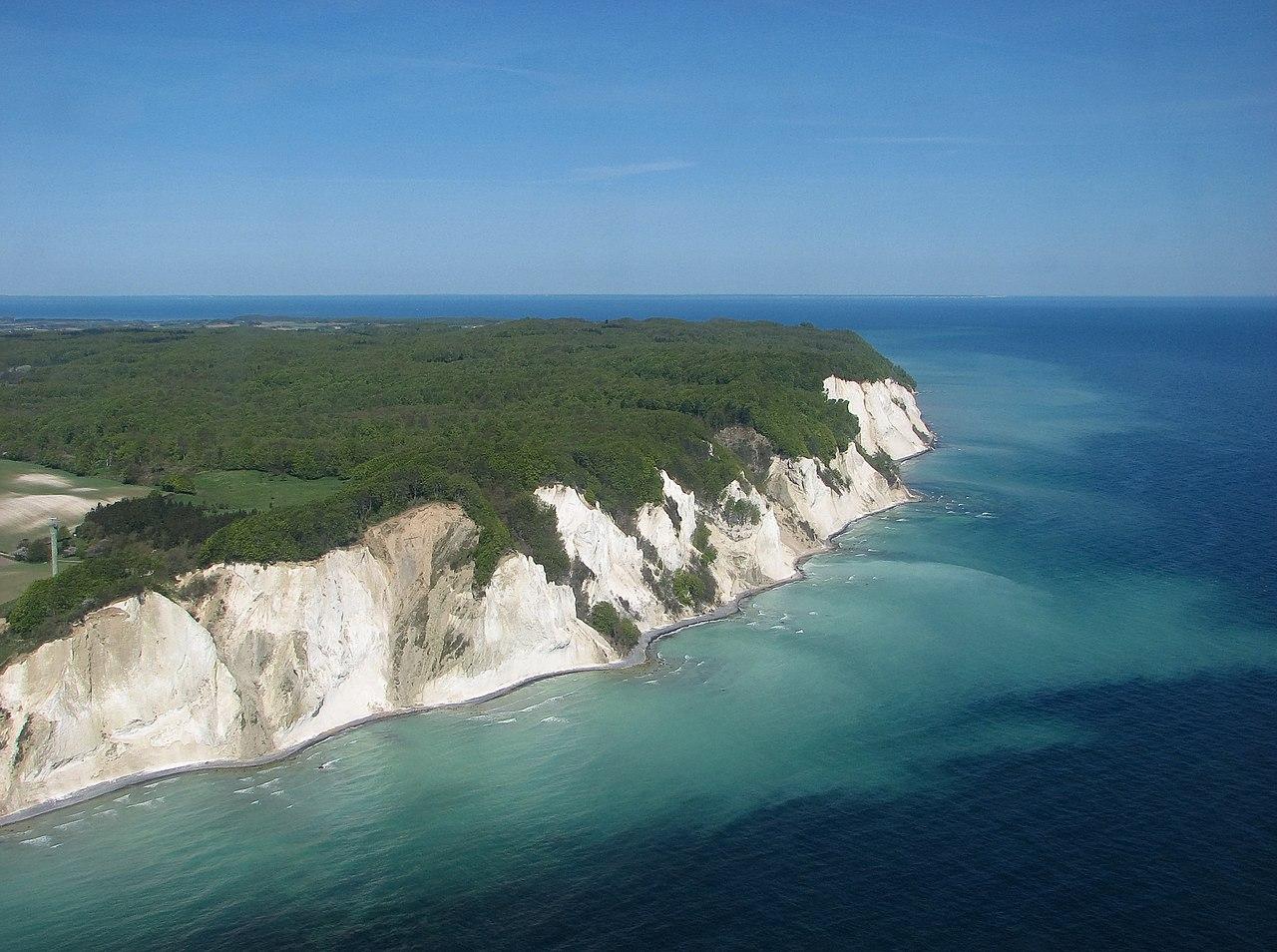
Looking beyond Vallø Castle? Discover South Zealand for broader travel guides, local hot-spots, and regional highlights.
Explore South Zealand
A quietly spectacular woodland garden on Køge’s outskirts, home to one of Denmark’s largest rhododendron collections and an elegant fusion of estate history and landscape art.

Discover Køge Church, a stunning Gothic landmark with historic interiors, breathtaking architecture, and centuries-old maritime connections at the heart of Køge.
