
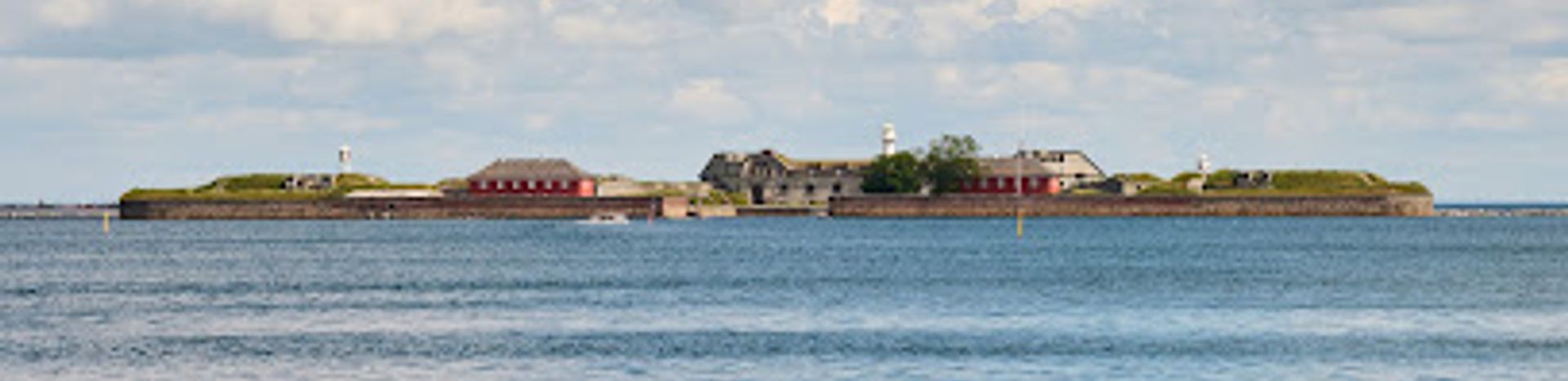
Trekroner Fort (Trekroner Søfort)
Historic sea fortress on an artificial island at Copenhagen’s harbour mouth, blending coastal views, cool casemate tunnels and centuries of naval history.
Trekroner Fort is a historic sea fortress on an artificial island guarding the entrance to Copenhagen’s harbour. Built from the late 18th century on the foundations of scuttled warships, it played a key role in the Battle of Copenhagen in 1801 and the British bombardment in 1807. Today you come for atmospheric casemate tunnels, cannon positions and sweeping skyline views, reached by a short boat ride from the city. On summer days, lawns, simple exhibitions and the breeze off the Øresund make it a relaxed, quietly dramatic escape.
A brief summary to Trekroner Fort
- Copenhagen Municipality, DK
- Duration: 1.5 to 3 hours
- Budget
-
 Outdoor
- Mobile reception: 4 out of 5
Local tips
- Bring a light jacket even on sunny days; wind over the open water and along the ramparts can feel noticeably cooler than in the city streets.
- Carry a small torch or use your phone light if you plan to explore the darker basement corridors and casemate tunnels in depth.
- Plan your timing around boat departures and returns, leaving some margin so you can linger on the island without worrying about the last crossing.
- Food and drink options on the island can be seasonal or limited, so consider bringing water and a simple picnic, especially outside peak summer.

For the on-the-go comforts that matter to you
- Restrooms
- Drink Options
- Food Options
- Seating Areas
- Trash Bins
- Information Boards
Getting There
-
Boat from Nyhavn
From central Copenhagen, the most direct option is a seasonal boat service from the Nyhavn waterfront to Trekroner Fort. The crossing typically takes around 25–35 minutes each way and functions as both transport and a short harbour cruise, often passing landmarks such as Amalienborg and the Little Mermaid en route. Expect to pay roughly 80–120 DKK per adult for a round-trip ticket, with discounted fares for children. Boats usually run on a fixed timetable with limited daily departures, and services are concentrated between late spring and early autumn, so it is worth checking schedules in advance and arriving early on busy days.
-
Guided harbour tour including Trekroner
Several operators in central Copenhagen offer harbour tours that include a stop at Trekroner Fort. These trips often last 1–3 hours in total, combining commentary on city sights with free time to explore the island before re‑boarding. Prices commonly start around 150–250 DKK per adult depending on duration and inclusions, with children’s reductions. Departures are usually from popular quays in the historic centre, and places can book out in peak summer or on warm weekends, so advance booking is advisable. Accessibility may be limited, as boarding involves stepping between quay and boat and moving over uneven surfaces at the fort.
-
Private or small‑group boat charter
For more flexibility, it is possible to reach Trekroner on a private or small‑group charter arranged from central Copenhagen marinas. Travel time is similar to regular services at around 20–30 minutes each way, but you can often tailor departure time, route and length of stay on the island. Costs vary widely by vessel size and duration, but a short charter that includes a stop at the fort typically starts from about 1,500–3,000 DKK per group. This option is best suited to groups comfortable with basic boat movements and the lack of step‑free boarding, and may be more weather‑dependent if using smaller open boats.
Trekroner Fort location weather suitability
-
 Clear Skies
-
 Mild Temperatures
-
 Hot Weather
-
 Cold Weather
-
 Any Weather
-
 Windy Conditions
Discover more about Trekroner Fort
Sea gatekeeper at Copenhagen’s harbour mouth
Trekroner Fort, or Trekroner Søfort, sits low and solid on an artificial island where the harbour of Copenhagen meets the Øresund. Long before the current fort rose from the water, three ageing ships of the line were deliberately sunk here in 1713 to form a floating gun platform guarding the narrow approach to the city. One of those ships was named Trekroner – Three Crowns – and the name has followed the fortification ever since. The present masonry and concrete stronghold took shape from the late 1780s, when the Danish crown decided to replace the improvised ship battery with a permanent sea fort. Earth, stone and dredged harbour mud were packed into a timber framework to create a stable island, then ringed with ramparts, bastions and gun emplacements. From the beginning, Trekroner was intended not as a picturesque outpost but as a serious piece of military engineering that could command every vessel sailing toward the capital.Front-line witness to naval conflict
Even before construction was fully complete, Trekroner found itself in the front line. In 1801 the fort joined Danish ships and floating batteries in the Battle of Copenhagen, firing on the British fleet commanded by Admirals Parker and Nelson. Cannons hastily mounted along its walls helped keep enemy warships at bay, though they could not prevent Denmark’s eventual defeat. Just six years later, in 1807, Trekroner again thundered into action during the British bombardment that set large swathes of Copenhagen ablaze and seized the Danish fleet. Throughout the 19th century the fort was repeatedly strengthened. Casemate blocks were added for protected artillery, underground powder magazines were tucked into the traverses between guns, and a small lighthouse rose above the works to guide friendly vessels safely past the minefields. For decades the stronghold formed part of an integrated defensive ring around Copenhagen, staffed by hundreds of soldiers and bristling with heavy artillery.From military outpost to island museum
After the First World War, Trekroner’s strategic value faded as technology and geopolitical realities changed. The complex passed to harbour authorities in the 1930s and took on new roles during the German occupation of Denmark, when the island served as barracks and later as a temporary prison for German officers. In the quieter post-war decades the fort slipped into disuse, its walls weathered by salt and wind, until a careful restoration opened it to the public in the 1980s as a historic site. Today you step into a place where traces of every era still overlap. Heavy, rusting gun mountings sit beside modern safety railings, while exhibition rooms in former gun casements tell stories of sea battles, coastal defense and life in an isolated garrison. Simple digital installations and displays help you piece together how this low artificial island once stood at the centre of European power struggles.Exploring casemates, ramparts and shoreline
A visit unfolds at your own pace. From the landing pier you fan out across grassy embankments and gravel paths that loop around the island’s perimeter. The heart of the fort is its multi-storey casemate building, where arched brick chambers once sheltered crews, ammunition and artillery. Upstairs, open emplacements reveal how cannons were spaced and protected; below, cool, dim passages cut through the interior like a honeycomb, some now housing small exhibits, others left deliberately raw. Outside, low parapets frame wide views back to Copenhagen’s skyline – church spires and modern towers rising beyond the harbour – while the constant movement of ferries and cargo ships reminds you that this shipping lane is still very much alive. On sunny days, visitors sprawl on the grassy slopes with a picnic, using the old earthworks as informal seating. In summer seasons, a small café sometimes operates in one of the buildings, adding coffee and ice cream to the mix of cannons and coastal scenery.An atmospheric escape just offshore
Part of Trekroner’s charm lies in the journey required to get here. The fort is accessible only by boat, so the short crossing from central Copenhagen doubles as a miniature harbour cruise. As you approach, the thick walls seem to rise straight from the water, with the Danish flag usually snapping in the wind above the ramparts. Once ashore, the city’s noise falls away, replaced by gull calls, the slap of waves against stone and the occasional thud of boots on old wooden floors. The island is compact enough to explore in an hour or two, yet layered enough to reward lingering. History enthusiasts pore over gun positions and wartime photographs, while families weave in and out of tunnels with torches in hand. Photographers seek out silhouettes of cannons against the sky and long perspectives along the outer wall. Whether you treat Trekroner as a half-day excursion or a brief detour on a wider waterfront itinerary, it offers a rare chance to stand in the exact channel where Copenhagen has been defended for more than three centuries.For the vibe & atmosphere seeker
- Scenic
- Tranquil
- Adventurous
- Unique
- Casual
For the design and aesthetic lover
- Vintage Styles
- Rustic Designs
For the architecture buff
- Historic
- Landmarks
- Viewpoints
For the view chaser and sunset hunter
- Iconic Views
- Panoramas
- Waterfront
- Sunset Spots
For the social media creator & influencer
- Photo Spots
- Selfie Spots
- Reel-Friendly
- Architectural Shots
For the eco-conscious traveler
- Low Impact
- Public-Transport Accessible
- Leave-No-Trace Critical
- Locally Managed
For the kind of experience you’re after
- Cultural Heritage
- Photowalk
- Adventure Photo Shoot
- Day Trip
- Roadtrip Stop
For how adventurous you want the journey to be
- Easy Access
- Seasonal Only
Location Audience
- Family Friendly
- Senior Friendly
- Child Friendly
- Teen Friendly
- Solo Friendly
- Couple Friendly
- Solo Female Friendly


