

Beit el-Wali Travel Guide
Free Guide: Explore Beit el-Wali, a relocated Nubian temple of Ramses II showcasing ancient Egyptian art and history near Aswan's Kalabsha Temple.


A brief summary of Beit el-Wali
Explore Beit el-Wali, a relocated Nubian temple of Ramses II showcasing ancient Egyptian art and history near Aswan's Kalabsha Temple.
Beit el-Wali is a small, rock-cut temple in Nubia, built by Pharaoh Ramses II. Originally located 50 kilometers south of Aswan, it was relocated to higher ground near the Kalabsha Temple during the 1960s to save it from submersion by the Aswan High Dam project. Dedicated to the deities Amun-Re, Re-Horakhti, Khnum, and Anuket, it offers insights into ancient Egyptian art, culture, and history.
- Address
- XV68+QH6, Aswan, Aswan Governorate 1230814
Getting there
Taxi
Public Transport
Discover more about Beit el-Wali
Overview
Beit el-Wali, meaning 'House of the Holy Man,' is an ancient Egyptian temple built by Pharaoh Ramses II in Nubia. It is believed that the name came from its use by a Christian hermit at some point in time. Constructed as the first in a series of temples by Ramses II in this region, it served as a place of worship and ritual ceremonies dedicated to the deified Pharaoh and other gods.In the 1960s, the temple faced submersion due to the construction of the Aswan High Dam. As part of the International Campaign to Save the Monuments of Nubia, the temple was dismantled and relocated to a new location near the Temple of Kalabsha.The temple's architecture includes a pylon entrance, a courtyard, and a sanctuary. The walls are adorned with well-preserved reliefs and inscriptions depicting scenes from Ramesses II's reign, showcasing his military campaigns and interactions with foreign dignitaries. The temple provides insights into the religious and political aspects of the New Kingdom period in ancient Egypt.
Evendo Review Centre
 Google
Guest reviews
Explore Beit el-Wali on the map
A handpicked selection of must-see spots near Beit el-Wali, mapped for you.
Get your free copy of our complete guide to Beit el-Wali, delivered straight to you.
Everything on this page, from opening hours and how to get there to Eve’s tips and the best time to go, in one PDF you can read offline, print or share.
Already have an account? Sign in
Your Beit el-Wali guide is ready.
We'll send it to · Not you? Sign out

Getting your guide ready…
We are putting together a fresh copy of the Beit el-Wali guide. This can take up to a minute.
This can take a few moments. If your browser asks, choose Allow so the download can start. You'll find the guide in your Downloads folder.
Nothing happened? Download it again
Sorry, the guide is taking longer than usual. Please try again in a minute, or get it by email instead.
Other nearby places you may find interesting
The closest places of the same kind, if this one is not quite what you had in mind.
-
-
-
-
-


Swipe for more places
More to explore near Beit el-Wali

 Best experiences near Beit el-Wali
 Best hotels near Beit el-Wali
 Best landmarks near Beit el-Wali
 Best attractions near Beit el-Wali
 Best shops near Beit el-Wali
 Best restaurants near Beit el-Wali
 Best bars near Beit el-Wali
Do you manage this location?
Take control to get all the benefits, like improved information, better appearance, and stronger visibility across AI-powered discovery.
Explore more

Explore more of Lower Egypt
Discover the timeless wonders of Lower Egypt, from the iconic Pyramids of Giza to the historic treasures of Alexandria, all set against the backdrop of the majestic Nile Delta.
Explore Lower Egypt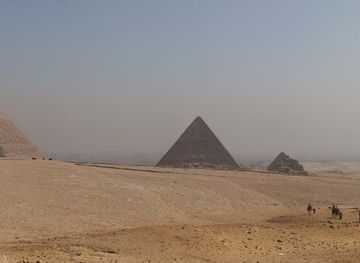
Explore more of Egypt
Discover Egypt: From the timeless pyramids to the vibrant Red Sea, experience a land where ancient wonders meet modern adventures.
Explore Egypt
