

Free Lower Egypt Travel Guide & Mobile App
Explore Lower Egypt with free travel guides. Discover regional history, expert tips, proposed trips, and audio guides on web or mobile app.


Explore Lower Egypt through Cairo's monuments, the Nile Delta's farm landscapes, Alexandria's Mediterranean heritage and historic river towns.
Read more about Lower Egypt
When is the best time to visit Lower Egypt?
Best: March–April, November · 23–27°C| Month | High (°C) | Rainfall (mm) |
|---|---|---|
| January | 18 | 4 |
| February | 20 | 3 |
| March (best) | 23 | 2 |
| April (best) | 27 | 1 |
| May | 31 | 1 |
| June | 34 | 0 |
| July | 36 | 0 |
| August | 36 | 0 |
| September | 34 | 0 |
| October | 31 | 1 |
| November (best) | 25 | 1 |
| December | 20 | 3 |
Getting to and around Lower Egypt
How to get there
Transportation
Top city travel guides in Lower Egypt
The cities of Lower Egypt, and the easiest places to base yourself.
-

-

-

-

-

-


Swipe for more cities
Best attractions in Lower Egypt
Lower Egypt offers an unusually broad range of attractions within a landscape shaped by the Nile. Giza and Saqqara provide the region's most celebrated ancient sites, from the Great Pyramid complex to the Step Pyramid and extensive desert necropolises. Cairo adds museums, medieval religious buildings, historic markets and Coptic heritage, while Alexandria combines archaeological remains with Mediterranean waterfronts, museums and the modern Bibliotheca Alexandrina. Beyond the two largest cities, the Delta rewards slower exploration of Rosetta's Ottoman houses, Damietta's river-and-sea setting, Tanta's religious significance and the agricultural countryside between towns. Wadi El Natrun offers active Coptic monasteries in a desert margin west of the Delta. The northern lakes, canals and coastal wetlands are important for fishing and birdlife, although access varies. Beaches and seaside promenades are concentrated around Alexandria and the Mediterranean coast, while boating and river views are available in selected urban and rural locations. Because attractions are widely dispersed, the region is best understood through a mixture of major monuments, historic urban quarters, working waterways, religious sites and journeys across the cultivated plain.
-
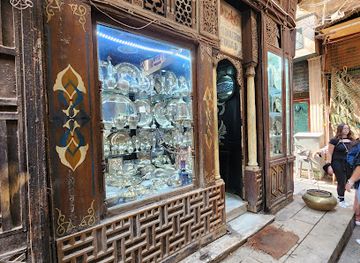
Bazar
Khan el-Khalili
Explore the enchanting Khan el-Khalili bazaar in Cairo, where vibrant culture, history, and exquisite crafts await every traveler.
-
Park
Al-Azhar Park
Discover the tranquility of Al-Azhar Park, Cairo's lush urban oasis, featuring stunning gardens, historical views, and a perfect escape from the city's hustle.
-
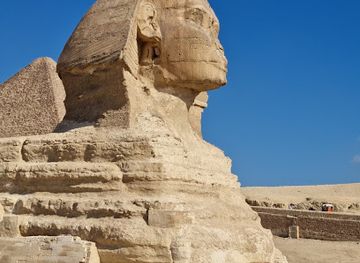
Monument
Great Sphinx of Giza
Explore the Great Sphinx of Giza, a monumental symbol of ancient Egypt, steeped in history and mystery, alongside the iconic Pyramids of Giza.
-
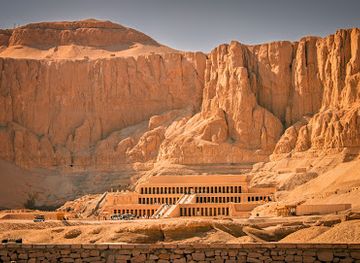
Historical landmark
Mortuary Temple of Hatshepsut
Discover the grandeur of the Mortuary Temple of Hatshepsut, a stunning testament to ancient Egyptian civilization and architecture in Luxor.

Best landmarks in Lower Egypt
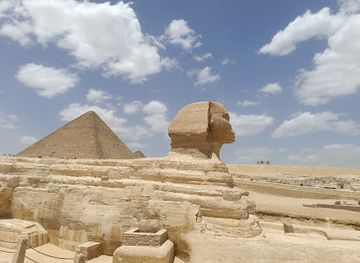
The Pyramids of Giza are Lower Egypt's defining landmark: the Great Pyramid, the last surviving ancient wonder, stands with the pyramids of Khafre and Menkaure and the Great Sphinx on the desert edge west of the Nile. Nearby Saqqara is marked by the Step Pyramid of Djoser, whose layered form represents a major stage in the development of monumental Egyptian architecture. In Cairo, the Citadel of Salah al-Din occupies a prominent limestone ridge, while the Mosque of Ibn Tulun and the historic gates and streets of Islamic Cairo embody the capital's medieval expansion. Alexandria's most recognisable modern landmark is the crescent-shaped Bibliotheca Alexandrina, built near the site traditionally associated with the ancient library; the Qaitbay Citadel occupies the eastern harbour area on the location associated with the Pharos lighthouse. Rosetta is distinguished not by a single monumental structure but by its surviving Ottoman houses, brick façades, carved woodwork and position near the western Nile branch. The Delta itself, with its branching waterways, canals, palms and intensely cultivated plain, is a geographical landmark of enduring importance.
-
Archaeological site
Giza Necropolis
Explore the iconic Pyramids of Giza, the Sphinx, and ancient Egyptian tombs at this UNESCO World Heritage Site near Cairo.
-
Archaeological museum
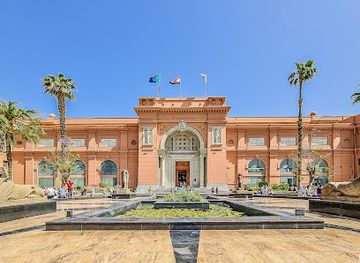
The Egyptian Museum in Cairo
Explore over 120,000 ancient Egyptian artifacts at the Egyptian Museum in Cairo, from the iconic treasures of Tutankhamun to royal mummies.
-
Archaeological site
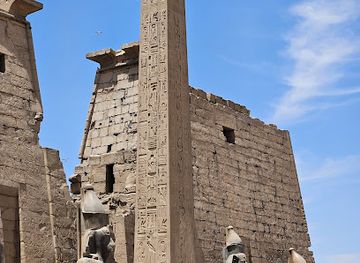
Luxor Temple
Explore the majestic Luxor Temple, a strikingly graceful monument in the heart of modern Luxor, and journey through the wonders of ancient Egyptian civilization.
-
Historical place
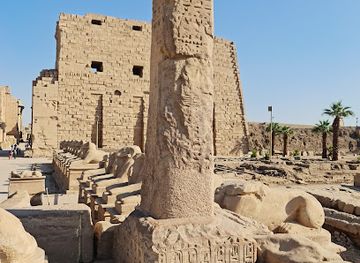
Karnak
Explore Karnak Temple, the largest ancient religious complex in the world, a testament to ancient Egyptian civilization and devotion.
Explore Lower Egypt on the map
Plan your trip on one map. See where the top cities, national parks and sights are, and book hotels and experiences in a few clicks.
Best hotels in Lower Egypt
Best restaurants in Lower Egypt
Eating in Lower Egypt combines the national Egyptian table with the produce of the Delta and Mediterranean coast. Cairo's restaurants range from traditional shops serving ful medames, falafel known locally as taamiya, koshari and grilled meats to modern dining rooms, while Alexandria is particularly associated with fish restaurants and seafood selected from the day's supply. The Delta's fertile soils support rice, vegetables, citrus fruit and other crops that appear in home-style cooking and local markets. Damietta is well known for its furniture industry, but its riverine and coastal position also gives local dining a strong fish tradition. Bakery counters and cafés provide flatbreads, pastries, tea and strong coffee, while sweets such as basbousa and rice pudding are widely available across the country. In smaller towns, busy family-run establishments are often the most dependable option; visitors should choose food that is freshly cooked and served hot, and use treated or bottled water.
-
Egyptian
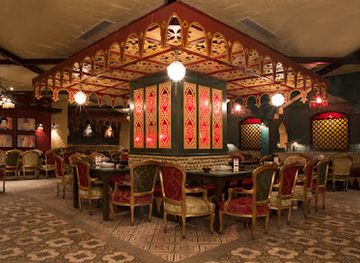
Abou El Sid Restaurant
Discover the essence of Egyptian flavors at Abou El Sid Restaurant in Zamalek - where tradition meets culinary creativity.
-
Restaurant
Crimson Bar & Grill, Cairo, Egypt.
Discover culinary excellence at Crimson Bar & Grill in Cairo – where international flavors meet local charm for an unforgettable dining experience.
-
Italian
il Nilo | النيلو
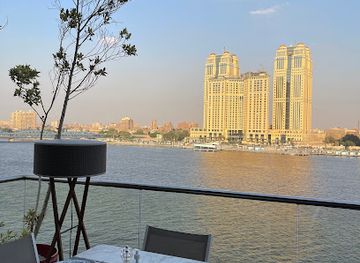
Discover authentic Italian flavors at il Nilo along Cairo's scenic Nile Corniche - where exquisite cuisine meets breathtaking views.
-
Italian
Pier 88 Nile River
Discover exquisite Italian cuisine amidst breathtaking views of the Nile at Pier 88 in Cairo.
Best bars in Lower Egypt
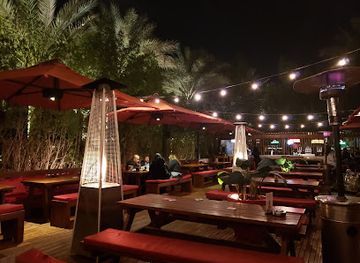
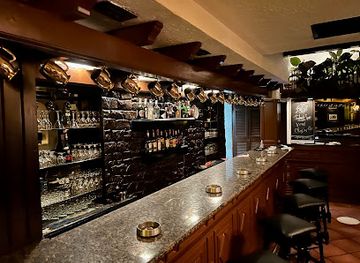
Lower Egypt's evening life is concentrated in Cairo and Alexandria, with smaller and more locally oriented scenes in Delta cities. Cairo offers cafés, hotel bars, restaurants, live music and a limited but established selection of cocktail and late-night venues, particularly in central and affluent districts. Alexandria's Corniche, central neighbourhoods and waterfront restaurants provide a more Mediterranean setting, although the character of individual venues changes over time. In towns such as Tanta, Mansoura and Damietta, evenings often centre on cafés, family restaurants, tea houses and informal social meeting places rather than nightclubs. Traditional coffeehouses remain important spaces for conversation and games, and many venues do not serve alcohol. Where alcohol is available, it is more commonly found in licensed hotels, restaurants and specialist bars than in ordinary cafés. Rural Delta nightlife is generally quiet, with late meals and family gatherings replacing a formal club scene.
-
Bar
Crimson Bar & Grill, Cairo, Egypt.
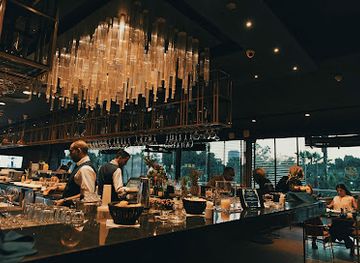
Discover the luxury of dining at Crimson Bar & Grill, where exquisite cuisine meets stunning views in the heart of Cairo.
-
Grill
The Tap East
Discover the vibrant atmosphere and culinary delights at The Tap East, a premier grill and bar in New Cairo, perfect for food lovers and nightlife enthusiasts.
-
Bar
Pub 28
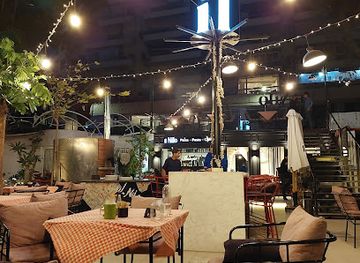
Discover the vibrant nightlife at Pub 28, a lively bar in Zamalek, Cairo, perfect for socializing and enjoying a wide range of drinks.
-
Lounge
The Roof Garden
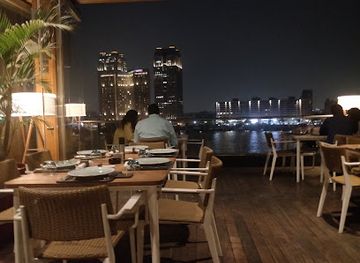
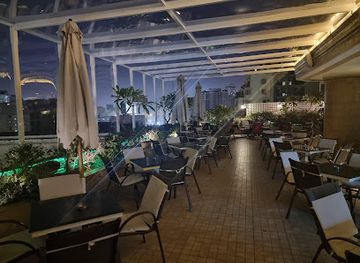
Experience Cairo from new heights at The Roof Garden - a luxurious lounge with stunning views and a vibrant atmosphere.
Best nightclubs in Lower Egypt
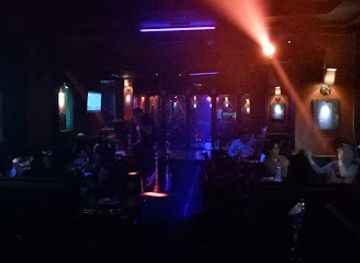
Lower Egypt's evening life is concentrated in Cairo and Alexandria, with smaller and more locally oriented scenes in Delta cities. Cairo offers cafés, hotel bars, restaurants, live music and a limited but established selection of cocktail and late-night venues, particularly in central and affluent districts. Alexandria's Corniche, central neighbourhoods and waterfront restaurants provide a more Mediterranean setting, although the character of individual venues changes over time. In towns such as Tanta, Mansoura and Damietta, evenings often centre on cafés, family restaurants, tea houses and informal social meeting places rather than nightclubs. Traditional coffeehouses remain important spaces for conversation and games, and many venues do not serve alcohol. Where alcohol is available, it is more commonly found in licensed hotels, restaurants and specialist bars than in ordinary cafés. Rural Delta nightlife is generally quiet, with late meals and family gatherings replacing a formal club scene.
-
Night club
Cairo Jazz Club
Experience the vibrant nightlife of Cairo at Cairo Jazz Club, where live music, great drinks, and a lively atmosphere await you.
-
Disco club
OMNI club cairo
Discover the vibrant nightlife at OMNI Club Cairo, where electrifying music and a lively atmosphere create unforgettable nights in Zamalek.
-
Night club
Cairo Jazz Club 610
Discover the exhilarating nightlife at Cairo Jazz Club 610, where live music meets a vibrant atmosphere in Giza's premier night club.
-
Night club
Night life
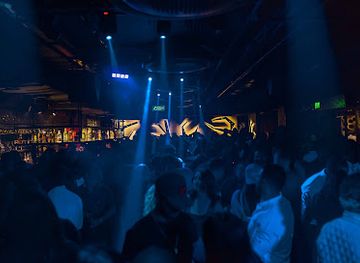
Unleash your spirit in Cairo's electrifying nightlife, where vibrant rhythms and unforgettable moments await.


Best shops in Lower Egypt
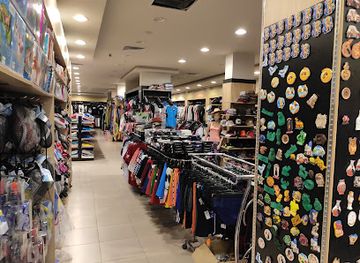
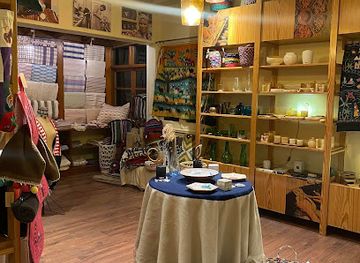
Shopping in Lower Egypt ranges from Cairo's historic markets and modern retail districts to the independent shops and market streets of Delta towns. Khan el-Khalili in historic Cairo is known for metalwork, jewellery, leather, textiles, spices and souvenirs, although quality and prices vary and bargaining is expected in many stalls. Alexandria offers bookshops, food shops, crafts and ordinary high-street retail alongside larger commercial centres. In the Delta, market towns are useful places to see everyday commerce in produce, clothing, household goods and sweets rather than luxury shopping. Damietta is particularly associated with furniture and woodwork, while regional markets sell rice, dates, citrus fruit, honey, spices and preserved foods. Independent galleries and craft shops in Cairo and Alexandria provide more carefully selected art, design and books. Visitors should compare prices, check the quality and legality of antiquities or claimed antiques, and remember that export rules apply to archaeological objects and some cultural material.
-
Souvenir store
Gift Shop Bazaar
Explore the Gift Shop Bazaar in Cairo for unique Egyptian souvenirs and local crafts, perfect for capturing memories of your travels.
-
Gift shop
ذا قاف - The Qaaf
Discover unique gifts and local fashion at ذا قاف - The Qaaf, a charming shop in the heart of Cairo offering authentic Egyptian treasures.
-
Souvenir store
3 Pyramids Shopping Center( free Wi-Fi) Free round trip transfer
Explore the vibrant 3 Pyramids Shopping Center in Hurghada for a unique shopping experience with diverse stores and free Wi-Fi.
-
Gift shop
Fair Trade Egypt
Experience the essence of Egypt through Fair Trade Egypt's exquisite handcrafted treasures and support local artisans.

Get your free copy of our complete guide to Lower Egypt, delivered straight to you.
Everything on this page, from attractions and restaurants to essentials and local phrases, in one PDF you can read offline, print or share.
Already have an account? Sign in
Your Lower Egypt guide is ready.
We'll send it to · Not you? Sign out

Getting your guide ready…
We are putting together a fresh copy of the Lower Egypt guide. This can take up to a minute.
This can take a few moments. If your browser asks, choose Allow so the download can start. You'll find the guide in your Downloads folder.
Nothing happened? Download it again
Sorry, the guide is taking longer than usual. Please try again in a minute, or get it by email instead.
Lower Egypt essentials
Currency and Payment
Safety
Emergency Situations
Do's and Don'ts
Local Tips
From Eve
Local phrases worth knowing
You don't need to get them perfect. A few words go a long way, and locals appreciate the effort.
Basics
| English | Local | Say it |
|---|---|---|
| Hello | Hey | [Hey] |
| Goodbye | See ya | [See ya] |
| Yes | Yeah | [Yeah] |
| No | Nope | [Nope] |
| Please/You're welcome | Sure thing | [Shur thing] |
| Thank you | Thanks | [Thanks] |
| Excuse me/Sorry | Sorry 'bout that | [Sorry 'bout that] |
| How are you? | How ya doin'? | [How ya doin'?] |
| Fine. And you? | Good. And you? | [Good. An' you?] |
| Do you speak English? | Do you talk English? | [D'you talk English?] |
| I don't understand | I ain't gettin' it | [I ain't gettin' it] |
Eating & Drinking
| English | Local | Say it |
|---|---|---|
| I'd like to see the menu, please | Can I see the menu? | [Can I see th' menu?] |
| I don't eat meat | I don't do meat | [I don't do meat] |
| Cheers! | Cheers! | [Cheers!] |
| I would like to pay, please | Can I get the check? | [Can I get th' check?] |
Emergencies
| English | Local | Say it |
|---|---|---|
| Help! | Help! | [Help!] |
| Go away! | Get lost! | [Get lost!] |
| Call the Police! | Call the cops! | [Call th' cops!] |
| Call a doctor! | Get a doc! | [Get a doc!] |
| I'm lost | I'm turned around | [I'm turned around] |
| I'm ill | I'm not feelin' well | [I'm not feelin' well] |
Shopping
| English | Local | Say it |
|---|---|---|
| I'd like to buy... | I wanna buy... | [I wanna buy...] |
| I'm just looking | I'm just browsin' | [I'm just browsin'] |
| How much is it? | How much is this? | [How much is this?] |
| That's too expensive | That's way too pricey | [That's way too pricey] |
| Can you lower the price? | Can ya drop the price? | [Can ya drop th' price?] |
Time & Numbers
| English | Local | Say it |
|---|---|---|
| What time is it? | What time is it? | [What time is it?] |
| It's one o'clock | It's one | [It's one] |
| Half past (10) | Half past ten | [Half past ten] |
| Morning | Morning | [Morning] |
| Afternoon | Afternoon | [Afternoon] |
| Evening | Evening | [Evening] |
| Yesterday | Yesterday | [Yesterday] |
| Today | Today | [Today] |
| Tomorrow | Tomorrow | [Tomorrow] |
| 1 | One | [One] |
| 2 | Two | [Two] |
| 3 | Three | [Three] |
| 4 | Four | [Four] |
| 5 | Five | [Five] |
| 6 | Six | [Six] |
| 7 | Seven | [Seven] |
| 8 | Eight | [Eight] |
| 9 | Nine | [Nine] |
| 10 | Ten | [Ten] |
Transport & Directions
| English | Local | Say it |
|---|---|---|
| Where's a/the...? | Where's a...? | [Where's a...?] |
| What's the address? | What's the address? | [What's th' address?] |
| Can you show me (on the map)? | Can ya show me on the map? | [Can ya show me on th' map?] |
| When's the next (bus)? | When's the next bus? | [When's th' next bus?] |
| A ticket (to ....) | A ticket to ... | [A ticket to ...] |
History of Lower Egypt
Predynastic Communities and the Formation of Ancient Egypt
The Nile Delta and its adjoining valley supported settled farming communities long before the pharaonic state emerged. Wetlands, distributary channels and fertile floodplain soils encouraged agriculture, fishing and trade, while settlements in the north developed distinctive local traditions. During the late fourth millennium BC, political consolidation linked Upper and Lower Egypt under a single kingship. The symbolism of the Delta, often represented by the cobra and the papyrus, remained central to Egyptian royal ideology. Much of the earliest settlement evidence is buried beneath later alluvium, but the region's agricultural geography continued to shape Egyptian civilisation for thousands of years.
Memphis, Saqqara and the Old Kingdom
Memphis, founded near the apex of the Delta, became one of ancient Egypt's principal political and religious centres. Its associated cemetery at Saqqara developed into a vast funerary landscape, where the Step Pyramid of Djoser marked a decisive stage in monumental stone architecture during the Third Dynasty. Later royal and elite tombs extended across the surrounding desert edge. The pyramids of Giza, built during the Fourth Dynasty on the opposite side of modern Cairo, belong to the same broader Memphite zone. Their survival demonstrates the long-term importance of Lower Egypt as a centre of royal power, administration and sacred architecture.
Persian, Greek and Roman Rule
From the first millennium BC, Lower Egypt became an arena for Assyrian, Persian, Macedonian and later Roman power. Alexander the Great founded Alexandria in 331 BC on the Mediterranean coast, and the city grew into a major centre of scholarship, trade and maritime administration under the Ptolemies. Its library and scholarly institutions acquired international importance, while the Pharos lighthouse became one of the celebrated monuments of the ancient world. Roman rule integrated Egypt into a wider imperial economy that exported grain and papyrus. Alexandria, the Delta ports and the Nile's navigable channels connected the region to the Mediterranean and Red Sea worlds.
Christian Egypt and the Monastic Tradition
Christianity became deeply established in northern Egypt during late antiquity, and the region developed a distinctive Coptic Christian culture. The desert margins west of the Delta, especially Wadi El Natrun, attracted monks seeking solitude and became home to monasteries that endured periods of political and religious change. Urban centres such as Alexandria were also important in Christian theology, ecclesiastical debate and the development of the Coptic tradition. Several monasteries remain active today, linking modern religious practice with a history that reaches back to the formative centuries of Egyptian Christianity.
Islamic Cairo and the Medieval Delta
After the Arab conquest in the seventh century, new administrative centres developed around the older settlement of Memphis. Fustat, al-Askar and al-Qata'i preceded the foundation of Cairo by the Fatimids in 969. The city expanded under Ayyubid and Mamluk rulers, while mosques, schools, markets and defensive works transformed the area at the southern edge of the Delta. The region's canals, ports and agricultural estates supported urban growth and long-distance commerce. Medieval Cairo's surviving architecture, together with historic towns such as Rosetta, reflects the political and commercial importance of Lower Egypt within the Islamic world.
Ottoman Rule and European Commercial Influence
Following the Ottoman conquest in 1517, Lower Egypt remained a vital agricultural and commercial province. Rosetta and Damietta handled river and Mediterranean trade, while Alexandria gradually regained importance as a port. Ottoman houses, carved wooden screens, warehouses and religious buildings still survive most clearly in Rosetta. From the eighteenth century, European powers competed for influence in Egypt because control of the Nile, Mediterranean shipping and routes towards the Red Sea had strategic value. These pressures intensified under Muhammad Ali and his successors, whose reforms reshaped administration, agriculture, industry and the military.
Modern Irrigation, Cotton and Urban Expansion
Nineteenth- and twentieth-century projects altered Lower Egypt's environment and economy. Barrages, canals and improved irrigation increased agricultural production, while cotton became a major export crop during the global textile boom. Railways and modern ports strengthened connections between Cairo, Alexandria and Delta towns. In the twentieth century, rapid population growth expanded Cairo and Alexandria far beyond their historic cores, while villages and farmland remained interwoven with new roads, factories and housing. The contemporary region is consequently both an ancient cultural landscape and one of Egypt's most densely populated and economically active areas.
Lower Egypt in Photos
Browse through our photo collection highlighting the charm and character of the destination.
Neighbouring regions of Lower Egypt
The closest regions to Lower Egypt, if you have time for more than one.
-

-

-

-

-


Swipe for more regions
Explore more
Explore more of Egypt
Discover Egypt: From the timeless pyramids to the vibrant Red Sea, experience a land where ancient wonders meet modern adventures.
Explore Egypt