Église Notre-Dame, Dijon Travel Guide
Free Guide: Discover Dijon's architectural gem: Église Notre-Dame, a 13th-century Gothic church with gargoyles, the Jacquemart clock, and the legendary owl.


A brief summary of Église Notre-Dame
Discover Dijon's architectural gem: Église Notre-Dame, a 13th-century Gothic church with gargoyles, the Jacquemart clock, and the legendary owl.
The Église Notre-Dame de Dijon, a 13th-century Gothic church, stands as a cultural and historical landmark in the heart of Dijon. Known for its unique facade adorned with decorative gargoyles, the Jacquemart clock, and the good-luck owl sculpture, it attracts visitors with its architectural beauty and rich history.
- Address
- Place Notre Dame, 21000 Dijon
- Phone
Getting there
Walking
Public Transport
Taxi
Discover more about Église Notre-Dame
Overview
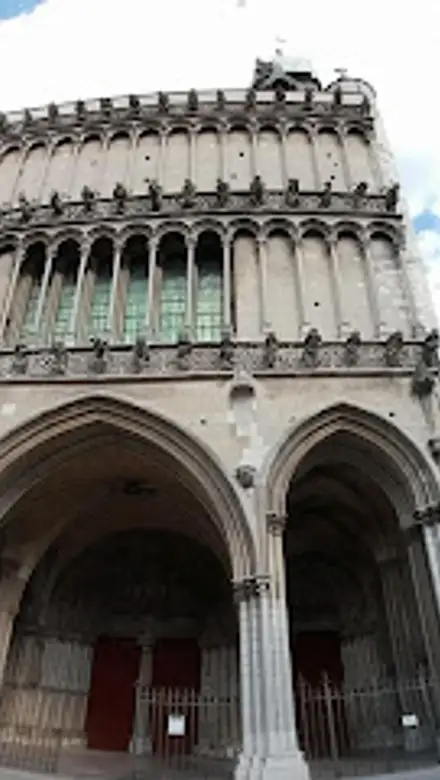
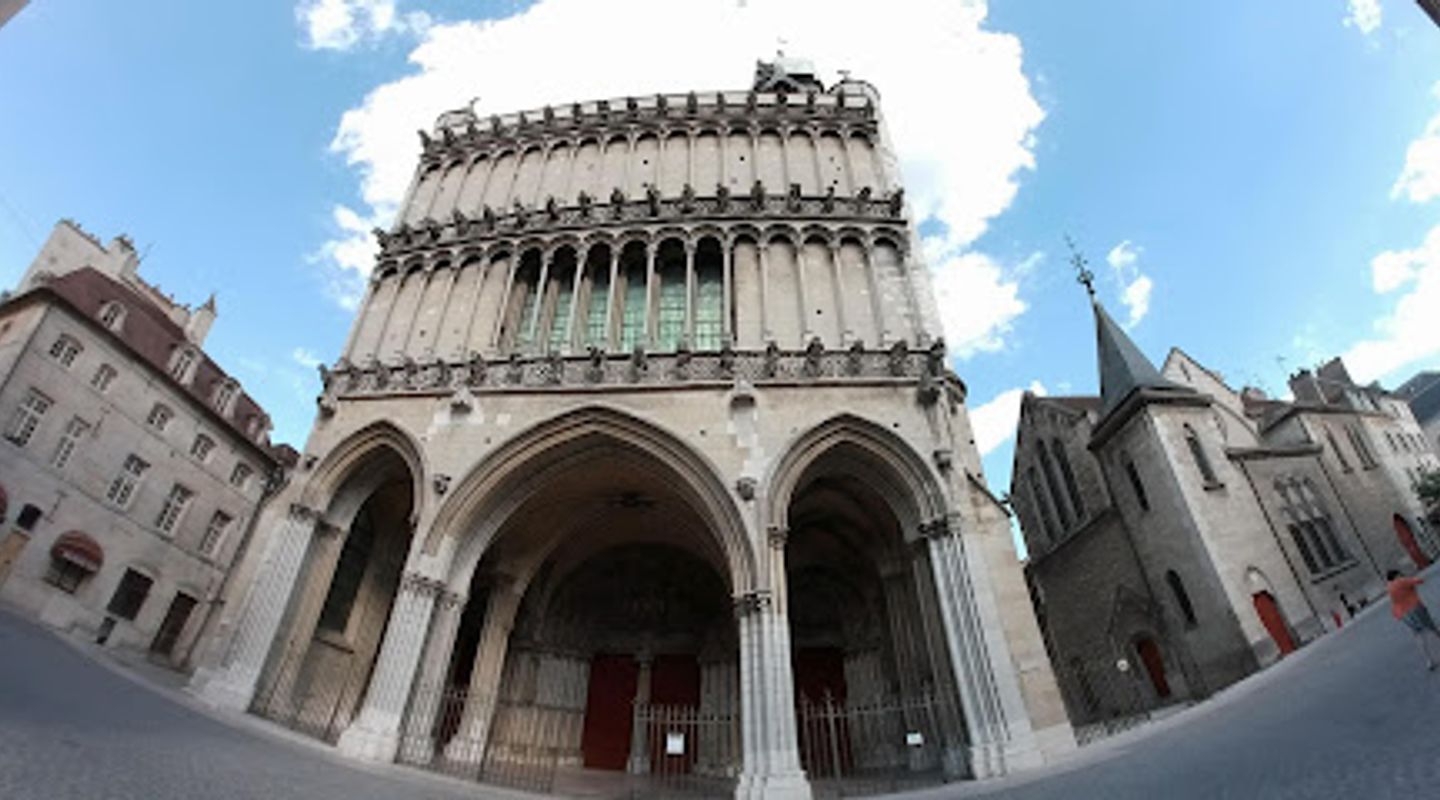
Église Notre-Dame de Dijon, constructed from 1230 to 1250, exemplifies 13th-century Burgundian Gothic architecture. Its location in the heart of Dijon, near the Palace of the Dukes of Burgundy, underscores its historical significance.The church's facade is distinguished by three tiers of arcades with slender columns and 51 non-functional gargoyles. These "false gargoyles," added during the 19th-century restoration, depict humans, animals, and monsters. The original gargoyles were removed in 1240 after a fatal accident.Inside, the church houses the statue of Notre-Dame de Bon-Espoir, formerly known as the Black Madonna, a revered object of devotion. The Jacquemart clock, featuring an automaton that strikes the bell, was brought from Flanders in 1383 by Philip the Bold. Another symbol of Dijon is the small owl carved on a corner of the church's exterior; rubbing it with your left hand is said to bring good luck.The church's architectural layout includes a central space supported by cylindrical columns and a triforium. The transept features five lancet windows and a rose window, while a lantern tower with eight windows sits at the intersection. The chapel of the Assumption, sacristy, and connecting gallery have been listed as Monuments Historiques since 2002.
Evendo Review Centre
 Google
Guest reviews
Explore Église Notre-Dame on the map
A handpicked selection of must-see spots near Église Notre-Dame, mapped for you.
Get your free copy of our complete guide to Église Notre-Dame, delivered straight to you.
Everything on this page, from opening hours and how to get there to Eve’s tips and the best time to go, in one PDF you can read offline, print or share.
Already have an account? Sign in
Your Église Notre-Dame guide is ready.
We'll send it to · Not you? Sign out

Getting your guide ready…
We are putting together a fresh copy of the Église Notre-Dame guide. This can take up to a minute.
This can take a few moments. If your browser asks, choose Allow so the download can start. You'll find the guide in your Downloads folder.
Nothing happened? Download it again
Sorry, the guide is taking longer than usual. Please try again in a minute, or get it by email instead.
Unlock the best of Église Notre-Dame
Skip-the-line tickets, guided tours with entry, and walking tours of the area, booked in a few clicks.


Other nearby places you may find interesting
The closest places of the same kind, if this one is not quite what you had in mind.
-
-
-

-
-


Swipe for more places
More to explore near Église Notre-Dame

 Best experiences near Église Notre-Dame
 Best hotels near Église Notre-Dame
 Best landmarks near Église Notre-Dame
 Best attractions near Église Notre-Dame
 Best shops near Église Notre-Dame
 Best restaurants near Église Notre-Dame
 Best bars near Église Notre-Dame
Do you manage this location?
Take control to get all the benefits, like improved information, better appearance, and stronger visibility across AI-powered discovery.
Explore more

Explore more of Dijon
Discover Dijon, a charming city in the heart of Burgundy, where history, culture, and gastronomy create an unforgettable experience for every visitor.
Explore Dijon
Explore more of France
Explore France: A land of romance, history, and unparalleled beauty, from the iconic streets of Paris to the serene landscapes of Provence and the luxury of the French Riviera.
Explore France