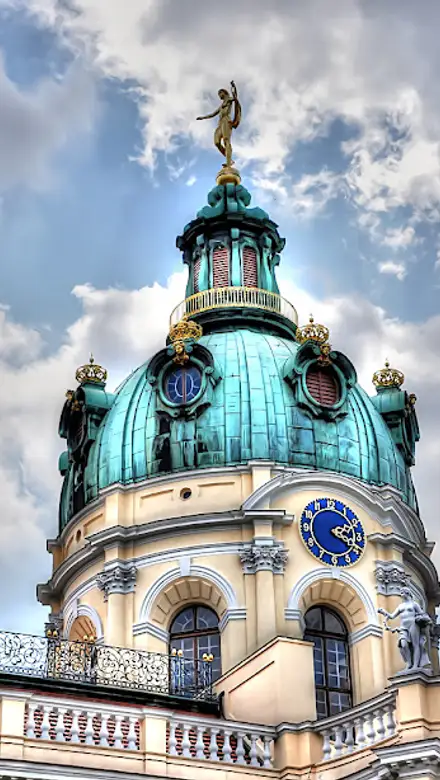
Charlottenburg Palace Travel Guide
Free Guide: Discover Berlin's largest palace, a baroque masterpiece with opulent state rooms, stunning art collections, and serene gardens, reflecting centuries of Prussian history.


A brief summary of Charlottenburg Palace
Discover Berlin's largest palace, a baroque masterpiece with opulent state rooms, stunning art collections, and serene gardens, reflecting centuries of Prussian history.
Charlottenburg Palace, Berlin's largest palace, offers a captivating journey through Prussian history and architectural grandeur. Originally a summer residence for Queen Sophie Charlotte, it evolved into a magnificent baroque complex with lavish state rooms, stunning art collections, and serene gardens. Explore the Old Palace's baroque splendor, the New Wing's elegant halls, and the charming Belvedere teahouse. Stroll through the expansive gardens, a blend of French baroque and English landscape styles, and discover hidden gems like the Mausoleum and the New Pavilion. A visit to Charlottenburg Palace is a must for anyone seeking to immerse themselves in Berlin's royal past and experience the beauty of its cultural heritage.
Opening hours
- MonClosed
- Tue10 am–5:30 pm
- Wed10 am–5:30 pm
- Thu10 am–5:30 pm
- Fri10 am–5:30 pm
- Sat10 am–5:30 pm
- Sun10 am–5:30 pm
Opening hours as listed on the venue’s Google Business Profile. Hours can change for services and special events, so check with the venue before you go.
- Address
- Spandauer Damm 10-22, 14059 Berlin
- Phone
- Website
Getting there
Public Transport
Taxi/Ride-Share
Driving
Discover more about Charlottenburg Palace
Overview
Charlottenburg Palace, located in the Charlottenburg-Wilmersdorf borough of Berlin, stands as the city's largest and most significant palace complex. Its history spans centuries, reflecting the evolving tastes and ambitions of the Hohenzollern rulers who called it home. Originally commissioned as a modest summer residence for Sophie Charlotte, wife of Elector Frederick III, in 1695, the palace has undergone numerous expansions and renovations, transforming it into the sprawling baroque masterpiece we see today. The palace's origins lie in the small village of Lietze (later Lützow), just outside Berlin. Frederick gifted the estate to Sophie Charlotte, who envisioned a tranquil retreat where she could indulge her passion for the arts and intellectual pursuits. The initial design, attributed to architect Johann Arnold Nering, featured a single wing in the baroque style, characterized by Corinthian pilasters and a central cupola. Sophie Charlotte, a woman of refined taste and intellect, transformed the palace into a vibrant cultural hub, attracting poets, philosophers, musicians, and artists to her "court of the muses." In 1701, Frederick III was crowned the first King of Prussia, elevating the palace's status and necessitating its expansion. Architect Eosander von Göthe was tasked with transforming the palace into a more representative seat, drawing inspiration from the Palace of Versailles. Side wings were added to the central building, creating a grand court of honor. Following Sophie Charlotte's death in 1705, Frederick honored her memory by renaming the palace and the surrounding area Charlottenburg. Construction continued under subsequent rulers, with Frederick the Great making significant contributions in the mid-18th century. He commissioned the construction of a new wing in the east, designed by Knobelsdorff, mirroring the older west wing and its Orangery. This expansion included opulent state rooms and the magnificent Golden Gallery, a rococo ballroom that epitomizes the palace's grandeur. The final addition came in 1791 with the completion of the palace theater, designed by Carl Gotthard Langhans, further solidifying Charlottenburg's reputation as a center for the arts. Throughout the 19th century, Charlottenburg Palace gradually lost its prominence as a royal residence, with the rulers favoring other palaces. However, it remained a symbol of Prussian heritage and a repository of valuable art collections. During World War II, the palace suffered extensive damage, requiring decades of painstaking restoration and rebuilding efforts. Today, Charlottenburg Palace stands as a testament to Berlin's rich history and cultural significance. Visitors can explore the Old Palace, with its baroque interiors and the Hohenzollern silver chamber, showcasing a dazzling array of treasures and precious items. The New Wing houses the state rooms and the Golden Gallery, offering a glimpse into the opulent lifestyle of the Prussian monarchs. The palace gardens, originally designed in the French baroque style and later transformed into an English landscape garden, provide a serene oasis for visitors to stroll and admire the meticulously manicured lawns, fountains, and sculptures. Within the palace gardens, several notable buildings await discovery. The Belvedere, a former tea house, now houses a collection of exquisite porcelain. The Mausoleum serves as the final resting place for Queen Louise and other members of the royal family. The New Pavilion, an Italianate villa designed by Schinkel, showcases 19th-century arts and crafts. Charlottenburg Palace offers a multifaceted experience, blending history, art, architecture, and nature into a captivating destination for travelers seeking to immerse themselves in Berlin's royal past.
Evendo Review Centre
 Google
Guest reviews
Explore Charlottenburg Palace on the map
A handpicked selection of must-see spots near Charlottenburg Palace, mapped for you.
Get your free copy of our complete guide to Charlottenburg Palace, delivered straight to you.
Everything on this page, from opening hours and how to get there to Eve’s tips and the best time to go, in one PDF you can read offline, print or share.
Already have an account? Sign in
Your Charlottenburg Palace guide is ready.
We'll send it to · Not you? Sign out

Getting your guide ready…
We are putting together a fresh copy of the Charlottenburg Palace guide. This can take up to a minute.
This can take a few moments. If your browser asks, choose Allow so the download can start. You'll find the guide in your Downloads folder.
Nothing happened? Download it again
Sorry, the guide is taking longer than usual. Please try again in a minute, or get it by email instead.
Unlock the best of Charlottenburg Palace
Skip-the-line tickets, guided tours with entry, and walking tours of the area, booked in a few clicks.

 Tour with entry
Berlin Christmas Lights Live Tour + Mulled Wine & Gingerbread
from $34.18 Tour with entry
Self-guided audio tour of Charlottenburg palace and gardens
from $41.46 Tour with entry
Full Day Tour of Berlin from Warnemunde and Rostock Cruise Port
from $180.49 Tour with entry
Best Berlin Shore Excursion from Warnemunde, Rortock Cruise Port
from $180.49




Other nearby places you may find interesting
The closest places of the same kind, if this one is not quite what you had in mind.
-
-
-
-
-


Swipe for more places
More to explore near Charlottenburg Palace

 Best experiences near Charlottenburg Palace
 Best hotels near Charlottenburg Palace
 Best landmarks near Charlottenburg Palace
 Best attractions near Charlottenburg Palace
 Best shops near Charlottenburg Palace
 Best restaurants near Charlottenburg Palace
 Best bars near Charlottenburg Palace
Do you manage this location?
Take control to get all the benefits, like improved information, better appearance, and stronger visibility across AI-powered discovery.
Explore more

Explore more of Brandenburg
Discover Brandenburg: Explore a region rich in history, culture, and natural beauty, featuring stunning landscapes, historic sites, and vibrant cultural experiences.
Explore Brandenburg
Explore more of Germany
Experience Germany: where history meets innovation, and urban energy blends with natural beauty. Discover diverse cultures, delicious cuisine, and stunning landscapes.
Explore Germany