

St. Petri Dom Bremen, Bremen Travel Guide
Free Guide: Discover Bremen's historical heart at St. Peter's Cathedral, a magnificent landmark blending Romanesque and Gothic architecture, housing ancient crypts and offering panoramic city views.


A brief summary of St. Petri Dom Bremen
Discover Bremen's historical heart at St. Peter's Cathedral, a magnificent landmark blending Romanesque and Gothic architecture, housing ancient crypts and offering panoramic city views.
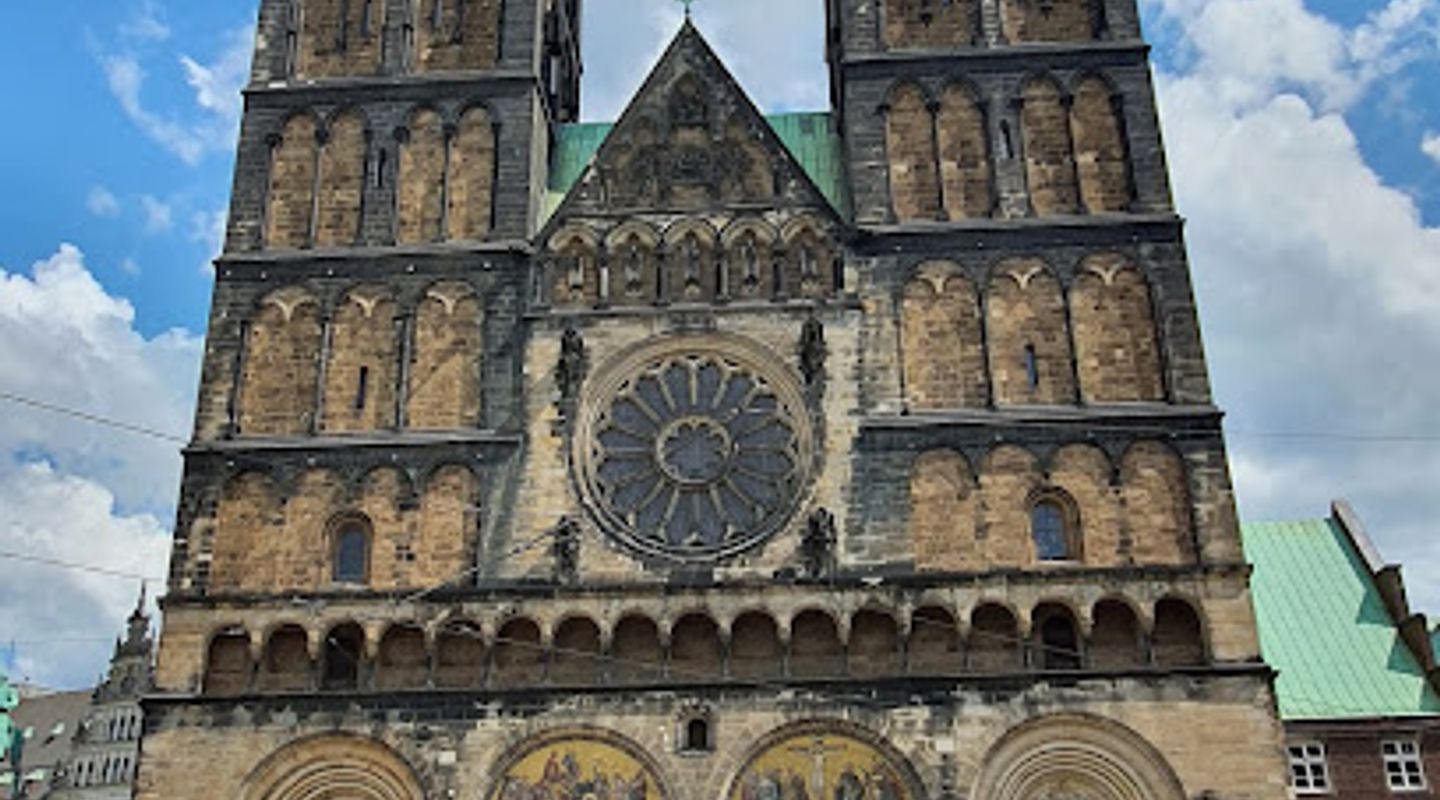
St. Peter's Cathedral, or St. Petri Dom Bremen, stands as a majestic symbol of Bremen's rich history and architectural prowess. With its towering spires and imposing facade, the cathedral dominates the city's skyline, beckoning visitors to explore its hallowed halls. Construction of the cathedral began in the 11th century, and over the centuries, it has witnessed countless historical events, from coronations to conflicts. Its Romanesque and Gothic architectural styles blend seamlessly, reflecting the evolving tastes and influences of different eras. Inside, visitors are greeted by a breathtaking display of artistry, including intricate sculptures, stained glass windows, and ornate altars. The cathedral's crypt houses the mummified remains of past archbishops, offering a glimpse into Bremen's ecclesiastical past. Ascending the south tower rewards visitors with panoramic views of the city, providing a unique perspective on Bremen's urban landscape. A visit to St. Peter's Cathedral is a journey through time, an opportunity to connect with Bremen's cultural heritage, and a chance to marvel at the enduring power of faith and human creativity.
Opening hours
- Mon–Sat10 am–5 pm
- Sun11:30 am–5 pm
Opening hours as listed on the venue’s Google Business Profile. Hours can change for services and special events, so check with the venue before you go.
- Address
- Sandstraße 10-12, 28195 Bremen
- Phone
- Website
Getting there
Walking
Public Transport
Taxi/Ride-Share
Discover more about St. Petri Dom Bremen
Overview
St. Peter's Cathedral, known locally as St. Petri Dom Bremen, is more than just a religious building; it's a living chronicle of Bremen's past, a testament to its resilience, and a beacon of its cultural identity. Rising proudly in the heart of the city, its twin towers serve as a constant reminder of the city's enduring spirit. Construction of the cathedral commenced in 1042, initiated by Archbishop Bezelin. This early Romanesque structure replaced an earlier wooden church, marking a significant step in establishing Bremen as a prominent religious center. However, fire ravaged the cathedral in 1062, necessitating a substantial rebuild. The subsequent reconstruction saw the adoption of a more elaborate Romanesque style, reflecting the growing wealth and influence of the city. Over the centuries, St. Peter's Cathedral underwent numerous transformations, each leaving its indelible mark on the building's architectural character. In the 13th century, the cathedral embraced the Gothic style, with pointed arches, ribbed vaults, and soaring stained glass windows replacing the heavier Romanesque forms. This fusion of styles created a unique architectural tapestry, blending the solidity of the Romanesque with the ethereal grace of the Gothic. The Reformation brought significant changes to Bremen and its cathedral. In 1532, the city officially embraced Lutheranism, and St. Peter's Cathedral became a Lutheran church. This transition was not without its challenges, as the cathedral's interior was stripped of many of its Catholic symbols and decorations. However, the cathedral continued to serve as a vital center for the community, adapting to the changing religious landscape. Throughout its history, St. Peter's Cathedral has been a witness to pivotal events in Bremen's history. Coronations, religious festivals, and even periods of conflict have all unfolded within its walls. During World War II, the cathedral suffered significant damage from Allied bombing raids. However, the resilient spirit of the people of Bremen ensured its restoration, and the cathedral was painstakingly rebuilt to its former glory. Today, St. Peter's Cathedral stands as a symbol of Bremen's enduring spirit and its commitment to preserving its cultural heritage. Visitors are drawn to its awe-inspiring architecture, its rich history, and its spiritual significance. The cathedral's interior is a treasure trove of artistic masterpieces, including intricate sculptures, ornate altars, and stunning stained glass windows that depict biblical scenes and historical events. The cathedral's crypt is a particularly fascinating area, housing the mummified remains of eight archbishops and other prominent figures from Bremen's past. These well-preserved bodies offer a unique glimpse into the lives and times of those who shaped the city's history. For those seeking panoramic views of Bremen, a climb to the top of the south tower is a must. From this vantage point, visitors can admire the city's skyline, the Weser River, and the surrounding countryside. The climb is not for the faint of heart, but the reward is well worth the effort. St. Peter's Cathedral is not just a historical monument; it is a living, breathing part of Bremen's community. Regular services are held in the cathedral, and it continues to serve as a place of worship and reflection for people of all faiths. The cathedral also hosts concerts, exhibitions, and other cultural events throughout the year, further enriching Bremen's cultural landscape. A visit to St. Peter's Cathedral is an immersive experience that engages the senses and stimulates the mind. It's a journey through time, a celebration of human creativity, and a testament to the enduring power of faith. Whether you're a history buff, an art enthusiast, or simply seeking a moment of peace and reflection, St. Peter's Cathedral offers something for everyone. The Bleikeller (lead cellar) is another intriguing part of the Dom. It contains eight mummified corpses, some dating back to the 12th century. The natural ventilation and consistent temperature in the cellar have preserved these bodies in remarkable condition, offering a macabre yet fascinating glimpse into the past. Beyond its architectural and historical significance, St. Peter's Cathedral plays an active role in the community. It hosts regular services, concerts, and exhibitions, making it a vibrant cultural hub. The Dom also engages in various social outreach programs, reflecting its commitment to serving the needs of the community. Visiting St. Peter's Cathedral is more than just a sightseeing trip; it's an opportunity to connect with the heart and soul of Bremen. It's a chance to appreciate the city's rich history, admire its artistic treasures, and experience its vibrant cultural life. Whether you're a first-time visitor or a seasoned traveler, St. Peter's Cathedral is sure to leave a lasting impression. The Dom Museum, located within the cathedral complex, houses a collection of artifacts and exhibits that further illuminate the history of the cathedral and the city of Bremen. From ancient religious relics to medieval sculptures, the museum offers a comprehensive overview of the Dom's past. St. Peter's Cathedral is easily accessible by public transportation, making it a convenient destination for visitors. The cathedral is located in the heart of Bremen's city center, within walking distance of many other popular attractions. Whether you're arriving by train, bus, or tram, getting to the Dom is a breeze. As you stand before the towering facade of St. Peter's Cathedral, take a moment to appreciate the centuries of history and artistry that have gone into its creation. This is more than just a building; it's a symbol of Bremen's enduring spirit and its commitment to preserving its cultural heritage. Step inside and prepare to be transported to another time, another place, where faith, art, and history converge to create an unforgettable experience.
Evendo Review Centre
 Google
Guest reviews
Explore St. Petri Dom Bremen on the map
A handpicked selection of must-see spots near St. Petri Dom Bremen, mapped for you.
Get your free copy of our complete guide to St. Petri Dom Bremen, delivered straight to you.
Everything on this page, from opening hours and how to get there to Eve’s tips and the best time to go, in one PDF you can read offline, print or share.
Already have an account? Sign in
Your St. Petri Dom Bremen guide is ready.
We'll send it to · Not you? Sign out

Getting your guide ready…
We are putting together a fresh copy of the St. Petri Dom Bremen guide. This can take up to a minute.
This can take a few moments. If your browser asks, choose Allow so the download can start. You'll find the guide in your Downloads folder.
Nothing happened? Download it again
Sorry, the guide is taking longer than usual. Please try again in a minute, or get it by email instead.
Unlock the best of St. Petri Dom Bremen
Skip-the-line tickets, guided tours with entry, and walking tours of the area, booked in a few clicks.


Other nearby places you may find interesting
The closest places of the same kind, if this one is not quite what you had in mind.
-
-
-
-
-


Swipe for more places
More to explore near St. Petri Dom Bremen

 Best experiences near St. Petri Dom Bremen
 Best hotels near St. Petri Dom Bremen
 Best landmarks near St. Petri Dom Bremen
 Best attractions near St. Petri Dom Bremen
 Best shops near St. Petri Dom Bremen
 Best restaurants near St. Petri Dom Bremen
 Best bars near St. Petri Dom Bremen
Do you manage this location?
Take control to get all the benefits, like improved information, better appearance, and stronger visibility across AI-powered discovery.
Explore more

Explore more of Bremen
Explore Bremen, a historic German city where medieval architecture meets modern charm, offering rich cultural experiences and scenic riverfront views.
Explore Bremen
Explore more of Germany
Experience Germany: where history meets innovation, and urban energy blends with natural beauty. Discover diverse cultures, delicious cuisine, and stunning landscapes.
Explore Germany
