

Bismarck monument, Bremen Travel Guide
Discover Bremen's Bismarck Monument: a historic equestrian statue honoring Germany's 'Iron Chancellor' on Domshof, near the iconic Bremen Cathedral.
The Bismarck Monument in Bremen, an imposing equestrian statue of the former German Chancellor Otto von Bismarck, stands proudly on Domshof, near the Bremen Cathedral. Created in 1910 by sculptor Adolf von Hildebrand, it's the only equestrian Bismarck monument in Germany. Bismarck, celebrated as the 'Iron Chancellor' for his role in unifying Germany in 1871, is depicted holding a scroll, symbolizing the imperial constitution. The monument reflects Bremen's complex relationship with Bismarck, a figure both revered for national unity and criticized for his policies. Its prominent location and artistic merit make it a significant landmark and a reminder of Germany's history, attracting visitors interested in history, art, and the legacy of Bismarck.
A brief summary to Bismarck monument
- Domshof, Bremen, Mitte, 28195, DE

Know before you go
Hi, I'm Eve. Here are a few practical things to know before exploring Bismarck monument.
- Visit during the weekly market on Domshof for a vibrant atmosphere and local produce.
- Combine your visit with a tour of the Bremen Cathedral to learn about the monument's historical context.
- Take a stroll through the nearby Schnoor district, Bremen's oldest quarter, for a charming contrast to the monument's grandeur.
Do you manage this location?
Take control to get all the benefits, like improved information, better appearance, and stronger visibility across AI-powered discovery. Learn more about listing your business on Evendo
Activate your presenceOther nearby places you may find interesting
The closest places of the same kind, if this one is not quite what you had in mind.
Explore Bismarck monument on the Map
A handpicked selection of must-see spots near Bismarck monument, mapped for you.
Getting There
-
Public Transport
From Bremen Hauptbahnhof (main train station), take tram lines 4, 6, or 8 to the Domsheide or Schüsselkorb stop. From either stop, it's a short walk towards the Bremen Cathedral; the Bismarck Monument is located on Domshof, next to the cathedral. A single tram ticket costs approximately €2.60.
-
Walking
From Bremen's Marktplatz, walk towards the Bremen Cathedral. The Bismarck Monument is located directly adjacent to the cathedral on Domshof. The walk is short and straightforward, approximately 2-3 minutes.
-
Taxi/Ride-Share
A taxi or ride-share from Bremen Hauptbahnhof to the Bismarck Monument on Domshof will cost approximately €8-€12, depending on traffic. The journey typically takes 5-10 minutes.
-
Driving
If driving, several parking garages are located near Domshof, including 'Parkhaus Mitte' and 'Parkhaus am Dom'. Parking fees typically range from €2-€3 per hour or €15-€20 for a full day. Be aware that parking can be limited, especially during peak tourist season or market days.
Discover more about Bismarck monument













Your all‑in‑one travel companion app
Explore expert travel guides, compare and book tours, experiences, hotels, and more—all from the palm of your hand. Download now for seamless trip planning wherever your wanderlust takes you.


Explore More of Bremen
Looking beyond Bismarck monument? Discover Bremen for broader travel guides, local hot-spots, and regional highlights.
Explore Bremen
Discover Bremen's enchanting Böttcherstraße: A unique Expressionist street blending art, history, and culture, featuring museums, artisan workshops, and the iconic Glockenspiel.
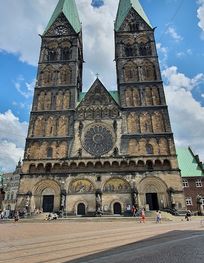
Discover Bremen's iconic St. Petri Dom, a magnificent cathedral with over 1200 years of history, stunning Gothic architecture, and a captivating blend of art, history, and spirituality.
