

Östliche Vorstadt (Bremen) Travel Guide - Free
Explore Östliche Vorstadt in Bremen with Evendo's free guide. Find the best shops, historic streets, restaurants, and gems on web or mobile.


Östliche Vorstadt in Bremen blends the Viertel’s cafés, theatres, street art, Weser walks and football culture with lively local neighbourhood life.
The Viertel and Its Urban Rhythm
Östliche Vorstadt lies immediately east of Bremen’s historic centre, a broad inner-city district whose best-known heart is the Viertel, the informal name usually applied to the Ostertor and Steintor areas. Its main streets, Ostertorsteinweg and Vor dem Steintor, form a lively corridor of cafés, bars, independent shops, theatres and everyday services, while quieter side streets reveal nineteenth-century houses, apartment buildings and small gardens. The district feels urban without being monumental: bicycles, trams, pavement terraces and local errands shape its daily rhythm.Read more about Östliche Vorstadt
Architecture, Culture and Street Life
Weser, Football and Residential Bremen
Best attractions in Östliche Vorstadt
Östliche Vorstadt’s attractions are woven into its streets rather than concentrated in a single museum precinct. The main walk follows Ostertorsteinweg and Vor dem Steintor, where nineteenth-century façades, independent shopfronts, cafés and changing murals create a lively urban scene. Around Goetheplatz, Theater Bremen provides theatre, opera and dance in one of the city’s principal cultural settings, while nearby streets lead towards the Wallanlagen and the historic centre. The Kulturzentrum Lagerhaus on Schildstraße adds concerts, exhibitions and community-oriented programming in a former warehouse setting. South-east of the Viertel, Peterswerder brings a different experience: the Weserstadion is a major football landmark, and paths towards the Weser offer open river views and space for walking. Hulsberg’s quieter streets and hospital quarter complete the district’s varied, locally rooted character.
-
Tourist attraction
St. Petri Dom Bremen
Discover the historical and architectural splendor of St. Petri Dom Bremen, a breathtaking cathedral and cultural landmark in the heart of the city.
6 min drive · 2.0 km from neighbourhood centre
-
Tourist attraction
Wuseum
Experience the legacy of Werder Bremen at the Wuseum, a museum dedicated to the history and achievements of this iconic football club in Bremen.
4 min walk · 0.3 km from neighbourhood centre
-
Tourist attraction
Bleikeller
Explore Bremen's hidden gem, the Bleikeller, where history comes alive beneath St. Peter's Cathedral with fascinating artifacts and engaging exhibits.
6 min drive · 2.0 km from neighbourhood centre
-
Tourist attraction
Stone Toten
Uncover Bremen's hidden gem, Stone Toten, where ancient stones whisper tales of history amidst serene surroundings.
5 min drive · 1.8 km from neighbourhood centre


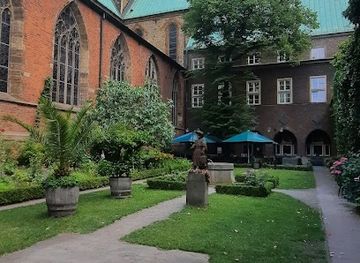
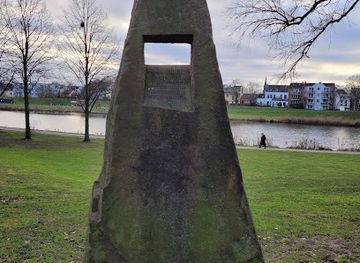
Best landmarks in Östliche Vorstadt
The historic gate names Ostertor and Steintor are the district’s most important geographical landmarks, even though the medieval gates themselves no longer define the streets as they once did. Their former routes are represented by the major east–west corridors leading out from central Bremen. Theatre Bremen’s buildings around Goetheplatz provide a prominent cultural landmark in Ostertor, while the Kulturzentrum Lagerhaus on Schildstraße represents the area’s continuing association with independent culture and reused urban premises. In Peterswerder, the Weserstadion is the most recognisable structure, linking Östliche Vorstadt to Bremen’s football history and to the river landscape. The nineteenth-century apartment façades along the Viertel’s principal streets are also significant: together they record the period when Bremen expanded beyond its old centre and developed its eastern inner suburbs.
-
Historical landmark
Schnoor
Wander through Bremen's enchanting Schnoor district, a medieval maze of cobblestone streets, half-timbered houses, artisan shops, and cozy cafes, offering a unique glimpse into the city's past.
6 min drive · 1.9 km from neighbourhood centre
-
Sculpture
Bismarck monument
Discover Bremen's Bismarck Monument: a historic equestrian statue honoring Germany's 'Iron Chancellor' on Domshof, near the iconic Bremen Cathedral.
6 min drive · 2.0 km from neighbourhood centre
-
Tourist attraction
Bleikeller
Discover Bremen's chilling past in the Bleikeller, home to naturally mummified remains beneath the iconic St. Petri Dom, offering a unique and unforgettable historical experience.
6 min drive · 2.0 km from neighbourhood centre
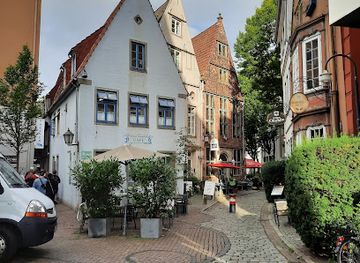


Explore Östliche Vorstadt on the map
A handpicked selection of must-see spots in Östliche Vorstadt, mapped for you.
Best hotels in Östliche Vorstadt
Best restaurants in Östliche Vorstadt
Eating in Östliche Vorstadt is closely tied to the mixed, street-facing character of the Viertel. Ostertorsteinweg and Vor dem Steintor are lined with cafés, bakeries, casual restaurants and bars, while side streets offer smaller dining rooms and pavement tables. The choice reflects Bremen’s international inner-city population, with German cooking appearing alongside Turkish, Mediterranean, Middle Eastern, Asian and vegetarian-oriented food. Independent cafés are particularly suited to a slow morning or afternoon, whereas the Steintor corridor becomes more informal and social later in the day. The district’s food culture is less about a single signature dish than about variety within a compact walkable area, with takeaways and modest neighbourhood restaurants sitting alongside more considered kitchens. Visitors should distinguish the lively commercial strips from surrounding residential streets, where dining options become more dispersed and evening noise matters more.
-
Spanish
Don Carlos
Experience authentic Spanish cuisine at Don Carlos in Bremen - a culinary gem where flavor meets tradition.
15 min walk · 1.2 km from neighbourhood centre
-
Italian
Bellini
Discover the authentic taste of Italy at Bellini in Bremen – where exquisite flavors meet warm hospitality.
10 min walk · 0.8 km from neighbourhood centre
-
Restaurant
Steintor KVARTIER Bremen
Discover the culinary excellence of Steintor KVARTIER Bremen - where local flavors meet global inspiration in a charming atmosphere.
5 min walk · 0.4 km from neighbourhood centre
-
Restaurant
Medoo
Discover Medoo in Bremen - where local flavors meet international cuisine in a cozy dining atmosphere.
8 min walk · 0.6 km from neighbourhood centre


Best bars in Östliche Vorstadt
After dark, the Viertel is one of Bremen’s best-known areas for casual drinking, live music and late-evening social life, especially around Vor dem Steintor, Ostertorsteinweg and the connecting side streets. The atmosphere ranges from traditional pubs and relaxed cafés to music-oriented venues and small clubs rather than one concentrated nightlife complex. Lila Eule has long been associated with Bremen’s live-music and alternative culture, while the Kulturzentrum Lagerhaus hosts concerts and cultural events in a more organised setting. Theatre audiences gather around Goetheplatz, giving Ostertor an evening identity beyond bars. Crowds and noise are most noticeable along the main corridors, but residential streets begin close by, so visitors should leave venues quietly and check individual programme information before relying on a particular event or opening arrangement.
-
Bar
Heldenbar
Discover the vibrant atmosphere and diverse drink offerings at Heldenbar, a must-visit bar in Bremen for an unforgettable nightlife experience.
12 min walk · 1.0 km from neighbourhood centre
-
Pub
Rum Bumper's
Discover the vibrant nightlife at Rum Bumper's Pub in Bremen, where great drinks and lively atmosphere come together for an unforgettable experience.
12 min walk · 0.9 km from neighbourhood centre
-
Bar
Capri Bar
Discover the lively Capri Bar in Bremen's Bermuda Triangle, where innovative cocktails and vibrant nightlife await every visitor.
11 min walk · 0.9 km from neighbourhood centre
-
Bar
Maerz
Experience the vibrant nightlife of Bremen at Maerz, a bar that perfectly blends traditional pub culture with modern cocktail flair.
12 min walk · 0.9 km from neighbourhood centre


Best nightclubs in Östliche Vorstadt
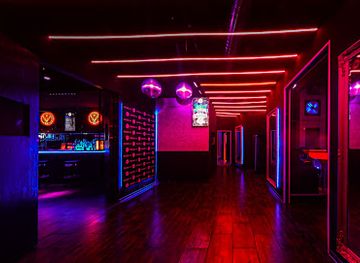
After dark, the Viertel is one of Bremen’s best-known areas for casual drinking, live music and late-evening social life, especially around Vor dem Steintor, Ostertorsteinweg and the connecting side streets. The atmosphere ranges from traditional pubs and relaxed cafés to music-oriented venues and small clubs rather than one concentrated nightlife complex. Lila Eule has long been associated with Bremen’s live-music and alternative culture, while the Kulturzentrum Lagerhaus hosts concerts and cultural events in a more organised setting. Theatre audiences gather around Goetheplatz, giving Ostertor an evening identity beyond bars. Crowds and noise are most noticeable along the main corridors, but residential streets begin close by, so visitors should leave venues quietly and check individual programme information before relying on a particular event or opening arrangement.
-
Disco club
Lila Eule
Dive into Bremen's nightlife at Lila Eule, the ultimate disco club for an electrifying experience filled with music and dance.
12 min walk · 1.0 km from neighbourhood centre
-
Disco club
2RaumClub dein Techno Club
Discover the vibrant nightlife of Bremen at 2RaumClub, the ultimate destination for electrifying techno beats and unforgettable dance experiences.
6 min drive · 1.9 km from neighbourhood centre
-
Disco club
AMÉLIE CLUB BREMEN
Discover Bremen's nightlife at Amélie Club, a top disco destination for dancing and socializing in a lively atmosphere.
9 min walk · 0.7 km from neighbourhood centre
-
Disco club
Römer
Experience the electrifying nightlife at Römer in Bremen, a premier disco club offering unforgettable parties and vibrant entertainment.
11 min walk · 0.9 km from neighbourhood centre



Best shops in Östliche Vorstadt
Shopping in Östliche Vorstadt is concentrated along Ostertorsteinweg, Vor dem Steintor and their adjoining streets, where independent retailers sit among cafés, restaurants and everyday services. The district is better suited to browsing than to conventional department-store shopping: visitors find fashion, design, books, music, gifts, specialist food and second-hand goods interspersed with practical local businesses. The selection changes from one block to the next, and the strongest sense of place comes from the shopfronts, small-scale premises and street life rather than from a single enclosed centre. Ostertor tends to feel more connected with galleries, design and cultural venues, while Steintor has a denser, more informal commercial rhythm. The streets are busy and largely urban rather than market-like, so visitors seeking Bremen’s historic market squares or major chain stores should continue towards the city centre rather than treating the Viertel as a traditional market district.
-
Clothing store
FOUR ACES Rod'n Roll Shop
Explore the vibrant world of fashion at FOUR ACES Rod'n Roll Shop in Bremen, where unique styles and local creativity come together.
13 min walk · 1.1 km from neighbourhood centre
-
Book store
Golden Shop
Explore the Golden Shop in Bremen, a book and record haven offering a unique blend of literature and music in a charming atmosphere.
11 min walk · 0.9 km from neighbourhood centre
-
Clothing store
Stilhaus Bremen
Discover the latest trends at Stilhaus Bremen, a stylish women's clothing boutique in the heart of Bremen's Östliche Vorstadt district.
12 min walk · 1.0 km from neighbourhood centre
-
Gift shop
Weltladen Bremen GmbH
Explore ethical shopping at Weltladen Bremen, a gift shop offering unique, sustainable products and fair trade treasures in the heart of Bremen.
14 min walk · 1.1 km from neighbourhood centre


Östliche Vorstadt essentials
Getting There
Getting Around
Safety
Emergency Situations
Do's and Don'ts
Local Tips

From Eve
Local phrases worth knowing
You don't need to get them perfect. A few words go a long way, and locals appreciate the effort.
Basics
| English | Local | Say it |
|---|---|---|
| Hello | Hallo | [ha-loh] |
| Goodbye | Auf Wiedersehen | [owf vee-der-zay-en] |
| Yes | Ja | [yah] |
| No | Nein | [nine] |
| Please/You're welcome | Bitte | [bih-tuh] |
| Thank you | Danke | [dahn-kuh] |
| Excuse me/Sorry | Entschuldigung | [ent-shool-dee-goong] |
| How are you? | Wie geht es Ihnen? | [vee gayt es een-en] |
| Fine. And you? | Gut. Und Ihnen? | [goot oont een-en] |
| Do you speak English? | Sprechen Sie Englisch? | [shpre-khen zee eng-lish] |
| I don't understand | Ich verstehe nicht | [ikh fer-shtay-uh nikht] |
Eating & Drinking
| English | Local | Say it |
|---|---|---|
| I'd like to see the menu, please | Ich würde gerne die Speisekarte sehen, bitte | [ikh vur-dee geh-ren-uh dee shpy-suh-kar-tuh zay-en, bih-tuh] |
| I don't eat meat | Ich esse kein Fleisch | [ikh es-suh kine fly-sh] |
| Cheers! | Prost! | [prohst] |
| I would like to pay, please | Ich würde gerne zahlen, bitte | [ikh vur-dee geh-ren-uh zah-len, bih-tuh] |
Emergencies
| English | Local | Say it |
|---|---|---|
| Help! | Hilfe! | [hil-fuh] |
| Go away! | Geh weg! | [gay vekh] |
| Call the Police! | Rufen Sie die Polizei! | [roo-fen zee dee poh-lee-tsy] |
| Call a doctor! | Rufen Sie einen Arzt! | [roo-fen zee i-nen artsht] |
| I'm lost | Ich habe mich verirrt | [ikh hah-buh meesh fer-eert] |
| I'm ill | Ich bin krank | [ikh been krank] |
Shopping
| English | Local | Say it |
|---|---|---|
| I'd like to buy... | Ich möchte kaufen... | [ikh murkht-uh kow-fen] |
| I'm just looking | Ich schaue nur | [ikh shou-uh noor] |
| How much is it? | Wie viel kostet es? | [vee feel kohs-tet es] |
| That's too expensive | Das ist zu teuer | [dahs ist tsoo toy-er] |
| Can you lower the price? | Können Sie den Preis senken? | [kern-en zee den prise zen-ken] |
Time & Numbers
| English | Local | Say it |
|---|---|---|
| What time is it? | Wie spät ist es? | [vee shpayt ist es] |
| It's one o'clock | Es ist ein Uhr | [es ist iyn oor] |
| Half past (10) | Halb elf | [halb elf] |
| Morning | Morgen | [mawr-guhn] |
| Afternoon | Nachmittag | [nahk-mit-tahk] |
| Evening | Abend | [ah-bent] |
| Yesterday | Gestern | [geh-stern] |
| Today | Heute | [hoy-tuh] |
| Tomorrow | Morgen | [mawr-guhn] |
| 1 | Eins | [ines] |
| 2 | Zwei | [tsvai] |
| 3 | Drei | [dry] |
| 4 | Vier | [feer] |
| 5 | Fünf | [foontf] |
| 6 | Sechs | [zeks] |
| 7 | Sieben | [zee-ben] |
| 8 | Acht | [ahkt] |
| 9 | Neun | [noyn] |
| 10 | Zehn | [tsane] |
Transport & Directions
| English | Local | Say it |
|---|---|---|
| Where's a/the...? | Wo ist ein/der...? | [vo ist iyn/dehr] |
| What's the address? | Was ist die Adresse? | [vas ist dee ah-dreh-suh] |
| Can you show me (on the map)? | Können Sie mir zeigen (auf der Karte)? | [kern-en zee meer tsay-gen (owf dehr kar-tuh)] |
| When's the next (bus)? | Wann kommt der nächste (Bus)? | [vann kohmt dehr nekhs-teh (boos)] |
| A ticket (to ....) | Eine Fahrkarte (nach ....) | [i-ne fahr-kahr-teh (nakh)] |
History of Östliche Vorstadt
Outside Bremen’s Medieval Walls
Östliche Vorstadt developed beyond the historic core of Bremen, on the eastern side of the old defensive boundary. The names Ostertor and Steintor preserve the memory of gates through which roads left the walled city: Ostertor faced the eastern approaches, while Steintor served routes towards the surrounding countryside. For centuries the area remained a mixture of roads, gardens, farmland and scattered settlement rather than a continuous urban quarter. Its position outside the central fortifications later made expansion easier, but the older gate names continued to shape the geography and identity of the district.
Nineteenth-Century Urban Expansion
During the nineteenth century, Bremen’s population growth and economic expansion pushed building beyond the old centre. Streets around Ostertor and Steintor were gradually laid out with dense housing, shops and workshops, creating the urban fabric that still defines much of the Viertel. Many surviving façades date from this period or from the decades around 1900, when Bremen’s inner suburbs acquired a more metropolitan appearance. The new streets connected the historic centre with eastern residential areas and established Östliche Vorstadt as a place where working life, commerce and housing stood close together.
The Making of the Viertel
As tramways and other urban connections improved, Ostertor and Steintor became closely integrated with central Bremen. The district’s mix of apartment houses, small businesses, workshops and entertainment venues produced the local term Viertel, literally meaning ‘quarter’, which gradually became a cultural label as well as a geographical one. The area was not defined by a single industry or monument; its identity emerged from its streetscape and social mixture. Cafés, cinemas, theatres, music venues and independent retailers later strengthened this reputation, while the underlying residential character remained visible in the side streets.
Cultural Change and Contemporary Identity
From the late twentieth century onwards, parts of Östliche Vorstadt became increasingly associated with alternative culture, independent commerce and nightlife. Formerly ordinary shopfronts and small premises supplied space for bars, restaurants, studios and cultural organisations, while rising demand for inner-city housing brought further change. The process has produced both reinvestment and debate about affordability and the balance between residents and evening visitors. Today the district combines established theatres and cultural centres with newer businesses, long-standing households and the football culture of Peterswerder, making ‘the Viertel’ an active shorthand for a much broader and changing neighbourhood.
Östliche Vorstadt in Photos
Browse through our photo collection highlighting the charm and character of the destination.
Neighbourhoods near Östliche Vorstadt
The closest neighbourhoods to Östliche Vorstadt, if you have time for more than one stop.
-

-

-


Swipe for more neighbourhoods
Explore more

Explore more of Bremen
Bremen, Germany blends Hanseatic history, UNESCO landmarks, riverside walks, lively arts, distinctive museums and local culture for rewarding city sightseeing.
Explore Bremen