Background

Berliner Tor: A Prussian Baroque Gateway

Discover Wesel's Prussian past at the Berliner Tor, the city's last remaining gate, now home to the Hanseforum exhibition, showcasing its Hanseatic heritage.

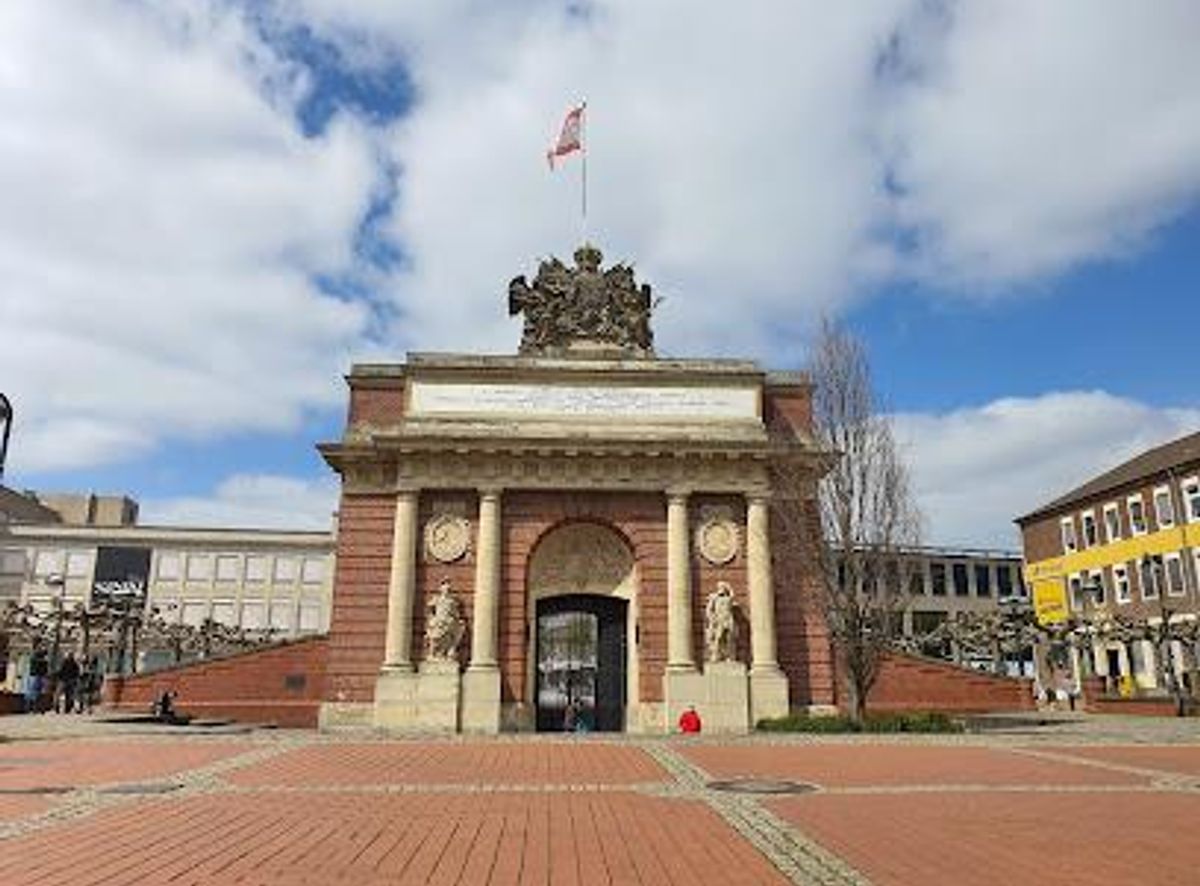
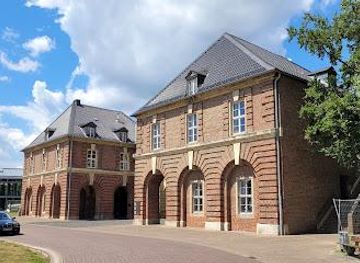
The Berliner Tor in Wesel is the city's last remaining gate, a proud monument to its Prussian fortress past. Built between 1718 and 1722 in the Prussian Baroque style by Jean de Bodt, it once formed part of Wesel's extensive fortifications. Severely damaged during WWII, it has been restored and stands as a symbol of the city's resilience. Adorned with sculptures of Minerva and Hercules, and featuring a Latin inscription celebrating Prussian rulers, the gate offers a glimpse into Wesel's rich history. Today, it houses the Hanseforum, an exhibition dedicated to Wesel's Hanseatic League heritage, providing visitors with a deeper understanding of the city's medieval trade connections and historical significance. The Berliner Tor is a must-see for history enthusiasts and those seeking to explore Wesel's cultural landmarks.

A brief summary to Berliner-Tor-Platz

  • Wesel, 46483, DE

Local tips

  • Visit the Hanseforum inside the Berliner Tor to learn about Wesel's fascinating history as a member of the Hanseatic League; admission is free.
  • Take a stroll through the pedestrian zone leading up to the Berliner Tor to experience the heart of Wesel's city center.
  • Combine your visit to the Berliner Tor with a trip to the nearby Wesel Citadel and Willibrordi Cathedral for a comprehensive historical tour.
widget icon

Do you manage this location?

Take control to get all the benefits, like improved information, better appearance, and stronger visibility across AI-powered discovery. Learn more

Activate your presence

Unlock the Best of Berliner-Tor-Platz

Buy tickets

    No tickets available

Book tours with entry

    No tours available

Book tours without entry

    No tours available

Getting There

  • Walking

    From Wesel Train Station (Wesel Bahnhof), the Berliner Tor is approximately a 10-15 minute walk. Exit the station and head east towards the city center. Follow the signs for 'Innenstadt' or 'Berliner Tor'. The route is straightforward and well-signposted. The gate is located at the end of the pedestrian zone, making it easily accessible on foot.

  • Public Transport

    If arriving by bus, many local bus lines stop near Wesel Train Station (Wesel Bahnhof), including lines 64, 67, RE19, RE5, SB3, X27, and X28. From the bus stop at the train station, follow the walking directions above to reach the Berliner Tor. A single bus fare within Wesel typically costs around €2-€3.

  • Taxi/Ride-Share

    A taxi or ride-share from Wesel Train Station to the Berliner Tor is a short ride, typically costing between €8-€12, depending on traffic and the specific service. Simply provide the destination 'Berliner-Tor-Platz, Wesel' to the driver.

  • Parking

    If driving, parking is available near the Berliner Tor, though it can be limited. There are parking spaces on the Berliner-Tor-Platz, but they may be full during peak hours. There are also parking garages nearby, such as those near the Großermarkt. Parking fees typically range from €1.50-€2.50 per hour.

Discover more about Berliner-Tor-Platz

The Berliner Tor, standing proudly on Berliner-Tor-Platz in Wesel, is more than just a city gate; it's a tangible link to the city's rich and complex past. Constructed between 1718 and 1722 by Jean de Bodt, a renowned fortress and court architect, this imposing structure is the last surviving gate of what was once the formidable Wesel Fortress. Commissioned during the reign of Friedrich Wilhelm I, the Berliner Tor exemplifies Prussian Baroque architecture, a style that blends grandeur with military functionality. Its design reflects Wesel's strategic importance as a key stronghold in the Prussian kingdom. The gate served not only as a point of entry and defense but also as a symbol of Prussian power and authority. Originally, the Berliner Tor was part of a larger ensemble of fortifications, including extensive wing buildings that connected to the gate in a semi-circular fashion, reminiscent of the Potsdam City Palace. These wings were unfortunately demolished in 1892 to ease traffic flow, leaving the gate as a solitary, yet still impressive, reminder of the fortress's former scale. The gate's architecture is replete with symbolism and artistic details. The field side, facing outwards towards the railway station, is adorned with a trophy crowned with allegorical representations of fame and good reputation. Statues of Minerva, the goddess of wisdom and warfare, and Hercules, the epitome of strength, stand guard between Doric columns, each accompanied by medallions bearing Latin inscriptions. These inscriptions, along with the Prussian eagle and a sleeping lion, convey messages of vigilance, power, and the enduring legacy of the Prussian rulers. The Latin inscription on the gate's cornice proudly proclaims the completion of the city and citadel's fortifications, initiated by Friedrich Wilhelm, Elector of Brandenburg, expanded by Friedrich I, the first King of Prussia, and brought to fruition by Friedrich Wilhelm I. This inscription serves as a testament to the continuity of Prussian rule and the importance of Wesel in the kingdom's strategic vision. Sadly, the city side of the Berliner Tor was destroyed during the Second World War, a period that saw extensive damage inflicted upon Wesel. The gate itself suffered significant damage during an air raid in February 1945, but its resilient structure has been painstakingly restored, allowing visitors to appreciate its original grandeur. Today, the Berliner Tor houses the Hanseforum, an exhibition dedicated to Wesel's history as a member of the Hanseatic League. This medieval trading network played a crucial role in Wesel's economic and cultural development, connecting the city to a vast network of trade routes across Northern Europe. The Hanseforum provides insights into Wesel's Hanseatic past, showcasing the goods traded, the connections forged, and the legacy left behind. Visitors to the Hanseforum can explore exhibits detailing Wesel's trade routes, the goods that flowed through the city, and the lives of the merchants who shaped its destiny. The exhibition also highlights Wesel's connections to other Hanseatic cities, fostering a sense of shared heritage and historical significance. The Berliner Tor and the Hanseforum offer a unique opportunity to delve into Wesel's past, from its Prussian fortress days to its Hanseatic trading era. The gate stands as a symbol of resilience, architectural grandeur, and the enduring legacy of a city shaped by its strategic location and historical connections. A visit to the Berliner Tor is a journey through time, offering a glimpse into the lives of those who shaped Wesel into the city it is today. Located at the eastern end of the pedestrian zone, the Berliner Tor is easily accessible and serves as a prominent landmark in the city center. Its imposing presence and historical significance make it a must-see for anyone interested in exploring Wesel's cultural heritage. The gate's proximity to other attractions, such as the Willibrordi Cathedral and the Wesel Citadel, makes it an ideal starting point for a comprehensive exploration of the city's historical sites. The Berliner Tor is more than just a monument; it's a living testament to Wesel's past, a reminder of its resilience, and a symbol of its enduring spirit. Whether you're a history enthusiast, an architecture aficionado, or simply a curious traveler, a visit to the Berliner Tor is sure to leave a lasting impression.
Mobile App

Your all‑in‑one travel companion app

Explore expert travel guides, compare and book tours, experiences, hotels, and more—all from the palm of your hand. Download now for seamless trip planning wherever your wanderlust takes you.


More about Essen

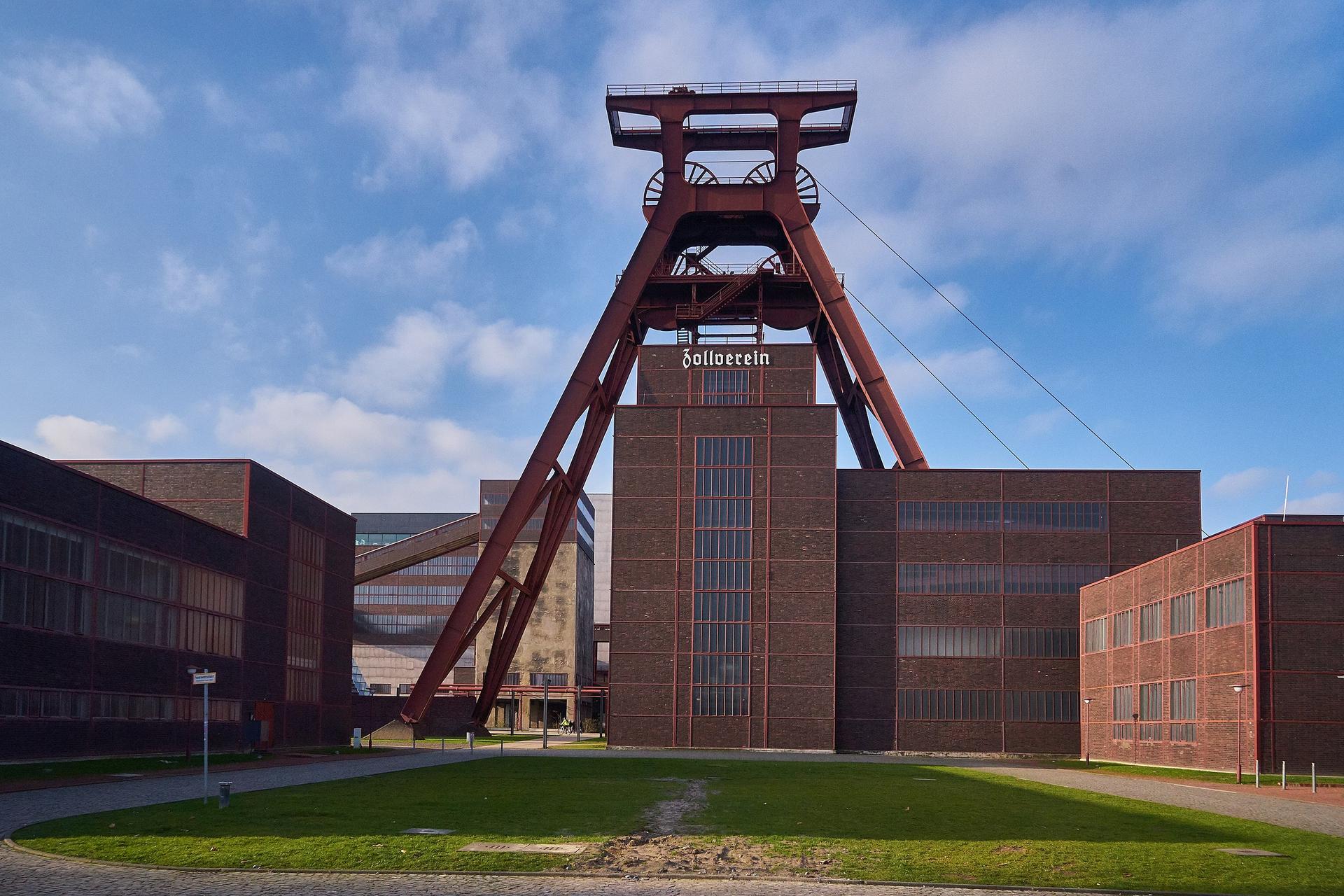
File:20180114 Zeche Zollverein, Essen (01980).jpg - Wikimedia Commons

Essen, Germany: A perfect blend of industrial heritage, lush green spaces, and cultural richness in the heart of the Ruhr region.

Tell me more about Essen
Select Currency