

Bergpark Wilhelmshöhe Travel Guide
Free Guide: Explore Bergpark Wilhelmshöhe, a UNESCO World Heritage site in Kassel, Germany, featuring the iconic Hercules monument, stunning water features, and Wilhelmshöhe Palace.


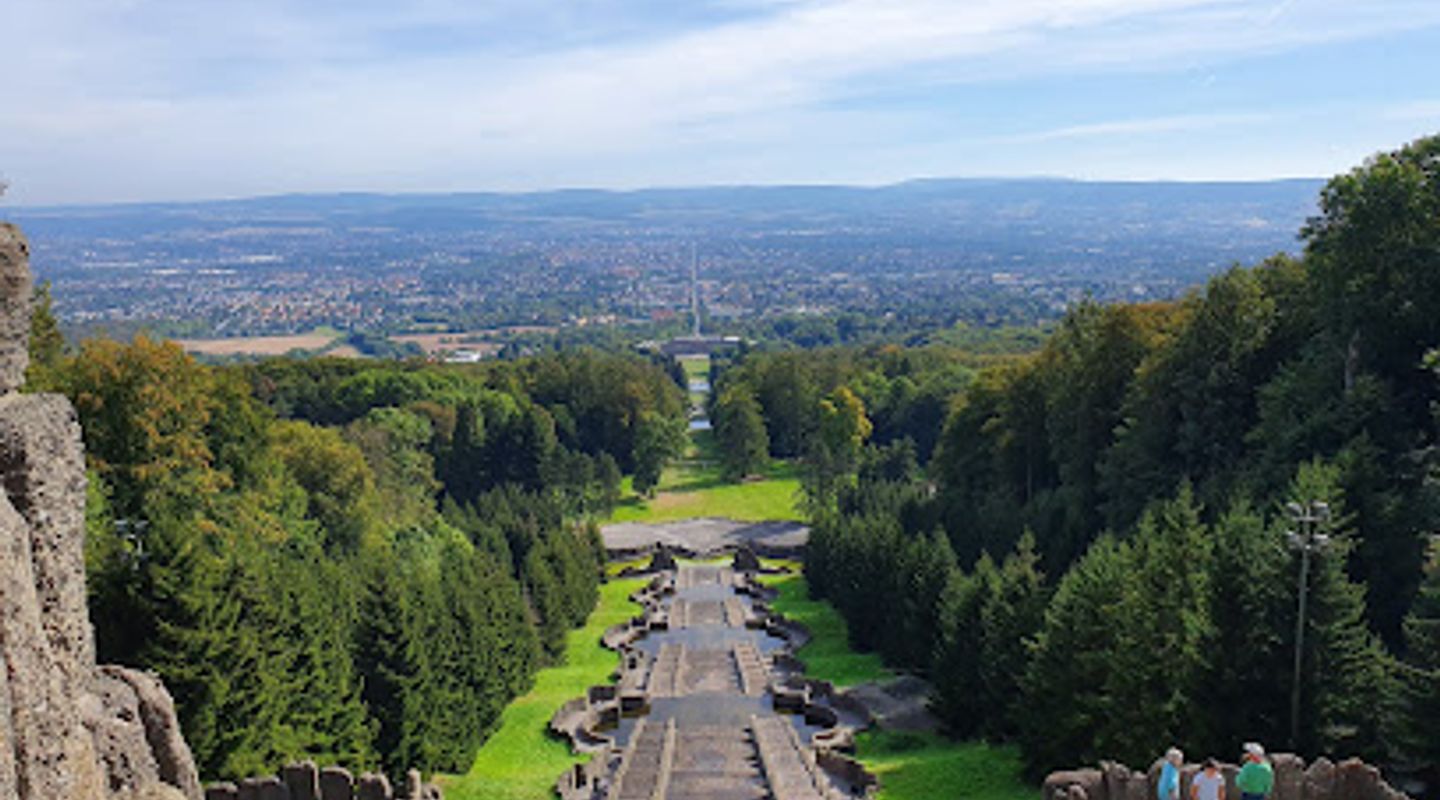
A brief summary of Bergpark Wilhelmshöhe
Explore Bergpark Wilhelmshöhe, a UNESCO World Heritage site in Kassel, Germany, featuring the iconic Hercules monument, stunning water features, and Wilhelmshöhe Palace.
Bergpark Wilhelmshöhe, a UNESCO World Heritage site, is a sprawling hillside park in Kassel, Germany, blending Baroque design with natural landscapes. Covering over 2.4 square kilometers, it's Europe's second-largest park of its kind, featuring the iconic Hercules monument, cascading water features, Wilhelmshöhe Palace, and the Löwenburg (Lion's Castle). The park offers a unique experience, seamlessly integrating art, architecture, and nature. Visitors can explore diverse landscapes, from formal gardens to wooded trails, and witness the impressive water displays that have captivated audiences for centuries. Entry to the park is free, though individual attractions like the palace may have admission fees. With its rich history and stunning vistas, Bergpark Wilhelmshöhe is a must-see destination for any traveler.
Opening hours
- Every dayOpen 24 hours
Opening hours as listed on the venue’s Google Business Profile. Hours can change for services and special events, so check with the venue before you go.
- Address
- 34131 Kassel
- Phone
- Website
Getting there
Public Transport
Driving
Shuttle Bus
Discover more about Bergpark Wilhelmshöhe
Overview
Bergpark Wilhelmshöhe, a designated UNESCO World Heritage site since 2013, stands as a monumental testament to European garden design and absolutist power. Conceived in 1689 by Landgrave Carl of Hesse-Kassel, the park evolved over 150 years, blending Baroque and Romantic aesthetics into a unique landscape. Situated on the eastern slopes of the Habichtswald, it sprawls across 2.4 square kilometers, making it the largest hillside park in Europe and second largest in the world. The park's centerpiece is the Hercules monument, a colossal copper statue of the Greek demigod Heracles, erected in the early 18th century. Perched atop the 526-meter-high Karlsberg mountain, Hercules serves as Kassel's iconic landmark, visible from afar. The monument marks the starting point of the park's famed water features, an elaborate system of cascades, waterfalls, and fountains that descend towards Wilhelmshöhe Palace. The water features, operational from May 1st to October 3rd on Wednesdays, Sundays, and public holidays, showcase a remarkable feat of engineering. Without the aid of pumps, over 750,000 liters of water cascade down 12 kilometers of waterways, powered solely by gravity. The spectacle begins at 2:30 PM at the Hercules monument, with the water flowing through a series of carefully designed channels, aqueducts, and water wheels. The cascading water passes through several notable landmarks, including the Steinhöfer Waterfall, the Devil's Bridge, and the Aqueduct, before culminating in the Grand Fountain in the Wilhelmshöhe Palace Pond. Here, the water pressure propels a jet of water 50 meters into the air, creating a breathtaking finale to the water display. Beyond the Hercules monument and water features, Bergpark Wilhelmshöhe boasts a wealth of other attractions. Wilhelmshöhe Palace, a Neoclassical structure completed in the late 18th century, houses significant art collections, including a gallery of Old Masters paintings, a collection of Graeco-Roman antiques, and a wallpaper collection. The palace itself was damaged during World War II and later rebuilt as an art museum, and is home to the second-largest collection of Rembrandts in Germany. The Löwenburg (Lion's Castle), a mock medieval castle constructed in the late 18th century, adds a touch of Romanticism to the park's landscape. Built as a private retreat and burial ground for Landgrave Wilhelm IX, the Löwenburg features artificial ruins and a picturesque setting. The park's landscape is equally diverse, transitioning from formal Baroque gardens near the Hercules monument to more naturalistic English landscape gardens surrounding Wilhelmshöhe Palace. An extensive network of paths allows visitors to explore the park's varied terrain, offering stunning views and hidden follies along the way. Bergpark Wilhelmshöhe's historical significance extends beyond its artistic and architectural merits. The park reflects the changing ideals of landscape design, from the formal gardens of the Baroque era to the more naturalistic landscapes of the English garden movement. It also serves as a reminder of the power and ambition of the Landgraves of Hesse-Kassel, who sought to create a landscape that would rival the great gardens of Europe. Today, Bergpark Wilhelmshöhe remains a popular destination for tourists and locals alike. Visitors can explore the park's many attractions, witness the impressive water displays, and enjoy the natural beauty of the surrounding landscape. The park also hosts a variety of events and festivals throughout the year, including guided tours, concerts, and theatrical performances. To fully appreciate Bergpark Wilhelmshöhe, allow ample time to explore its vast grounds. Wear comfortable shoes, as the park's terrain can be challenging, especially when walking uphill to the Hercules monument. Consider visiting on a Wednesday, Sunday, or public holiday to witness the water features in action. And be sure to check the opening hours and admission fees for individual attractions, such as Wilhelmshöhe Palace and the Löwenburg. Whether you're interested in art, architecture, history, or nature, Bergpark Wilhelmshöhe offers something for everyone. Its unique blend of Baroque design, Romantic landscapes, and impressive water features makes it a truly unforgettable destination.
Evendo Review Centre
 Google
Guest reviews
Explore Bergpark Wilhelmshöhe on the map
A handpicked selection of must-see spots near Bergpark Wilhelmshöhe, mapped for you.
Get your free copy of our complete guide to Bergpark Wilhelmshöhe, delivered straight to you.
Everything on this page, from opening hours and how to get there to Eve’s tips and the best time to go, in one PDF you can read offline, print or share.
Already have an account? Sign in
Your Bergpark Wilhelmshöhe guide is ready.
We'll send it to · Not you? Sign out

Getting your guide ready…
We are putting together a fresh copy of the Bergpark Wilhelmshöhe guide. This can take up to a minute.
This can take a few moments. If your browser asks, choose Allow so the download can start. You'll find the guide in your Downloads folder.
Nothing happened? Download it again
Sorry, the guide is taking longer than usual. Please try again in a minute, or get it by email instead.
Unlock the best of Bergpark Wilhelmshöhe
Skip-the-line tickets, guided tours with entry, and walking tours of the area, booked in a few clicks.

Other nearby places you may find interesting
The closest places of the same kind, if this one is not quite what you had in mind.
-
-

-
-
-


Swipe for more places
More to explore near Bergpark Wilhelmshöhe

 Best experiences near Bergpark Wilhelmshöhe
 Best hotels near Bergpark Wilhelmshöhe
 Best landmarks near Bergpark Wilhelmshöhe
 Best attractions near Bergpark Wilhelmshöhe
 Best shops near Bergpark Wilhelmshöhe
 Best restaurants near Bergpark Wilhelmshöhe
 Best bars near Bergpark Wilhelmshöhe
Do you manage this location?
Take control to get all the benefits, like improved information, better appearance, and stronger visibility across AI-powered discovery.
Explore more

Explore more of Hesse
Discover Hesse: A blend of historical charm, natural beauty, and cultural richness in the heart of Germany.
Explore Hesse
Explore more of Germany
Experience Germany: where history meets innovation, and urban energy blends with natural beauty. Discover diverse cultures, delicious cuisine, and stunning landscapes.
Explore Germany
