

Free Hesse Travel Guide & Mobile App
Explore Hesse with free travel guides. Discover regional history, expert tips, proposed trips, and audio guides on web or mobile app.


Explore Hesse for Frankfurt’s culture, Wiesbaden’s spa heritage, Kassel’s art, medieval towns, vineyards and wooded German landscapes.
Read more about Hesse
When is the best time to visit Hesse?
Best: June–August · 22–24°C| Month | High (°C) | Rainfall (mm) |
|---|---|---|
| January | 4 | 50 |
| February | 5 | 45 |
| March | 9 | 50 |
| April | 14 | 55 |
| May | 19 | 65 |
| June (best) | 22 | 70 |
| July (best) | 24 | 75 |
| August (best) | 23 | 70 |
| September | 19 | 60 |
| October | 14 | 55 |
| November | 7 | 60 |
| December | 5 | 55 |
Getting to and around Hesse
How to get there
Transportation
Top city travel guides in Hesse
The cities of Hesse, and the easiest places to base yourself.
-

-

-

-

-

-


Swipe for more cities
Destinations in Hesse
Resorts, valleys and scenic spots worth a trip of their own.
-

-

-

-

-

-


Swipe for more destinations
Best attractions in Hesse
Hesse’s attractions range from major urban museums to forested hills and rural heritage. Frankfurt offers the Museumsufer, the reconstructed Römerberg area and institutions covering art, film, history and natural science, while Wiesbaden combines spa heritage with galleries, theatre and elegant public architecture. Kassel’s Bergpark Wilhelmshöhe, with its Hercules monument and water features, is a defining northern Hesse experience, and the city’s documenta tradition gives it an important contemporary-art dimension. Darmstadt’s Mathildenhöhe introduces a different cultural chapter through its artists’ colony and exhibition buildings. Beyond the cities, visitors can follow Roman frontier remains along the Limes, explore the medieval lanes of Marburg and Fulda, or visit castles and palace complexes in the Taunus, Odenwald and Lahn valley. The Rhön, Vogelsberg and Hessian uplands provide walking, cycling and wildlife habitats, while the Main, Lahn, Fulda and Werra valleys offer gentler routes. Hesse’s attraction landscape is strongest when historic towns, museums and landscapes are combined rather than treated as separate themes.
-
State park
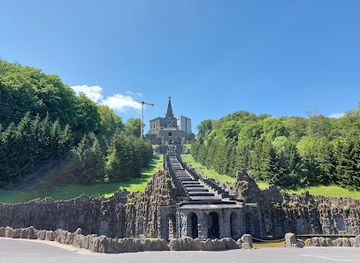
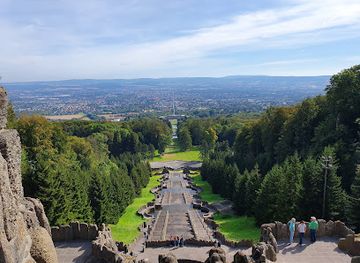
Bergpark Wilhelmshöhe
Explore the stunning Bergpark Wilhelmshöhe, a UNESCO World Heritage site in Kassel, blending breathtaking nature with rich history and art.
-
Historical landmark
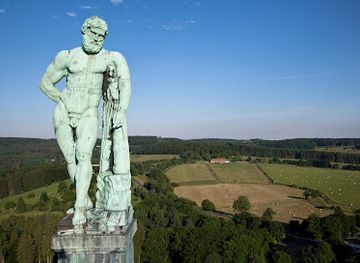
Hercules monument
Explore the breathtaking Hercules Monument in Kassel, a UNESCO World Heritage site surrounded by stunning landscapes and rich history.
-
Castle
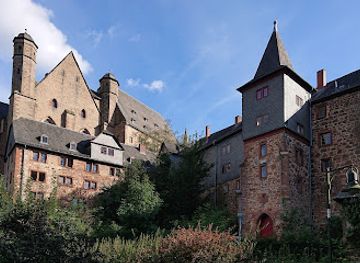
Landgrafen Palace
Immerse yourself in history at Marburg's Landgrafen Palace, a stunning castle showcasing Gothic architecture and breathtaking views.
-
Wildlife park
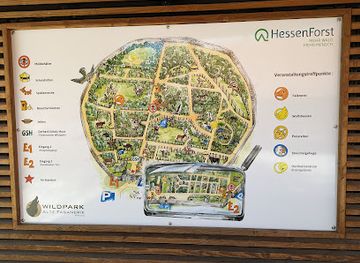
Wildpark Alte Fasanerie
Experience the beauty of Germany's native wildlife at Wildpark Alte Fasanerie in Hanau - perfect for families and nature enthusiasts.
Best landmarks in Hesse
Hesse’s most recognisable landmarks express the region’s changing political, architectural and natural history. Frankfurt’s Kaiserdom St Bartholomäus is a major Gothic church associated with the Holy Roman Empire’s imperial elections, while the Römer and the reconstructed old-town buildings represent the city’s historic civic core. Wiesbaden’s Kurhaus and adjacent spa architecture embody the nineteenth-century development of the city as a European resort. In Kassel, the Hercules monument crowns Bergpark Wilhelmshöhe and forms the visual focus of a monumental landscaped setting; the park is also recognised for its water-management and garden design. Marburg Castle rises above the medieval town, and the Elisabeth Church below it is closely linked with the cult of Saint Elisabeth. The Mathildenhöhe buildings in Darmstadt mark an important chapter in early modern design and the German Jugendstil movement. Elsewhere, the Limes, Fulda Cathedral, the basalt landscapes of the Vogelsberg and the wooded ridges of the Taunus provide landmarks whose significance is archaeological, religious, artistic or geographical rather than simply monumental.
-
Castle
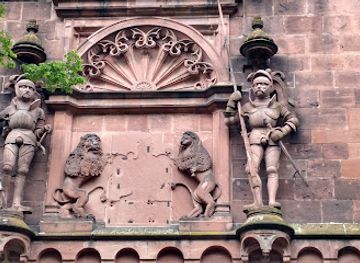
Heidelberg Castle
Explore the majestic ruins of Heidelberg Castle, a symbol of German Romanticism, offering breathtaking views and a journey through centuries of history and architectural grandeur.
-
 Historical market square
Römerberg
Discover Römerberg, Frankfurt's historic heart: a captivating square where imperial history meets charming half-timbered houses and festive Christmas markets, creating an unforgettable experience.
-
State park
Bergpark Wilhelmshöhe
Explore Bergpark Wilhelmshöhe, a UNESCO World Heritage site in Kassel, Germany, featuring the iconic Hercules monument, stunning water features, and Wilhelmshöhe Palace.
-
Cultural landmark
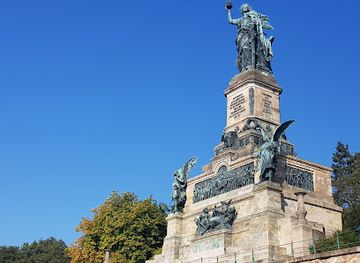
Niederwald Monument
Explore the majestic Niederwald Monument in Rüdesheim am Rhein, a cultural landmark offering breathtaking views and rich German history.
Explore Hesse on the map
Plan your trip on one map. See where the top cities, national parks and sights are, and book hotels and experiences in a few clicks.
Best hotels in Hesse
Best restaurants in Hesse
Hessian food varies between urban international dining and robust regional cooking served in traditional inns, cider taverns and market-town restaurants. Frankfurt and its surrounding villages are associated with Apfelwein, usually served with hearty dishes such as green sauce with eggs and potatoes, although recipes and accompaniments vary between establishments. North Hesse is known for Ahle Wurst, a slowly matured sausage traditionally associated with rural food production, alongside seasonal vegetables, bread and potato-based dishes. In the southern Bergstrasse and Rhine-Main area, vineyards, orchards and farm shops contribute wine, fruit and regional specialities. Bakeries, weekly markets and café culture are useful places to sample everyday food rather than only formal restaurant cooking. International restaurants are particularly numerous in Frankfurt, reflecting the region’s global population and economy, while rural dining tends to focus on local produce, seasonal menus and substantial portions. Menus may change with asparagus season, autumn game or winter specialities, so visitors should treat Hessian cuisine as a broad regional tradition rather than a fixed list of dishes.
-
German
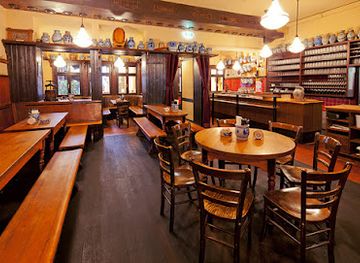
Apfelwein Wagner
Savor traditional German dishes and delightful Apfelwein at Apfelwein Wagner in Frankfurt's vibrant dining scene.
-
German
Paulaner am Dom
Savor traditional German flavors at Paulaner am Dom in Frankfurt—where authentic cuisine meets vibrant atmosphere.
-
Restaurant
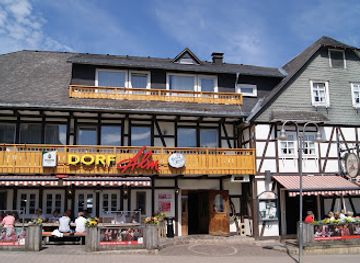
Dorf Alm Willingen
Discover culinary delights and vibrant nightlife at Dorf Alm Willingen - your gateway to local flavors and unforgettable experiences.
-
Eritrean
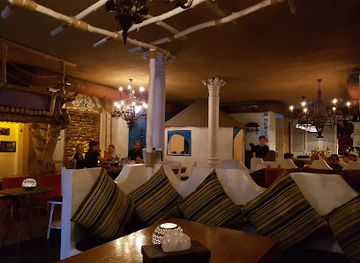
Im Herzen Afrikas
Experience authentic Eritrean cuisine at Im Herzen Afrikas—where flavors meet tradition in Frankfurt's vibrant dining scene.
Best bars in Hesse
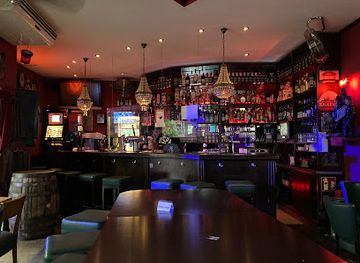
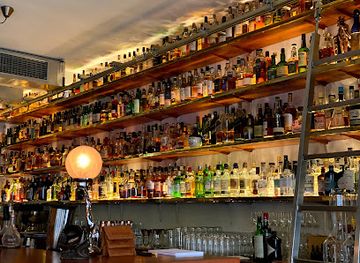
Evening life in Hesse is concentrated in Frankfurt, Wiesbaden, Darmstadt, Kassel and the larger university towns. Frankfurt has the region’s broadest choice, from cocktail and wine bars to live-music rooms, late venues and restaurants around the central districts and Sachsenhausen, where cider taverns form part of the local tradition. Wiesbaden’s evening scene is shaped more by restaurants, theatre, stylish bars and the historic spa-city setting, while Darmstadt and Marburg benefit from student populations and smaller live-music venues. Kassel combines bars and cultural events with a less intensive nightlife rhythm than Frankfurt. In smaller towns and rural districts, traditional pubs, village inns, breweries and seasonal events are more common than nightclubs; opening patterns can be limited outside the main centres. Drinking is not necessary to experience local evening culture, and many Hessian towns are best explored through restaurants, concerts, theatre and illuminated historic streets.
-
Irish pub
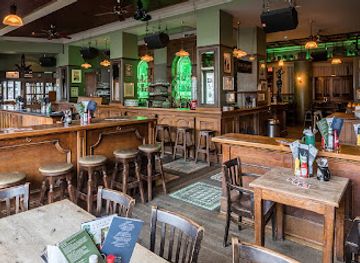
o'reilly's Irish pubs
Discover the essence of Ireland in the heart of Frankfurt at O'Reilly's Irish Pub, offering authentic cuisine and a lively atmosphere.
-
Bar
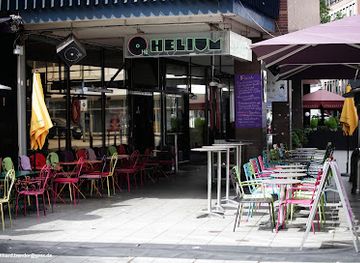
Bar Helium Frankfurt
Discover Bar Helium Frankfurt, where innovative cocktails and vibrant atmosphere come together for an unforgettable night out in the heart of the city.
-
Irish pub
Birmingham Pub - Frankfurt am Main
Discover Birmingham Pub in Frankfurt: A lively Irish pub offering great drinks, traditional food, and a warm atmosphere perfect for relaxation and socializing.
-
Cocktail bar
Embury Bar Frankfurt am Main
Discover Embury Bar in Frankfurt am Main, where innovative cocktails and live music create an unforgettable nightlife experience.
Best nightclubs in Hesse
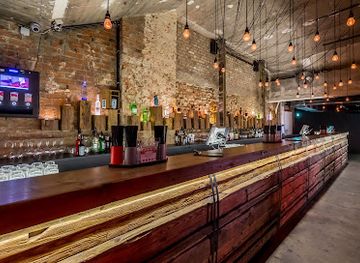
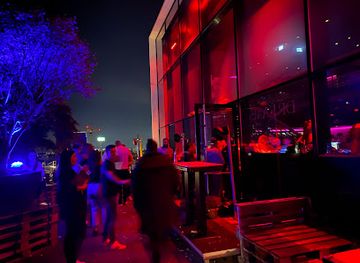
Evening life in Hesse is concentrated in Frankfurt, Wiesbaden, Darmstadt, Kassel and the larger university towns. Frankfurt has the region’s broadest choice, from cocktail and wine bars to live-music rooms, late venues and restaurants around the central districts and Sachsenhausen, where cider taverns form part of the local tradition. Wiesbaden’s evening scene is shaped more by restaurants, theatre, stylish bars and the historic spa-city setting, while Darmstadt and Marburg benefit from student populations and smaller live-music venues. Kassel combines bars and cultural events with a less intensive nightlife rhythm than Frankfurt. In smaller towns and rural districts, traditional pubs, village inns, breweries and seasonal events are more common than nightclubs; opening patterns can be limited outside the main centres. Drinking is not necessary to experience local evening culture, and many Hessian towns are best explored through restaurants, concerts, theatre and illuminated historic streets.
-
Disco club
Velvet
Discover the thrilling nightlife of Frankfurt at Velvet Disco Club, where the music is electrifying and the ambiance is unforgettable.
-
Night club
Gibson
Discover the electrifying nightlife of Frankfurt at Gibson Club, where live music meets culinary delight in a vibrant atmosphere.
-
Night club
Adlib
Discover the electrifying nightlife of Adlib, a top-tier night club in Frankfurt, offering an unforgettable experience with vibrant music and stylish ambiance.
-
Disco club
Tenne Winterberg
Experience the pulse of Winterberg's nightlife at Tenne, a dynamic disco club where every night is a celebration filled with music and dancing.

Best shops in Hesse
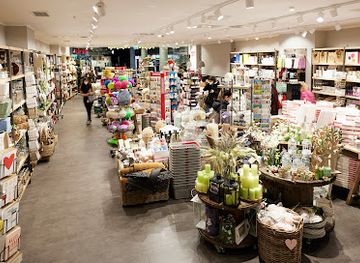
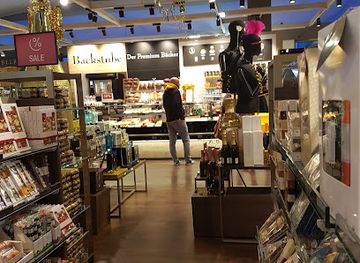
Shopping in Hesse ranges from international retail in Frankfurt to market-town high streets, weekly food markets and specialist craft shops in smaller communities. Frankfurt has the widest selection of department stores, fashion, design, books and international food, while the city’s markets are useful for regional produce and everyday ingredients. Wiesbaden offers a more traditional city-centre shopping experience with independent boutiques, galleries and cafés among nineteenth-century streets. Darmstadt and Marburg combine university-town shops with books, fashion, gifts and local design, while Kassel’s central districts provide practical retail alongside cultural and independent outlets. In rural Hesse, look for farm shops selling apple products, honey, sausages, preserves and seasonal fruit, particularly around the Bergstrasse, Wetterau and northern agricultural districts. Craft traditions include pottery, textiles, woodwork and locally produced food rather than a single region-wide souvenir style. Weekly markets are often the best places to understand local shopping culture, but days and locations vary, so check municipal information before travelling.
-
Shopping mall
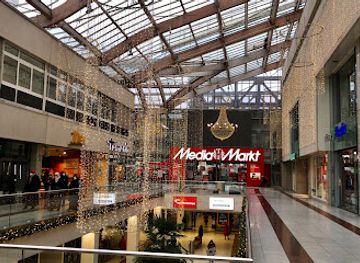
MyZeil
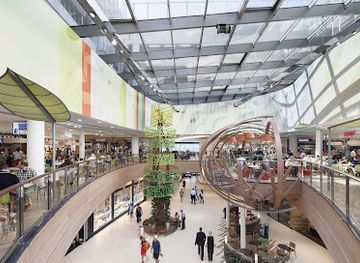
Discover MyZeil, Frankfurt's architectural gem, where shopping meets dining in a vibrant atmosphere.
-
Shopping mall
Skyline Plaza
Experience the best of shopping and dining at Skyline Plaza in Frankfurt, where style meets convenience amidst a vibrant city atmosphere.
-
Shopping mall
Main-Taunus-Zentrum
Explore Main-Taunus-Zentrum, the ultimate shopping mall in Sulzbach, Germany, featuring top brands, dining options, and entertainment for every visitor.
-
Shopping mall
Nordwestzentrum
Discover Nordwestzentrum - Frankfurt's premier shopping mall, offering a variety of stores, dining options, and a lively atmosphere for every visitor.
Get your free copy of our complete guide to Hesse, delivered straight to you.
Everything on this page, from attractions and restaurants to essentials and local phrases, in one PDF you can read offline, print or share.
Already have an account? Sign in
Your Hesse guide is ready.
We'll send it to · Not you? Sign out

Getting your guide ready…
We are putting together a fresh copy of the Hesse guide. This can take up to a minute.
This can take a few moments. If your browser asks, choose Allow so the download can start. You'll find the guide in your Downloads folder.
Nothing happened? Download it again
Sorry, the guide is taking longer than usual. Please try again in a minute, or get it by email instead.
Hesse essentials
Currency and Payment
Safety
Emergency Situations
Do's and Don'ts
Local Tips
From Eve
Local phrases worth knowing
You don't need to get them perfect. A few words go a long way, and locals appreciate the effort.
Basics
| English | Local | Say it |
|---|---|---|
| Hello | Hallo | [HAH-loh] |
| Goodbye | Auf Wiedersehen | [OWF VEE-der-zay-en] |
| Yes | Ja | [YAH] |
| No | Nein | [NINE] |
| Please/You're welcome | Bitte | [BIT-tay] |
| Thank you | Danke | [DAHN-kay] |
| Excuse me/Sorry | Entschuldigung | [ENT-shool-dee-goong] |
| How are you? | Wie geht's? | [VEE gates?] |
| Fine. And you? | Gut. Und dir? | [GOOT. OOND deer?] |
| Do you speak English? | Sprechen Sie Englisch? | [SPRE-khen zee ENG-lish?] |
| I don't understand | Ich verstehe nicht | [IKH fer-SHTAY-eh nikht] |
Eating & Drinking
| English | Local | Say it |
|---|---|---|
| I'd like to see the menu, please | Ich hätte gerne die Speisekarte, bitte | [IKH HET-teh GERN-eh dee SHPY-ze-kar-teh, BIT-tay] |
| I don't eat meat | Ich esse kein Fleisch | [IKH ES-se KINE FLYSH] |
| Cheers! | Prost! | [PROHST] |
| I would like to pay, please | Ich möchte bezahlen, bitte | [IKH MERKH-teh be-ZAH-len, BIT-tay] |
Emergencies
| English | Local | Say it |
|---|---|---|
| Help! | Hilfe! | [HIL-fe] |
| Go away! | Geh weg! | [GEH VEG] |
| Call the Police! | Rufen Sie die Polizei! | [ROO-fen zee dee PO-li-TZAI] |
| Call a doctor! | Rufen Sie einen Arzt! | [ROO-fen zee EYE-nen ARTZ] |
| I'm lost | Ich habe mich verlaufen | [IKH HAH-beh mikh fer-LAU-fen] |
| I'm ill | Ich bin krank | [IKH bin KRANK] |
Shopping
| English | Local | Say it |
|---|---|---|
| I'd like to buy... | Ich möchte... kaufen | [IKH MERKH-teh... KAU-fen] |
| I'm just looking | Ich schaue nur | [IKH SHOU-eh noor] |
| How much is it? | Wie viel kostet es? | [VEE FEEL KOST-et es?] |
| That's too expensive | Das ist zu teuer | [DAS ist tsu TOY-er] |
| Can you lower the price? | Könnten Sie den Preis senken? | [KERN-ten zee den PRYSS SANK-en] |
Time & Numbers
| English | Local | Say it |
|---|---|---|
| What time is it? | Wie spät ist es? | [VEE SHPAYT ist es?] |
| It's one o'clock | Es ist ein Uhr | [ES ist EYN OOR] |
| Half past (10) | Halb (10) | [HALB (10)] |
| Morning | Morgen | [MOR-gen] |
| Afternoon | Nachmittag | [NAHKH-mit-tahg] |
| Evening | Abend | [AH-bend] |
| Yesterday | Gestern | [GES-turn] |
| Today | Heute | [HOY-te] |
| Tomorrow | Morgen | [MOR-gen] |
| 1 | Eins | [EYNZ] |
| 2 | Zwei | [TSVY] |
| 3 | Drei | [DRY] |
| 4 | Vier | [FEER] |
| 5 | Fünf | [FUENF] |
| 6 | Sechs | [ZEX] |
| 7 | Sieben | [ZEE-ben] |
| 8 | Acht | [AHKT] |
| 9 | Neun | [NOYN] |
| 10 | Zehn | [TSAYN] |
Transport & Directions
| English | Local | Say it |
|---|---|---|
| Where's a/the...? | Wo ist ein/der...? | [VOH ist EYN/DER...?] |
| What's the address? | Wie ist die Adresse? | [VEE ist dee AH-dress-eh?] |
| Can you show me (on the map)? | Könnten Sie mir (auf der Karte) zeigen? | [KERN-ten zee meer (OWF der KAR-te) TSY-gen?] |
| When's the next (bus)? | Wann kommt der nächste (Bus)? | [VAHN kommt der NAY-stuh (BOOS)?] |
| A ticket (to ....) | Ein Ticket (nach ....) | [EYN TICK-et (NAHKH ....)] |
History of Hesse
Prehistoric Landscapes and Roman Frontiers
Hesse has been occupied since prehistoric times, with archaeological evidence of farming communities, burial sites and hilltop settlements. Roman influence became especially visible from the first centuries AD, when the empire established roads, forts and frontier installations along the Limes. Parts of the Upper Germanic-Raetian Limes cross present-day Hesse, including the Taunus and Wetterau, marking the shifting boundary between Roman-controlled territory and Germanic lands. Although the frontier was not an impermeable cultural divide, its forts, roads and reconstructed watchtowers provide an important framework for understanding the region’s ancient geography.
Frankish Rule and the Rise of Medieval Territories
Following the decline of Roman power, Hesse became part of the Frankish world and was gradually integrated into the political and religious structures of the early medieval kingdom. Christian foundations, monasteries and fortified settlements helped shape later towns. The region was not a single unified state: power was distributed among ecclesiastical territories, noble families and emerging urban communities. Fulda became an important religious centre, while settlements along the Main, Lahn and Rhine developed through trade, administration and pilgrimage. This early political fragmentation explains the variety of historic identities still visible across Hesse.
Landgraviate of Hesse and Medieval Marburg
The Landgraviate of Hesse emerged as a major territorial power during the Middle Ages, with Marburg becoming one of its most significant centres. Landgrave Elisabeth of Thuringia, who lived in the early thirteenth century and was later canonised, established a lasting religious connection with the town; the Gothic Elisabeth Church was built over her tomb. Marburg Castle and the steep lanes of the old town reflect the political and ecclesiastical importance of the medieval landgraviate. Over time, dynastic divisions produced several Hessian lines, including Hesse-Kassel and Hesse-Darmstadt.
Reformation, Confessional Division and the Thirty Years’ War
The Reformation altered Hesse’s religious and political landscape. Landgrave Philip of Hesse supported Protestant reform and convened the famous 1529 meeting at Marburg, where Martin Luther and Huldrych Zwingli debated the meaning of the Eucharist. The landgraviate subsequently became a significant Protestant territory, although religious divisions persisted elsewhere. The Thirty Years’ War in the seventeenth century brought military occupation, disease, economic disruption and population loss to many parts of the region. Town walls, churches and administrative buildings preserve traces of the political instability that followed.
Kassel, Hesse-Kassel and Court Culture
Kassel developed as the capital of Hesse-Kassel and acquired the monuments, collections and landscaped estates associated with a European court. The Bergpark Wilhelmshöhe, begun in the late seventeenth century and expanded over subsequent generations, expresses this ambition through water features, monumental sculpture and the Hercules monument. The city also became associated with scientific collections and the Brothers Grimm, who worked in Kassel during the early nineteenth century and gathered much of the material that informed their literary and linguistic scholarship. Court patronage left a strong architectural and cultural imprint on northern Hesse.
Napoleonic Reorganisation and the Grand Duchy of Hesse
The Napoleonic era transformed the political map of central Germany. Hesse-Darmstadt was elevated to a grand duchy, while other territories were reorganised or absorbed into larger states. After 1815, the German Confederation preserved a patchwork of Hessian administrations rather than creating a single Hesse. Darmstadt became a courtly and administrative centre, and nineteenth-century improvements in roads, canals and railways strengthened links between the Main valley, the Rhine, central uplands and northern towns. These changes laid foundations for modern urban growth and industrial development.
Industrialisation, Railways and the Rhine-Main Metropolis
During the nineteenth and early twentieth centuries, railways, banking, manufacturing and trade reshaped Hesse. Frankfurt’s position on the Main and its expanding rail network helped it become a national commercial centre, while Offenbach developed important manufacturing traditions and Darmstadt gained scientific and industrial significance. Wiesbaden grew as a spa and administrative city, drawing visitors to its springs and elegant public buildings. The Rhine-Main area became increasingly interconnected, contrasting with the more agricultural and forested districts of the north, east and south. This regional division remains important to Hesse’s economic and cultural geography.
Twentieth-Century Destruction and Cultural Renewal
The Second World War caused severe damage to many Hessian cities, particularly Frankfurt and Kassel, while the post-war period brought reconstruction, new industry and rapid metropolitan expansion. Frankfurt became a major centre of finance, transport and international trade in the Federal Republic. Hesse was established as a modern German federal state in 1946, bringing together territories that had previously belonged to different administrations. From 1955, documenta in Kassel developed into one of the world’s most influential recurring exhibitions of contemporary art, giving the region a powerful modern cultural identity alongside its older heritage.
Hesse in Photos
Browse through our photo collection highlighting the charm and character of the destination.
Neighbouring regions of Hesse
The closest regions to Hesse, if you have time for more than one.
-

-

-

-

-


Swipe for more regions
Explore more

Explore more of Germany
Experience Germany: where history meets innovation, and urban energy blends with natural beauty. Discover diverse cultures, delicious cuisine, and stunning landscapes.
Explore Germany