History Column, Koblenz Travel Guide
Discover Koblenz's captivating history etched in stone at the History Column on Görresplatz, a vibrant square where the past meets the present in the heart of the Old Town.
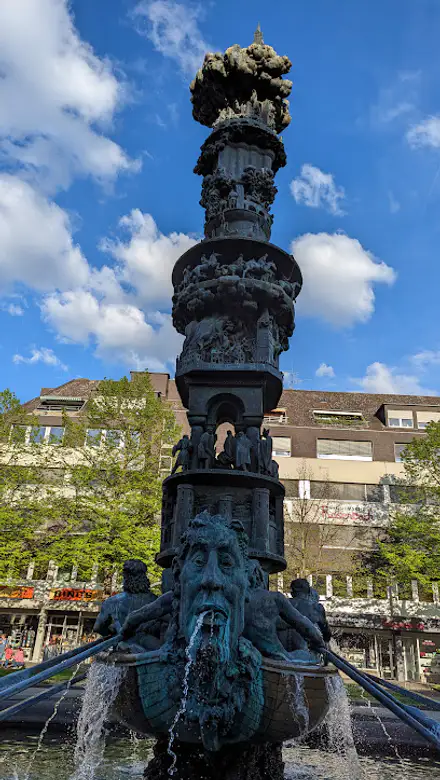
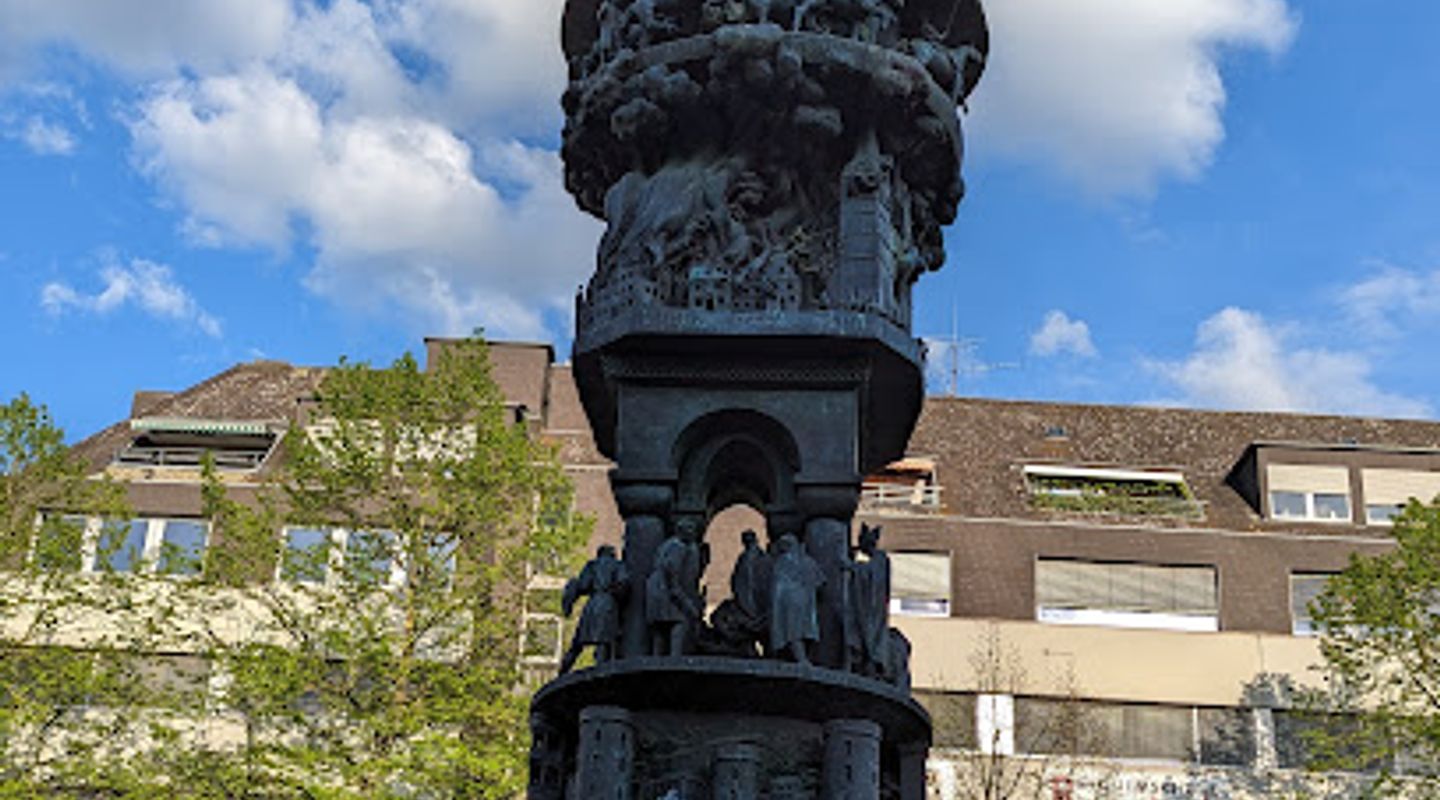
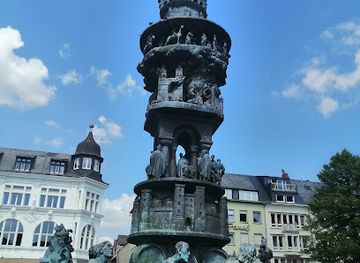
The History Column, gracing Josef-Görres-Platz in Koblenz's Old Town, is more than just a fountain; it's a captivating visual chronicle of the city's past. Gifted to Koblenz in 1992 by Rhineland-Palatinate, the column, created by sculptor Jürgen Weber, wasn't fully realized until 2000. Rising over 10 meters, this 3.6-tonne monument intricately depicts 2000 years of Koblenz's history in ten three-dimensional scenes, from Roman settlements to modern-day reconstruction. The square itself, with a history dating back to Roman times, has borne witness to countless transformations, serving as a marketplace, parade ground, and memorial site. Surrounded by cafes and shops, the History Column offers a reflective pause amidst the lively atmosphere of the city center, inviting visitors to delve into the rich tapestry of Koblenz's heritage.
A brief summary to History Column
- Josef-Görres-Platz, Koblenz, 56068, DE
- Click to display

Know before you go
Hi, I'm Eve. Here are a few practical things to know before exploring History Column.
- Take your time to examine each of the ten scenes on the History Column, as they depict significant moments in Koblenz's 2000-year history.
- Visit the History Column during a local festival or market to experience the square's vibrant atmosphere.
- Combine your visit to the History Column with a stroll through Koblenz's Old Town to discover other historical landmarks and charming streets.
Do you manage this location?
Take control to get all the benefits, like improved information, better appearance, and stronger visibility across AI-powered discovery. Learn more about listing your business on Evendo
Activate your presenceOther nearby places you may find interesting
The closest places of the same kind, if this one is not quite what you had in mind.
Explore History Column on the Map
A handpicked selection of must-see spots near History Column, mapped for you.
Unlock the Best of History Column
Buy tickets
-
No tickets available
Book tours with entry
-
No tours available
Book tours without entry

Getting There
-
Walking
From Koblenz Hauptbahnhof (main train station), exit towards the city center. Walk along Bahnhofstraße for approximately 600 meters until you reach Dreifaltigkeitsplatz. Continue straight ahead, and you will arrive at Josef-Görres-Platz, where the History Column is located. The walk takes about 10-15 minutes. Alternatively, from Deutsches Eck, walk inland, away from the confluence of the Rhine and Mosel rivers, following signs towards the Altstadt (Old Town). Josef-Görres-Platz is a short walk from the Rhine promenade.
-
Public Transport
From Koblenz Hauptbahnhof, take bus lines 1, 3, or 5 to the 'Josef-Görres-Platz' stop. The journey takes approximately 10 minutes. A single ticket costs around €2.80. From other locations within Koblenz, use the local bus network (koveb) to reach Josef-Görres-Platz. Check the Koveb website or app for schedules and routes.
-
Driving
Navigate to Josef-Görres-Platz, 56068 Koblenz. Follow signs for Altstadt (Old Town). Several parking garages are nearby, including Parkhaus Altstadt/Görresplatz (Josef-Görres-Platz 15) and Parkhaus Am Schloss (Neustadt 30). Parking fees typically range from €1.50 to €2.00 per hour. Parkhaus Altstadt/Görresplatz offers 386 parking spaces and charges €2.00 for the first hour and €1.50 for each additional hour. A daily maximum rate of €20.00 applies.
Discover more about History Column













Your all‑in‑one travel companion app
Explore expert travel guides, compare and book tours, experiences, hotels, and more—all from the palm of your hand. Download now for seamless trip planning wherever your wanderlust takes you.


Explore More of Koblenz
Looking beyond History Column? Discover Koblenz for broader travel guides, local hot-spots, and regional highlights.
Explore Koblenz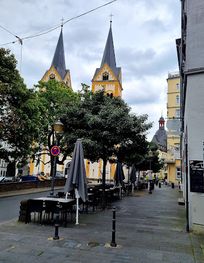
Discover Denkmalzone „Vier Türme“, a serene memorial park in Koblenz with stunning views and rich historical significance.

Experience the vibrant heart of Koblenz at Görresplatz, a historic square brimming with culture, charm, and captivating stories etched in stone and celebrated in lively local events.