Background

The Four Towers of Koblenz

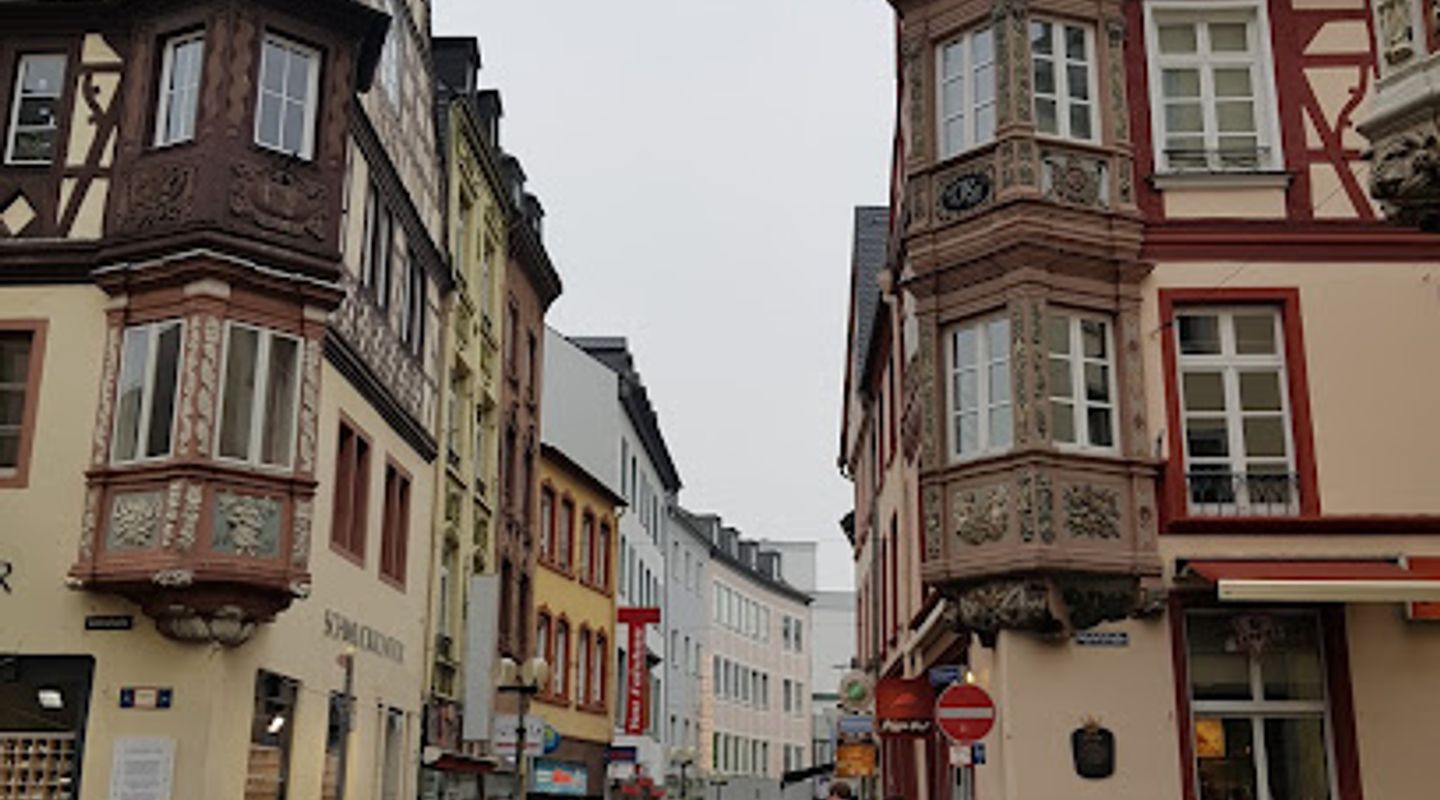
Discover the historic Four Towers of Koblenz, an iconic landmark showcasing stunning architecture and a rich history in the heart of the city's charming Old Town, a UNESCO World Heritage site.

4.8

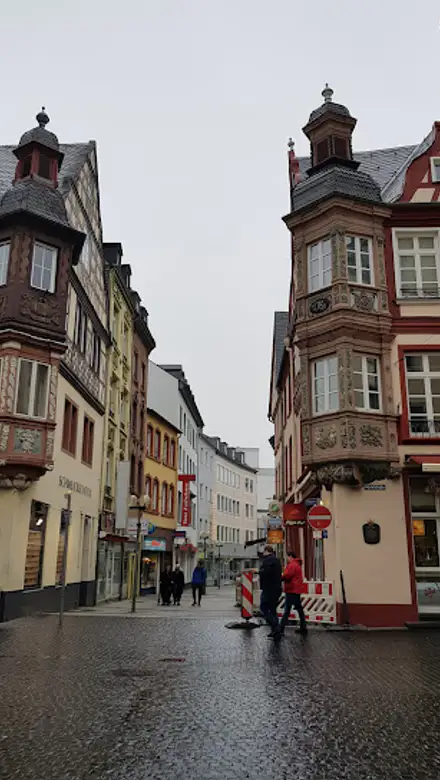
The Four Towers, or 'Vier Türme' in German, are a captivating ensemble of four historic buildings located in the heart of Koblenz's Old Town. Situated at the crossroads of Am Plan, Löhrstraße, Marktstraße, and Altengraben, these buildings are famed for their ornate oriel windows, showcasing a blend of Gothic and Renaissance architectural styles. Originally constructed in 1608, they were destroyed in 1688 during the Palatinate War of Succession and later reconstructed between 1689 and 1692. Each tower boasts unique details and a rich history, with one having housed a pharmacy from 1730 until the early 2000s, and another serving as the main guardhouse until 1848. The Four Towers stand as a testament to Koblenz's resilience and architectural evolution, making them a must-see for any visitor exploring the city's heritage. Today, the Four Towers are a protected cultural asset and have been part of the UNESCO World Heritage Upper Middle Rhine Valley since 2002.

A brief summary to 4 Towers (Oriel Windows)

  • Marktstraße 1, Koblenz, Altstadt, 56068, DE

Local tips

  • Take your time to observe the unique architectural details of each tower, as each one tells a different story about Koblenz's past.
  • Visit during the warmer months to enjoy the outdoor cafes and restaurants surrounding the Four Towers, offering a perfect spot for people-watching.
  • Explore the nearby Liebfrauenkirche and other historical sites in the Old Town to fully immerse yourself in Koblenz's rich heritage.
widget icon

Getting There

  • Walking

    The Four Towers are centrally located in Koblenz's Old Town and are easily accessible on foot from most central locations. From the Deutsches Eck (German Corner), walk southwest along Konrad-Adenauer-Ufer, then turn left onto Am Plan. Continue straight, and the Four Towers will be at the intersection of Am Plan, Löhrstraße, Marktstraße, and Altengraben. The walk is approximately 10-15 minutes. No costs are associated with walking.

  • Public Transport

    If arriving by train at Koblenz Hauptbahnhof (main station), take bus line 3 or 5 towards 'Neuwied' and disembark at the 'Zentralplatz/Forum' stop. From there, walk east along Marktstraße for about 5 minutes until you reach the intersection with Am Plan, Löhrstraße, and Altengraben, where the Four Towers are located. A single bus fare within Koblenz is approximately €2.60.

  • Taxi/Ride-Share

    A taxi or ride-share from Koblenz Hauptbahnhof to the Four Towers takes approximately 5-10 minutes, depending on traffic. The estimated fare is between €8 and €12. Taxis are readily available at the train station.

  • Parking

    If driving, parking is available at the Parkhaus Obere Löhr (Karthäuserstraße 1) or the Tiefgarage Görresplatz. From either parking garage, it's a short walk to the Four Towers. Parking fees at both garages are approximately €1.50 per hour, with a daily maximum of €20. Alternatively, limited free parking is available at Peter-Altmeier-Ufer, a 15-minute walk away.

Unlock the Best of 4 Towers (Oriel Windows)

Buy tickets

    No tickets available

Book tours with entry

    No tours available

Book tours without entry

    No tours available

Discover more about 4 Towers (Oriel Windows)

The Four Towers, an iconic landmark in Koblenz, Germany, represent more than just architectural beauty; they embody the city's rich history and resilience through centuries of change. Situated at the intersection of Am Plan, Löhrstraße, Marktstraße, and Altengraben in the heart of the Old Town (Altstadt), these four buildings, adorned with elaborate oriel windows, create a picturesque scene that captures the essence of Koblenz. Originally constructed in 1608, the Four Towers were a symbol of prosperity and architectural innovation during the early 17th century. The intricate designs of the oriel windows, projecting from the buildings' corners, showcased the craftsmanship and artistic flair of the era. However, this initial period of glory was short-lived. In 1688, during the Palatinate War of Succession, the city of Koblenz suffered extensive damage, and the Four Towers were among the casualties, reduced to rubble by the ravages of war. The destruction of the Four Towers marked a significant setback for Koblenz, but the city's spirit remained unbroken. Between 1689 and 1692, a determined effort was undertaken to rebuild and restore these iconic structures. The reconstructed towers retained the original architectural style, but also incorporated new elements, reflecting the changing tastes and influences of the late 17th century. This restoration symbolized Koblenz's ability to rise from the ashes and preserve its cultural heritage. Over the centuries, the Four Towers witnessed numerous historical events and served various purposes. Each building developed its own unique identity and story. One of the towers, known as "Zum grünen Baum" (At the Green Tree), had a passageway built into its corner in 1950 to accommodate pedestrians when the streetcar, which operated from 1899 to 1967, turned the corner. Another tower, "Zum heiligen Petrus" (To Saint Peter), housed a pharmacy from 1730 until the 2000s, becoming a fixture in the community and a source of healing for generations. The 20th century brought further challenges to the Four Towers. During World War II, Koblenz endured heavy bombing, and three of the four buildings were severely damaged. Only the house at Marktstraße 1 survived relatively unscathed, bearing witness to the destruction around it. After the war, the city embarked on another ambitious reconstruction project, painstakingly rebuilding the damaged towers to their former glory. The reconstruction efforts, completed by 1960, ensured that the Four Towers would continue to stand as a symbol of Koblenz's resilience and determination. Today, the Four Towers are more than just historical monuments; they are an integral part of Koblenz's identity and a major tourist attraction. Visitors from around the world come to admire the intricate architecture, learn about the towers' history, and soak in the atmosphere of the Old Town. The towers' location at a bustling intersection makes them a natural focal point, drawing people in and inviting them to explore the surrounding streets and squares. The Four Towers also hold significant cultural importance. Since 2002, they have been part of the UNESCO World Heritage Upper Middle Rhine Valley, a recognition of their outstanding universal value. The towers are also protected under the Hague Convention and marked with the blue and white protection sign, signifying their importance as a cultural asset. This designation ensures that the Four Towers will be preserved for future generations to enjoy and appreciate. Each of the Four Towers has its own distinct character and history, adding to the ensemble's overall appeal: * **Marktstraße 1:** This building is notable for being the only one to survive the bombings of World War II almost unscathed. Its facade offers a glimpse into the original architecture and design of the Four Towers. * **Hauptwache (Main Guard):** This building features guns, flags, muskets, and horns on its facade, commemorating its role as the main guardhouse of Koblenz until 1848. It served as a center for police duties and military administration. * **Zum grünen Baum (At the Green Tree):** Known for the passageway built into its corner in 1950, this building provided an alternative route for pedestrians when the streetcar turned the corner. The building's name and history are reflected in its design. * **Zum heiligen Petrus (To Saint Peter):** This building housed a pharmacy from 1730 until the 2000s, serving the community for centuries. Its history as a place of healing and medicine adds to its significance. Exploring the Four Towers is an immersive experience that transports visitors back in time. As you stand at the intersection, gazing up at the ornate oriel windows and intricate details, you can almost hear the echoes of the past. The Four Towers are a reminder of Koblenz's rich history, its resilience in the face of adversity, and its enduring cultural heritage. They are a must-see for anyone visiting Koblenz and a testament to the city's enduring spirit. Beyond their historical and architectural significance, the Four Towers also contribute to the vibrant atmosphere of Koblenz's Old Town. The surrounding streets are filled with shops, cafes, and restaurants, creating a lively and welcoming environment. Visitors can stroll through the narrow streets, browse the local shops, and enjoy a meal or a drink while taking in the sights and sounds of the city. The Four Towers are easily accessible by public transportation and are located within walking distance of many other major attractions in Koblenz. Whether you are a history buff, an architecture enthusiast, or simply looking for a beautiful and interesting place to visit, the Four Towers are sure to impress. They are a symbol of Koblenz's past, present, and future, and a testament to the city's enduring spirit.

Popular Experiences near 4 Towers (Oriel Windows)

Popular Hotels near 4 Towers (Oriel Windows)

Select Currency