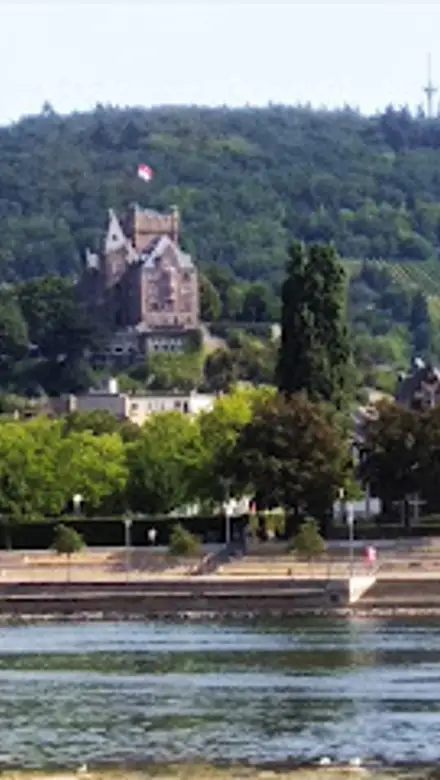
Klopp Castle Travel Guide
Free Guide: Explore Klopp Castle in Bingen am Rhein: A historic landmark with panoramic views of the Rhine Valley, offering a glimpse into Germany's rich past and stunning scenery.


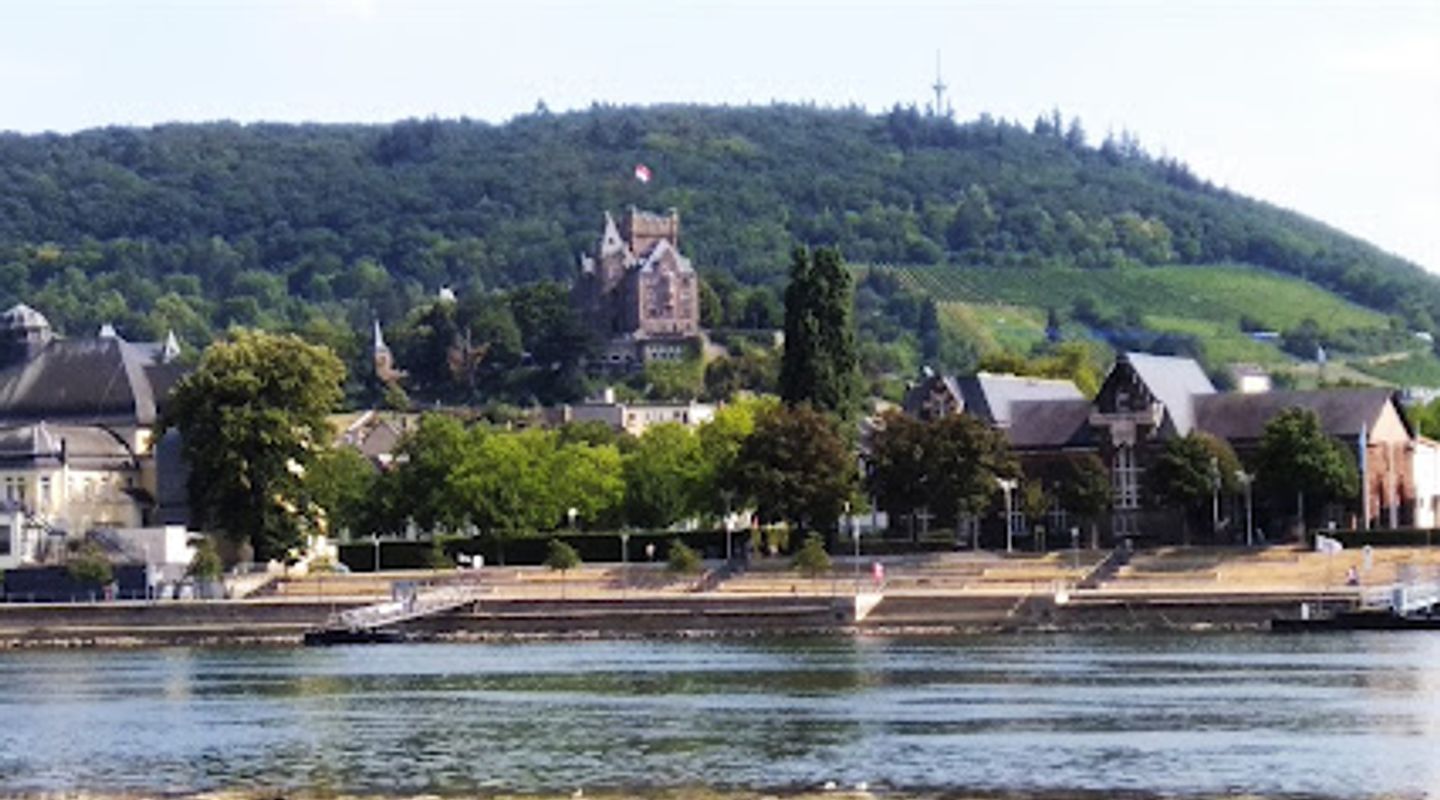
A brief summary of Klopp Castle
Explore Klopp Castle in Bingen am Rhein: A historic landmark with panoramic views of the Rhine Valley, offering a glimpse into Germany's rich past and stunning scenery.
Klopp Castle, perched high above Bingen am Rhein, offers a captivating blend of history and stunning views. Originally a Roman fortification, the site evolved into a medieval stronghold, playing a key role in controlling Rhine River traffic. Though destroyed and rebuilt multiple times, the current Neo-Gothic structure, dating back to the 19th century, houses the town's administration. Visitors can explore the castle courtyard, climb the tower for panoramic vistas, and enjoy the on-site restaurant. Klopp Castle is a prominent landmark, embodying the romantic allure of the Rhine Valley and offering a glimpse into its rich past. Its strategic location and architectural grandeur make it a worthwhile destination for history buffs and sightseers alike. The castle provides a unique perspective on the Rhine River and the surrounding landscape.
- Address
- Mariahilfstraße, 55411 Bingen am Rhein
- Phone
- Website
Getting there
Walking
Public Transport
Taxi/Ride-Share
Driving
Discover more about Klopp Castle
Overview
Klopp Castle, or Burg Klopp as it's known in German, stands majestically atop Burgberg (Castle Hill) overlooking the town of Bingen am Rhein. Its strategic location at the confluence of the Rhine and Nahe rivers has shaped its history for centuries, making it a landmark visible for miles. The site's story begins long before the medieval castle, with evidence suggesting a Roman fortification, possibly built by Nero Claudius Drusus around 10 BCE, occupied the hill. This early Roman presence highlights the location's enduring importance for controlling river traffic and commanding the surrounding landscape. The first documented mention of a castle on Kloppberg appears in 1105 or 1106, linked to the legend of Emperor Henry IV's imprisonment by his son. The medieval castle itself took shape in the 13th century, likely around 1240 when Kloppberg is referenced as a clergyman's residence, with the first official mention of Burg Clopp in 1282. Constructed by Archbishop Siegfried III of Eppstein of Mainz, Klopp Castle, along with Ehrenfels Castle across the Rhine and the Mouse Tower on a nearby island, formed a formidable toll collection system, asserting the Archbishopric's control over lucrative river trade. Throughout the Middle Ages, the castle faced numerous challenges. In 1301, King Albrecht I of Habsburg's troops besieged and severely damaged it during a dispute over toll rights. In 1438, the Archbishop sold Bingen and the castle to the Mainz Cathedral Chapter, granting the townspeople greater control. Despite its strategic importance, the castle gradually fell into disrepair during the 16th century. The Thirty Years' War brought further destruction, but the castle was rebuilt in 1653. However, its rebuilt form was short-lived, as French troops under Louis XIV destroyed it again in 1689 during the War of the Palatine Succession. In 1713, during the War of the Spanish Succession, Mainz forces demolished the remaining structures to prevent enemy use. For over a century, Klopp Castle remained a ruin, a picturesque subject for artists and writers of the Rhine Romanticism era. J.M.W. Turner sketched it from the River Nahe in 1844, capturing its dilapidated state. However, in 1853, a new chapter began when Ludwig Maria Cron, a businessman, acquired the ruins and initiated a Neo-Gothic reconstruction. The gatehouse, bridge, and fortifications were rebuilt, and the keep was transformed into a crenellated tower standing 125 feet high. Eberhard Soherr, the mayor, served as the architect for both the initial reconstruction and the addition of a new Gothic building between 1875 and 1879. In 1897, the town of Bingen purchased Klopp Castle, transforming it into the town hall and a folk museum. The castle suffered damage during World War II, but repairs were carried out in the 1950s. Today, Klopp Castle serves as the seat of Bingen's municipal administration. While the interior is not generally open to the public, the courtyard and tower are accessible, offering panoramic views of the Rhine Valley, the Rheingau, and the Nahe region. Visitors can reach Klopp Castle via a winding path from the town center. The climb is rewarded with stunning views and a sense of history. The castle grounds also feature a restaurant, allowing visitors to enjoy a meal or refreshments while taking in the scenery. The tower provides a 360-degree view of Bingen and the confluence of the Nahe and Rhine rivers. Information boards inside the tower offer insights into the castle's history, though they are primarily in German. Klopp Castle remains a symbol of Bingen and the Rhine Valley, attracting tourists with its rich history, architectural grandeur, and breathtaking views. Whether exploring the courtyard, climbing the tower, or simply admiring it from afar, Klopp Castle offers a glimpse into the region's past and a reminder of its enduring beauty. The castle also hosts events such as the Bingen Swingt jazz festival and the Bingen Winzerfest, further solidifying its role as a cultural hub. The combination of historical significance, architectural interest, and stunning views makes Klopp Castle a must-see destination for anyone visiting the Rhine Valley.
Evendo Review Centre
 Google
Guest reviews
Explore Klopp Castle on the map
A handpicked selection of must-see spots near Klopp Castle, mapped for you.
Get your free copy of our complete guide to Klopp Castle, delivered straight to you.
Everything on this page, from opening hours and how to get there to Eve’s tips and the best time to go, in one PDF you can read offline, print or share.
Already have an account? Sign in
Your Klopp Castle guide is ready.
We'll send it to · Not you? Sign out

Getting your guide ready…
We are putting together a fresh copy of the Klopp Castle guide. This can take up to a minute.
This can take a few moments. If your browser asks, choose Allow so the download can start. You'll find the guide in your Downloads folder.
Nothing happened? Download it again
Sorry, the guide is taking longer than usual. Please try again in a minute, or get it by email instead.
Other nearby places you may find interesting
The closest places of the same kind, if this one is not quite what you had in mind.
-
-
-
-
-


Swipe for more places
More to explore near Klopp Castle

 Best experiences near Klopp Castle
 Best hotels near Klopp Castle
 Best landmarks near Klopp Castle
 Best attractions near Klopp Castle
 Best shops near Klopp Castle
 Best restaurants near Klopp Castle
 Best bars near Klopp Castle
Do you manage this location?
Take control to get all the benefits, like improved information, better appearance, and stronger visibility across AI-powered discovery.
Explore more

Explore more of Lower Rhine
Explore the Lower Rhine: A scenic journey through Germany's lush landscapes, historic treasures, and culinary delights.
Explore Lower Rhine
Explore more of Germany
Experience Germany: where history meets innovation, and urban energy blends with natural beauty. Discover diverse cultures, delicious cuisine, and stunning landscapes.
Explore Germany