

Free Takoradi Travel Guide & Mobile App
Plan your Takoradi trip with Evendo. Get free guides to top attractions, restaurants, hotels, and bars. Web access or download the mobile app.


Takoradi, Ghana’s Atlantic port city, combines coastal history, lively markets, Western Region cuisine and access to beaches, forts and the Ahanta coast.
Port City and Coastal Character
Takoradi occupies a broad stretch of Ghana’s Atlantic coast in the Western Region, where a working harbour, commercial streets and low-rise residential districts meet beaches, lagoons and fishing communities. Although it is commonly spoken of as a city in its own right, Takoradi forms part of the larger Sekondi-Takoradi metropolis, created through the union of the historic towns of Sekondi and Takoradi. Its identity is shaped by the sea: the port supports trade and industry, while the waterfront and nearby beaches provide a slower counterpoint to the city’s business activity.Read more about Takoradi
Markets, Memory and Modern Ghana
Gateway to the Western Coast
When is the best time to visit Takoradi?
Best: December–January · 31–32°C| Month | High (°C) | Rainfall (mm) |
|---|---|---|
| January (best) | 31 | 29 |
| February | 31 | 49 |
| March | 32 | 71 |
| April | 32 | 110 |
| May | 32 | 188 |
| June | 32 | 227 |
| July | 32 | 160 |
| August | 32 | 59 |
| September (best) | 32 | 46 |
| October | 32 | 68 |
| November | 32 | 54 |
| December (best) | 32 | 24 |
Getting to and around Takoradi
How to get there
Transportation
Best attractions in Takoradi
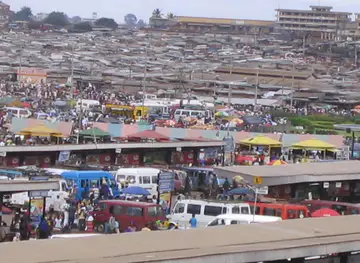
Takoradi’s attractions reflect its role as a working coastal city rather than a resort centre. Takoradi Market Circle is the place to observe everyday commerce, with dense stalls, food sellers and streets that reveal the city’s practical energy. The harbour gives context to Takoradi’s economic importance, although operational areas are controlled and not all sections are open to visitors. Within the wider Sekondi-Takoradi metropolis, Fort Orange in Sekondi offers a tangible connection with the Gold Coast’s European trading era, while the older Sekondi townscape contrasts with Takoradi’s port-led development. Beach Road and nearby coastal stretches provide space for sea views and informal leisure, with organised beach venues offering food and music. Takoradi also makes a useful base for excursions to Busua, Axim, Cape Three Points and other Western Region landscapes, but these lie beyond the city and require separate transport arrangements.
-
Public beach
Virginia Beach Resort
Explore the serene beauty and vibrant culture of Virginia Beach Resort in Takoradi, a perfect getaway for relaxation and adventure on the Atlantic coast.
11 min drive · 3.7 km from city centre
-
 Park
2BN OF INFANTRY FOOTBALL PARK
Discover the tranquil charm of 2BN of Infantry Football Park in Takoradi, a perfect blend of recreation and relaxation in the heart of Ghana.
13 min drive · 4.2 km from city centre
-
Garden
McEhurong Investment
Explore the beauty and tranquility of McEhurong Investment Garden, a serene oasis in Sekondi-Takoradi, perfect for a peaceful retreat.
30 min drive · 10 km from city centre


Best landmarks in Takoradi
Takoradi Harbour is the city’s defining modern landmark, its docks and maritime infrastructure expressing the importance of the port opened in 1928. The railway station and associated transport landscape recall the period when Takoradi linked the coast with the Gold Coast’s mining and agricultural interior. Takoradi Market Circle is less monumental but highly significant as a civic and commercial reference point, anchoring the daily life of the modern city. In nearby Sekondi, Fort Orange is the most prominent historic structure in the metropolitan area, a Dutch-built coastal fortification associated with European competition and Atlantic commerce. The contrast between Fort Orange, Sekondi’s older urban fabric and Takoradi’s port-oriented development helps explain the layered identity of Sekondi-Takoradi. Industrial sites and harbour facilities should be viewed from permitted public areas rather than treated as open monuments.
-
Shopping mall
Takoradi Mall
Explore Takoradi Mall, the ultimate shopping and entertainment destination in Takoradi, Ghana, offering a diverse range of stores and dining options.
15 min walk · 1.2 km from city centre
-
Chop bar
God Is Love Chopbar
Discover the essence of Ghanaian cuisine at God Is Love Chopbar in Takoradi, where every dish tells a story of culture and tradition.
5 min drive · 1.8 km from city centre
-
Restaurant
Vienna City Beach
Discover the lively Vienna City Beach in Takoradi — a perfect blend of relaxation, dining, and vibrant nightlife.
9 min drive · 2.9 km from city centre
-
Hotel
Akroma Plaza
Discover the charm of Takoradi while enjoying a luxurious stay at Akroma Plaza, where comfort meets local culture in a vibrant atmosphere.
5 min drive · 1.6 km from city centre


Explore Takoradi on the map
Plan your Takoradi trip on one map. See where the top attractions, landmarks, restaurants, bars and hotels are, find what's near where you're staying, and book hotels and experiences in a few clicks.
Best hotels in Takoradi
Best restaurants in Takoradi
Takoradi’s food culture is grounded in the coastal cooking of Ghana’s Western Region, where fresh fish, plantain, cassava, cocoyam and pepper-based sauces are central to everyday meals. Grilled fish and banku with hot pepper and accompanying sauces are common choices, while red-red, waakye, jollof rice and soups reflect the broader Ghanaian culinary landscape. Market-side eateries and modest chop bars provide informal meals, often accompanied by fried plantain, rice or stews; hotels and established restaurants add continental dishes and more polished versions of local favourites. Around the commercial centre and main hotel districts, diners can find cafés, bakeries and restaurants serving both Ghanaian and international food. Eating times can be flexible, but popular cooked dishes may be freshest and most plentiful around midday. Fish should be sourced from reputable, busy establishments, particularly during hot weather.
-
Chop bar
God Is Love Chopbar
Discover authentic Ghanaian flavors at God Is Love Chopbar in Takoradi – a culinary gem offering delicious traditional dishes.
5 min drive · 1.8 km from city centre
-
Restaurant
Anaji choice restaurant
Discover the flavors of Ghana at Anaji Choice Restaurant in Takoradi – where tradition meets taste in every bite.
10 min drive · 3.4 km from city centre
-
Restaurant
Han Palace Chinese Restaurant
Experience authentic Chinese flavors at Han Palace in Takoradi – a must-visit culinary destination for food lovers.
9 min drive · 2.8 km from city centre
-
Restaurant
Bombay Indian Restaurant
Experience authentic Indian flavors at Bombay Indian Restaurant in Takoradi - where every dish tells a story.
5 min walk · 0.4 km from city centre


Best bars in Takoradi
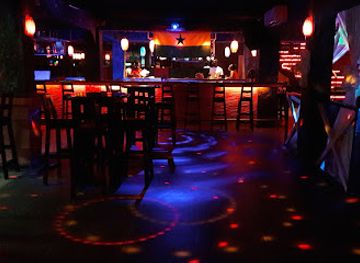
Takoradi’s evening life is concentrated around hotel lounges, restaurants, pubs and entertainment venues in central districts and along routes towards the coast. Beach Road and parts of the wider commercial area can become social meeting points, with music, drinks and informal gatherings rather than one clearly defined nightlife quarter. Highlife, hiplife, Afrobeats and contemporary Ghanaian music are common sounds, and some venues host DJs or live performances. The city’s nightlife is generally more dispersed than that of Accra, ranging from relaxed hotel bars and sports-viewing spots to livelier clubs at weekends. Evening activity can also centre on food, conversation and football rather than dancing. Visitors should establish transport home in advance, avoid isolated waterfront areas after dark and check locally for current venue operations rather than relying on old listings.
-
Chop bar
God Is Love Chopbar
Discover the flavors of Ghana at God Is Love Chopbar, a local favorite in Takoradi offering authentic Ghanaian dishes in a vibrant setting.
5 min drive · 1.8 km from city centre
-
Lounge
Vienna Lounge & Bar
Experience the ultimate nightlife at Vienna Lounge & Bar in Takoradi, where culinary delights meet vibrant entertainment in a stylish setting.
6 min drive · 1.8 km from city centre
-
Restaurant
Paragon bar + grill
Discover the vibrant flavors of Takoradi at Paragon Bar + Grill, where local cuisine meets a lively atmosphere.
8 min drive · 2.5 km from city centre
-
Restaurant
Noble House - Takoradi
Discover the vibrant flavors of Ghana at Noble House - Takoradi, where local cuisine meets international flair in a delightful dining experience.
6 min drive · 2.0 km from city centre


Best nightclubs in Takoradi
Takoradi’s evening life is concentrated around hotel lounges, restaurants, pubs and entertainment venues in central districts and along routes towards the coast. Beach Road and parts of the wider commercial area can become social meeting points, with music, drinks and informal gatherings rather than one clearly defined nightlife quarter. Highlife, hiplife, Afrobeats and contemporary Ghanaian music are common sounds, and some venues host DJs or live performances. The city’s nightlife is generally more dispersed than that of Accra, ranging from relaxed hotel bars and sports-viewing spots to livelier clubs at weekends. Evening activity can also centre on food, conversation and football rather than dancing. Visitors should establish transport home in advance, avoid isolated waterfront areas after dark and check locally for current venue operations rather than relying on old listings.
-
Lounge
Vienna Lounge & Bar
Discover the nightlife at Vienna Lounge & Bar, where vibrant entertainment meets a stylish atmosphere in Takoradi.
6 min drive · 1.8 km from city centre
-
Night club
The Arena Lounge and Club
Discover vibrant nightlife at The Arena Lounge and Club in Takoradi, where lively music and an energetic crowd create unforgettable experiences.
15 min walk · 1.2 km from city centre
-
Night club
90's Lounge 'N' Bar (Quatre-Vingt-Dix)
Experience a nostalgic nightlife at 90's Lounge 'N' Bar, a vibrant club in Takoradi offering retro vibes, cocktails, and unforgettable memories.
13 min drive · 4.3 km from city centre
-
Night club
Game Center
Discover the vibrant nightlife at Takoradi's Game Center, where music and dance create an unforgettable experience in Ghana.
12 min walk · 1.0 km from city centre


Best shops in Takoradi
Shopping in Takoradi is centred on Market Circle and the streets around it, where traders sell Ghanaian fabrics, clothing, toiletries, household goods, fresh produce and prepared foods. The experience is practical and local rather than arranged as a formal souvenir district, and bargaining may be appropriate for some goods but not every product. Smaller shops, supermarkets and commercial centres provide packaged food, craft items and everyday necessities, while tailors and fabric sellers offer a direct connection with Ghana’s clothing culture. Visitors may find locally made woven or printed textiles, beads, shea-based products, baskets and regional foodstuffs, though quality and provenance should be checked carefully. Shops and stalls serving the growing professional community also reflect Takoradi’s oil, port and business economy. Carrying small cedi notes makes market purchases easier.
-
Shopping mall
Takoradi Mall
Explore Takoradi Mall, a vibrant shopping paradise in Ghana, offering diverse retail, dining, and entertainment options for all visitors.
15 min walk · 1.2 km from city centre
-
Shopping mall
Shoprite Takoradi
Discover the vibrant shopping experience at Shoprite Takoradi, where local culture meets modern retail in the heart of Ghana.
15 min walk · 1.2 km from city centre
-
Shopping mall
Anaji Choice Mart
Discover the vibrant shopping experience at Anaji Choice Mart in Takoradi, featuring diverse shops, delightful dining, and family-friendly entertainment.
10 min drive · 3.3 km from city centre
-
Supermarket
All Needs Supermarket Market Circle
Explore local flavors and everyday essentials at All Needs Supermarket in Takoradi, a must-visit for tourists seeking a true taste of Ghana.
7 min walk · 0.6 km from city centre


Get your free copy of our complete guide to Takoradi, delivered straight to you.
Everything on this page, from attractions and restaurants to essentials and local phrases, in one PDF you can read offline, print or share.
Already have an account? Sign in
Your Takoradi guide is ready.
We'll send it to · Not you? Sign out

Getting your guide ready…
We are putting together a fresh copy of the Takoradi guide. This can take up to a minute.
This can take a few moments. If your browser asks, choose Allow so the download can start. You'll find the guide in your Downloads folder.
Nothing happened? Download it again
Sorry, the guide is taking longer than usual. Please try again in a minute, or get it by email instead.
Takoradi essentials
Currency and Payment
Safety
Emergency Situations
Do's and Don'ts
Local Tips
From Eve
Local phrases worth knowing
You don't need to get them perfect. A few words go a long way, and locals appreciate the effort.
Basics
| English | Local | Say it |
|---|---|---|
| Hello | Ɛte sɛn | [eh-teh sen] |
| Goodbye | Ɛdaabi | [eh-dah-bee] |
| Yes | Aane | [ah-neh] |
| No | Daabi | [dah-bee] |
| Please/You're welcome | Mesrɛ | [meh-sreh] |
| Thank you | Medaase | [meh-dah-seh] |
| Excuse me/Sorry | Ɔdɔ bɛn | [oh-doh ben] |
| How are you? | Wofiri anopa? | [woh-fee-ree ah-noh-pah] |
| Fine. And you? | Eye. Na wo ho? | [eh-yeh. nah woh hoh] |
| Do you speak English? | Wo ka Asɛmpa dɛn? | [woh kah ah-sɛm-pah den] |
| I don't understand | Minni tua | [mee-nee twah] |
Eating & Drinking
| English | Local | Say it |
|---|---|---|
| I'd like to see the menu, please | Mepɛ menu no, mesrɛ | [meh-peh meh-noo no, meh-sreh] |
| I don't eat meat | Minni tua ɛto | [mee-nee twah eh-toh] |
| Cheers! | Afehyia pa | [ah-feh-hee-yah pah] |
| I would like to pay, please | Mepɛ sika, mesrɛ | [meh-peh see-kah, meh-sreh] |
Emergencies
| English | Local | Say it |
|---|---|---|
| Help! | Boa me! | [boh-ah meh] |
| Go away! | Yi wo fie! | [yee woh fee-eh] |
| Call the Police! | Kyerɛ polis! | [chee-reh poh-lees] |
| Call a doctor! | Kyerɛ dokita! | [chee-reh doh-kee-tah] |
| I'm lost | Minni tua | [mee-nee twah] |
| I'm ill | Minni pɛ | [mee-nee peh] |
Shopping
| English | Local | Say it |
|---|---|---|
| I'd like to buy... | Mepɛ se... | [meh-peh seh] |
| I'm just looking | Minni tua wɔ ho | [mee-nee twah woh hoh] |
| How much is it? | Ete sɛn? | [eh-teh sen] |
| That's too expensive | Ɛyɛ a eniara | [eh-yeh ah eh-nyah-rah] |
| Can you lower the price? | Wopɛ sika kakra? | [woh-peh see-kah kah-krah] |
Time & Numbers
| English | Local | Say it |
|---|---|---|
| What time is it? | Dɛn ne titi? | [den neh tee-tee] |
| It's one o'clock | Ne titi fie | [neh tee-tee fee-eh] |
| Half past (10) | Hɔn afo (teɛ) | [hone ah-foh (teh)] |
| Morning | Anɔpa | [ah-noh-pah] |
| Afternoon | Awia | [ah-wee-ah] |
| Evening | Anadwo | [ah-nah-dwoh] |
| Yesterday | Nnwensɔ | [nyehn-soh] |
| Today | Ɛnnora | [ehn-noh-rah] |
| Tomorrow | Ɛnnɔ | [ehn-noh] |
| 1 | Baako | [bah-koh] |
| 2 | Mmienu | [mmee-eh-noo] |
| 3 | Mmiɛnsa | [mmee-ehn-sah] |
| 4 | Ɛnan | [eh-nahn] |
| 5 | Enum | [eh-noom] |
| 6 | Nsia | [n-shah] |
| 7 | Nson | [n-sohn] |
| 8 | Nsɛn | [n-sehn] |
| 9 | Nkron | [n-krohn] |
| 10 | Du | [doo] |
Transport & Directions
| English | Local | Say it |
|---|---|---|
| Where's a/the...? | Ɛhefie ne...? | [eh-heh-fee-eh neh] |
| What's the address? | Ɛhe adirɛsi ne? | [eh-heh ah-dee-reh-see neh] |
| Can you show me (on the map)? | Wopɛ sɛ wobɛba me (wɔ map no)? | [woh-peh seh woh-beh-bah meh woh map no] |
| When's the next (bus)? | Ɛhe na ɛyɛ (trotro)? | [eh-heh nah eh-yeah (troh-troh)] |
| A ticket (to ....) | Tiikɛt (ka ....) | [tee-keh-teh (kah)] |
History of Takoradi
Coastal Settlements Before the Port
The coast around present-day Takoradi was inhabited by Akan-speaking communities whose livelihoods were connected to fishing, farming and Atlantic trade. The name Takoradi is generally linked to the older settlement of Amanful and to local traditions surrounding the coastal area, although the exact linguistic history is interpreted in different ways. Before the modern harbour, this was not a large inland administrative centre but part of a network of coastal communities connected by canoe traffic, regional markets and European trading interests. Nearby Sekondi developed a more prominent colonial and maritime profile, while Takoradi remained a smaller settlement whose later importance would depend on railway construction and the creation of a major modern port.
European Forts and Atlantic Commerce
European powers established forts along the Gold Coast to control trade and compete for influence. Fort Orange, built by the Dutch at Sekondi in the late seventeenth century, is the most important surviving fortification in the immediate urban area. Its position reflects the strategic value of the coast, where European commerce intersected with African political authority and local trading networks. The forts were not isolated monuments but instruments in a wider Atlantic system involving gold, timber, commodities and, tragically, the transatlantic slave trade. Their presence helped give Sekondi greater historical visibility than Takoradi, while the two settlements remained linked by geography and coastal commerce.
Railways and Colonial Expansion
Takoradi’s transformation accelerated during the colonial period as British authorities developed rail links from the coast towards the mining and agricultural districts of the Gold Coast. The railway made the coastal settlement an important outlet for minerals and other commodities, connecting the harbour area with the interior and encouraging migration, employment and urban growth. Railway construction also changed the social geography of the region: workers, traders and officials gathered around transport infrastructure, while roads and commercial services expanded alongside it. The surviving railway and port-related landscape therefore represents more than colonial engineering; it records the integration of the Western Region’s resources into a wider export economy.
The Harbour Opens in 1928
Takoradi’s deep-water harbour opened in 1928, creating one of the Gold Coast’s most significant modern transport facilities and firmly establishing the town as a maritime and industrial centre. The harbour was designed to handle bulk exports, including minerals and agricultural products, and it strengthened the railway’s role in moving goods between the coast and the interior. Port employment encouraged further urbanisation and helped Takoradi develop a distinct commercial identity beside older Sekondi. The harbour also tied the town to international shipping routes, making it a practical gateway for trade while reinforcing the social importance of dock workers, railway employees, merchants and migrant communities.
Sekondi-Takoradi and Independence
Sekondi and Takoradi were administratively combined in 1946, creating the urban authority now known as Sekondi-Takoradi. The merged city continued to grow through port activity, railway services, manufacturing and regional commerce. Ghana’s independence in 1957 placed these institutions within a new national framework, while the city retained its role as a principal western seaboard centre. The two historic cores developed different emphases: Sekondi preserved stronger associations with forts, colonial administration and older coastal settlement, whereas Takoradi became particularly identified with the harbour, railway and expanding business districts. Their union explains why the metropolis contains several overlapping urban histories rather than one uniform centre.
Industry, Oil and a Regional City
In the late twentieth and early twenty-first centuries, Takoradi continued to serve as a commercial and industrial hub for Ghana’s Western Region. The discovery and development of offshore oil fields near the western coast brought new attention to the port, along with investment in services, logistics, accommodation and professional activities. This newer economy exists alongside older livelihoods, including fishing, market trading and small-scale commerce. Takoradi today remains shaped by the coexistence of these layers: a working port with international connections, a regional capital of business and education, and a coastal city whose surrounding communities preserve longstanding foodways, festivals and maritime traditions.
Takoradi in Photos
Browse through our photo collection highlighting the charm and character of the destination.
Cities near Takoradi
The closest cities to Takoradi, if you have time for more than one stop.
-

-

-

-
-


Swipe for more cities
Explore more

Explore more of Ghana
Discover Ghana: A vibrant blend of rich history, stunning landscapes, and warm hospitality in the heart of West Africa.
Explore Ghana