

Psarou (Mykonos) Travel Guide - Free
Explore Psarou in Mykonos with Evendo's free guide. Find the best shops, historic streets, restaurants, and gems on web or mobile.


Psarou, Mykonos, combines a sheltered sandy beach, clear Aegean swimming, stylish dining and south-coast glamour near Platys Gialos.
A Sheltered South-Coast Setting
Psarou occupies a small, sheltered cove on the south coast of Mykonos, a short drive from Mykonos Town and close to the neighbouring beaches of Platys Gialos and Paraga. Its appeal is concentrated rather than sprawling: a crescent of pale sand, clear Aegean water, low hills and a narrow coastal road lead to one of the island’s most recognised beach scenes. The bay is protected from some of the strong northern winds that shape the island’s more exposed beaches, making it particularly attractive for swimming and long lunches beside the water.Read more about Psarou
From Quiet Cove to International Address
What a Day in Psarou Feels Like
Best landmarks in Psarou
Psarou’s defining landmark is the beach itself: a small, sheltered crescent whose clear water, pale sand and enclosing hills have made it one of Mykonos’s most recognisable coastal settings. The beachfront complex associated with Nammos is the principal contemporary built reference point, reflecting the shift from a lightly developed rural cove to an internationally marketed luxury destination. The surrounding dry-stone edges, low hills and narrow approach roads are less formal landmarks but help preserve the area’s visual relationship with the traditional Cycladic landscape. Psarou does not contain a major historic church, civic square or dense architectural quarter, so its significance lies in the meeting of natural geography and modern hospitality development rather than in a collection of monumental buildings.
-
Restaurant
NAMMOS Mykonos
Experience opulent beach life at Nammos Mykonos: world-class dining, high-end shopping, and unforgettable parties on Psarou Beach.
1 min walk · 0.1 km from neighbourhood centre
-
Beach
Psarou beach
Experience the allure of Mykonos at Psarou Beach: Emerald waters, golden sands, and a playground for celebrities and jet-setters.
1 min walk · 0.1 km from neighbourhood centre


Explore Psarou on the map
A handpicked selection of must-see spots in Psarou, mapped for you.
Best hotels in Psarou
Best bars in Psarou
Psarou’s evening scene is centred on beachfront dining, music and the later stages of the beach-club day rather than on a concentrated strip of independent bars and nightclubs. Nammos is the area’s most recognisable nightlife name, giving the cove an international, event-driven profile during the summer season, although the exact programme and opening pattern vary. After dark, the atmosphere can remain social and polished, but Psarou is not the same kind of late-night district as Mykonos Town, where bars and clubs continue along the narrow central lanes. Visitors should arrange transport back in advance, avoid walking unfamiliar roads after drinking and check directly with venues about seasonal entertainment, reservations and closing arrangements.
-
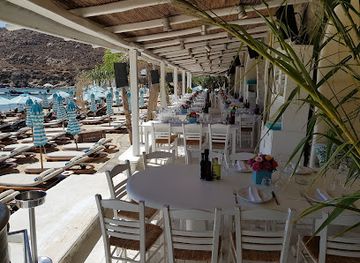
Restaurant
NAMMOS Mykonos
Discover the luxury and vibrant atmosphere of NAMMOS Mykonos, where exquisite dining meets breathtaking beach views.
1 min walk · 0.1 km from neighbourhood centre
Best nightclubs in Psarou
Psarou’s evening scene is centred on beachfront dining, music and the later stages of the beach-club day rather than on a concentrated strip of independent bars and nightclubs. Nammos is the area’s most recognisable nightlife name, giving the cove an international, event-driven profile during the summer season, although the exact programme and opening pattern vary. After dark, the atmosphere can remain social and polished, but Psarou is not the same kind of late-night district as Mykonos Town, where bars and clubs continue along the narrow central lanes. Visitors should arrange transport back in advance, avoid walking unfamiliar roads after drinking and check directly with venues about seasonal entertainment, reservations and closing arrangements.
-
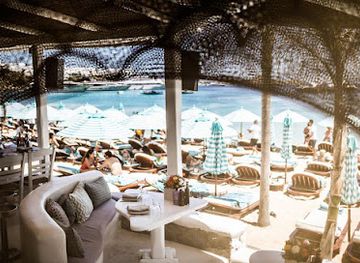
Restaurant
NAMMOS Mykonos
Discover the luxurious lifestyle at NAMMOS Mykonos, where exquisite dining meets vibrant nightlife on the stunning shores of Psarrou.
1 min walk · 0.1 km from neighbourhood centre
Best shops in Psarou
Shopping in Psarou is limited and closely connected to the beach experience rather than organised around a traditional retail street. Visitors may encounter seasonal beachwear, resort fashion, accessories and upscale lifestyle goods through the area’s hospitality businesses, but Psarou should not be confused with Mykonos Town’s network of boutiques, jewellers, galleries and gift shops. The commercial focus is on time spent by the water, dining and beach services, with relatively little everyday retail for residents or independent browsing. Those looking for ceramics, jewellery, art, local food products or a broader selection of Cycladic souvenirs should continue to Mykonos Town or investigate the shops around nearby Platys Gialos and Ornos. Stock, access and opening patterns are particularly seasonal, so shopping should be treated as incidental rather than the main reason to visit the cove.
-
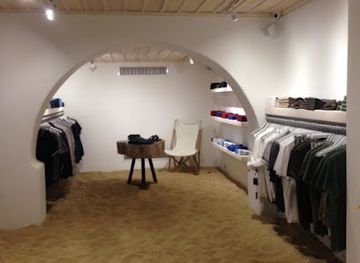
Men's clothing store
Collective Resort
Explore high-end men's fashion at the Collective Resort, a luxurious shopping destination on Mykonos' Nammos Psarou Beach.
1 min walk · 0.1 km from neighbourhood centre
-
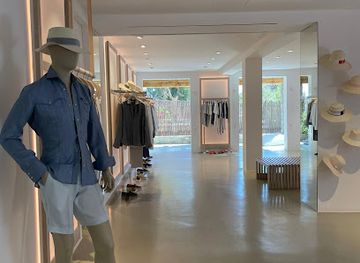
 Boutique
Borsalino Nammos Village
Discover the epitome of luxury shopping at Borsalino in Nammos Village, where high fashion meets the stunning beauty of Mykonos.
1 min walk · 0.1 km from neighbourhood centre
-
Clothing store
100% Capri Nammos
Explore luxury Italian fashion at 100% Capri Nammos in Mykonos, where style meets the stunning beauty of Psarou Beach.
1 min walk · 0.1 km from neighbourhood centre
Psarou essentials
Getting There
Getting Around
Safety
Emergency Situations
Do's and Don'ts
Local Tips

From Eve
Local phrases worth knowing
You don't need to get them perfect. A few words go a long way, and locals appreciate the effort.
Basics
| English | Local | Say it |
|---|---|---|
| Hello | Γεια σας | [Ya sas] |
| Goodbye | Αντίο | [Adio] |
| Yes | Ναι | [Ne] |
| No | Όχι | [Ohi] |
| Please/You're welcome | Παρακαλώ | [Para-kalo] |
| Thank you | Ευχαριστώ | [Ef-ha-ri-sto] |
| Excuse me/Sorry | Συγνώμη | [Sig-no-mi] |
| How are you? | Πώς είστε; | [Pos iste?] |
| Fine. And you? | Καλά. Εσείς; | [Ka-la. E-sis?] |
| Do you speak English? | Μιλάτε αγγλικά; | [Mi-la-te ang-li-ka?] |
| I don't understand | Δεν καταλαβαίνω | [Den ka-ta-la-ve-no] |
Eating & Drinking
| English | Local | Say it |
|---|---|---|
| I'd like to see the menu, please | Θα ήθελα να δω το μενού, παρακαλώ | [Tha i-thela na do to me-nou, para-kalo] |
| I don't eat meat | Δεν τρώω κρέας | [Den tro-o kre-as] |
| Cheers! | Υγεία! | [I-ya] |
| I would like to pay, please | Θα ήθελα να πληρώσω, παρακαλώ | [Tha i-thela na pli-ro-so, para-kalo] |
Emergencies
| English | Local | Say it |
|---|---|---|
| Help! | Βοήθεια! | [Vo-i-thi-a!] |
| Go away! | Φύγε! | [Fi-ge!] |
| Call the Police! | Καλέστε την αστυνομία! | [Ka-le-ste tin as-ti-no-mi-a!] |
| Call a doctor! | Καλέστε έναν γιατρό! | [Ka-le-ste e-nan gia-tro!] |
| I'm lost | Έχω χαθεί | [E-ho ha-thi] |
| I'm ill | Είμαι άρρωστος | [E-mi a-ro-stos] |
Shopping
| English | Local | Say it |
|---|---|---|
| I'd like to buy... | Θα ήθελα να αγοράσω... | [Tha i-thela na a-go-ra-so...] |
| I'm just looking | Απλά κοιτάω | [A-pla ki-ta-o] |
| How much is it? | Πόσο κοστίζει; | [Po-so kos-ti-zi?] |
| That's too expensive | Αυτό είναι πολύ ακριβό | [Af-to i-ne po-li ak-ri-vo] |
| Can you lower the price? | Μπορείτε να μειώσετε την τιμή; | [Bo-ri-te na mi-o-se-te tin ti-mi?] |
Time & Numbers
| English | Local | Say it |
|---|---|---|
| What time is it? | Τι ώρα είναι; | [Ti o-ra i-ne?] |
| It's one o'clock | Είναι μία η ώρα | [I-ne mi-a i o-ra] |
| Half past (10) | Μισή (10) | [Mi-si (de-ka)] |
| Morning | Πρωί | [Pro-i] |
| Afternoon | Απόγευμα | [A-po-yef-ma] |
| Evening | Βράδυ | [Vra-di] |
| Yesterday | Χθες | [Hthes] |
| Today | Σήμερα | [Si-me-ra] |
| Tomorrow | Αύριο | [Af-ri-o] |
| 1 | Ένα | [E-na] |
| 2 | Δύο | [Thi-o] |
| 3 | Τρία | [Tri-a] |
| 4 | Τέσσερα | [Tes-se-ra] |
| 5 | Πέντε | [Pen-te] |
| 6 | Έξι | [E-xi] |
| 7 | Εφτά | [Ef-ta] |
| 8 | Οκτώ | [Ok-to] |
| 9 | Εννιά | [En-ni-a] |
| 10 | Δέκα | [De-ka] |
Transport & Directions
| English | Local | Say it |
|---|---|---|
| Where's a/the...? | Πού είναι ένας/η...; | [Pu i-ne e-nas/e...?] |
| What's the address? | Ποια είναι η διεύθυνση; | [Pia i-ne i di-ef-thin-si?] |
| Can you show me (on the map)? | Μπορείτε να μου δείξετε (στο χάρτη); | [Bo-ri-te na mu di-xe-te (sto har-ti)?] |
| When's the next (bus)? | Πότε είναι το επόμενο (λεωφορείο); | [Po-te i-ne to e-po-me-no (le-o-fo-re-o)?] |
| A ticket (to ....) | Ένα εισιτήριο (για το ...); | [E-na i-si-ti-ri-o (ya to ...)?] |
History of Psarou
A Rural South-Coast Cove
Before the rise of mass tourism on Mykonos, Psarou was part of the island’s rural south coast, where small coves, dry hillsides and limited road access shaped everyday life. The bay’s sheltered position made it useful to local fishers, while the surrounding land reflected the island’s traditional agricultural landscape of stone boundaries, scrub and seasonal cultivation. There was no substantial urban settlement in the cove: its identity came from the beach and its relationship with nearby rural tracks and coastal communities. This low-density character is important to understanding why Psarou remains physically compact even though it later acquired an international reputation.
Tourism Reaches the South Coast
The expansion of tourism on Mykonos during the mid- and late twentieth century gradually brought improved roads, restaurants and beach facilities to the island’s southern coves. Psarou benefited from its proximity to Mykonos Town and from the calmer swimming conditions offered by its orientation and shelter. The neighbouring beach of Platys Gialos developed as a particularly important access point for the south-coast beach circuit, while Psarou remained smaller and more concentrated. As visitors increasingly travelled between beaches by road and seasonal boat services, the cove moved from local seaside use into the island’s expanding tourism economy.
The Rise of a Luxury Beach Identity
In the late twentieth and early twenty-first centuries, the development of high-profile dining and beach-club operations altered Psarou’s image. Nammos became the best-known name associated with the beach, helping position the cove within Mykonos’s luxury-oriented international tourism market. The change brought greater seasonal activity, celebrity attention and commercial intensity, but it did not turn Psarou into a conventional town: the neighbourhood remains centred on one beach, a limited access road and surrounding hills. Its contemporary identity is therefore defined by the contrast between a small natural setting and an influential global hospitality brand.
Psarou in Photos
Browse through our photo collection highlighting the charm and character of the destination.
Neighbourhoods near Psarou
The closest neighbourhoods to Psarou, if you have time for more than one stop.
-
-

-

-


Swipe for more neighbourhoods
Explore more
Explore more of Mykonos
Mykonos blends whitewashed Cycladic architecture, ancient Delos excursions, famous beaches, island cuisine and lively Aegean nightlife in Greece.
Explore Mykonos