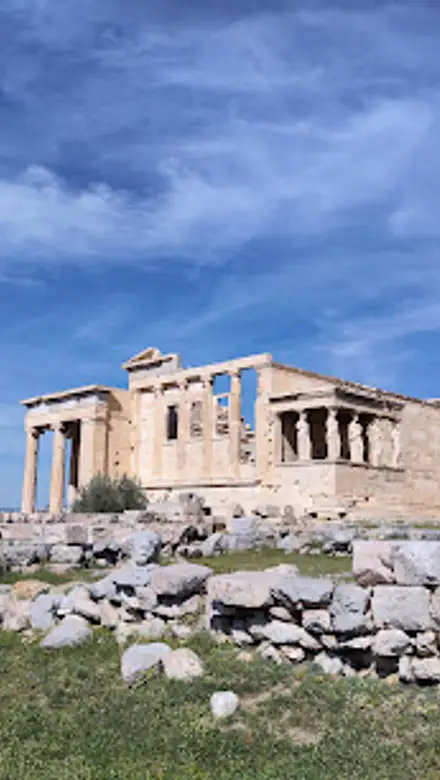
Parthenon Travel Guide
Free Guide: Explore the Parthenon, an iconic symbol of ancient Greece and Athenian democracy, standing proudly on the Acropolis for over 2,500 years.


A brief summary of Parthenon
Explore the Parthenon, an iconic symbol of ancient Greece and Athenian democracy, standing proudly on the Acropolis for over 2,500 years.
The Parthenon, a majestic marble temple dedicated to the Greek goddess Athena, stands proudly atop the Acropolis in Athens. Built in the 5th century BC, it remains a powerful symbol of ancient Greece, Athenian democracy, and Western civilization, despite enduring centuries of war, explosions, and looting.
Opening hours
- Every dayOpen 24 hours
Opening hours as listed on the venue’s Google Business Profile. Hours can change for services and special events, so check with the venue before you go.
- Address
- Athens 105 58
- Phone
- Website
Getting there
Metro
Bus
Walking
Taxi
Discover more about Parthenon
Overview
The Parthenon, an iconic symbol of ancient Greece, dominates the Acropolis of Athens. Constructed between 447 and 432 BC, during the height of the Athenian Empire, it was dedicated to Athena Parthenos, the city's patron goddess. The temple was part of a vast building program initiated by Athenian statesman Pericles.The Parthenon replaced an earlier temple that was destroyed by the Persians in 480 BC. Architects Iktinos and Kallikrates designed the temple, while the renowned sculptor Phidias oversaw the sculptural decoration. The temple's innovative architectural features and harmonic proportions have been celebrated and emulated for millennia. Constructed primarily of Pentelic marble, the Parthenon required immense resources and skilled labor.Over its long history, the Parthenon has served various purposes. In the 6th century AD, it was converted into a Christian church, and later, under Ottoman rule, it became a mosque. In 1687, during a Venetian siege, an explosion caused severe damage to the structure when it was being used as a gunpowder magazine. In the early 19th century, Lord Elgin removed many of the surviving sculptures, now known as the Elgin Marbles, which are housed in the British Museum. Today, the Parthenon is undergoing extensive restoration to preserve its structural integrity and remaining artifacts. Visitors can explore the Acropolis and marvel at the Parthenon's architecture and historical significance. Though entry inside the structure is not permitted, the exterior view and surrounding site offer a profound connection to the past.
Evendo Review Centre
 Google
Guest reviews
Explore Parthenon on the map
A handpicked selection of must-see spots near Parthenon, mapped for you.
Get your free copy of our complete guide to Parthenon, delivered straight to you.
Everything on this page, from opening hours and how to get there to Eve’s tips and the best time to go, in one PDF you can read offline, print or share.
Already have an account? Sign in
Your Parthenon guide is ready.
We'll send it to · Not you? Sign out

Getting your guide ready…
We are putting together a fresh copy of the Parthenon guide. This can take up to a minute.
This can take a few moments. If your browser asks, choose Allow so the download can start. You'll find the guide in your Downloads folder.
Nothing happened? Download it again
Sorry, the guide is taking longer than usual. Please try again in a minute, or get it by email instead.
Unlock the best of Parthenon
Skip-the-line tickets, guided tours with entry, and walking tours of the area, booked in a few clicks.
 Tour with entry
Athens Walking Tour: Self-Guided City Game
from $7.24 Tour with entry
Acropolis of Athens: In-depth Historical Tour with a Historian
from $31.98 Tour with entry
Acropolis and Parthenon Guided Walking Tour
from $36.24 Tour with entry
Guided tour of the Acropolis and Parthenon in Athens
from $36.24


Other nearby places you may find interesting
The closest places of the same kind, if this one is not quite what you had in mind.
-
-
-
-
-


Swipe for more places
More to explore near Parthenon

 Best experiences near Parthenon
 Best hotels near Parthenon
 Best landmarks near Parthenon
 Best attractions near Parthenon
 Best shops near Parthenon
 Best restaurants near Parthenon
 Best bars near Parthenon
Do you manage this location?
Take control to get all the benefits, like improved information, better appearance, and stronger visibility across AI-powered discovery.
Explore more
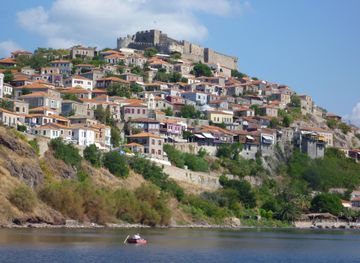
Explore more of North Aegean
Discover the serene beauty, historical richness, and cultural allure of the North Aegean in Greece, where each island tells its own enchanting story.
Explore North Aegean
Explore more of Greece
Discover Greece: A land where ancient history meets modern vibrancy, offering stunning islands, crystal-clear seas, and unforgettable cultural experiences.
Explore Greece