

Imerovigli (Santorini) Travel Guide - Free
Explore Imerovigli in Santorini with Evendo's free guide. Find the best shops, historic streets, restaurants, and gems on web or mobile.


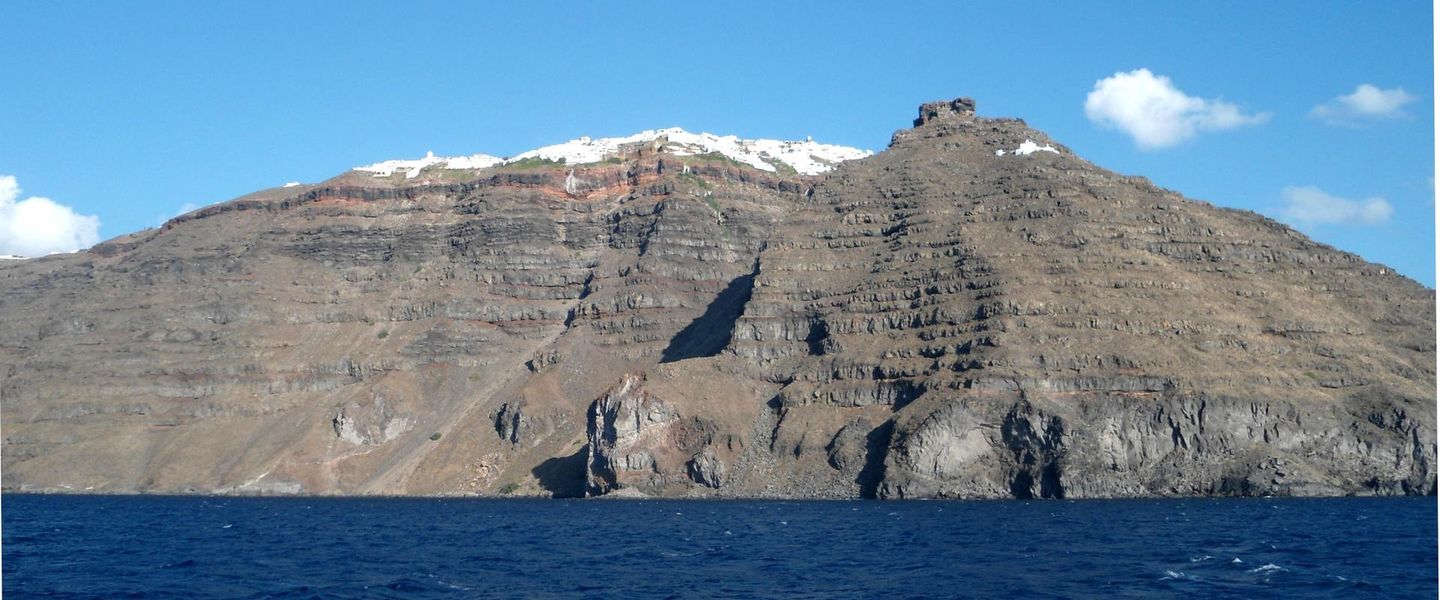


Imerovigli, Santorini, explores caldera views, Skaros Rock, cave houses and sunset walks near Fira in the Cyclades, Greece for slow island days.
Village Above the Caldera
Imerovigli occupies a high section of Santorini’s caldera rim, immediately north of Fira, where whitewashed buildings descend in terraces towards the volcanic sea. Its name is commonly linked to vigla, meaning a lookout or watchtower, an apt reference to the settlement’s elevated position. The village is quieter and more residential in feel than Fira, although its hotels, restaurants and sunset terraces make it one of the island’s best-known places to stay. Narrow pedestrian lanes connect small churches, cave houses, private courtyards and viewpoints, while the paved caldera path leads south towards Fira through a succession of dramatic vistas.Read more about Imerovigli
Skaros and the Village Landscape
Evenings on the Rim
Best attractions in Imerovigli
Imerovigli’s principal attraction is its position along Santorini’s caldera rim, where paved paths open to views across the submerged volcanic basin, Thirasia and the Aegean. The route towards Fira is itself a major sightseeing experience, passing whitewashed buildings, blue-domed churches, cave-style dwellings and hotel terraces cut into the slope. Below the village, Skaros Rock provides the area’s most dramatic excursion: a rocky promontory associated with medieval fortification, reached by a steep path that continues towards the small chapel of Theoskepasti. The walk is more demanding than the village lanes and should be attempted in suitable footwear. Visitors can also explore the Church of Anastasi and other caldera-edge chapels, though many religious buildings remain active places of worship. Imerovigli’s appeal lies less in a large museum collection than in the relationship between architecture, volcanic geology, open horizons and carefully preserved walking routes.
-
Fortress
Skaros Rock
Discover the breathtaking views and rich history of Skaros Rock, an iconic fortress and scenic spot in Santorini, perfect for stunning sunsets and exploration.
5 min walk · 0.4 km from neighbourhood centre
-
Greek Orthodox church
Church of the Resurrection of the Lord
Explore the Church of the Resurrection of the Lord in Imerovigli, a stunning Greek Orthodox church offering breathtaking views and rich cultural heritage.
1 min walk · 0.1 km from neighbourhood centre
-
Tourist attraction
Three Bells of Fira iconic viewpoint
Experience the iconic Three Bells of Fira, a captivating viewpoint offering stunning panoramas of Santorini's caldera and the Aegean Sea.
14 min walk · 1.1 km from neighbourhood centre
-
Convent
Saint Nikolaos Holy Convent
Experience the serene beauty and rich spiritual heritage of the Saint Nikolaos Holy Convent in Imerovigli, Santorini.
6 min walk · 0.5 km from neighbourhood centre


Best landmarks in Imerovigli
Skaros Rock is Imerovigli’s defining landmark, a rugged volcanic outcrop below the caldera rim whose strategic position made it associated with a medieval fortified settlement. The path descending towards it leads to Theoskepasti, a small chapel set beneath the rock and reached by steps and uneven ground. In the village itself, the Church of Anastasi is recognisable for its white surfaces and blue dome, while other small Orthodox churches punctuate the caldera skyline and local lanes. Traditional cave houses, vaulted interiors, volcanic-stone walls and narrow passages are also important architectural features, although many have been restored or adapted for hospitality. Rather than standing as isolated monuments, these elements form a continuous cliff settlement shaped by earthquakes, limited building land and the need to work with volcanic terrain. The caldera edge remains the neighbourhood’s most powerful geographic and symbolic boundary.
-
Fortress
Skaros Rock
Explore Skaros Rock in Santorini: Hike to a historic fortress with stunning caldera views. A must-see landmark sculpted by time and volcanic activity.
5 min walk · 0.4 km from neighbourhood centre
-
Catholic church
Three Bells of Fira
Capture the iconic beauty of Santorini at the Three Bells of Fira, with stunning caldera views and classic Cycladic architecture.
14 min walk · 1.1 km from neighbourhood centre
-
Greek Orthodox church
Church of the Resurrection of the Lord
Discover the iconic blue-domed Church of the Resurrection in Imerovigli, Santorini, offering stunning views and a serene spiritual experience.
1 min walk · 0.1 km from neighbourhood centre
-
Scenic spot
Imerovigli Viewpoint
Experience breathtaking panoramic views of Santorini's caldera, volcano, and the Aegean Sea from the tranquil Imerovigli Viewpoint.
5 min walk · 0.4 km from neighbourhood centre


Explore Imerovigli on the map
A handpicked selection of must-see spots in Imerovigli, mapped for you.
Best hotels in Imerovigli
Best restaurants in Imerovigli
Dining in Imerovigli is shaped by the caldera rather than by a traditional market street or dense restaurant quarter. Restaurants, hotel dining rooms and terrace venues concentrate around the ridge, with menus commonly drawing on Santorinian and wider Greek ingredients such as fava, tomatoes, capers, aubergine, grilled fish and local cheeses, alongside contemporary Mediterranean cooking. Breakfast and light meals are widely associated with accommodation terraces, while evening tables focus on the western outlook and the changing light over the volcano. Visitor demand means reservations may be sensible for sought-after caldera-facing settings, although exact arrangements vary by season. The village has fewer everyday food shops and informal eateries than Fira, so independent travellers should plan provisions rather than rely on a large local market. For a broader choice of bakeries, takeaway food and traditional tavernas, Fira and inland villages offer useful nearby alternatives.
-
Greek
Anogi
Discover Anogi in Imerovigli: where traditional Greek flavors meet stunning caldera views for an unforgettable dining experience.
1 min walk · 0.1 km from neighbourhood centre
-
Mediterranean
Avocado
Experience exquisite Mediterranean dining at Avocado in Imerovigli – where flavor meets stunning caldera views.
3 min walk · 0.2 km from neighbourhood centre
-
Greek
Aegean Restaurant
Experience authentic Greek flavors at Aegean Restaurant while enjoying stunning caldera views in picturesque Imerovigli.
3 min walk · 0.2 km from neighbourhood centre
-
Restaurant
Mama Lena
Experience authentic Greek flavors with stunning caldera views at Mama Lena in Imerovigli.
1 min walk · 0.1 km from neighbourhood centre


Best bars in Imerovigli
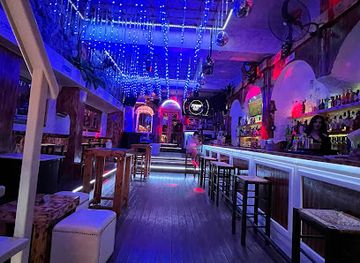
Imerovigli’s evening scene is predominantly quiet and view-led rather than club-oriented. Hotel bars, cocktail terraces and restaurant lounges provide places to watch the sunset and continue with a drink, while the caldera path becomes a peaceful route between accommodation and dining venues after dark. The neighbourhood does not have the concentrated nightlife of Fira, and visitors seeking late music venues, larger bars or clubs will generally need to travel south to the island’s capital. Evenings in Imerovigli are better suited to conversation, wine and open views than to dancing, although the atmosphere can become busier around popular sunset terraces during the high season. Because many establishments are integrated into hotels or residential buildings, considerate noise levels matter, particularly when returning along narrow lanes. Availability and opening patterns vary considerably by season.
-
Bar
Buddha-Bar
Discover the luxurious Buddha-Bar in Imerovigli, where fine dining meets vibrant nightlife against stunning Aegean views.
1 min walk · 0.1 km from neighbourhood centre
-
Bar
The Wine Bar
Experience the best of Santorini with exceptional wines, stunning views, and a warm atmosphere at The Wine Bar in Imerovigli.
4 min walk · 0.3 km from neighbourhood centre
-
Cocktail bar
Bar To Navagio
Experience the best cocktails in Imerovigli at Bar To Navagio, where stunning views meet exquisite flavors in a lively atmosphere.
3 min walk · 0.2 km from neighbourhood centre
-
Bar
Altana Cafe Bar
Discover the stunning views and unique cocktails at Altana Cafe Bar in Imerovigli, Santorini – a perfect spot for relaxation and unforgettable sunsets.
1 min walk · 0.1 km from neighbourhood centre


Best nightclubs in Imerovigli
Imerovigli’s evening scene is predominantly quiet and view-led rather than club-oriented. Hotel bars, cocktail terraces and restaurant lounges provide places to watch the sunset and continue with a drink, while the caldera path becomes a peaceful route between accommodation and dining venues after dark. The neighbourhood does not have the concentrated nightlife of Fira, and visitors seeking late music venues, larger bars or clubs will generally need to travel south to the island’s capital. Evenings in Imerovigli are better suited to conversation, wine and open views than to dancing, although the atmosphere can become busier around popular sunset terraces during the high season. Because many establishments are integrated into hotels or residential buildings, considerate noise levels matter, particularly when returning along narrow lanes. Availability and opening patterns vary considerably by season.
-
Bar
Buddha-Bar
Experience the ultimate luxury dining and cocktail experience at Buddha-Bar in Imerovigli, Santorini, where breathtaking views meet exquisite cuisine.
1 min walk · 0.1 km from neighbourhood centre
-
Night club
Koo Club
Experience the electric atmosphere of Koo Club, Fira's premier night club, where vibrant music and unforgettable nights await you.
5 min drive · 1.7 km from neighbourhood centre
-
Night club
Town Club
Discover the lively nightlife at Town Club in Fira, where music, dance, and a vibrant atmosphere create unforgettable memories.
5 min drive · 1.7 km from neighbourhood centre
-
Night club
Casablanca Soul
Discover the nightlife of Santorini at Casablanca Soul, where live music and cocktails create an unforgettable experience in the heart of Fira.
5 min drive · 1.8 km from neighbourhood centre



Best shops in Imerovigli
Shopping in Imerovigli is limited and closely tied to the visitor economy, with small boutiques, jewellery and craft shops, art galleries, souvenir retailers and hotel-associated stores scattered along the caldera approach rather than concentrated in a large commercial street. The most distinctive purchases may include local ceramics, textiles, jewellery, artwork and packaged Santorinian food products, but stock and opening patterns vary with the season. The village is not the island’s main place for a practical market shop, and everyday groceries are more easily found in larger settlements or along the main road. Browsing works best as part of a walk between viewpoints, churches and restaurants, when the contrast between contemporary boutiques and older whitewashed or volcanic-stone buildings becomes apparent. Visitors should treat small galleries and independent shops as individual businesses rather than assuming that all products are locally made.
-
Convenience store
Jimmy's Market Cava - Super Market - Krielas L.-Kafieri M. O.E
Explore local delights and essentials at Jimmy's Market Cava, a charming convenience store in the heart of Imerovigli, Santorini.
2 min walk · 0.2 km from neighbourhood centre
-
Grocery store
Grocery store mini market
Explore the authentic taste of Santorini at Imerovigli's charming grocery store mini market, offering fresh produce and local delights.
3 min walk · 0.3 km from neighbourhood centre
-
Grocery store
Supermarket
Discover the heart of Imerovigli at this local grocery store, where you can find fresh produce, traditional delicacies, and an authentic Greek experience.
1 min walk · 0.1 km from neighbourhood centre
-
Clothing store
Pegasus Boutique Santorini
Pegasus Boutique Santorini: Where Style Meets the Spectacular Views of Imerovigli
5 min walk · 0.4 km from neighbourhood centre


Imerovigli essentials
Getting There
Getting Around
Safety
Emergency Situations
Do's and Don'ts
Local Tips

From Eve
Local phrases worth knowing
You don't need to get them perfect. A few words go a long way, and locals appreciate the effort.
Basics
| English | Local | Say it |
|---|---|---|
| Hello | Γεια σας | [Ya sas] |
| Goodbye | Αντίο | [Adio] |
| Yes | Ναι | [Ne] |
| No | Όχι | [Ohi] |
| Please/You're welcome | Παρακαλώ | [Parakalo] |
| Thank you | Ευχαριστώ | [Efharisto] |
| Excuse me/Sorry | Συγγνώμη | [Signomi] |
| How are you? | Πώς είστε; | [Pos iste?] |
| Fine. And you? | Καλά. Εσείς; | [Kala. Esis?] |
| Do you speak English? | Μιλάτε αγγλικά; | [Milate anglika?] |
| I don't understand | Δεν καταλαβαίνω | [Den katalaveno] |
Eating & Drinking
| English | Local | Say it |
|---|---|---|
| I'd like to see the menu, please | Θα ήθελα να δω το μενού, παρακαλώ | [Tha ithela na do to menu, parakalo] |
| I don't eat meat | Δεν τρώω κρέας | [Den troo kreas] |
| Cheers! | Υγεία! | [Ygeia!] |
| I would like to pay, please | Θα ήθελα να πληρώσω, παρακαλώ | [Tha ithela na plirosso, parakalo] |
Emergencies
| English | Local | Say it |
|---|---|---|
| Help! | Βοήθεια! | [Voithia!] |
| Go away! | Φύγε! | [Fiye!] |
| Call the Police! | Καλέστε την Αστυνομία! | [Kaleste tin Astinomia!] |
| Call a doctor! | Καλέστε γιατρό! | [Kaleste giatro!] |
| I'm lost | Έχω χαθεί | [Eho hathi] |
| I'm ill | Είμαι άρρωστος | [Eimai arrostos] |
Shopping
| English | Local | Say it |
|---|---|---|
| I'd like to buy... | Θα ήθελα να αγοράσω... | [Tha ithela na agoraso...] |
| I'm just looking | Απλά κοιτάω | [Apla kitao] |
| How much is it? | Πόσο κοστίζει; | [Poso kostizi?] |
| That's too expensive | Αυτό είναι πολύ ακριβό | [Afto ine poli akribo] |
| Can you lower the price? | Μπορείτε να μειώσετε την τιμή; | [Boreite na miosete tin timi?] |
Time & Numbers
| English | Local | Say it |
|---|---|---|
| What time is it? | Τι ώρα είναι; | [Ti ora ine?] |
| It's one o'clock | Είναι μία ώρα | [Ine mia ora] |
| Half past (10) | Μισή (10) | [Misi (10)] |
| Morning | Πρωί | [Proi] |
| Afternoon | Απόγευμα | [Apoyevma] |
| Evening | Βράδυ | [Vradi] |
| Yesterday | Χθες | [Hthes] |
| Today | Σήμερα | [Simera] |
| Tomorrow | Αύριο | [Avrio] |
| 1 | Ένα | [Ena] |
| 2 | Δύο | [Dio] |
| 3 | Τρία | [Tria] |
| 4 | Τέσσερα | [Tessera] |
| 5 | Πέντε | [Pente] |
| 6 | Έξι | [Exi] |
| 7 | Εφτά | [Efta] |
| 8 | Οχτώ | [Ohto] |
| 9 | Εννέα | [Ennea] |
| 10 | Δέκα | [Deka] |
Transport & Directions
| English | Local | Say it |
|---|---|---|
| Where's a/the...? | Πού είναι ένα/το...; | [Pou ine ena/to...?] |
| What's the address? | Ποια είναι η διεύθυνση; | [Poia ine i diefthinsi?] |
| Can you show me (on the map)? | Μπορείτε να μου δείξετε (στο χάρτη); | [Boreite na mou dixete (sto charti)?] |
| When's the next (bus)? | Πότε είναι το επόμενο (λεωφορείο); | [Pote ine to epomeno (leoforeio)?] |
| A ticket (to ....) | Ένα εισιτήριο (για ....); | [Ena isitirio (ya ....)?] |
History of Imerovigli
A Lookout Above the Caldera
Imerovigli developed on the high caldera rim at a naturally defensive and highly visible position. Its name is generally associated with the Greek word vigla, referring to a lookout, reflecting Santorini’s historic need to monitor movement across the Aegean. The settlement’s elevated location also shaped its relationship with the sea: rather than growing around a sheltered harbour, it was organised along the plateau and cliff edge. Traditional dwellings were adapted to the volcanic ground, with houses and storage spaces often cut into or built against the slope. This combination of watchpoint, village and agricultural settlement established the physical character that remains visible in the lanes above Skaros.
Skaros and the Medieval Stronghold
Skaros became the principal fortified feature of the area during the medieval period, when Santorini formed part of the maritime world controlled by Venetian rulers. The settlement on and around the rock was one of the island’s important defensive centres, protected by its steep position above the caldera. Its role was linked to the wider threat of piracy and to the need for secure places of residence and administration. Over time, the fortified settlement declined as political conditions changed, while earthquakes and the instability of the volcanic landscape affected the buildings. The surviving rock, pathways and chapels provide the clearest physical reminder of this earlier phase of Imerovigli’s history.
Earthquakes and Changing Settlement
Imerovigli, like other villages on Santorini’s caldera rim, was shaped by repeated seismic activity. Earthquakes damaged or destroyed buildings over the centuries, and the strong earthquake of 1956 had a particularly serious effect across the island. Reconstruction altered the appearance and construction of many properties, even as traditional forms such as whitewashed walls, barrel vaults and cave-like interiors continued to influence rebuilding. The settlement’s relationship with Skaros also changed as the old fortified centre ceased to function as the focus of everyday life. Churches, domestic buildings and paths were repaired in successive periods, leaving a layered village rather than an untouched historic monument.
From Village to Caldera Destination
In the later twentieth century, improved roads, electricity, water infrastructure and tourism transformed Imerovigli’s economy and appearance. Rooms and traditional houses were gradually adapted into guest accommodation, followed by hotels, villas and restaurants positioned to face the caldera. This development brought international attention and new investment, while also increasing pressure on water, access routes, views and the limited building land along the rim. Contemporary Imerovigli therefore combines an inhabited Cycladic village with a substantial hospitality sector. Its identity remains tied to the old paths, churches, cave-style architecture and Skaros landscape, even as many buildings now serve visitors rather than agriculture or long-established domestic use.
Imerovigli in Photos
Browse through our photo collection highlighting the charm and character of the destination.
Neighbourhoods near Imerovigli
The closest neighbourhoods to Imerovigli, if you have time for more than one stop.
-

-

-

-


Swipe for more neighbourhoods
Explore more

Explore more of Santorini
Santorini, Greece, pairs volcanic caldera views with whitewashed villages, ancient history, Aegean beaches, local wines and memorable island sightseeing.
Explore Santorini