

Munger Fort Travel Guide
Free Guide: Explore Munger Fort, a historic fortress on the Ganges, blending Hindu and Islamic architecture, and offering panoramic river views.


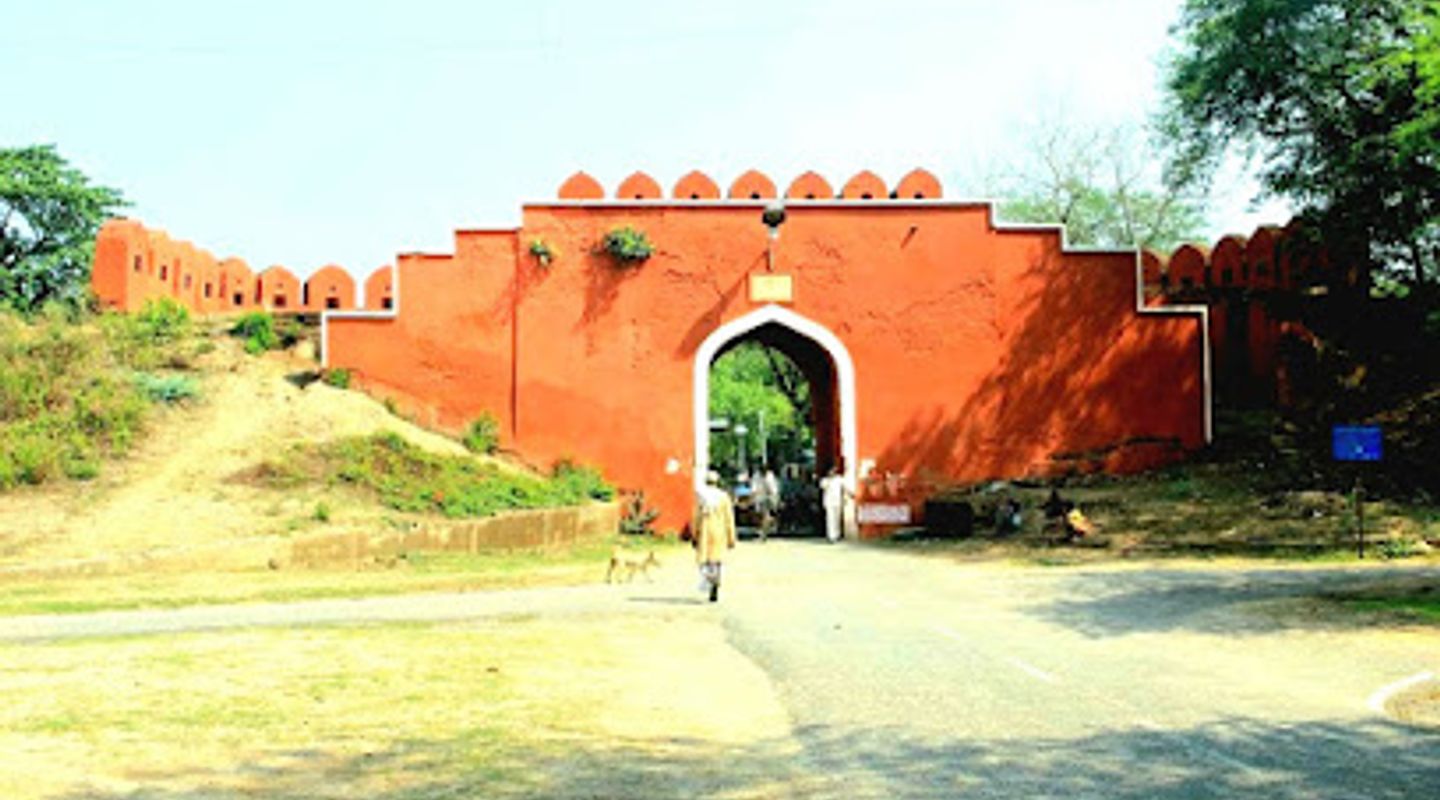
A brief summary of Munger Fort
Explore Munger Fort, a historic fortress on the Ganges, blending Hindu and Islamic architecture, and offering panoramic river views.
Munger Fort, located on the Ganges River's south bank in Bihar, India, is a historic fortress with a rich past. Believed to have originated during the Slave dynasty, it has been controlled by various rulers, including the Mughals and the British, and is now a popular tourist destination.
Opening hours
- Every dayOpen 24 hours
Opening hours as listed on the venue’s Google Business Profile. Hours can change for services and special events, so check with the venue before you go.
- Address
- 9FH9+GXW, Munger Fort, Munger, Bihar 811201
Getting there
Walking
Public Transport
Discover more about Munger Fort
Overview
Munger Fort, situated in Munger, Bihar, India, stands as a testament to the region's rich and varied history. Perched on a rocky hillock along the southern bank of the Ganges River, the fort's origins are somewhat debated, but it's largely believed to have been constructed during the early period of the Slave dynasty of India. The town of Munger itself was once under the control of Muhammad bin Tughluq of Delhi in the 14th century.Over the centuries, Munger Fort has been under the control of numerous dynasties, including the Khaljis, Tughlaqs, Lodis, Nawabs of Bengal, and the Mughals. Ultimately, it was ceded to the British by Mir Qasim in the 18th century. The British recognized the fort's strategic importance and used it as a major military and administrative center until India's independence in 1947.The fort complex houses several significant historical and religious monuments. These include the Tomb of Pir Shah Nufa, a Sufi saint who died in 1497, the Palace of Shah Suja, the Tomb of Mulla Muhammad Said, the Kashtaharini Ghat on the Ganges River, the Chandisthana (an ancient temple dedicated to Goddess Chandi), and an 18th-century British cemetery. The fort's architecture showcases a blend of Hindu and Islamic styles, reflecting the diverse influences of its rulers. The massive walls, fortified gates, and watchtowers speak to its strategic importance throughout history.Today, Munger Fort is a popular tourist attraction, drawing visitors interested in exploring its historical and architectural features. The fort offers panoramic views of the Ganges River and the surrounding landscape.
Evendo Review Centre
 Google
Guest reviews
Explore Munger Fort on the map
A handpicked selection of must-see spots near Munger Fort, mapped for you.
Get your free copy of our complete guide to Munger Fort, delivered straight to you.
Everything on this page, from opening hours and how to get there to Eve’s tips and the best time to go, in one PDF you can read offline, print or share.
Already have an account? Sign in
Your Munger Fort guide is ready.
We'll send it to · Not you? Sign out

Getting your guide ready…
We are putting together a fresh copy of the Munger Fort guide. This can take up to a minute.
This can take a few moments. If your browser asks, choose Allow so the download can start. You'll find the guide in your Downloads folder.
Nothing happened? Download it again
Sorry, the guide is taking longer than usual. Please try again in a minute, or get it by email instead.
Other nearby places you may find interesting
The closest places of the same kind, if this one is not quite what you had in mind.
-
-
-
-
-


Swipe for more places
More to explore near Munger Fort

 Best experiences near Munger Fort
 Best hotels near Munger Fort
 Best landmarks near Munger Fort
 Best attractions near Munger Fort
 Best shops near Munger Fort
 Best restaurants near Munger Fort
 Best bars near Munger Fort
Do you manage this location?
Take control to get all the benefits, like improved information, better appearance, and stronger visibility across AI-powered discovery.
Explore more

Explore more of Bihar
Explore the rich heritage, spiritual landmarks, and natural beauty of Bihar, India. Discover ancient ruins, pilgrimage sites, and vibrant cultural festivals.
Explore Bihar
Explore more of India
Discover the magic of India, where diverse landscapes, rich heritage, and vibrant culture come together to create an unforgettable travel experience.
Explore India
