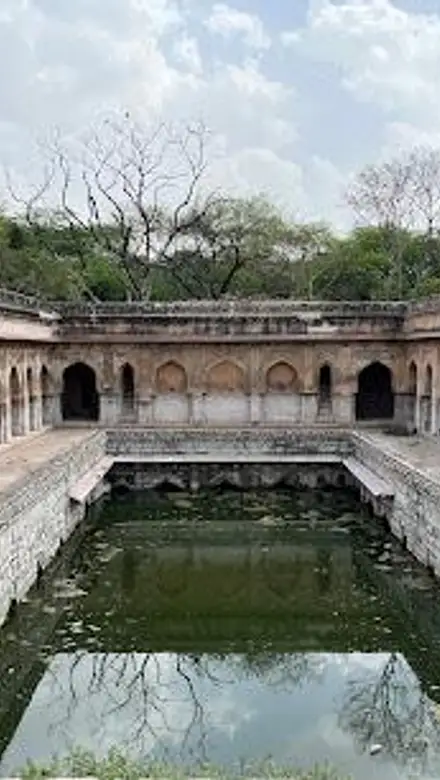
Rajon Ki Baoli, Delhi Travel Guide
Free Guide: Explore the historic Rajon Ki Baoli, a 16th-century stepwell in Delhi's Mehrauli Archaeological Park, showcasing Lodi-era architecture and water management.


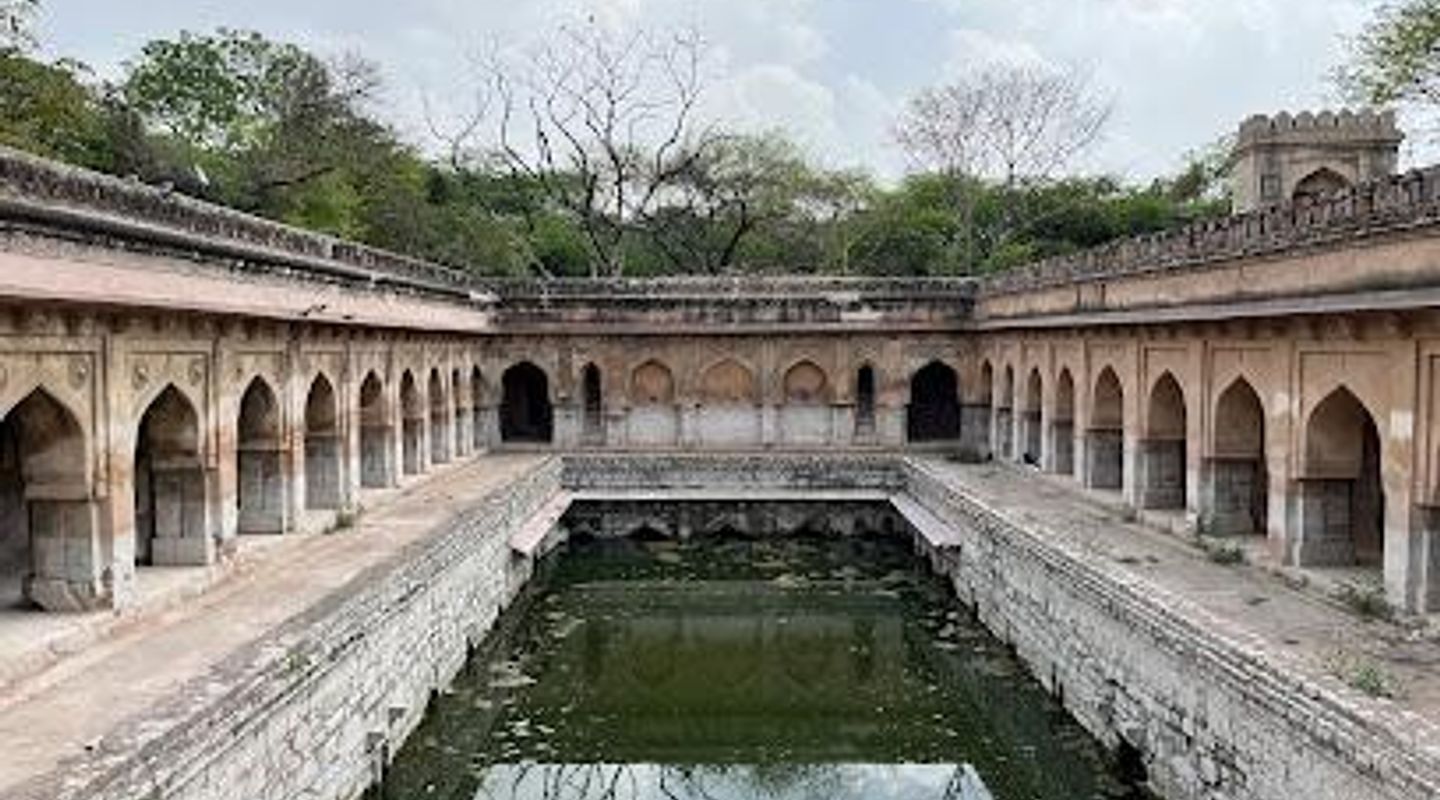
A brief summary of Rajon Ki Baoli
Explore the historic Rajon Ki Baoli, a 16th-century stepwell in Delhi's Mehrauli Archaeological Park, showcasing Lodi-era architecture and water management.
Rajon Ki Baoli, located within Mehrauli Archaeological Park in Delhi, is a 16th-century stepwell commissioned in 1506 by Daulat Khan of the Lodi dynasty. Translating to 'Stepwell of the Masons,' it served as a water reservoir, a resting place, and possibly a social gathering spot. The baoli showcases Indo-Islamic architecture with its four-level structure, arched corridors, and intricately carved pillars.
Opening hours
- Mon–Sat10 am–5 pm
- Sun10 am–6 pm
Opening hours as listed on the venue’s Google Business Profile. Hours can change for services and special events, so check with the venue before you go.
- Address
- G5CM+493, Mehrauli Archeological Pk Trl, Mehrauli Village, Mehrauli, New Delhi, Delhi 110016
- Phone
Getting there
Public Transport
Taxi/Ride-share
Walking
Discover more about Rajon Ki Baoli
Overview
Rajon Ki Baoli, also known as Rajon ki Bain, is a captivating stepwell nestled within the historic Mehrauli Archaeological Park in Delhi. Constructed in 1506 by Daulat Khan Lodi during the Lodi dynasty, it represents a significant example of Lodi-era architecture and traditional water management. The name 'Rajon Ki Baoli' translates to 'Stepwell of the Masons,' indicating its historical use by masons for drinking and cooking.The stepwell's design is primarily subterranean, with only the uppermost level visible from ground level. The structure is built on four levels, each narrowing as one descends towards the water. Spanning 1,610 square meters and reaching a depth of 13.4 meters, the main tank measures 23 by 10 meters at its base. The architecture features a courtyard-like appearance reminiscent of the medieval period, with passages defined by stylized arches and pillars in the North Indian style. Rooms at each level once provided cool resting places for travelers. The presence of alcoves suggests the baoli may have also hosted social and cultural events.Today, Rajon Ki Baoli stands as a testament to the ingenuity of the past, offering visitors a glimpse into the architectural and cultural heritage of the Lodi dynasty. It is one of several baolis in the Mehrauli area, including Anangtal Baoli and Gandhak ki Baoli. The Archaeological Survey of India, in collaboration with other organizations, has undertaken conservation work to preserve this historical site.
Evendo Review Centre
 Google
Guest reviews
Explore Rajon Ki Baoli on the map
A handpicked selection of must-see spots near Rajon Ki Baoli, mapped for you.
Get your free copy of our complete guide to Rajon Ki Baoli, delivered straight to you.
Everything on this page, from opening hours and how to get there to Eve’s tips and the best time to go, in one PDF you can read offline, print or share.
Already have an account? Sign in
Your Rajon Ki Baoli guide is ready.
We'll send it to · Not you? Sign out

Getting your guide ready…
We are putting together a fresh copy of the Rajon Ki Baoli guide. This can take up to a minute.
This can take a few moments. If your browser asks, choose Allow so the download can start. You'll find the guide in your Downloads folder.
Nothing happened? Download it again
Sorry, the guide is taking longer than usual. Please try again in a minute, or get it by email instead.
Unlock the best of Rajon Ki Baoli
Skip-the-line tickets, guided tours with entry, and walking tours of the area, booked in a few clicks.


Other nearby places you may find interesting
The closest places of the same kind, if this one is not quite what you had in mind.
-
-
-
-
-


Swipe for more places
More to explore near Rajon Ki Baoli

 Best experiences near Rajon Ki Baoli
 Best hotels near Rajon Ki Baoli
 Best landmarks near Rajon Ki Baoli
 Best attractions near Rajon Ki Baoli
 Best shops near Rajon Ki Baoli
 Best restaurants near Rajon Ki Baoli
 Best bars near Rajon Ki Baoli
Do you manage this location?
Take control to get all the benefits, like improved information, better appearance, and stronger visibility across AI-powered discovery.
Explore more

Explore more of Delhi
Discover Delhi: A city where history meets modernity, offering a rich tapestry of cultural experiences, diverse cuisine, and vibrant arts and crafts.
Explore Delhi
Explore more of India
Discover the magic of India, where diverse landscapes, rich heritage, and vibrant culture come together to create an unforgettable travel experience.
Explore India