

Connaught Place (Delhi) Travel Guide - Free
Explore Connaught Place in Delhi with Evendo's free guide. Find the best shops, historic streets, restaurants, and gems on web or mobile.


Connaught Place in Delhi blends grand colonial arcades, Central Park, lively dining, shopping, nightlife and easy metro access in India’s capital.
White Colonnades and Circular Streets
Connaught Place is the geometric commercial heart of New Delhi, laid out in broad concentric circles around the green expanse of Central Park. Designed during the British imperial development of the capital, its white-painted colonnades, radiating roads and formal symmetry create an urban setting unlike anywhere else in Delhi. The Inner Circle, Middle Circle and Outer Circle are filled with shops, offices, cafés, restaurants, banks, cinemas, hotels and late-evening meeting places, while the traffic and pedestrians give the district a constant sense of movement.Read more about Connaught Place
A Meeting Place in the Capital
History, Commerce and Evening Life
Best attractions in Connaught Place
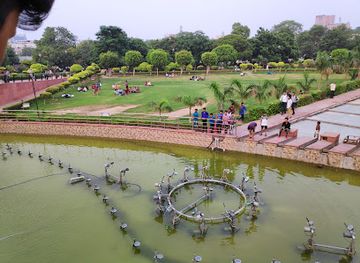
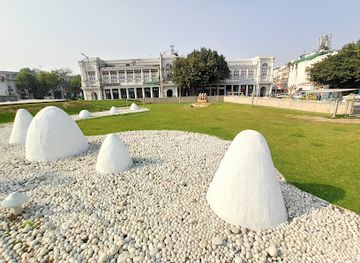
Connaught Place’s chief attraction is the neighbourhood itself: a grand circular composition of white colonnades, radial avenues and open space that rewards walking rather than hurried sightseeing. Begin at Central Park, where the lawns and paths provide a view towards the surrounding Inner Circle, then follow the arcades around the numbered blocks to see how shops, cafés and offices occupy the original planned frontage. Palika Bazaar, the underground market beneath the central area, offers a more crowded and informal contrast to the ordered streets above. The neighbourhood’s central position also places visitors near Jantar Mantar, an eighteenth-century astronomical observatory just beyond the southern side of Connaught Place, although it is best treated as a nearby attraction rather than part of the circular core. Evening visits reveal the arcades as a social setting for dining, conversation and city-centre people-watching.
-
Park
Central Park
Escape to the green heart of Delhi: Central Park in Connaught Place offers a refreshing retreat with lawns, water features, and cultural events.
1 min walk · 0.1 km from neighbourhood centre
-
Museum
Museum of Illusions
Challenge your senses and question reality at New Delhi's Museum of Illusions, an interactive wonderland of mind-bending exhibits for all ages.
2 min walk · 0.1 km from neighbourhood centre
-
Tourist attraction
Charkha Museum
Explore the legacy of the spinning wheel at Delhi's Charkha Museum, a symbol of India's self-reliance and freedom movement.
4 min walk · 0.3 km from neighbourhood centre
-
Tourist attraction
Ram Yantra
Explore the Ram Yantra in Delhi's Jantar Mantar: An 18th-century astronomical observatory for measuring celestial positions.
10 min walk · 0.8 km from neighbourhood centre


Best landmarks in Connaught Place
Connaught Place’s most important landmark is its architectural plan: three concentric commercial rings, broad radial roads and continuous arcades executed in a restrained classical idiom that defined New Delhi’s early commercial centre. The repeated columns and recessed walkways give the Inner and Middle Circles their distinctive visual rhythm, while Central Park preserves an open centre within the dense urban arrangement. Beneath this formal setting, Palika Bazaar represents a later layer of Delhi’s commercial history, extending retail activity underground and contrasting with the planned façades above. The nearby Jantar Mantar, located beyond Connaught Place towards Parliament Street, is a separate but closely related landmark in the surrounding civic landscape; its masonry astronomical instruments date from the eighteenth-century observatory founded by Maharaja Sawai Jai Singh II. Together, these places show how the area’s identity combines imperial planning, independent India’s commerce and older scientific heritage.
-
Observatory
Jantar Mantar
Discover Jantar Mantar: A UNESCO World Heritage Site showcasing ancient astronomical instruments and India's rich scientific heritage.
9 min walk · 0.7 km from neighbourhood centre
-
Park
Central Park
Discover Central Park, New Delhi's lush oasis in Connaught Place, perfect for relaxation and cultural experiences amidst the vibrant city life.
1 min walk · 0.1 km from neighbourhood centre
-
Museum
Charkha Museum
Discover the essence of Mahatma Gandhi at Charkha Museum, a cultural gem in New Delhi, showcasing India's rich history and heritage.
4 min walk · 0.3 km from neighbourhood centre
-
Bird watching area
Kabootar Chowk, Connaught Place
Explore the serene Kabootar Chowk in Connaught Place, a birdwatching haven amidst the vibrant pulse of New Delhi's urban life.
4 min walk · 0.4 km from neighbourhood centre


Explore Connaught Place on the map
A handpicked selection of must-see spots in Connaught Place, mapped for you.
Best hotels in Connaught Place
Best restaurants in Connaught Place
Connaught Place has one of central Delhi’s broadest concentrations of places to eat, ranging from long-established cafés and bakeries to Indian regional restaurants, casual international chains, contemporary dining rooms and bars serving food. The colonnades around the Inner and Middle Circles make it easy to compare venues within a short walk, while the blocks nearer Parliament Street and Janpath add further options just beyond the core. Established names such as Wenger’s and United Coffee House are associated with the area’s long commercial dining history, while South Indian restaurants and modern casual venues reflect the capital’s wider culinary mix. The neighbourhood is particularly useful for visitors who want familiar access to vegetarian meals, snacks, coffee, sweets and full-service dining without travelling across Delhi. Restaurant character varies considerably by block, and the central setting means that menus and venues change more quickly than the architecture.
-
Restaurant
38 Barracks Restaurant and Bar
Discover 38 Barracks Restaurant and Bar: Where North Indian flavors meet Chinese delicacies amidst live music in Connaught Place.
4 min walk · 0.3 km from neighbourhood centre
-
Barbecue
The GT Road
Discover the rich flavors of Barbecue and Mughlai cuisine at The GT Road in Connaught Place - where every meal is a celebration.
4 min walk · 0.3 km from neighbourhood centre
-
Restaurant
Tamasha
Discover Tamasha: A vibrant restaurant in Connaught Place serving exquisite continental and North Indian cuisine alongside stunning cocktails.
6 min walk · 0.5 km from neighbourhood centre
-
Indian
Parikrama The Revolving Restaurant
Dine in style at Parikrama The Revolving Restaurant in New Delhi—where exquisite cuisine meets stunning panoramic views.
8 min walk · 0.6 km from neighbourhood centre


Best bars in Connaught Place
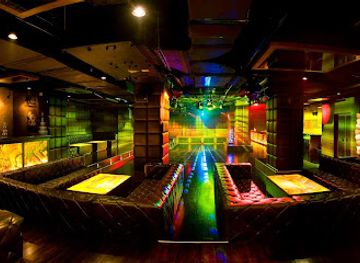
Connaught Place remains active after office hours, when its arcades fill with diners, café customers and groups meeting for drinks. The nightlife is concentrated around the Inner and Middle Circles, with cocktail bars, casual pubs, restaurant-bars and contemporary venues occupying former retail or office spaces. The area’s evening identity is commercial and sociable rather than centred on one music scene: different venues cater to live entertainment, televised sport, cocktails, dancing or relaxed conversation. Larger venues associated with the wider central Delhi circuit may be close by but should not automatically be treated as being inside Connaught Place. Traffic and crowds remain part of the experience, and the character becomes more subdued on quieter office-facing stretches. Visitors should check current entry policies and transport arrangements independently, particularly if staying elsewhere in the city.
-
Bar
My Bar Headquarters
Discover the vibrant nightlife at My Bar Headquarters, a top bar in Connaught Place, New Delhi, offering a lively atmosphere and delicious cocktails.
4 min walk · 0.3 km from neighbourhood centre
-
Lounge
Lord of the Drinks
Discover the vibrant ambiance and exquisite flavors at Lord of the Drinks, New Delhi's premier lounge and bar in the heart of Connaught Place.
4 min walk · 0.3 km from neighbourhood centre
-
Bar
My Bar Square
Experience the vibrant culinary scene at My Bar Square, a premier spot in Connaught Place for exquisite food and lively atmosphere.
3 min walk · 0.2 km from neighbourhood centre
-
Bar
World of My Bar (My Bar Club)
Discover the lively ambiance and diverse drink selection at World of My Bar in Connaught Place, New Delhi - a top spot for tourists seeking nightlife.
4 min walk · 0.3 km from neighbourhood centre


Best nightclubs in Connaught Place
Connaught Place remains active after office hours, when its arcades fill with diners, café customers and groups meeting for drinks. The nightlife is concentrated around the Inner and Middle Circles, with cocktail bars, casual pubs, restaurant-bars and contemporary venues occupying former retail or office spaces. The area’s evening identity is commercial and sociable rather than centred on one music scene: different venues cater to live entertainment, televised sport, cocktails, dancing or relaxed conversation. Larger venues associated with the wider central Delhi circuit may be close by but should not automatically be treated as being inside Connaught Place. Traffic and crowds remain part of the experience, and the character becomes more subdued on quieter office-facing stretches. Visitors should check current entry policies and transport arrangements independently, particularly if staying elsewhere in the city.
-
Bar
World of My Bar (My Bar Club)
Explore the vibrant nightlife at World of My Bar in Connaught Place, Delhi, offering exceptional cocktails and a lively atmosphere.
4 min walk · 0.3 km from neighbourhood centre
-
Pub
Excuse Me Boss
Discover Excuse Me Boss, a vibrant pub in Connaught Place, offering a diverse menu and lively ambiance, perfect for food lovers and nightlife enthusiasts.
3 min walk · 0.3 km from neighbourhood centre
-
Night club
Kitty Su New Delhi
Discover the pulse of New Delhi's nightlife at Kitty Su, an unparalleled night club experience nestled in the luxurious Lalit Hotel.
10 min walk · 0.8 km from neighbourhood centre
-
Night club
PRIVEE
Discover the ultimate nightlife experience at PRIVEE, New Delhi's luxurious night club, where sophistication meets vibrant energy.
17 min walk · 1.4 km from neighbourhood centre



Best shops in Connaught Place
Shopping in Connaught Place ranges from formal branded retail beneath the historic arcades to small specialist businesses, bookshops, jewellers, cafés and Indian fashion outlets scattered through the blocks. Palika Bazaar is the most distinctive local shopping environment: an underground market of compact stalls where visitors may encounter clothing, accessories, electronics and inexpensive gifts, with quality and authenticity varying between sellers. The colonnades above provide a more conventional retail experience, while Janpath Market lies immediately beyond the western and south-western side of the neighbourhood and is known for handicrafts, textiles, jewellery and souvenirs; it should be described as adjacent rather than part of the Inner Circle. Bargaining is more relevant in informal market settings than in fixed-price shops. Connaught Place is therefore most interesting for the contrast between planned commercial architecture, contemporary retail and the dense, negotiable atmosphere below street level.
-
Clothing store
H&M
Explore H&M in Connaught Place for trendy and affordable fashion for the whole family, set in the heart of New Delhi's shopping district.
1 min walk · 0.1 km from neighbourhood centre
-
Clothing store
Fabindia, Connaught Place (A Block)
Explore Fabindia in Connaught Place for a unique blend of traditional Indian clothing and handmade crafts, perfect for the discerning traveler.
2 min walk · 0.2 km from neighbourhood centre
-
Clothing store
UNIQLO Connaught Place, Delhi
Explore UNIQLO Connaught Place for stylish, affordable clothing and accessories in the heart of New Delhi's iconic shopping district.
2 min walk · 0.2 km from neighbourhood centre
-
Clothing store
Van Heusen - Clothing Store, Connaught Place - A Block, New Delhi
Explore the chic fashion offerings at Van Heusen in Connaught Place, New Delhi, where style meets sophistication.
2 min walk · 0.2 km from neighbourhood centre


Connaught Place essentials
Getting There
Getting Around
Safety
Emergency Situations
Do's and Don'ts
Local Tips

From Eve
Local phrases worth knowing
You don't need to get them perfect. A few words go a long way, and locals appreciate the effort.
Basics
| English | Local | Say it |
|---|---|---|
| Hello | नमस्ते | [Namaste] |
| Goodbye | अलविदा | [Alvida] |
| Yes | हाँ | [Haan] |
| No | नहीं | [Nahi] |
| Please/You're welcome | कृपया | [Kripya] |
| Thank you | धन्यवाद | [Dhanyavaad] |
| Excuse me/Sorry | क्षमा करें | [Kshama karein] |
| How are you? | आप कैसे हैं? | [Aap kaise hain?] |
| Fine. And you? | ठीक हूँ। और आप? | [Theek hoon. Aur aap?] |
| Do you speak English? | क्या आप अंग्रेज़ी बोलते हैं? | [Kya aap angrezi bolte hain?] |
| I don't understand | मुझे समझ नहीं आया | [Mujhe samajh nahi aaya] |
Eating & Drinking
| English | Local | Say it |
|---|---|---|
| I'd like to see the menu, please | कृपया मेन्यू दिखाइए | [Kripya menu dikhaiye] |
| I don't eat meat | मैं मांस नहीं खाता/खाती | [Main maans nahi khaata/khaati] |
| Cheers! | चियर्स! | [Cheers!] |
| I would like to pay, please | कृपया मैं भुगतान करना चाहूँ | [Kripya main bhugtan karna chaahoon] |
Emergencies
| English | Local | Say it |
|---|---|---|
| Help! | बचाओ! | [Bachao!] |
| Go away! | दूर हो जाओ! | [Door ho jao!] |
| Call the Police! | पुलिस को बुलाओ! | [Police ko bulaao!] |
| Call a doctor! | डॉक्टर को बुलाओ! | [Doctor ko bulaao!] |
| I'm lost | मैं खो गया/गई हूँ | [Main kho gaya/gayi hoon] |
| I'm ill | मुझे बीमारी है | [Mujhe bimaari hai] |
Shopping
| English | Local | Say it |
|---|---|---|
| I'd like to buy... | मैं ... खरीदना चाहूँ | [Main ... khareedna chaahoon] |
| I'm just looking | मैं बस देख रहा/रही हूँ | [Main bas dekh raha/rahi hoon] |
| How much is it? | यह कितने का है? | [Yeh kitne ka hai?] |
| That's too expensive | यह बहुत महंगा है | [Yeh bahut mehnga hai] |
| Can you lower the price? | क्या आप कीमत कम कर सकते हैं? | [Kya aap keemat kam kar sakte hain?] |
Time & Numbers
| English | Local | Say it |
|---|---|---|
| What time is it? | अब कितने बजे हैं? | [Ab kitne baje hain?] |
| It's one o'clock | एक बजे हैं | [Ek baje hain] |
| Half past (10) | दस बजे तक | [Das baje tak] |
| Morning | सुबह | [Subah] |
| Afternoon | दोपहर | [Dopahar] |
| Evening | शाम | [Shaam] |
| Yesterday | कल | [Kal] |
| Today | आज | [Aaj] |
| Tomorrow | कल | [Kal] |
| 1 | एक | [Ek] |
| 2 | दो | [Do] |
| 3 | तीन | [Teen] |
| 4 | चार | [Char] |
| 5 | पाँच | [Paanch] |
| 6 | छह | [Chhah] |
| 7 | सात | [Saath] |
| 8 | आठ | [Aath] |
| 9 | नौ | [Nau] |
| 10 | दस | [Das] |
Transport & Directions
| English | Local | Say it |
|---|---|---|
| Where's a/the...? | ... कहाँ है? | [... kahan hai?] |
| What's the address? | पता क्या है? | [Pata kya hai?] |
| Can you show me (on the map)? | क्या आप मुझे दिखा सकते हैं (नक्शे पर)? | [Kya aap mujhe dikhha sakte hain (naksha par)?] |
| When's the next (bus)? | अगली (बस) कब आ रही है? | [Agli (bus) kab aa rahi hai?] |
| A ticket (to ....) | एक टिकट (.... के लिए) | [Ek ticket (... ke liye)] |
History of Connaught Place
Planning New Delhi’s Commercial Centre
Connaught Place was planned as the principal commercial centre of New Delhi, the imperial capital developed south of the older city after the capital shifted from Calcutta in 1911. Its circular plan, radiating roads and colonnaded blocks formed part of the carefully ordered urban design associated with Edwin Lutyens and Herbert Baker’s New Delhi. Construction took place chiefly during the 1920s, and the district was named after the Duke of Connaught, who had visited India. The design set shops and offices beneath continuous arcades, providing shade and a unified architectural frontage while giving the new capital a substantial retail and administrative centre.
The Opening of the White Arcades
Connaught Place developed commercially during the final years of British rule, with the Inner Circle, Middle Circle and Outer Circle accommodating merchants, offices, banks, restaurants and entertainment businesses. Its radial streets linked the commercial centre with other planned parts of New Delhi, while the open central parkland provided a deliberate counterpoint to the surrounding masonry. The district’s architecture was not simply decorative: the repeated arches, recessed walkways and circular arrangement created a recognisable system for commerce and movement. By the mid-twentieth century, Connaught Place had become one of the capital’s most established public meeting and shopping areas.
A Commercial Centre After Independence
After Indian independence in 1947, Connaught Place continued as a major commercial address while its social and cultural identity changed with the new capital. Businesses serving a wider Indian public joined the earlier commercial institutions, and the surrounding area became associated with restaurants, cinemas, offices and retail as well as government activity. The colonnades survived changes in political authority and consumer culture, giving the neighbourhood a visible connection with New Delhi’s planned colonial origins without leaving it frozen in that period. Its central position also helped it remain a natural meeting point for residents, workers and visitors arriving from across the city.
Modern Retail and Underground Delhi
Late twentieth-century layers added new forms of commerce beneath and around the historic plan. Palika Bazaar, an underground market below the central area, introduced a dense, informal retail environment distinct from the formal arcades above. The arrival of the Delhi Metro and the opening of Rajiv Chowk station in 2005 strengthened Connaught Place’s role as a city-wide interchange and made the neighbourhood more accessible from distant parts of Delhi. Renovation, pedestrian management and commercial redevelopment have continued to reshape the district, while debates about signage, building maintenance and heritage character reflect the continuing tension between a working shopping centre and its planned architectural legacy.
Connaught Place in Photos
Browse through our photo collection highlighting the charm and character of the destination.
Neighbourhoods near Connaught Place
The closest neighbourhoods to Connaught Place, if you have time for more than one stop.
-
-
-
-
-


Swipe for more neighbourhoods
Explore more

Explore more of Delhi
Delhi combines Mughal monuments, grand New Delhi avenues, lively bazaars and diverse Indian cuisine, with layered history and culture at every turn.
Explore Delhi