Ur Travel Guide
Free Guide: Explore Ur, the ancient Sumerian city in Iraq, and discover its rich history, impressive Ziggurat, and royal tombs dating back to 3800 BC.


A brief summary of Ur
Explore Ur, the ancient Sumerian city in Iraq, and discover its rich history, impressive Ziggurat, and royal tombs dating back to 3800 BC.
Explore the ancient city of Ur, a major Sumerian city-state in Mesopotamia, now located in southern Iraq. Discover the impressive Ziggurat, royal tombs, and remnants of a once-thriving civilization dating back to 3800 BC, offering invaluable insights into early urban development and culture.
- Address
- X464+92R, Mahatt Ur, Dhi Qar Governorate
Getting there
Taxi
Public Transport
Car
Discover more about Ur
Overview
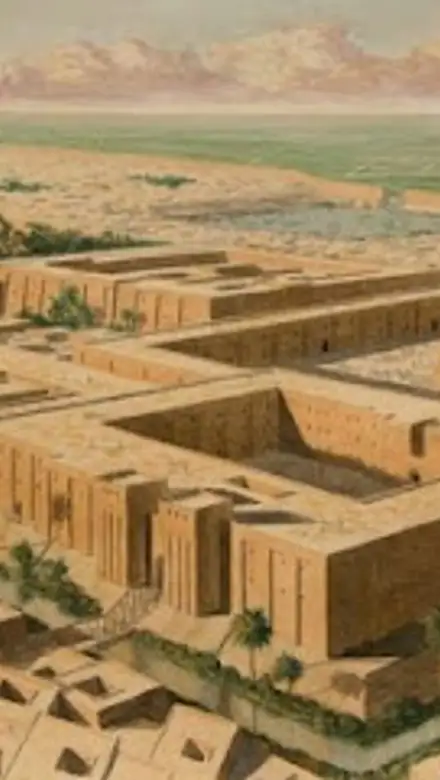
Ur, presently known as Tell el-Muqayyar, was a prominent Sumerian city-state in ancient Mesopotamia, situated in modern-day Dhi Qar Governorate, southern Iraq. Established around 3800 BC, Ur evolved into a significant port city and an important urban center in southern Mesopotamia. The city's name translates to “the abode of Nanna,” the moon god who was the city's patron deity.During the third millennium BC, cuneiform tablets reveal Ur as a highly centralized, wealthy, and bureaucratic state. The discovery of the Royal Tombs, dating back to the 25th century BC, showcased luxury items crafted from precious metals and semi-precious stones, indicating extensive trade and importation. The city reached its zenith under the Third Dynasty of Ur around 2000 BC, marked by remarkable architectural and cultural achievements.Key features of Ur include the Great Ziggurat, constructed by Ur-Nammu in the 21st century BC and later restored by Nabonidus, the last king of Babylon. This temple complex served as an administrative center and was dedicated to Nanna, the moon god. The Royal Cemetery is another highlight, containing richly decorated tombs of Sumerian kings and queens, providing insights into ancient burial practices.Ur's strategic location near the Euphrates River facilitated trade, agriculture, and transportation, contributing to its economic prosperity and cultural exchange. Although Ur lost its political power after the Third Dynasty, it remained economically important, falling under the control of various empires, including the Babylonians and Assyrians. The city began its final decline around 550 BC due to drought and changing river patterns, eventually becoming uninhabited by 500 BC. Today, visitors can explore the archaeological site, including the well-preserved ziggurat and remnants of ancient houses, and the Royal Cemetery.
Evendo Review Centre
 Google
Guest reviews
Explore Ur on the map
A handpicked selection of must-see spots near Ur, mapped for you.
Get your free copy of our complete guide to Ur, delivered straight to you.
Everything on this page, from opening hours and how to get there to Eve’s tips and the best time to go, in one PDF you can read offline, print or share.
Already have an account? Sign in
Your Ur guide is ready.
We'll send it to · Not you? Sign out

Getting your guide ready…
We are putting together a fresh copy of the Ur guide. This can take up to a minute.
This can take a few moments. If your browser asks, choose Allow so the download can start. You'll find the guide in your Downloads folder.
Nothing happened? Download it again
Sorry, the guide is taking longer than usual. Please try again in a minute, or get it by email instead.
Other nearby places you may find interesting
The closest places of the same kind, if this one is not quite what you had in mind.
-
-
-
-
-


Swipe for more places
More to explore near Ur

 Best experiences near Ur
 Best hotels near Ur
 Best landmarks near Ur
 Best attractions near Ur
 Best shops near Ur
 Best restaurants near Ur
 Best bars near Ur
Do you manage this location?
Take control to get all the benefits, like improved information, better appearance, and stronger visibility across AI-powered discovery.
Explore more
Explore more of Wasit
Discover the rich history, vibrant culture, and natural beauty of Wasit in Iraq – a hidden gem waiting to be explored.
Explore Wasit
Explore more of Iraq
Explore the cradle of civilization in Iraq, where ancient history, rich culture, and diverse landscapes create an unforgettable travel experience.
Explore Iraq