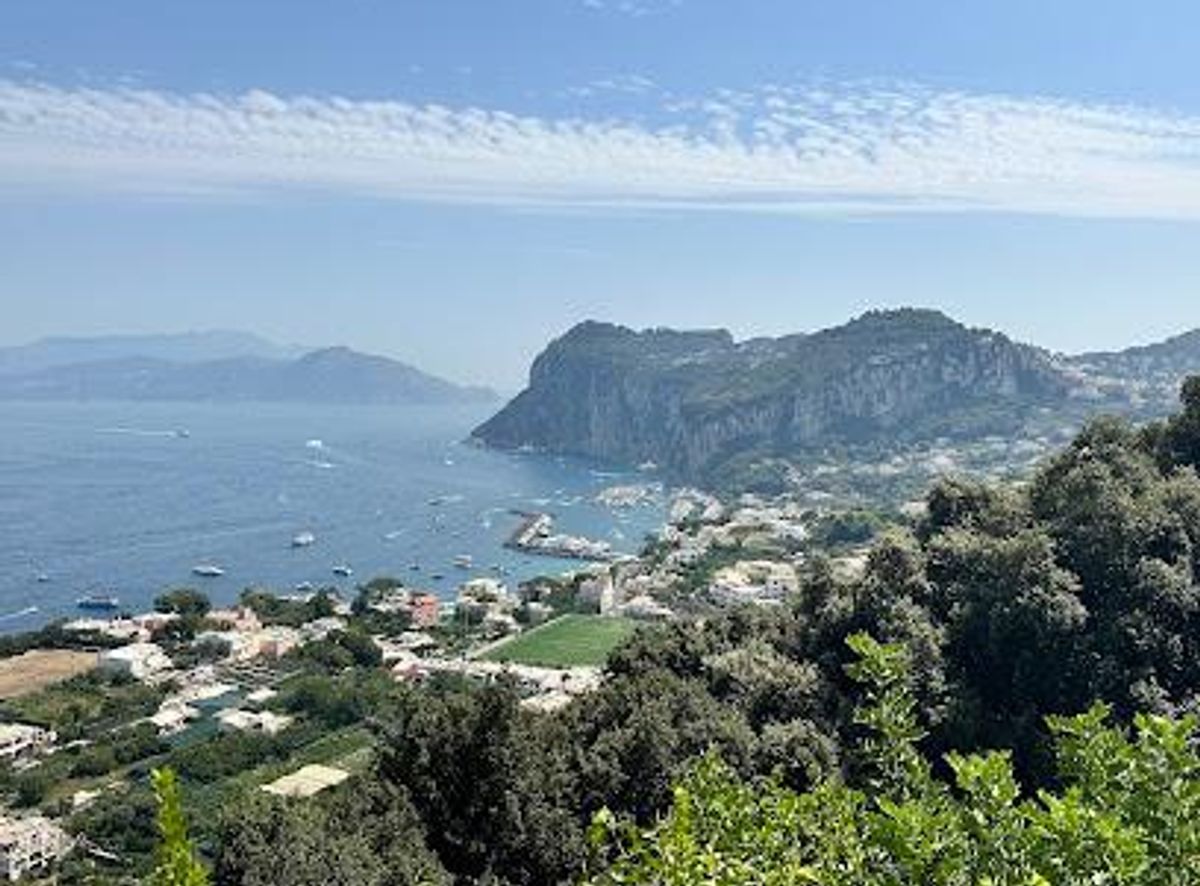
Background

Scala Fenicia: Capri's Ancient Stairway

Hike the historic Scala Fenicia on Capri: ancient steps, stunning views, and a rewarding climb between Marina Grande and Anacapri.

★★★★★4.7 (652)

The Scala Fenicia, or Phoenician Steps, is a historic stone stairway connecting Capri and Anacapri. Built by the Ancient Greeks, not Phoenicians, in the 7th-6th centuries BC, it offers a challenging climb with rewarding panoramic views.

Plan your visit

A brief summary to Scala Fenicia

Opening times, essentials, and a few local tips gathered into one calmer, easier-to-scan planning section.

Plan your visit

📍
plattl, 7c, Ritten, South Tyrol, 39054, IT

Explore places near Scala Fenicia

    See all →

    Unlock the Best of Scala Fenicia

    Find tickets, tours with entry, and experiences available for this location.

    Buy tickets

    No tickets available

    Book tours with entry

    No tours with entry available

    Book tours without entry

    No tours without entry available

    Getting There

    Walking

    From the port of Marina Grande, walk along Via Palazzo a Mare for about 400 meters. Look for a majolica sign on the right indicating the start of the Scala Fenicia. The initial steps are gentle but soon become steeper. Follow the steps uphill, taking in the views. The climb to Anacapri takes approximately 45 minutes to an hour.

    Public Transport

    From Piazza Umberto I in Capri, take the bus towards Anacapri. Get off at the Anacapri stop, then follow signs for Scala Fenicia, a 15-minute walk downhill. Bus tickets cost around €2.00.

    Local tips

    Wear comfortable hiking shoes due to the uneven and steep stone steps.
    Bring water, especially during hot weather, as the climb can be strenuous.
    Take your time and enjoy the views; there are plenty of spots to stop and rest.
    Consider hiking downhill from Anacapri to Marina Grande to save your knees, but be cautious as the steps can be slippery.

    Discover more about Scala Fenicia

    The Scala Fenicia, also known as the Phoenician Steps, is an ancient and steep stone stairway linking Marina Grande with Anacapri on the island of Capri. Despite its name, the steps were constructed by Greek colonists between the 7th and 6th centuries BC. The name 'Phoenician' arose from 17th-century scholars who mistakenly attributed pre-Greek structures to the Phoenicians. Until a road was built in 1874, the Scala Fenicia was the only route between Capri and Anacapri, essential for transporting goods and accessing the higher slopes of Monte Solaro. The 921 steps stretch for 1.7 kilometers, climbing roughly 200 meters in elevation. Island women once traversed these steps multiple times daily, carrying heavy loads. Today, the Scala Fenicia is a popular hiking trail, offering stunning views of the island, the Bay of Naples, and Mount Vesuvius. Along the way, you'll find a small chapel dedicated to Sant'Antonio, a historic landmark for sailors. The path has undergone restoration, including the installation of steel netting to protect hikers from falling rocks. The climb can be strenuous, with uneven steps, but the panoramic vistas and historical significance make it a worthwhile experience. At the top of the steps near Anacapri is the Villa San Michele, another must-see attraction.

    A brief summary to Scala Fenicia

    Use Tower Bridge as your starting point for nearby food, family ideas, nightlife, and more local discoveries.

    Mobile App
    Get the app

    Your all‑in‑one travel companion app

    Explore expert travel guides, compare and book tours, experiences, hotels, and more—all from the palm of your hand. Download now for seamless trip planning wherever your wanderlust takes you.

    File:A View of Naples and Vesuvius.jpg - Wikimedia Commons

    More about Naples

    Discover Naples, a city where history, culture, and culinary delights converge along the stunning Tyrrhenian coastline. Experience the true essence of Southern Italy.

    Tell me more about Naples

    Select Currency

    Choose the currency you want prices to display in.