
Background

Riga Nativity of Christ Orthodox Cathedral

Explore the Nativity of Christ Orthodox Cathedral in Riga, a symbol of resilience, history, and architectural beauty in the heart of Latvia.

4.7

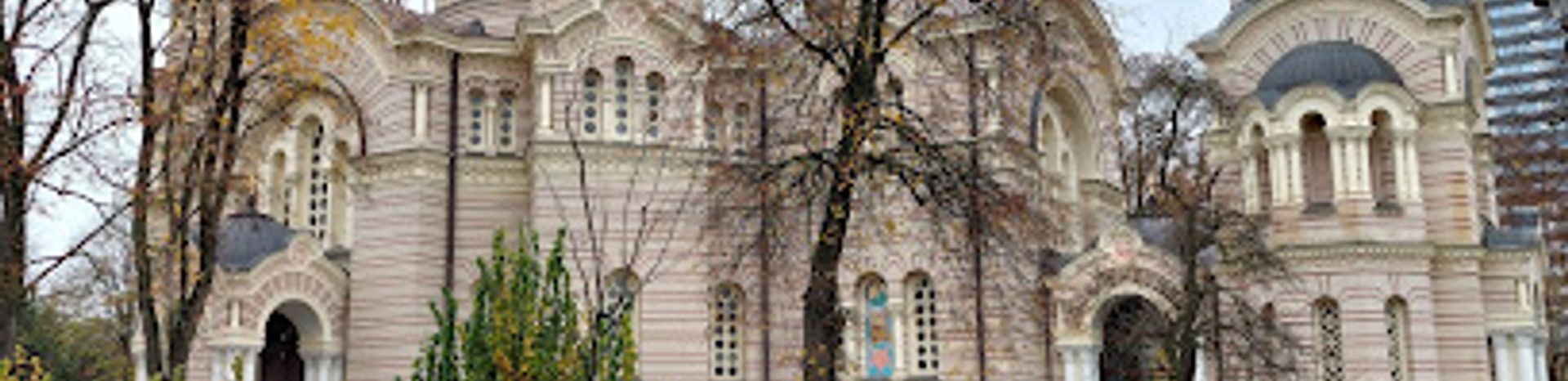
The Nativity of Christ Orthodox Cathedral, located on Brīvības bulvāris in Riga, is the largest Orthodox church in the city. Built in the Neo-Byzantine style between 1876 and 1883 during the Russian Empire, it stands as a symbol of Riga's diverse religious heritage and a testament to the city's rich history.

A brief summary to Riga Nativity of Christ Orthodox Cathedral

Local tips

  • Visit during the weekdays for a quieter experience and a more intimate exploration of the cathedral's interior.
  • Dress modestly when visiting the cathedral to show respect for its religious significance.
  • Check the schedule for special services or events to enhance your visit with vibrant liturgical music and rituals.
widget icon

Getting There

  • Walking

    From the Freedom Monument on Brīvības iela, walk down Brīvības bulvāris towards the park. The cathedral is located at Brīvības bulvāris 23, a 5-10 minute walk. Look for the golden onion domes.

  • Public Transport

    Take tram number 1 or 11 to the 'Brīvības iela' stop. Walk approximately 5 minutes down Brīvības bulvāris towards the Freedom Monument. The cathedral will be on your right at Brīvības bulvāris 23. A single 90-minute ticket costs €1.50.

  • Taxi

    Taxis are readily available throughout Riga. A short taxi ride from a central location to the cathedral will typically cost around €6, with a base fare of €2.50 and €0.70 per kilometer. Ride-sharing apps like Bolt are also available.

Unlock the Best of Riga Nativity of Christ Orthodox Cathedral

Buy tickets

    No tickets available

Book tours with entry

    No tours available

Book tours without entry

    No tours available

Discover more about Riga Nativity of Christ Orthodox Cathedral

The Nativity of Christ Orthodox Cathedral is a prominent architectural and cultural landmark in Riga, Latvia. Constructed between 1876 and 1883 during the period when Latvia was part of the Russian Empire, the cathedral was designed by Nikolai Chagin in the Neo-Byzantine style. Its construction was initiated by local Governor-General Pyotr Bagration and Bishop Veniamin Karelin, with the blessing of Russian Tsar Alexander II. The cathedral's exterior is characterized by its golden domes and intricate facade, making it one of the most recognizable buildings in Riga. The initial design was modified to include an additional dome for bells, a gift from Czar Alexander II. Inside, the cathedral is adorned with beautiful frescoes, mosaics, and icons, reflecting the artistic traditions of the Orthodox faith. The interior was once renowned for its collection of ancient icons and three iconostases painted by pedagogues from the St. Petersburg Academy of Art and Russian painter Vasily Vereshchagin. The cathedral has faced numerous transformations throughout its history. During World War I, German troops used it as a Lutheran church. In the early 1960s, Soviet authorities closed the cathedral, repurposing it as a planetarium and later a restaurant. Following Latvia's independence in 1991, the cathedral was restored to its original purpose as a place of worship. The restoration, which began in the late 1990s, was seen as a symbol of Latvia's cultural and religious rebirth. Today, the cathedral holds regular Orthodox services and is open to visitors.

Popular Experiences near Riga Nativity of Christ Orthodox Cathedral

Popular Hotels near Riga Nativity of Christ Orthodox Cathedral

Select Currency