

Arch of Septimius Severus Travel Guide
Free Guide: A monumental Roman arch in Leptis Magna, Libya, honoring Emperor Septimius Severus and showcasing the grandeur of the Roman Empire.


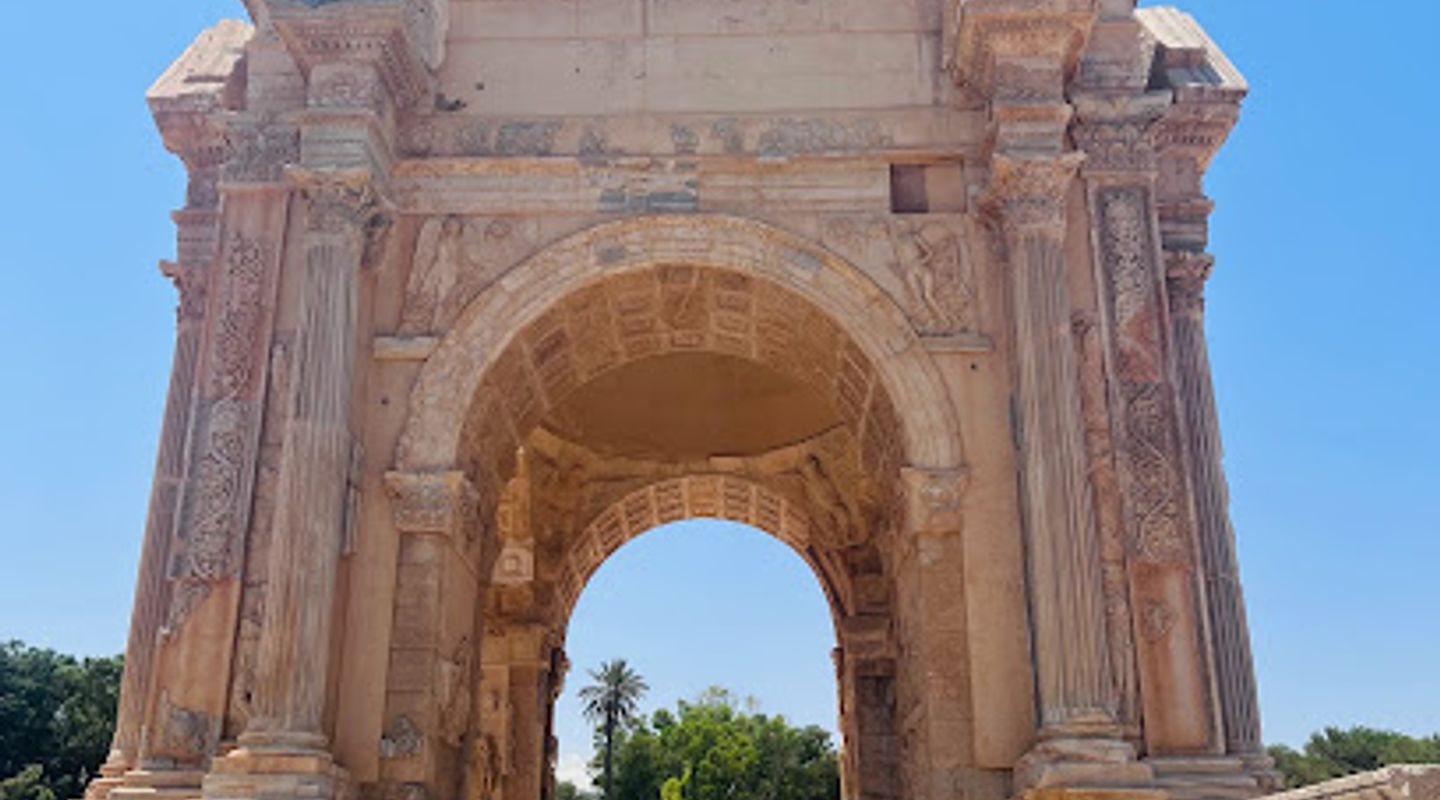
A brief summary of Arch of Septimius Severus
A monumental Roman arch in Leptis Magna, Libya, honoring Emperor Septimius Severus and showcasing the grandeur of the Roman Empire.
The Arch of Septimius Severus, located in Leptis Magna, Libya, is a triumphal arch built in 203 AD to honor Emperor Septimius Severus, who was born in the city. The arch stands as a symbol of Roman imperial power and architectural prowess, featuring intricate reliefs depicting the emperor's military campaigns and achievements.
- Address
- Leptis Magna
Getting there
Walking
Taxi
Discover more about Arch of Septimius Severus
Overview
The Arch of Septimius Severus is a remarkable monument located in the ancient Roman city of Leptis Magna, now in present-day Libya. Constructed in 203 AD, the arch commemorates the visit of Emperor Septimius Severus to his birthplace and celebrates his military victories. Severus, who reigned from 193 to 211 AD, was the first emperor born in the provinces since Hadrian and Trajan, and he significantly contributed to the architectural development of Leptis Magna during his rule.Built as a tetrapylon, the four-way arch marks the intersection of the cardo (north-south road) and the Decumanus Maximus (east-west road), the two most important roads in the city. The arch stands approximately 23 meters high and consists of three arched openings. The structure is made of a limestone core with a marble facing, adorned with elaborately decorated panels. These panels depict scenes from Septimius Severus' military campaigns, including battles, sieges, and his triumphant return to Rome. One prominent relief depicts a chariot driven by a quadriga, carrying Septimius Severus, Caracalla, and Geta, symbolizing the dynastic succession.The arch's design blends Hellenistic elements, featuring Corinthian columns supporting a broken pediment. The monument served as a symbol of imperial power and military prowess, while also commemorating the Severan dynasty's rule. The arch fell into ruin and was abandoned after barbarian invasions in the late 5th century. Rediscovered in 1928, the fragmented arch was meticulously pieced back together by archaeologists. Today, the Arch of Septimius Severus remains one of the most prominent and important architectural works in the Roman provinces, attracting visitors interested in Roman history and architecture. In 1982, it was designated a UNESCO World Heritage Site as part of Leptis Magna.
Evendo Review Centre
 Google
Guest reviews
Explore Arch of Septimius Severus on the map
A handpicked selection of must-see spots near Arch of Septimius Severus, mapped for you.
Get your free copy of our complete guide to Arch of Septimius Severus, delivered straight to you.
Everything on this page, from opening hours and how to get there to Eve’s tips and the best time to go, in one PDF you can read offline, print or share.
Already have an account? Sign in
Your Arch of Septimius Severus guide is ready.
We'll send it to · Not you? Sign out

Getting your guide ready…
We are putting together a fresh copy of the Arch of Septimius Severus guide. This can take up to a minute.
This can take a few moments. If your browser asks, choose Allow so the download can start. You'll find the guide in your Downloads folder.
Nothing happened? Download it again
Sorry, the guide is taking longer than usual. Please try again in a minute, or get it by email instead.
Other nearby places you may find interesting
The closest places of the same kind, if this one is not quite what you had in mind.
-
-
-
-
-


Swipe for more places
More to explore near Arch of Septimius Severus
-
 Best experiences near Arch of Septimius Severus
-
 Best hotels near Arch of Septimius Severus
-
 Best landmarks near Arch of Septimius Severus
-
 Best attractions near Arch of Septimius Severus
-
 Best shops near Arch of Septimius Severus
-
 Best restaurants near Arch of Septimius Severus
-
 Best bars near Arch of Septimius Severus


Do you manage this location?
Take control to get all the benefits, like improved information, better appearance, and stronger visibility across AI-powered discovery.
Explore more

Explore more of Al-Khums
Explore the ancient ruins of Leptis Magna and enjoy serene Mediterranean beaches in the historic city of Al-Khums, Libya.
Explore Al-Khums
Explore more of Libya
Discover Libya: Ancient ruins, vast deserts, and Mediterranean charm await in this North African gem.
Explore Libya
