Background

Fort Thüngen (“Three Acorns”) – Historic Fortress & Museum

Historic 18th‑century fortress in Luxembourg—restored fort towers, underground museum galleries, and panoramic views where past meets modern art

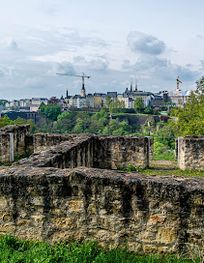
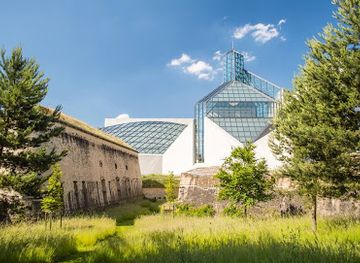
Fort Thüngen, known locally as Dräi Eechelen (“Three Acorns”), is an 18th‑century fortification in Luxembourg City’s Kirchberg district, now housing the Musée Dräi Eechelen. Originally built in 1732–33 by the Austrians and later expanded by the Prussians, most of it was demolished after the 1867 Treaty of London. Today, the restored towers and underground galleries offer an immersive historical experience amid Parc Dräi Eechelen and near the modern Mudam museum.

A brief summary to Fort Thüngen

  • FK5, Luxembourg, Clausen, LU

Local tips

  • Visit mid‑week to avoid crowds—Monday is often closed at nearby sites; Fort Thüngen’s museum is closed Tuesdays.
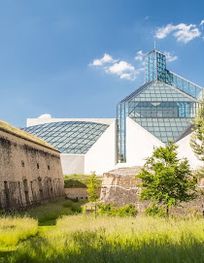
  • Combine with a visit to Mudam across the park for a striking contrast of history and modern art.
  • Climb the Three Acorns towers for sweeping views of Kirchberg and the Alzette valley.
  • Explore the underground casemates—wear comfortable shoes and a light jacket as they stay cool.
  • Check for free admission opportunities—e.g. students or under‑26 may enter free at times.
widget icon

Do you manage this location?

Take control to get all the benefits, like improved information, better appearance, and stronger visibility across AI-powered discovery. Learn more

Activate your presence

Unlock the Best of Fort Thüngen

Buy tickets

    No tickets available

Book tours with entry

    No tours available

Book tours without entry

    No tours available

Getting There

  • Cost

    Admission is modest—approximately €5 for adults; students and under‑26 often free—confirm at the museum.

Discover more about Fort Thüngen

Fort Thüngen, perched within Parc Dräi Eechelen in Luxembourg City’s Kirchberg quarter, stands as a living testament to the city’s layered military and cultural history.Built in 1732–33 by the Austrians atop Vauban’s earlier Redoute du Parc, the fort enclosed a star‑shaped redoubt with an earthen core and network of galleries and mine chambers. In 1836 and later in 1859–60, Prussian forces expanded and reinforced it, adding three distinctive crenellated towers topped with stone acorns—hence the nickname “Three Acorns” or Dräi Eechelen ([m3e.public.lu](https://m3e.public.lu/en/forts/fort-thuengen.html?utm_source=openai), [en.wikipedia.org](https://en.wikipedia.org/wiki/Fort_Th%C3%BCngen?utm_source=openai)).After the 1867 Treaty of London mandated the dismantling of Luxembourg’s fortifications, most of Fort Thüngen was demolished, leaving only the three towers and buried foundations. In the 1990s, archaeological excavation uncovered the remains, and a comprehensive restoration began, adhering to conservation standards. The Musée Dräi Eechelen opened in 2012 within the reconstructed redoubt, presenting the history of Luxembourg from 1443 to 1903 through underground casemates, multimedia installations, and over 600 artifacts ([m3e.public.lu](https://m3e.public.lu/en/musee/historique-batiment.html?utm_source=openai), [en.wikipedia.org](https://en.wikipedia.org/wiki/Mus%C3%A9e_Dr%C3%A4i_Eechelen?utm_source=openai)).Today, visitors explore underground galleries, enjoy panoramic views from the acorn‑topped towers, and reflect on the juxtaposition of history and modernity as they gaze across to the I. M. Pei‑designed Mudam (Musée d’Art Moderne Grand‑Duc Jean) built nearby ([seebeautifulplaces.com](https://www.seebeautifulplaces.com/2010/10/fort-thungen-and-mudam.html?utm_source=openai), [way4i.com](https://way4i.com/fort-thungen-luxembourgs-historic-fortress-of-three-acorns/?utm_source=openai), [en.wikipedia.org](https://en.wikipedia.org/wiki/Fort_Th%C3%BCngen?utm_source=openai)).The fort’s layered narrative—spanning Vauban’s redoubt, Austrian construction, Prussian expansion, peaceful dismantling, 20th‑century restoration, and 21st‑century museum use—makes it a deeply immersive site. Positioned within a peaceful park setting, yet rooted in military necessity, Fort Thüngen remains both a cultural landmark and a serene retreat.
Mobile App

Your all‑in‑one travel companion app

Explore expert travel guides, compare and book tours, experiences, hotels, and more—all from the palm of your hand. Download now for seamless trip planning wherever your wanderlust takes you.
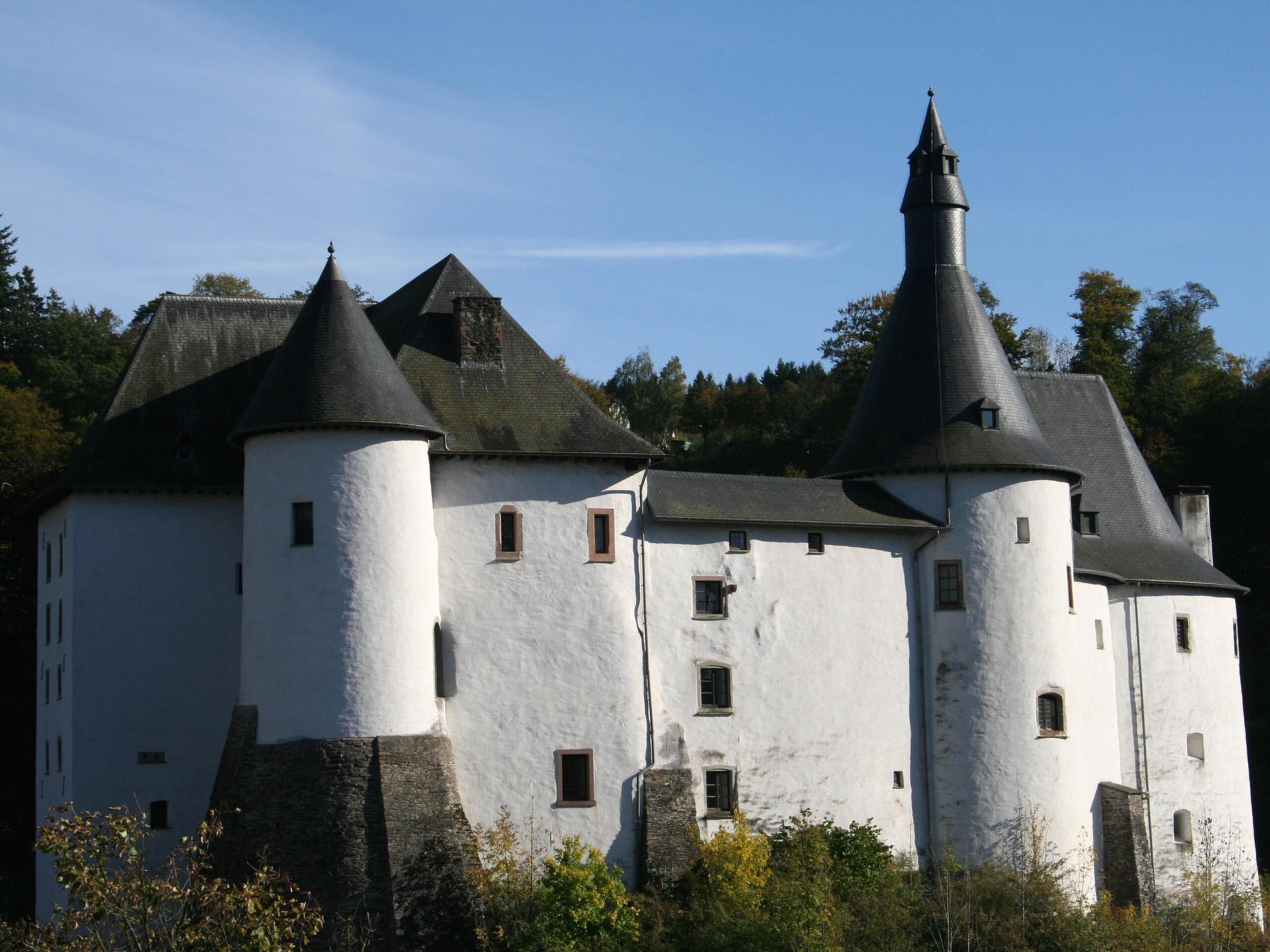


More about Clervaux

File:Clervaux - Le vieux château féodal (XIIe siècle).jpg - Wikimedia  Commons

Discover Clervaux: A picturesque town in Luxembourg known for its historic castle, serene landscapes, and vibrant local culture. Perfect for history buffs and nature lovers alike.

Tell me more about Clervaux
Select Currency