

Free Clervaux Travel Guide & Mobile App
Plan your Clervaux trip with Evendo. Get free guides to top attractions, restaurants, hotels, and bars. Web access or download the mobile app.


Clervaux, Luxembourg, pairs an Ardennes castle, The Family of Man photography, a peaceful abbey and wartime history with scenic walks and village streets.
A Castle Above the Clerve
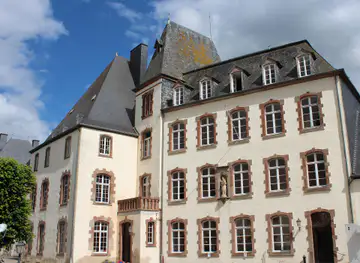
Clervaux rises in a wooded valley in northern Luxembourg, where the River Clerve curves below steep, green hills and slate-roofed houses. The town’s defining landmark is Clervaux Castle, a pale stone complex whose towers dominate the valley and provide a striking introduction to the Luxembourg Ardennes. Around it, quiet streets lead towards the parish church, riverside paths and viewpoints over the surrounding countryside.Read more about Clervaux
Art, Faith and Memory
Life in the Ardennes
When is the best time to visit Clervaux?
Best: June–August · 25–26°C| Month | High (°C) | Rainfall (mm) |
|---|---|---|
| January | 4 | 70 |
| February | 5 | 60 |
| March | 9 | 60 |
| April | 14 | 50 |
| May | 20 | 60 |
| June (best) | 25 | 70 |
| July (best) | 26 | 80 |
| August (best) | 25 | 80 |
| September | 21 | 60 |
| October | 15 | 60 |
| November | 10 | 70 |
| December | 5 | 70 |
Getting to and around Clervaux
How to get there
Transportation
Best attractions in Clervaux
Clervaux Castle is the town’s central attraction, bringing together the Family of Man photography exhibition, the Museum of the Battle of the Bulge and historic rooms within a dramatic hilltop complex. The exhibitions offer sharply different perspectives: one explores shared human experience through international photography, while the other examines the fighting that devastated the Ardennes in 1944. Above the town, the Benedictine Abbey of St Maurice and St Maur provides a quieter cultural visit, with its wooded setting and monastic architecture. The parish church, riverside streets and small valley centre reward an unhurried walk, while marked trails lead into the surrounding hills and forests. Viewpoints along the higher roads reveal the folded landscape that gives northern Luxembourg its character. Clervaux is also a useful base for exploring the broader Ardennes by foot, bicycle or car, although nearby villages and countryside should be treated as excursions beyond the town itself.
-
Tourist attraction
MUSEE THE FAMILY OF MAN
UNESCO-listed exhibition at Clervaux Castle, 'The Family of Man' showcases over 500 iconic photos in a poignant tribute to humanity by Edward Steichen.
1 min walk · 0.1 km from city centre
-
Tourist attraction
Museum of the Battle of the Bulge: Memories of the Liberation
Experience the Museum of the Battle of the Bulge in Clervaux Castle, where immersive exhibits bring World War II history and the 1944–45 Ardennes Offensive vividly to life.
1 min walk · 0.1 km from city centre
-
Museum
Museum of models of the Castles and Palaces of Luxembourg
Discover Luxembourg’s legendary castles in miniature form at Clervaux, where artistic scale models and captivating stories bring the nation’s rich history to life.
1 min walk · 0.1 km from city centre
-
Observation deck
Clervaux - Route de Marnach
Scenic observation point near Clervaux, offering panoramic views over the verdant Oesling valleys—ideal for quick photo stops or tranquil reflection moments.
4 min walk · 0.3 km from city centre


Best landmarks in Clervaux
Clervaux Castle is the town’s most recognisable landmark, its pale towers and irregular medieval complex rising above the Clerve valley. Although altered over the centuries and damaged during the Second World War, the castle remains closely tied to both the town’s feudal past and its modern museums. The Benedictine Abbey of St Maurice and St Maur stands on higher ground beyond the centre, where its Romanesque-inspired architecture and monastic setting create a strong religious presence in the landscape. The parish church adds a more intimate historic focus within the town. Memorials and museum displays connected with the Battle of the Bulge give Clervaux a further layer of significance, recalling the 1944 fighting that caused extensive destruction. Together these places express the town’s development from medieval lordship to wartime site and contemporary cultural destination.
-
Castle
Clervaux Castle
Medieval castle overlooking Clervaux, featuring UNESCO photography, WWII museum, sweeping Ardennes views, and a unique blend of culture and history.
1 min walk · 0.1 km from city centre
-
 Recreation center
Tourist Center Robbesscheier
Experience Luxembourg’s countryside traditions at Robbesscheier, where lively workshops, farm animals, and seasonal events bring rural heritage to life for all ages.
7 min drive · 2.5 km from city centre
-
Modern art museum
MUSEE THE FAMILY OF MAN
Discover 'The Family of Man', an iconic UNESCO-listed photo exhibition in Clervaux Castle, showcasing humanity’s shared stories through powerful photography.
1 min walk · 0.1 km from city centre
-
Museum
Museum of the Battle of the Bulge: Memories of the Liberation
Discover Luxembourg's wartime story at Clervaux’s Museum of the Battle of the Bulge—immersive exhibits, rare relics, and local memories beneath the historic castle walls.
1 min walk · 0.1 km from city centre


Explore Clervaux on the map
Plan your Clervaux trip on one map. See where the top attractions, landmarks, restaurants, bars and hotels are, find what's near where you're staying, and book hotels and experiences in a few clicks.
Best hotels in Clervaux
Best restaurants in Clervaux
Clervaux’s dining scene reflects northern Luxembourg’s rural setting and proximity to Belgium and Germany, with menus commonly drawing on Luxembourgish, French and wider regional traditions. Visitors may encounter hearty preparations based on pork, potatoes, seasonal vegetables and game, alongside freshwater fish and Belgian-influenced dishes. Local specialities associated with Luxembourg include judd mat gaardebounen, smoked pork with broad beans, and pastries such as treipeni, although individual menus vary. Restaurants and cafés are concentrated around the town centre, castle approaches and accommodation areas, while bakeries provide practical options for bread, pastries and coffee. The atmosphere is generally more relaxed and regional than cosmopolitan, with dining suited to a day of museum visits or walking. Seasonal ingredients and changing menus are common, so checking current opening arrangements is sensible, particularly outside peak periods and on quieter weekdays.
-
Meat
Rhino Steakhouse
Discover the ultimate steak dining experience at Rhino Steakhouse in Clervaux - where quality meets tradition in every delicious bite.
2 min walk · 0.2 km from city centre
-
Restaurant
Hotel Du Commerce
Experience comfort and culinary delight at Hotel Du Commerce in Clervaux – your gateway to exploring Luxembourg's scenic beauty.
2 min walk · 0.2 km from city centre
-
Restaurant
Restaurant Les Ecuries du Parc
Experience the rich flavors of Luxembourg at Restaurant Les Ecuries du Parc in Clervaux – where tradition meets culinary excellence.
3 min walk · 0.2 km from city centre
-
Restaurant
Restaurant-Hôtel Reiff
Experience exquisite dining and cozy accommodations at Restaurant-Hôtel Reiff in scenic Fischbach, Luxembourg.
11 min drive · 3.8 km from city centre


Best bars in Clervaux
Clervaux has a modest evening scene rather than a dedicated nightlife quarter. After the museums close, the main choices are generally hotel bars, traditional cafés and restaurants where visitors can enjoy Luxembourgish or Belgian beers, wine and a quiet meal. The town’s small scale means streets become peaceful relatively early, while larger late-night clubbing scenes are found in Luxembourg City and other bigger centres rather than in Clervaux. Cultural evenings may occasionally be connected with exhibitions, local events or performances, but schedules vary seasonally. The most characteristic experience after dark is a relaxed drink or dinner in the historic centre, followed by views of the illuminated castle and the wooded valley. Visitors should check venue arrangements in advance, since opening patterns can be limited outside weekends and holiday periods.
-
Meat
Rhino Steakhouse
Experience the best of Clervaux's culinary scene at Rhino Steakhouse, where top-quality meat meets a welcoming atmosphere.
2 min walk · 0.2 km from city centre
-
Restaurant
Hotel Du Commerce
Experience delightful cuisine and serene wellness at Hotel Du Commerce in the heart of Clervaux, Luxembourg.
2 min walk · 0.2 km from city centre
-
Restaurant
Chez Max
Experience the finest dining at Chez Max in Weiswampach, where local flavors meet elegance in a cozy atmosphere.
30 min drive · 10 km from city centre
-
Restaurant
Restaurant Les Ecuries du Parc
Enjoy a unique dining experience at Restaurant Les Ecuries du Parc, where tradition meets modern cuisine in the heart of Clervaux.
3 min walk · 0.2 km from city centre


Best nightclubs in Clervaux
Clervaux has a modest evening scene rather than a dedicated nightlife quarter. After the museums close, the main choices are generally hotel bars, traditional cafés and restaurants where visitors can enjoy Luxembourgish or Belgian beers, wine and a quiet meal. The town’s small scale means streets become peaceful relatively early, while larger late-night clubbing scenes are found in Luxembourg City and other bigger centres rather than in Clervaux. Cultural evenings may occasionally be connected with exhibitions, local events or performances, but schedules vary seasonally. The most characteristic experience after dark is a relaxed drink or dinner in the historic centre, followed by views of the illuminated castle and the wooded valley. Visitors should check venue arrangements in advance, since opening patterns can be limited outside weekends and holiday periods.
-
Golf club
Clerf (Clervaux)
Experience exceptional golfing at Clervaux Golf Club, where scenic beauty meets challenging play in the heart of Luxembourg.
7 min drive · 2.3 km from city centre
-
Italian
Da Lonati
Experience authentic Italian flavors at Da Lonati in Clervaux, where every meal is a celebration of culinary tradition and hospitality.
2 min walk · 0.1 km from city centre
-
Tapas Bar
Dos Gringos
Experience the vibrant atmosphere and diverse flavors of Dos Gringos, a premier tapas bar in Clervaux offering delicious small plates for every palate.
1 min walk · 0.1 km from city centre
-
Sports bar
Rhino Sports Bar
Discover the vibrant atmosphere of Rhino Sports Bar in Clervaux - a sports lover's paradise offering great food, drinks, and live game action.
2 min walk · 0.1 km from city centre


Best shops in Clervaux
Shopping in Clervaux is small-scale and practical, centred on local services, cafés, food shops and businesses serving visitors rather than on major retail streets. The most distinctive purchases are likely to be Luxembourgish food products, regional beers, wines, confectionery, books, postcards and small cultural souvenirs connected with the castle, photography exhibition or Ardennes heritage. Bakeries and specialist food retailers offer a more authentic sense of local shopping than formal souvenir outlets, while markets and seasonal events may provide opportunities to meet regional producers when scheduled. Visitors seeking extensive fashion, department-store or luxury shopping should look to Luxembourg City or larger regional centres. In Clervaux, the pleasure lies in browsing at an unhurried pace and choosing useful or edible reminders of northern Luxembourg rather than expecting a concentrated commercial district.
-
Shopping mall
Nordstrooss Shopping Mile Marnach
Explore the Nordstrooss Shopping Mile in Marnach, a premier shopping destination with diverse shops and a welcoming atmosphere for all tourists.
9 min drive · 3.0 km from city centre
-
Gift shop
ACTION
Explore ACTION Gift Shop in Clervaux for unique gifts, home goods, and DIY supplies that cater to every taste and budget.
8 min drive · 2.8 km from city centre
-
Bakery
Beim LUSS
Experience the authentic taste of Luxembourg at Beim LUSS Bakery, where fresh flavors and traditional recipes come to life.
1 min walk · 0.1 km from city centre
-
Tile store
Rinnen Clervaux
Explore Rinnen Clervaux, the ultimate destination for high-quality tiles and bathroom supplies in the heart of Luxembourg's picturesque Clervaux.
13 min walk · 1.0 km from city centre


Get your free copy of our complete guide to Clervaux, delivered straight to you.
Everything on this page, from attractions and restaurants to essentials and local phrases, in one PDF you can read offline, print or share.
Already have an account? Sign in
Your Clervaux guide is ready.
We'll send it to · Not you? Sign out

Getting your guide ready…
We are putting together a fresh copy of the Clervaux guide. This can take up to a minute.
This can take a few moments. If your browser asks, choose Allow so the download can start. You'll find the guide in your Downloads folder.
Nothing happened? Download it again
Sorry, the guide is taking longer than usual. Please try again in a minute, or get it by email instead.
Clervaux essentials
Currency and Payment
Safety
Emergency Situations
Do's and Don'ts
Local Tips
From Eve
Local phrases worth knowing
You don't need to get them perfect. A few words go a long way, and locals appreciate the effort.
Basics
| English | Local | Say it |
|---|---|---|
| Hello | Moien | [moy-en] |
| Goodbye | Äddi | [add-ee] |
| Yes | Jo | [yo] |
| No | Nee | [nee] |
| Please/You're welcome | Gär gesch/Gär gess | [gair-gesh/gair-gess] |
| Thank you | Merci | [mer-see] |
| Excuse me/Sorry | Entschëllegt | [ent-shell-egt] |
| How are you? | Wéi geet et dir? | [way geet et deer] |
| Fine. And you? | Gutt. A dir? | [goot. ah deer] |
| Do you speak English? | Schwaarzt du Englesch? | [shvart doo Eng-lesh] |
| I don't understand | Ech verstinn net | [esh verst-inn net] |
Eating & Drinking
| English | Local | Say it |
|---|---|---|
| I'd like to see the menu, please | Ech géif gär d'Menü gesinn | [esh gayf gair deh-men-oo geh-seen] |
| I don't eat meat | Ech iessen keng Fleesch | [esh ee-sen kang flesh] |
| Cheers! | Prost! | [prost] |
| I would like to pay, please | Ech géif gär bezuelen | [esh gayf gair beh-tzoo-len] |
Emergencies
| English | Local | Say it |
|---|---|---|
| Help! | Hëllef! | [hell-eff] |
| Go away! | Gutt ewech! | [goot eh-vek] |
| Call the Police! | Rufft d'Poliz | [roof-t dee-po-leez] |
| Call a doctor! | Rufft en Dokter | [roof-t en dok-ter] |
| I'm lost | Ech hunn mech verluer | [esh hoong meh-ver-loo-er] |
| I'm ill | Ech sinn krank | [esh seen kr-ank] |
Shopping
| English | Local | Say it |
|---|---|---|
| I'd like to buy... | Ech géif ... kafen | [esh gayf ... kaf-en] |
| I'm just looking | Ech kuck just | [esh kook yust] |
| How much is it? | Wéi vill kascht et? | [way vill kasht et] |
| That's too expensive | Dat ass ze deier | [dat ass tse deer] |
| Can you lower the price? | Kënnt Dir de Präis erofsetzen? | [kent deer deh pr-ice air-off-set-zen] |
Time & Numbers
| English | Local | Say it |
|---|---|---|
| What time is it? | Wéi spéit ass et? | [way sh-payt ass et] |
| It's one o'clock | Et ass e puer | [et ass eh-pyoor] |
| Half past (10) | Halwer (10) | [hal-ver (10)] |
| Morning | Muer | [meer] |
| Afternoon | Nomëtten | [no-met-ten] |
| Evening | Owend | [ow-end] |
| Yesterday | Gëschter | [gesh-ter] |
| Today | Haut | [howt] |
| Tomorrow | Muer | [meer] |
| 1 | Eent | [ent] |
| 2 | Zwee | [zvey] |
| 3 | Draï | [dry] |
| 4 | Veer | [veer] |
| 5 | Fënnef | [fenn-ef] |
| 6 | Sechs | [zeks] |
| 7 | Siwen | [si-ven] |
| 8 | Aacht | [acht] |
| 9 | Néng | [neng] |
| 10 | Zéng | [zeng] |
Transport & Directions
| English | Local | Say it |
|---|---|---|
| Where's a/the...? | Wou ass e(n) ...? | [woo ass eh(n)] |
| What's the address? | Wat ass d'Adress? | [vat ass de-adress] |
| Can you show me (on the map)? | Kënnt Dir mir dat weisen (op der Kaart)? | [kent deer meer dat vi-zen (op der kahrt)] |
| When's the next (bus)? | Wéini ass de nächste(n) (Bus)? | [way-nee ass deh nesh-teh(n) (bus)] |
| A ticket (to ....) | Ee Billett (no ....) | [ee bil-let (no)] |
History of Clervaux
A Medieval Valley Settlement
Clervaux developed in the narrow valley of the Clerve in the northern Ardennes, a region historically shaped by woodland, farming and routes between local communities. Its castle is first recorded in the twelfth century, when a fortified residence was established above the settlement. The elevated site offered control over the valley and helped define the town’s later form. Medieval Clervaux was not a major city, but the castle, church and surrounding lordship gave it regional importance. The natural setting remained central to its identity: the steep terrain limited expansion and encouraged development along the river corridor and the roads climbing towards the surrounding plateaux.
Lords, Castle and Parish Life
Over subsequent centuries, Clervaux was associated with successive noble families and territorial powers as political authority in Luxembourg evolved. The castle was altered and extended over time, producing the irregular complex visible today rather than a single unified fortress. Religious institutions also shaped local life through the parish church and the wider network of monasteries and rural communities in the Ardennes. The settlement’s economy remained principally connected with agriculture, forestry, small-scale trade and local administration. Its position in northern Luxembourg meant that Clervaux experienced the changing fortunes of the duchy and its neighbouring territories without developing the dense urban character of the capital.
Modern Connections and Renewal
The arrival of the railway in the nineteenth century connected northern Luxembourg more closely with the capital and neighbouring communities, strengthening Clervaux’s role as a local centre. Improved transport supported trade, administration and movement through the Ardennes, while the town’s historic buildings continued to reflect its medieval origins. The railway also made the surrounding landscape more accessible to visitors and later helped establish Clervaux as a destination for cultural and rural tourism. During the twentieth century, the town’s identity increasingly incorporated museums, religious heritage and photography alongside its older functions as a small market and service centre.
The Battle of the Bulge
In December 1944, Clervaux became a significant site in the Battle of the Bulge, Germany’s winter offensive on the Western Front. German forces attacked through the Ardennes, and American troops defended the town and its castle during intense fighting. Clervaux was heavily damaged, and the battle caused military and civilian casualties across the surrounding region. The events left a lasting mark on the town’s memory and landscape. Today, the Museum of the Battle of the Bulge and related memorials interpret this episode within the wider history of the Second World War, connecting Clervaux’s peaceful appearance with the destruction experienced there in 1944.
Photography and Cultural Identity
Clervaux gained a further cultural distinction in the post-war period through the presentation of The Family of Man, the celebrated photographic exhibition conceived by Luxembourg-born curator and photographer Edward Steichen. First shown internationally in 1955, the exhibition was later installed permanently at Clervaux Castle. Its broad humanist theme, using photographs from many countries, gave the town an international cultural association unusual for its size. Alongside the restored castle, the exhibition, the Benedictine abbey and the museums devoted to wartime history now form a layered identity in which medieval heritage, twentieth-century conflict and modern visual culture are closely connected.
Clervaux in Photos
Browse through our photo collection highlighting the charm and character of the destination.
Cities near Clervaux
The closest cities to Clervaux, if you have time for more than one stop.
-
-

-
-

-


Swipe for more cities
Explore more

Explore more of Luxembourg
Discover Luxembourg: A charming blend of historical wonders, breathtaking landscapes, and cultural vibrancy in the heart of Europe.
Explore Luxembourg