Background

Porta Nigra: The Roman Gateway to Trier

4.6 (35970)

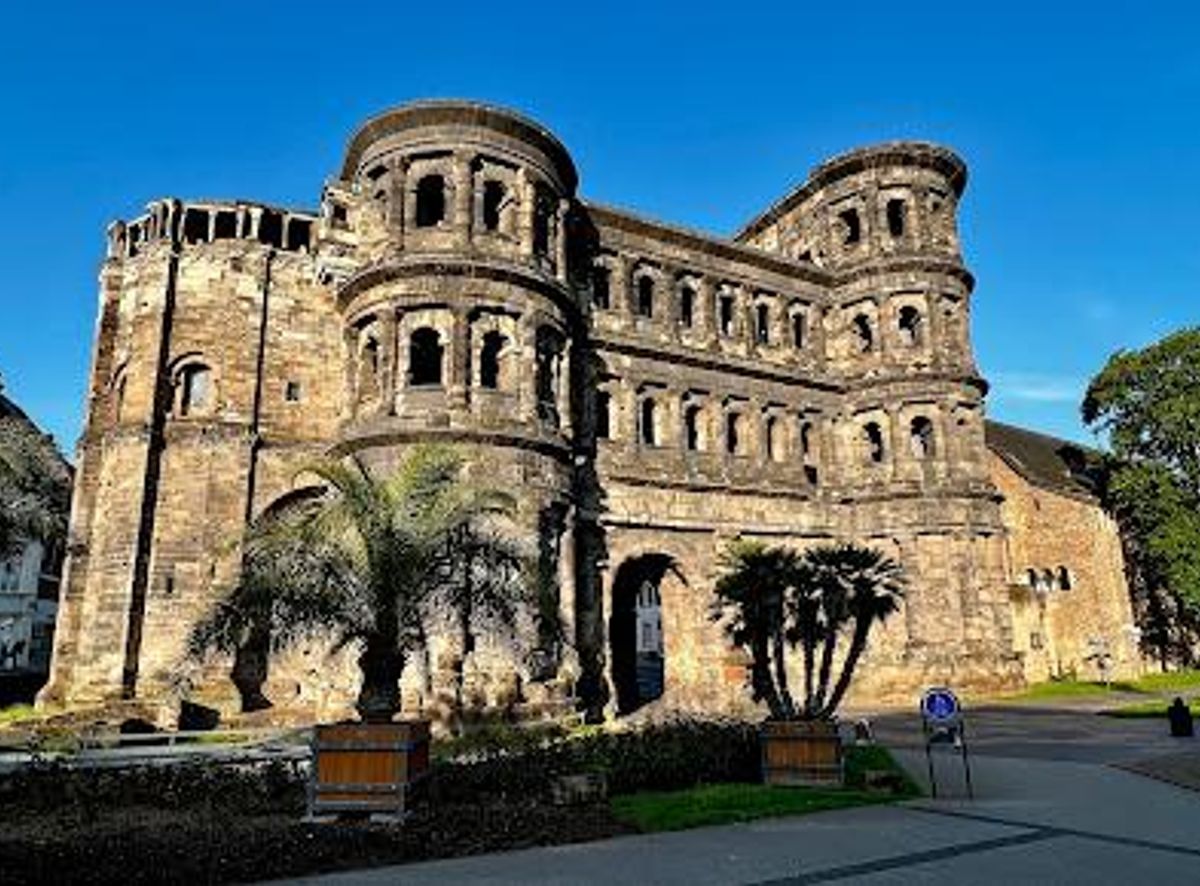
Explore Porta Nigra, Trier’s monumental Roman city gate—an awe-inspiring UNESCO landmark blending imperial might, medieval mystique, and panoramic city views.

Porta Nigra, looming over Trier’s bustling heart, stands as Europe's best-preserved Roman city gate—a UNESCO World Heritage site that draws history buffs and curious wanderers alike. Constructed around AD 170, its imposing sandstone blocks and storied archways usher visitors into centuries of imperial grandeur, medieval lore, and modern significance. The site is an essential stop amid Trier’s Roman treasures, easily accessible from the city’s vibrant central square.

A brief summary to Porta Nigra

  • Monday 9 am-4 pm
  • Tuesday 9 am-4 pm
  • Wednesday 9 am-4 pm
  • Thursday 9 am-4 pm
  • Friday 9 am-4 pm
  • Saturday 9 am-4 pm
  • Sunday 9 am-4 pm

Local tips

  • Plan your visit in the morning to avoid summer crowds and to experience softer light for memorable photographs.
  • Climb to the upper floors for exceptional panoramic views across Trier and the Moselle Valley.
  • Admission is free to explore the exterior and central plaza, but entry to the interior requires a modest ticket.
  • Check the schedule for guided tours or seasonal reenactments to enrich your understanding of the gate’s layered history.
  • Combine your visit with stops at nearby Roman monuments like the Imperial Baths or Amphitheatre for a fuller immersion in Trier’s ancient heritage.
widget icon

Do you manage this location?

Take control to get all the benefits, like improved information, better appearance, and stronger visibility across AI-powered discovery. Learn more

Activate your presence

Unlock the Best of Porta Nigra

Buy tickets

    No tickets available

Book tours with entry

    No tours available

Book tours without entry

    No tours available

Getting There

  • Landmark Orientation

    Porta Nigra is located at the northern edge of Trier's historic center, easily found by heading uphill from the Hauptmarkt, the city’s bustling main square.

  • Admission & Access

    Exploring the gate’s exterior and plaza is free. Entry to the internal passageways, upper galleries, and exhibitions requires a modest ticket (typically under €5 for adults; reduced rates for children and families).

  • Transport Hub Proximity

    Trier's main train station is within a comfortable 10-minute walk, making the site accessible for travelers arriving by train or regional bus services.

  • Obstacles & Accessibility

    The site’s interior features uneven steps and steep spiral staircases; wheelchair users may enjoy the surrounding plaza and impressive façade but will find interior access limited.

Discover more about Porta Nigra

Porta Nigra dominates the northern edge of Trier's city center, a colossal relic of Roman ambition that has stood watch over the Moselle Valley for nearly two millennia. Built around AD 170 from massive, dark-grey sandstone blocks, this UNESCO World Heritage wonder is the largest surviving Roman city gate north of the Alps. The name 'Porta Nigra,' or 'Black Gate,' stems from the weathered color the structure acquired over centuries of exposure. Originally erected as a show of the city’s importance and as a bulwark against invaders, the gate’s strategic position allowed it to guard the busiest roadways converging on ancient Augusta Treverorum, once among the Western Empire’s most influential cities.Stepping through the monumental arches, visitors are transported not just through time, but through layers of European history. During the Middle Ages, the gate became a sacred site when the hermit monk Simeon inhabited its upper floors; after his canonization, the structure was transformed into a church, protecting it from demolition while endowing it with strange beauty—a church nave perched atop Roman foundations. Napoleonic reforms in the 19th century saw its church features stripped away, revealing the original grandeur. Today, visitors can climb spiral staircases to sweeping city panoramas, peer out defensive windows once manned by Roman soldiers, and wander echoing halls that resonate with Trier’s dual heritage of empire and religion.A modest admission fee grants access to the full inner structure, including upper galleries and the small exhibitions on site, while the gate’s exterior and plaza are a lively hub for local festivals and open-air gatherings. From the foundations up, the blocks remain held together by gravity alone, a testament to ancient engineering prowess. The Porta Nigra stands amid boutiques, cafés, and the everyday rhythms of modern Trier, yet it evokes the enduring echo of Rome’s imperial reach—inviting contemplation and awe in equal measure.
Mobile App

Your all‑in‑one travel companion app

Explore expert travel guides, compare and book tours, experiences, hotels, and more—all from the palm of your hand. Download now for seamless trip planning wherever your wanderlust takes you.


More about Echternach

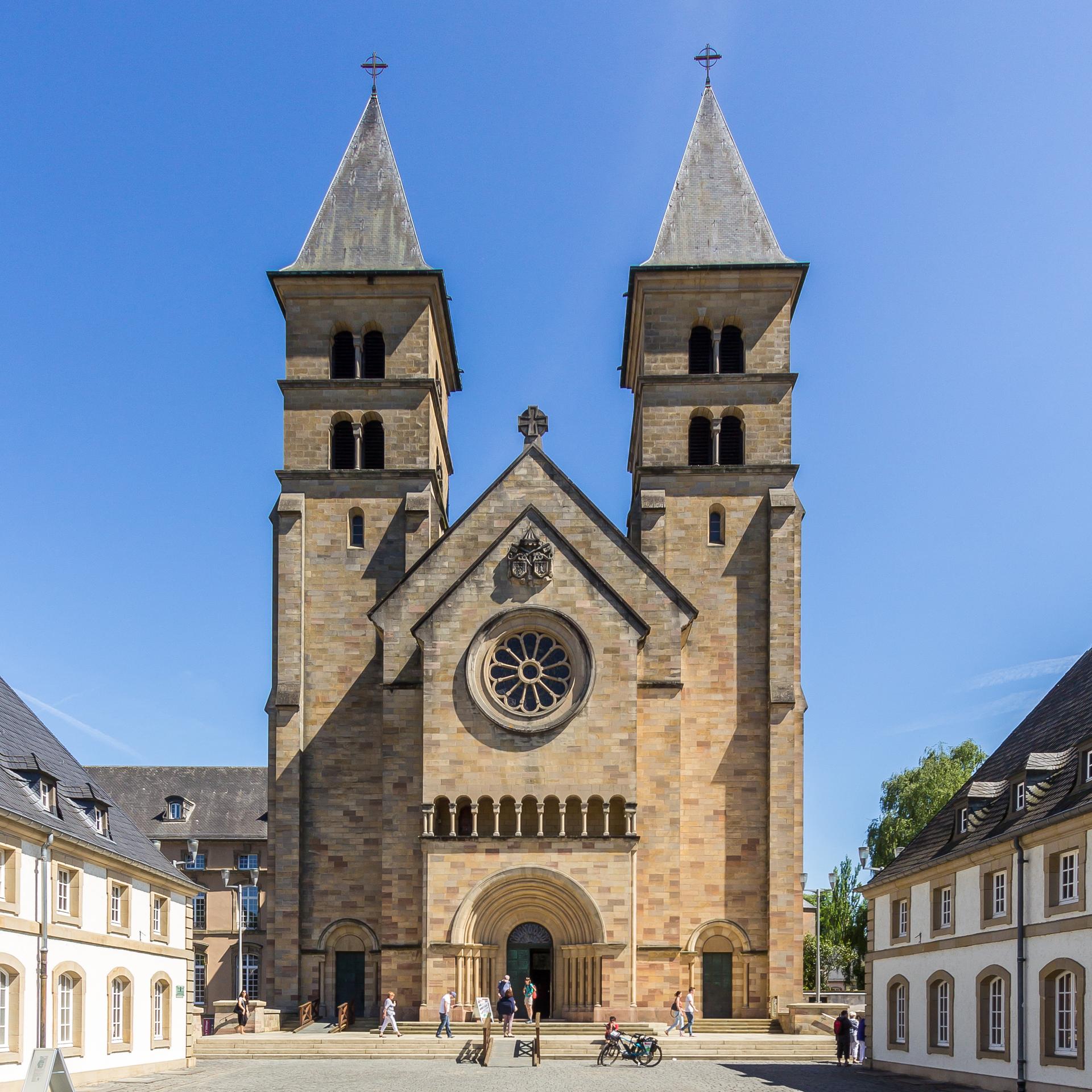
File:St. Willibrord Basilika, Echternach-3711.jpg - Wikimedia Commons

Discover the timeless charm of Echternach, Luxembourg’s oldest city, where history, nature, and culture come together in the enchanting Mullerthal region.

Tell me more about Echternach
Select Currency