
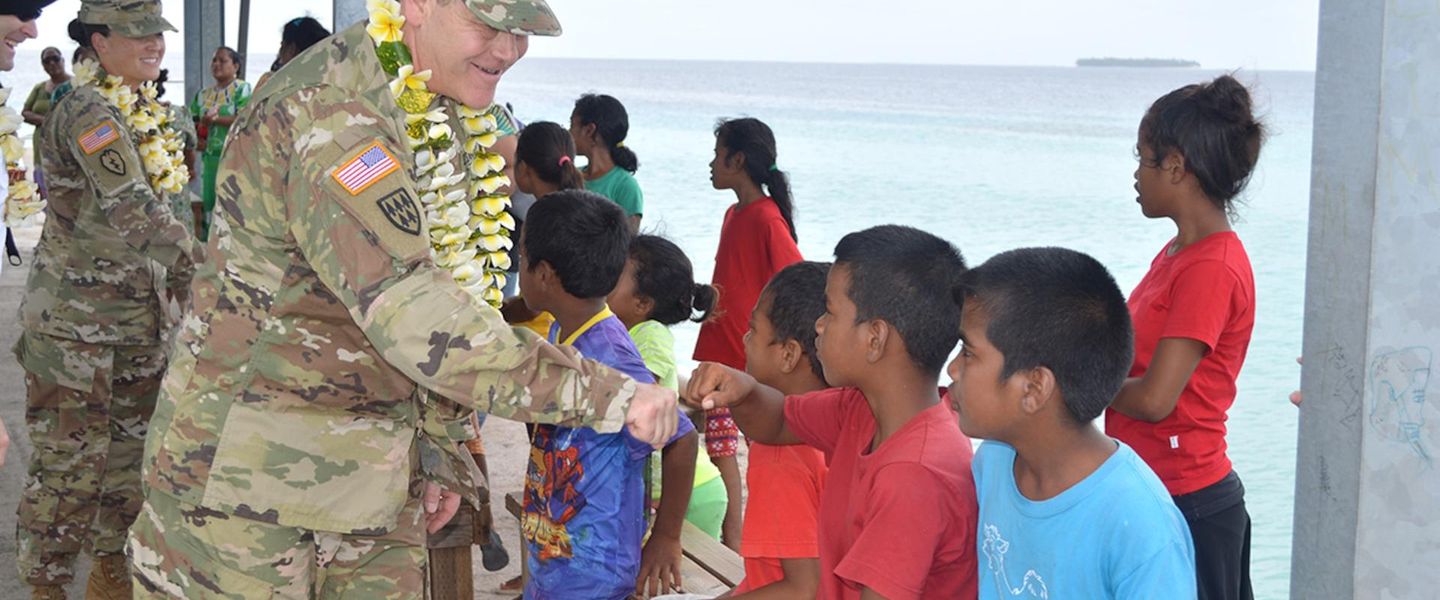
Ebeye Island, Marshall Islands Travel Guide
Discover the hidden gem of Ebeye Island in the Marshall Islands, where vibrant culture, stunning beaches, and rich history come together in a unique tropical paradise.
Ebeye Island, nestled in the Kwajalein Atoll of the Marshall Islands, offers a unique blend of culture and scenic beauty. Known for its vibrant community and rich history, this small island spans just over 80 acres but is home to nearly 15,000 residents, making it one of the most densely populated places in the Pacific. Visitors will find a warm and welcoming atmosphere, with locals eager to share their customs and traditions. The island's stunning beaches provide an idyllic setting for relaxation and water activities. Crystal-clear waters and coral reefs make Ebeye a paradise for snorkeling and diving enthusiasts. The underwater world here is teeming with colorful marine life, offering an unforgettable experience for nature lovers. Away from the beaches, the island's small markets and local eateries provide a taste of Marshallese cuisine, with fresh seafood and traditional dishes that are sure to delight your palate. History buffs will appreciate the island's role during World War II, with several historical sites and relics scattered throughout. The local museum offers insights into the island's past, including its strategic importance during the war. Despite its small size, Ebeye Island has a lot to offer, making it a must-visit destination for those looking to explore the lesser-known treasures of the Pacific.

Know before you go
Hi, I'm Eve. Here are a few practical things to know before exploring Ebeye Island.
- Visit the local markets early in the morning to experience the freshest produce and seafood.
- Respect local customs and dress modestly when exploring the island.
- Learn a few basic phrases in Marshallese to connect better with the locals.
- Bring cash, as credit card facilities are limited on the island.
- Be prepared for limited internet connectivity; enjoy the digital detox.
Explore Ebeye Island: Things to Do, Places to Eat, Hotels & More
Handpicked recommendations for top attractions, local dining, accommodations, and more

Best attractions in Ebeye Island
Top-rated picks
Best Attractions

Emon Beach
Experience the tranquility and natural beauty of Emon Beach, a hidden gem on Kwajalein Atoll in the stunning Marshall Islands.

Alele Museum and Public Library
Discover the vibrant heritage of the Marshall Islands at the Alele Museum and Public Library, a cultural hub filled with artifacts and local stories.

Delap Park
Discover the tranquility and natural beauty of Delap Park in Majuro Atoll, a perfect retreat for tourists seeking relaxation and local culture.

Bokanbotin
Explore the lush beauty of Bokanbotin, a breathtaking garden in Majuro Atoll, where vibrant flora and tranquility unite for an unforgettable experience.

Best landmarks in Ebeye Island
Top-rated picks
Best Landmarks

DAR
Experience the vibrant local culture at DAR Grocery Store in Kwajalein Atoll, offering fresh produce, local delicacies, and friendly service.

Church of the Queen of Peace
Experience the tranquil beauty and spiritual richness of the Church of the Queen of Peace on Kwajalein Atoll, a hidden gem in the Marshall Islands.

Ebeye Beach Park
Discover the serene beauty of Ebeye Beach Park, a tropical paradise perfect for relaxation and adventure in the Marshall Islands.

Ebeye Island Power Station
Explore Ebeye Island Power Station, a vital energy hub in Kwajalein Atoll, blending innovation with the stunning beauty of the Marshall Islands.

Best restaurants in Ebeye Island
Top-rated picks
Best Restaurants

Hotel Ebeye
Experience the charm of Kwajalein Atoll at Hotel Ebeye - your gateway to adventure and relaxation in the heart of the Marshall Islands.

Subway
Savor fresh and customizable meals at Subway in Kwajalein Atoll - a culinary gem amidst stunning tropical beauty.

Burger King
Experience fast food favorites amidst breathtaking views at Burger King in Kwajalein Atoll.
LaMike Bar
Experience the vibrant culture and stunning views at LaMike Bar in Kwajalein Atoll - your perfect tropical escape.

Best bars in Ebeye Island
Top-rated picks
Best Bars

Marshall Islands Resort
Discover the serene beauty and adventure at Marshall Islands Resort, your tropical sanctuary in Majuro Atoll with modern amenities and stunning ocean views.

Tide Table Restaurant & Lounge
Experience the vibrant flavors of the Marshall Islands at Tide Table Restaurant & Lounge, where fresh ingredients meet stunning ocean views.

Oceanview Club
Experience relaxation and local charm at Oceanview Club, a serene bar in Kwajalein Atoll, offering breathtaking ocean views and a vibrant atmosphere.

Cafe Roi
Discover the flavors of the Marshall Islands at Cafe Roi, a cozy cafe in Roi-Namur offering fresh coffee and local delicacies.

Best nightclubs in Ebeye Island
Top-rated picks
Best Nightclubs

Oceanview Club
Experience vibrant nightlife and breathtaking views at Oceanview Club in Kwajalein Atoll, a must-visit bar in the Marshall Islands.

Ebeye
Ebeye Island: A serene retreat in the Kwajalein Atoll, rich in culture and natural beauty, perfect for relaxation and adventure.
Hotel Ebeye
Discover the charm of Hotel Ebeye, a relaxing retreat in the heart of Kwajalein Atoll, where the beauty of the Marshall Islands awaits.

Yuk Theater
Explore the Yuk Theater in Kwajalein Atoll for a unique blend of cinematic magic and island charm, perfect for movie lovers and tourists alike.

Best shops in Ebeye Island
Top-rated picks
Best Shops

Ebeye
Experience Ebeye Island's breathtaking landscapes and vibrant local culture in the serene beauty of Kwajalein Atoll.

Surfway Grocery Store
Experience the charm of Kwajalein Atoll at Surfway Grocery Store, your go-to spot for local snacks and essentials in the heart of the Marshall Islands.

Sunrise Bakery
Experience the delightful flavors of Sunrise Bakery in Kwajalein, where fresh baked goods and island charm create the perfect culinary escape.

Payless Triple J
Discover local flavors and everyday essentials at Payless Triple J, your premier supermarket in Ebeye, Kwajalein Atoll.

Explore Ebeye Island on the Map
A handpicked selection of must-see spots in Ebeye Island, mapped for you.
Ebeye Island Essentials
-
Ebeye Island is located in the Kwajalein Atoll in the Marshall Islands. The nearest major gateway is Bucholz Army Airfield on Kwajalein Island, which has occasional flights from Honolulu and Guam. From Kwajalein, a ferry service operates to Ebeye Island. The ferry ride takes approximately 20 minutes. It is advisable to check the ferry schedule in advance as services can be irregular.
-
Ebeye Island is relatively small and most places are easily accessible on foot. Bicycles and scooters are popular modes of transportation among locals and can be rented. Taxis are available, but they can be scarce, so it is recommended to arrange transportation in advance when possible.
-
The official currency of the Marshall Islands is the United States Dollar (USD). Credit cards are not widely accepted on Ebeye Island. It is advisable to carry cash for most transactions. ATMs can be found, but it’s best to have sufficient cash on hand before arriving on the island.
-
Ebeye Island is generally safe for tourists. However, like in any small community, it’s important to remain vigilant. Avoid walking alone at night and keep your belongings secure. There are no specific areas on Ebeye known for high crime rates targeting tourists, but it is always best to exercise standard travel precautions.
-
In case of an emergency, dial 911 for immediate assistance. Ebeye has a hospital that can handle most medical emergencies. However, for more serious conditions, you may need to be evacuated to a larger medical facility. It is crucial to have travel insurance that covers medical emergencies and evacuation. Pharmacies are available for minor health issues and over-the-counter medications.
-
Fashion: Do dress modestly. Avoid wearing revealing clothing out of respect for local customs. Religion: Do respect local religious practices and traditions. Public Transport: Do be patient and respectful when using local transport services. Greetings: Do greet people with a friendly wave or a smile. Eating & Drinking: Do try local foods and accept hospitality graciously. Don’t refuse food offerings, as it may be seen as impolite.
-
To experience Ebeye Island 'like a local,' visit the local markets where you can buy fresh seafood and local produce. Engage with island residents who are often friendly and willing to share insights about their culture and way of life. Participate in local events and festivals if the opportunity arises, as they offer a unique glimpse into the island's vibrant community life.
When is the best time to visit Ebeye Island?
Useful Local Phrases for Ebeye Island
You don't need to speak the language perfectly. Even learning a few simple words can make conversations warmer—and locals usually appreciate the effort.
— Eve

Here are the phrases I use most often in Ebeye Island. Try a few—you'll be surprised how far they go! 😊
❤️
-
- HelloIo
[ee-oh] - GoodbyeKomol tata
[koh-mohl tah-tah] - YesEo
[eh-oh] - NoEj etal
[ehj eh-tahl] - Please/You're welcomeJekko
[jeck-koh] - Thank youKommol tata
[koh-mohl tah-tah] - Excuse me/SorryJekko
[jeck-koh] - How are you?Kwaj kwe
[kwahj kweh] - Fine. And you?Jokwe. Ijin eo?
[joh-kweh. ee-jeen eh-oh?] - Do you speak English?Ej jab ko rej Jepilin?
[ehj jahb koh rehj jeh-pee-leen?] - I don't understandEj jab kwe
[ehj jahb kweh]
- HelloIo
-
- I'd like to see the menu, pleaseEj jab kein menu, jekko
[ehj jahb kine meh-noo, jeck-koh] - I don't eat meatEj jab kein kein
[ehj jahb kine kine] - Cheers!Kommol
[koh-mohl] - I would like to pay, pleaseEj jab kein mool, jekko
[ehj jahb kine mool, jeck-koh]
- I'd like to see the menu, pleaseEj jab kein menu, jekko
-
- Help!Kakem
[kah-kem] - Go away!Jikin
[jee-keen] - Call the Police!Jab ko Police
[jahb koh poh-lees] - Call a doctor!Jab ko dokta
[jahb koh dohk-tah] - I'm lostEj jab kwe jidik
[ehj jahb kweh jee-deek] - I'm illEj jab kwe keem
[ehj jahb kweh keem]
- Help!Kakem
-
- I'd like to buy...Ej jab kein...
[ehj jahb kine...] - I'm just lookingJab kein kein
[jahb kine kine] - How much is it?Kilep in kwe?
[kee-lehp een kweh?] - That's too expensiveEj jab kwe kilep
[ehj jahb kweh kee-lehp] - Can you lower the price?Ej jab kwe kilep in
[ehj jahb kweh kee-lehp een]
- I'd like to buy...Ej jab kein...
-
- What time is it?Kwaj kwe rejerbal?
[kwahj kweh reh-jehr-bahl?] - It's one o'clockEo ilo juon
[eh-oh ee-loh jwohn] - Half past (10)Jalim juon im
[jah-leem jwohn eem] - MorningJinen
[jee-nehn] - AfternoonJalim enaaj
[jah-leem eh-nahj] - EveningJalim ainwot
[jah-leem eye-nwoht] - YesterdayJiban
[jee-bahn] - TodayJitok
[jee-tohk] - TomorrowJiban im
[jee-bahn eem] - 1Juon
[jwohn] - 2Ruo
[roo-oh] - 3Jilu
[jee-loo] - 4Jei
[jay-ee] - 5Jen
[jeen] - 6Jikkuar
[jee-kwahr] - 7Jikuji
[jee-koo-jee] - 8Jino
[jee-noh] - 9Jijel
[jee-jehl] - 10Jilok
[jee-lohk]
- What time is it?Kwaj kwe rejerbal?
-
- Where's a/the...?Ine ej...
[ee-neh ehj...] - What's the address?Ine ej kajin ko
[ee-neh ehj kah-jeen koh] - Can you show me (on the map)?Ej jab kwe nanaaj
[ehj jahb kweh nah-nahj] - When's the next (bus)?Jab kwe lon bus
[jahb kweh lohn boos] - A ticket (to ....)Jab ko tiket (eo ....)
[jahb koh tee-keht (eh-oh ....)]
- Where's a/the...?Ine ej...
History of Ebeye Island
-
Ebeye Island, like much of the Marshall Islands, was originally settled by Micronesian navigators thousands of years ago. These early inhabitants developed a rich culture centered around ocean navigation, fishing, and traditional Marshallese arts. Oral traditions and folklore still play an important role in the community, keeping the island's ancient history alive.
-
During World War II, Ebeye Island became strategically significant. In 1944, the island witnessed the Battle of Kwajalein, where American forces captured the Marshall Islands from Japanese control. Following the battle, Ebeye became a site for American military bases and operations, reshaping the island's infrastructure and demographics.
-
After World War II, Ebeye saw a significant influx of Marshallese people, particularly those displaced by nuclear testing on nearby atolls like Bikini and Enewetak. This led to a population boom, with Ebeye becoming one of the most densely populated islands in the Pacific. The U.S. military continued to play a role in the island's development, providing employment and economic support.
-
In 1986, the Compact of Free Association was signed between the United States and the Republic of the Marshall Islands. This agreement granted the Marshall Islands independence while allowing the U.S. to maintain military facilities in the region, including on Ebeye. The compact also provided economic aid and access to U.S. social services, significantly impacting the island’s socio-economic landscape.
-
Today, Ebeye faces numerous challenges, including overpopulation, limited resources, and environmental threats such as rising sea levels due to climate change. Despite these issues, the community remains resilient, drawing on its rich cultural heritage and strong social networks. Various local and international initiatives are underway to improve living conditions and sustainability on the island.
Neighbouring destination travel guides
Browse our curated selection of top destinations, scenic points, and must-visit spots in the area.


Your all‑in‑one travel companion app
Explore expert travel guides, compare and book tours, experiences, hotels, and more—all from the palm of your hand. Download now for seamless trip planning wherever your wanderlust takes you.


Explore More of Marshall Islands

Looking beyond Ebeye Island? Discover Marshall Islands for broader travel guides, local hot-spots, and regional highlights.
Explore Marshall IslandsEbeye Island in Photos
Browse through our photo collection highlighting the charm and character of the destination.

Ebeye Island: The Gem of the Marshall Islands
Ebeye Island, nestled in the Kwajalein Atoll of the Marshall Islands, offers a unique blend of culture and scenic beauty. Known for its vibrant community and rich history, this small island spans just over 80 acres but is home to nearly 15,000 residents, making it one of the most densely populated places in the Pacific. Visitors will find a warm and welcoming atmosphere, with locals eager to share their customs and traditions. The island's stunning beaches provide an idyllic setting for relaxation and water activities. Crystal-clear waters and coral reefs make Ebeye a paradise for snorkeling and diving enthusiasts. The underwater world here is teeming with colorful marine life, offering an unforgettable experience for nature lovers. Away from the beaches, the island's small markets and local eateries provide a taste of Marshallese cuisine, with fresh seafood and traditional dishes that are sure to delight your palate. History buffs will appreciate the island's role during World War II, with several historical sites and relics scattered throughout. The local museum offers insights into the island's past, including its strategic importance during the war. Despite its small size, Ebeye Island has a lot to offer, making it a must-visit destination for those looking to explore the lesser-known treasures of the Pacific.