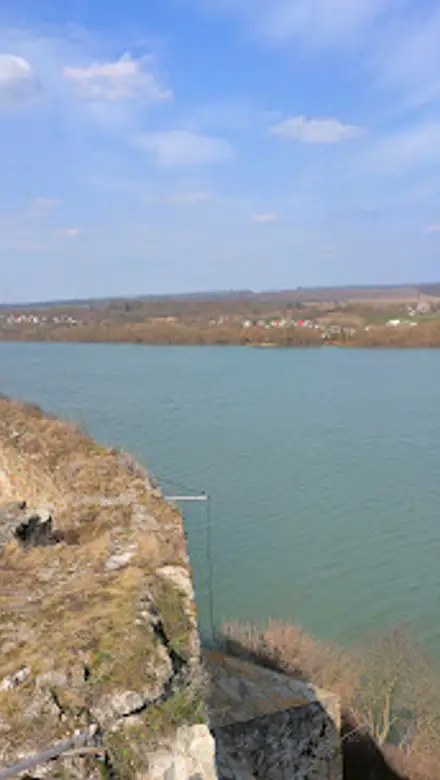
Dnister River Travel Guide
Free Guide: Explore the Dniester River: A historic waterway offering natural beauty and cultural richness in Eastern Europe.


A brief summary of Dnister River
Explore the Dniester River: A historic waterway offering natural beauty and cultural richness in Eastern Europe.
The Dnister River, also known as Nistru, is a vital waterway in Eastern Europe, flowing through Ukraine and Moldova. It has shaped the region's history, culture, and economy for centuries.
- Address
- Dnister River
Getting there
Walking
Public Transport
Discover more about Dnister River
Overview
The Dnister River rises in the Carpathian Mountains in Ukraine and flows for 1,352 kilometers to the Black Sea. It serves as a crucial resource for agriculture, energy, industry, and biodiversity, supporting the livelihoods of millions.The river has been a historical boundary and a corridor for cultural exchange. During the Neolithic era, the Dniester was the center of the Cucuteni-Trypillian culture, one of the most advanced civilizations of its time. In antiquity, the Greeks called it Tyras, and it formed part of a major trade route. In the Middle Ages, it served as a boundary for the Principality of Moldavia.Today, the Dnister is a popular destination for tourism. The Dniester Canyon, with its picturesque meanders and steep slopes, offers opportunities for rafting, paragliding, and hang-gliding. The river's floodplains are home to national parks like Nistru de Jos in Moldova, promoting eco-tourism and biodiversity conservation.Despite its importance, the Dnister faces challenges such as pollution, water scarcity, and geopolitical tensions. The river also has limited navigability due to shallow waters and sandbars.
Evendo Review Centre
 Google
Guest reviews
Explore Dnister River on the map
A handpicked selection of must-see spots near Dnister River, mapped for you.
Get your free copy of our complete guide to Dnister River, delivered straight to you.
Everything on this page, from opening hours and how to get there to Eve’s tips and the best time to go, in one PDF you can read offline, print or share.
Already have an account? Sign in
Your Dnister River guide is ready.
We'll send it to · Not you? Sign out

Getting your guide ready…
We are putting together a fresh copy of the Dnister River guide. This can take up to a minute.
This can take a few moments. If your browser asks, choose Allow so the download can start. You'll find the guide in your Downloads folder.
Nothing happened? Download it again
Sorry, the guide is taking longer than usual. Please try again in a minute, or get it by email instead.
Other nearby places you may find interesting
The closest places of the same kind, if this one is not quite what you had in mind.
-
-
-
-
-


Swipe for more places
More to explore near Dnister River

 Best experiences near Dnister River
 Best hotels near Dnister River
 Best landmarks near Dnister River
 Best attractions near Dnister River
 Best shops near Dnister River
 Best restaurants near Dnister River
 Best bars near Dnister River
Do you manage this location?
Take control to get all the benefits, like improved information, better appearance, and stronger visibility across AI-powered discovery.
Explore more

Explore more of Transnistria
Explore Transnistria in Moldova, a fascinating destination with Soviet-era architecture, peaceful monasteries, and rich history nestled between the Dniester River and Ukraine.
Explore Transnistria
Explore more of Moldova
Discover Moldova: A tranquil haven of rich history, stunning vineyards, and captivating natural landscapes, perfect for an off-the-beaten-path European adventure.
Explore Moldova