Background

Waag - Amsterdam's Medieval Gatehouse & Restaurant

Medieval gatehouse turned weigh house, now a candlelit restaurant in Amsterdam's oldest non-religious building.

★★★★★4.1 (3657)

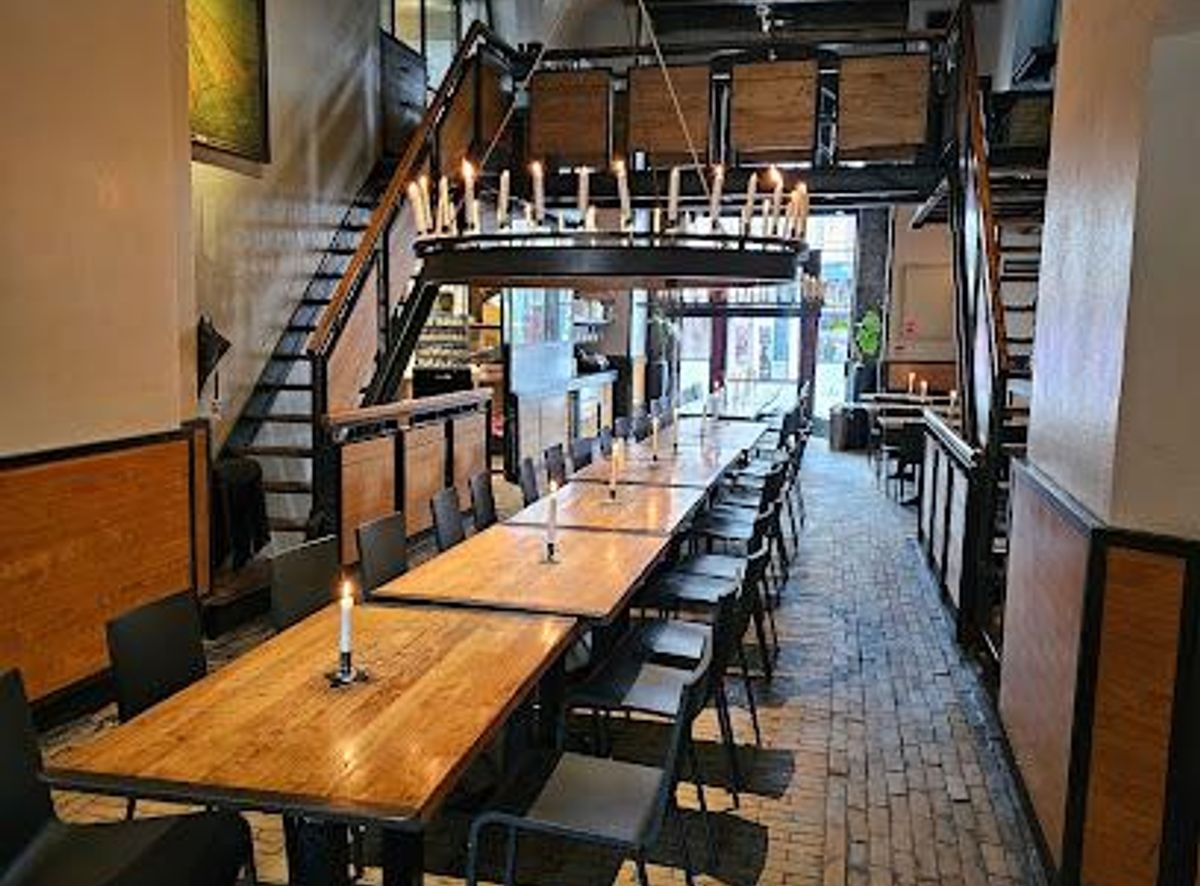
The Waag is Amsterdam's oldest non-religious building, a stunning 15th-century medieval gatehouse built in 1488 on Nieuwmarkt square. Originally a city gate, it was converted into a weigh house in 1617 and later served as a guildhall, museum, and fire station. Today, the ground floor houses Restaurant-Café In de Waag, a sophisticated dining venue offering French-Dutch cuisine in a candlelit, castle-like atmosphere with 300 hanging candles and high chandeliers.

Plan your visit

A brief summary to Waag

Opening times, essentials, and a few local tips gathered into one calmer, easier-to-scan planning section.

Plan your visit

📍
Nieuwmarkt 4, Amsterdam, Amsterdam-Centrum, 1012 CR, NL
💷
Mid ranged
🏛
Indoor
📶
Mobile reception: 4 out of 5
Monday
11 am-10 pm
Tuesday
11 am-10 pm
Wednesday
11 am-10 pm
Thursday
11 am-10 pm
Friday
11 am-10 pm
Saturday
9 am-10 pm
Sunday
9 am-10 pm

Explore places near Waag

    See all →

    Unlock the Best of Waag

    Find tickets, tours with entry, and experiences available for this location.

    Buy tickets

    No tickets available

    Book tours with entry

    No tours with entry available

    Book tours without entry

    No tours without entry available

    Getting There

    Metro

    Take Amsterdam's metro (lines 51, 53, or 54) directly to Nieuwmarkt station. The Waag is located immediately adjacent to the station, requiring only a 2-minute walk. This is the fastest option from Central Station (approximately 7 minutes total travel time).

    Tram

    Amsterdam's extensive tram network connects to Nieuwmarkt square. Multiple tram lines serve the area, making it easily accessible from anywhere in the city center. Journey times vary but typically range from 5-15 minutes depending on your starting point.

    Walking

    The Waag is located in Amsterdam's compact city center at Nieuwmarkt 4. From Central Station, it's a pleasant 7-minute walk through the old city. From Dam Square, it's approximately 5 minutes on foot, making it ideal for combining with other city center attractions.

    Bicycle

    Cycling is Amsterdam's preferred transportation method. Nieuwmarkt is well-connected by bike lanes throughout the city. Secure bike parking is available throughout the Nieuwmarkt area, and the location is easily accessible from any Amsterdam neighborhood.

    For the on-the-go comforts that matter to you

    Restrooms
    Drink Options
    Food Options
    Seating Areas
    Sheltered Areas

    Local tips

    Visit during evening hours to fully appreciate the atmospheric candlelit interior with 300 hanging candles and chandeliers that create an enchanting castle-like ambiance.
    Book a table in advance, especially for weekends and evenings, as the restaurant's popularity and limited seating in this historic building fill quickly.
    Arrive early to explore Nieuwmarkt square and the building's exterior before dining; the Waag dominates the square and is particularly photogenic when illuminated.
    Ask your server about the building's rich history, including its role as an anatomical theater and its connection to Rembrandt's famous painting.
    Combine your visit with exploration of nearby attractions including the Red Light District, Chinatown, and the Jewish Cultural Quarter, all within walking distance.

    Discover more about Waag

    ### Historical SignificanceThe Waag stands as Amsterdam's oldest surviving non-religious building, constructed in 1488 as the Sint Antoniespoort (Saint Anthony's Gate), one of three main city gates in Amsterdam's defensive walls. The building's first stone was laid on 28 April 1488, as commemorated by the oldest plaque in Amsterdam. When the city expanded in the late 16th century and walls were torn down around 1601, the gate lost its defensive function but gained new purpose as a public weigh house between 1617 and 1618, relieving pressure from the original weigh house on Dam Square. The name "Waag" derives from the Dutch word for scale, reflecting its primary function during this period.### Architectural MarvelThe building is an imposing structure of red brick adorned with limestone ornaments, featuring distinctive tower elements that once served as separate entrances for different guilds. Between 1690 and 1691, the Waag underwent significant architectural enhancement with the addition of a large dome-shaped hall topped by a central octagonal tower, creating what became known as the Theatrum Anatomicum. This anatomical theater allowed medical students to observe anatomy classes, and the surgeons' guild commissioned Rembrandt's famous 1632 painting "The Anatomy Lesson of Dr. Nicolaes Tulp" for display in their guildhall within the building. The upper floors historically housed four major guilds—smiths, painters, masons, and surgeons—each with dedicated spaces and symbolic door ornaments.### Multifaceted HistoryThroughout its existence, the Waag has served remarkably diverse functions. During the 19th century, it housed a fencing hall, furniture workshop, fire station (1874–1888), and city archives until 1914. A darker chapter occurred in the early 1800s when public executions were performed in front of the building under Napoleon's orders, with condemned prisoners held in the "little gallows room" inside. In the 20th century, the building transitioned to cultural use, serving as the original home of the Amsterdam Historical Museum (1926) and the Jewish Historical Museum. The building stood empty from 1989 to 1994 before being restored and handed to cultural stewardship.### Modern Restaurant ExperienceSince 1996, Restaurant-Café In de Waag has occupied the ground floor, transforming the historic space into an elegant dining destination. The restaurant's interior is distinguished by approximately 300 candles and high-hanging candelabras that create an enchanting castle-like ambiance. The venue offers a versatile dining experience across three historic spaces, accommodating intimate meals, group gatherings, and private events. The menu seamlessly blends French cuisine with Dutch culinary traditions, featuring seasonal dishes designed to cater to diverse tastes with substantial options for both carnivores and vegetarians.### Cultural InstitutionBeyond the restaurant, the upper floors have housed Waag Society (Institute for Art, Science and Technology) since 1996, a forward-thinking organization dedicated to exploring the intersection of art, science, and technology. The building was designated a national monument (rijksmonument) in 1970, recognizing its architectural and historical importance. Today, the Waag remains a landmark in Amsterdam's city center, dominating Nieuwmarkt square and appearing particularly striking when illuminated at night.

    A brief summary to Waag

    Use Tower Bridge as your starting point for nearby food, family ideas, nightlife, and more local discoveries.

    Plan around the quieter times

    A quick look at seasonal patterns and peak visiting hours.

    Busiest months of the year

    Seasonality

    Busiest hours of the day

    Footfall
    Mobile App
    Get the app

    Your all‑in‑one travel companion app

    Explore expert travel guides, compare and book tours, experiences, hotels, and more—all from the palm of your hand. Download now for seamless trip planning wherever your wanderlust takes you.
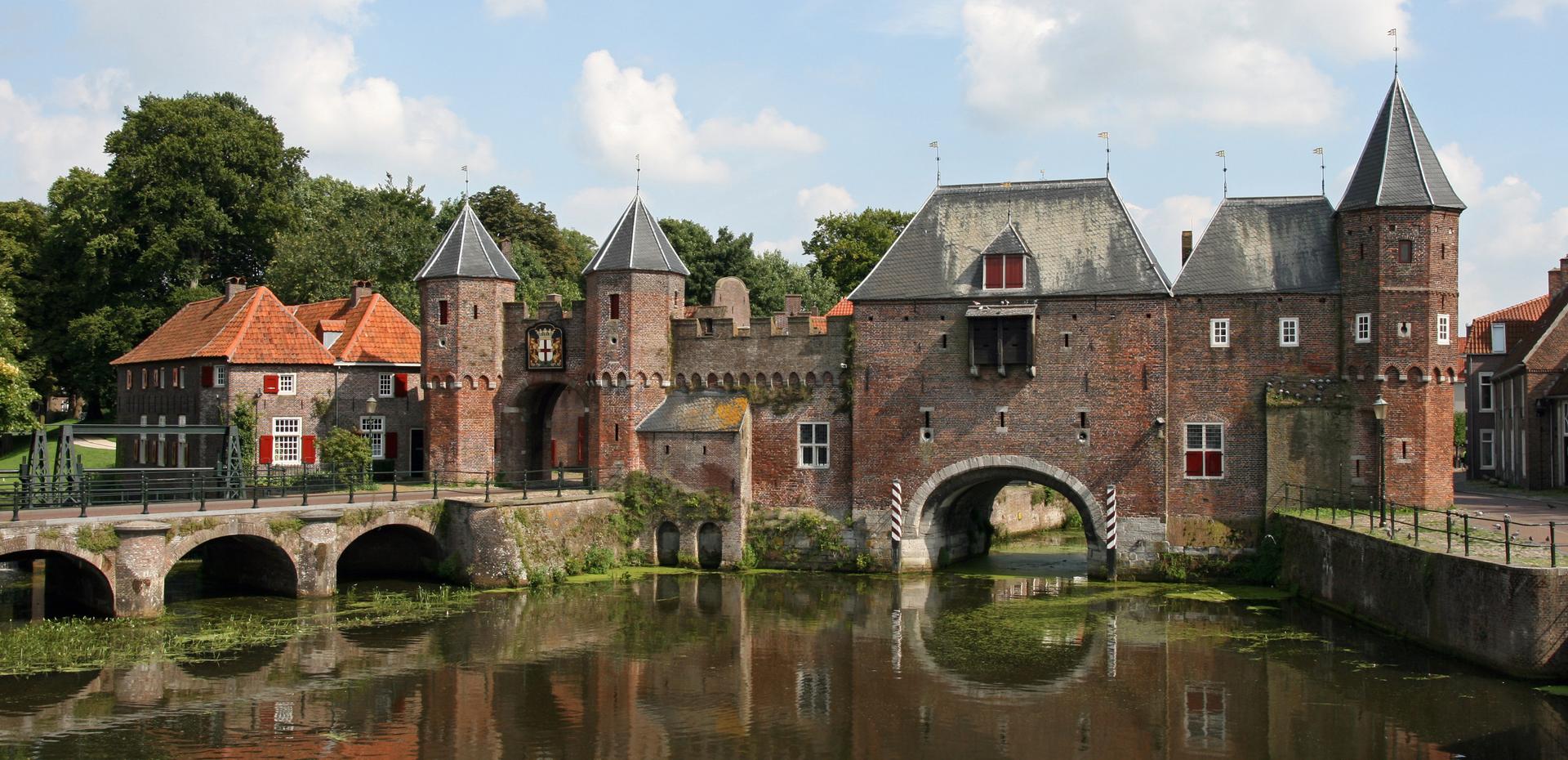
    File:Koppelpoort Amersfoort Cropped.jpg - Wikipedia

    More about Amersfoort

    Discover Amersfoort: A medieval city in the Netherlands, rich in history, art, and natural beauty. Perfect for history buffs, art lovers, and nature enthusiasts.

    Tell me more about Amersfoort
    Select Currency

    Choose the currency you want prices to display in.