

Fort Abraham Lincoln State Park Travel Guide - Free Web & App
Your ultimate guide to Fort Abraham Lincoln State Park. Discover top landmarks, proposed trips, and local tips. Free on the web or via the Evendo companion app.


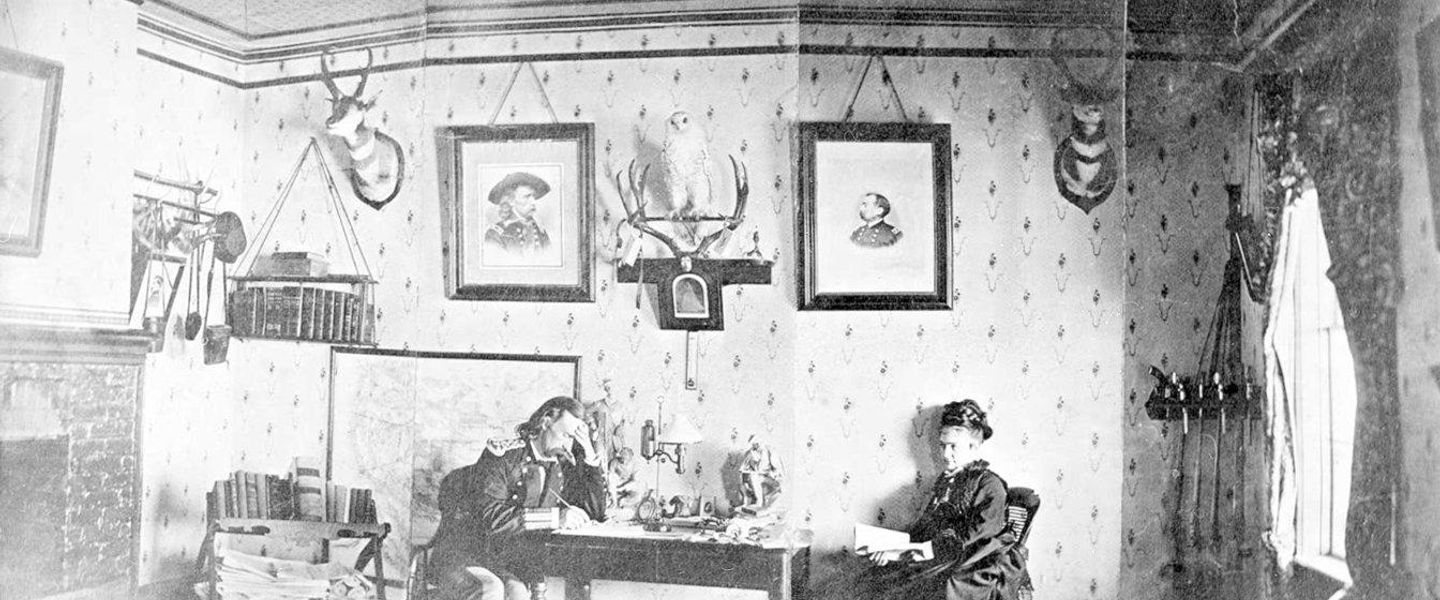


Fort Abraham Lincoln State Park in North Dakota brings Mandan earthlodge heritage, frontier history, scenic trails and Missouri River views together.
Missouri River Landscapes
Fort Abraham Lincoln State Park occupies a wooded and gently rolling area south of Mandan, where the Missouri River and Heart River meet in central North Dakota. Its trails, river views and open prairie offer a compact introduction to the landscapes that shaped both Mandan life and the later military history of the Northern Plains. The park is close to Bismarck and Mandan, yet its wooded ravines and broad outlooks create a markedly quieter setting beyond the urban area.Read more about Fort Abraham Lincoln State Park
Mandan and Military Heritage
Exploring the Park
When is the best time to visit Fort Abraham Lincoln State Park?
Best: May–June, August · 21–27°C| Month | High (°C) | Rainfall (mm) |
|---|---|---|
| January | -7 | 15 |
| February | -3 | 15 |
| March | 4 | 20 |
| April | 14 | 25 |
| May (best) | 21 | 50 |
| June (best) | 25 | 65 |
| July | 28 | 60 |
| August (best) | 27 | 50 |
| September | 19 | 35 |
| October | 12 | 25 |
| November | 4 | 20 |
| December | -3 | 15 |
Getting to and around Fort Abraham Lincoln State Park
How to get there
Best attractions in Fort Abraham Lincoln State Park
On-A-Slant Indian Village is the park's defining cultural attraction, with reconstructed Mandan earthlodges and interpretation of village life along the Missouri River. The Fort McKeen historic area presents the military landscape through reconstructed buildings, earthworks and exhibits about the United States Army's nineteenth-century presence. Nearby, the reconstructed Custer House focuses on domestic and officers' life at the frontier post rather than battlefield spectacle. Walking trails lead through prairie and wooded terrain, linking historical locations with views towards the Missouri and Heart rivers. Picnic areas and camping make the park suitable for a longer visit, while the visitor centre provides orientation and seasonal interpretation. The surrounding landscape is part of the experience: river terraces, cottonwood country, open grassland and changing skies explain why the site attracted both Mandan communities and later military planners. The park also serves as a starting point for exploring the broader Bismarck–Mandan area, although attractions beyond its boundaries should be treated as separate visits.
-
Historical place museum
Custer House
Explore the Custer House in Mandan, ND, a captivating historical museum that celebrates the legacy of General Custer and the American West.
-
Historical landmark
Mandan Village Historic Site
Discover the Mandan Village Historic Site, where the rich heritage of the Mandan people comes alive through immersive experiences and cultural education.
-
 Historical landmark
On-A-Slant Indian Village
Explore the On-A-Slant Indian Village, a historical landmark in Mandan, ND, showcasing the rich culture and heritage of the Mandan people.
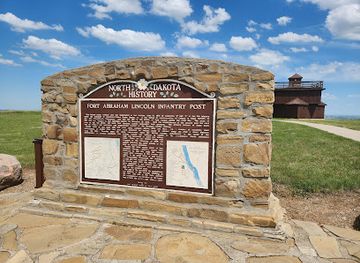
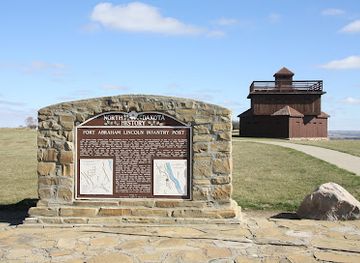
Explore Fort Abraham Lincoln State Park on the map
Plan your trip on one map. See where the top attractions, landmarks, restaurants and hotels are, and book hotels and experiences in a few clicks.
Best hotels in Fort Abraham Lincoln State Park
Best shops in Fort Abraham Lincoln State Park
Shopping within Fort Abraham Lincoln State Park is limited and centred on visitor-oriented materials, souvenirs and interpretive items rather than a broad commercial district. The most meaningful purchases are likely to be books, educational material, locally themed crafts or products connected with North Dakota history and Indigenous interpretation, where offered through official or reputable outlets. Mandan and Bismarck provide the nearest substantial range of supermarkets, outdoor equipment, independent retailers, galleries and practical supplies. Visitors interested in regional goods can look for North Dakota-produced food, art and craft products in the wider urban area, while availability varies by season and business. It is important to buy Indigenous-themed artwork and cultural products from credible makers or retailers, rather than treating generic frontier imagery as equivalent to Mandan heritage. For a park visit, provisions and outdoor essentials are more reliably obtained in town before arrival.
-
State park
Fort Abraham Lincoln State Park
Explore the captivating landscapes and rich history of Fort Abraham Lincoln State Park in North Dakota, a perfect getaway for nature lovers and history enthusiasts alike.
Get your free copy of our complete guide to Fort Abraham Lincoln State Park, delivered straight to you.
Everything on this page, from attractions and restaurants to essentials and local phrases, in one PDF you can read offline, print or share.
Already have an account? Sign in
Your Fort Abraham Lincoln State Park guide is ready.
We'll send it to · Not you? Sign out

Getting your guide ready…
We are putting together a fresh copy of the Fort Abraham Lincoln State Park guide. This can take up to a minute.
This can take a few moments. If your browser asks, choose Allow so the download can start. You'll find the guide in your Downloads folder.
Nothing happened? Download it again
Sorry, the guide is taking longer than usual. Please try again in a minute, or get it by email instead.
From Eve
Local phrases worth knowing
You don't need to get them perfect. A few words go a long way, and locals appreciate the effort.
Basics
| English | Local | Say it |
|---|---|---|
| Hello | Howdy | [hau-dee] |
| Goodbye | See ya | [see yah] |
| Yes | Yah | [yah] |
| No | Nah | [nah] |
| Please/You're welcome | Please | [pleez] |
| Thank you | Thanks | [th-anks] |
| Excuse me/Sorry | Pardon | [par-dn] |
| How are you? | Howdy | [hau-dee] |
| Fine. And you? | Good. How 'bout you? | [gud. haw 'bout yah] |
| Do you speak English? | You speak English? | [yoo speek ing-glish] |
| I don't understand | I dunno | [ai dun-no] |
Eating & Drinking
| English | Local | Say it |
|---|---|---|
| I'd like to see the menu, please | Menu, please | [men-yoo, pleez] |
| I don't eat meat | No meat for me | [noh meet for mee] |
| Cheers! | Cheers! | [cheers] |
| I would like to pay, please | Check, please | [chek, pleez] |
Emergencies
| English | Local | Say it |
|---|---|---|
| Help! | Help! | [help] |
| Go away! | Go away! | [go away] |
| Call the Police! | Call the cops! | [call the cops] |
| Call a doctor! | Get a doctor! | [get a doctor] |
| I'm lost | I'm lost | [aim lost] |
| I'm ill | I'm sick | [aim sick] |
Shopping
| English | Local | Say it |
|---|---|---|
| I'd like to buy... | I wanna buy... | [ai wanna buy] |
| I'm just looking | Just browsing | [just bro-zing] |
| How much is it? | How much? | [hau much] |
| That's too expensive | Too pricey | [too prai-see] |
| Can you lower the price? | Can you do a deal? | [can yoo doo a deal] |
Time & Numbers
| English | Local | Say it |
|---|---|---|
| What time is it? | What time is it? | [wut time is it] |
| It's one o'clock | It's one | [its wun] |
| Half past (10) | Half past ten | [haf past ten] |
| Morning | Morning | [mor-ning] |
| Afternoon | Afternoon | [af-ter-noon] |
| Evening | Evening | [ee-ven-ing] |
| Yesterday | Yesterday | [yes-ter-day] |
| Today | Today | [toh-day] |
| Tomorrow | Tomorrow | [toh-mor-row] |
| 1 | One | [wun] |
| 2 | Two | [too] |
| 3 | Three | [three] |
| 4 | Four | [for] |
| 5 | Five | [fahyv] |
| 6 | Six | [siks] |
| 7 | Seven | [sev-uhn] |
| 8 | Eight | [ayt] |
| 9 | Nine | [nine] |
| 10 | Ten | [ten] |
Transport & Directions
| English | Local | Say it |
|---|---|---|
| Where's a/the...? | Where's the...? | [wheres the] |
| What's the address? | What's the address? | [whuts the ad-dress] |
| Can you show me (on the map)? | Show me (on the map) | [show mee on the map] |
| When's the next (bus)? | When's the next bus? | [whens the next bus] |
| A ticket (to ....) | A ticket to... | [a ticket to] |
History of Fort Abraham Lincoln State Park
Missouri River Formation and Setting
The Missouri River landscape around present-day Fort Abraham Lincoln was shaped by glacial processes, river movement and the deposition of sediments across the Northern Plains. The meeting of the Missouri and Heart rivers created fertile ground and access to water, timber and transport routes, making the area significant long before the establishment of the state park. The wooded bottomlands and higher terraces visible today reflect this combination of riverine and prairie environments, while the park's elevated ground provided an advantageous position for later military observation.
Mandan Life at On-A-Slant
On-A-Slant Indian Village was a Mandan settlement on the Missouri River, occupied for several centuries before it was abandoned in the late eighteenth century. Mandan communities developed large earthlodge villages supported by farming, hunting, fishing and extensive regional exchange. Corn, beans and squash were important crops, while the Missouri connected the settlement to other peoples and trading networks across the Plains. The reconstructed earthlodges and interpretation at the park help explain a settled village tradition that is often overlooked in accounts focused only on later frontier forts.
The Army Frontier at Fort McKeen
The United States Army established Fort McKeen in the 1870s on the high ground above the Missouri. It was part of the military infrastructure created during a period of expanding federal control and conflict across the Northern Plains. The fort's position reflected the strategic importance of the river corridor and the nearby route west. Although the military post operated for a relatively short period, its earthworks, reconstructed buildings and surviving landscape features provide a tangible record of the army's presence during the final decades of the nineteenth-century frontier.
Camp Life and the Custer Association
The fort area is associated with Lieutenant Colonel George A. Custer, who was stationed at Fort Abraham Lincoln with the Seventh Cavalry before the 1876 campaign that ended at the Battle of the Little Bighorn. The reconstructed Custer House interprets the domestic side of military life, including the presence of officers' families and the social world surrounding the garrison. The site should be understood within the wider history of United States expansion, Indigenous displacement and the unequal power relations that shaped the Northern Plains in this period.
From Historic Site to State Park
After the military period, the fort site and surrounding landscape became important for historic preservation and public interpretation. Fort Abraham Lincoln State Park developed as a place where Mandan heritage, military history and the Missouri River environment could be presented together. Reconstruction, archaeological work and changing interpretation have helped preserve the site's physical character, while contemporary management also addresses recreation, visitor access and the protection of cultural resources. Its modern identity therefore rests on both preservation and an effort to present multiple histories within the same landscape.
Fort Abraham Lincoln State Park in Photos
Browse through our photo collection highlighting the charm and character of the destination.
Neighbouring destination travel guides
The closest destinations to Fort Abraham Lincoln State Park, if you have time for more than one.
-

-

-

-

-


Swipe for more destinations
Explore more

Explore more of Missouri Plateau
Explore North Dakota’s Missouri Plateau for Badlands scenery, wildlife, Indigenous history, ranch country and wide-open road journeys.
Explore Missouri Plateau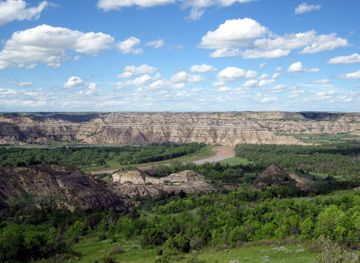
Explore more of North Dakota
Discover the rugged beauty, rich history, and warm hospitality of North Dakota, the untamed frontier of the United States.
Explore North Dakota