

Free Villarrica Travel Guide & Mobile App
Plan your Villarrica trip with Evendo. Get free guides to top attractions, restaurants, hotels, and bars. Web access or download the mobile app.


Villarrica, Paraguay, pairs Guairá’s colonial history with literary heritage, leafy parks, traditional cuisine and access to the Cordillera del Ybytyruzú for thoughtful sightseeing.
A City Shaped by Movement
Villarrica, officially Villarrica del Espíritu Santo, stands in the Guairá Department of eastern Paraguay, where gently rolling countryside leads towards the forested Cordillera del Ybytyruzú. The city was founded during the Spanish colonial period and moved repeatedly before reaching its present site, giving its history an unusual sense of movement across the eastern frontier. Today, its broad streets, low-rise centre and leafy public spaces create a more measured atmosphere than Paraguay’s larger cities, while historic buildings and civic institutions preserve the memory of an important regional centre.Read more about Villarrica
Literature, Music and Civic Life
Parks and the Guairá Landscape
When is the best time to visit Villarrica?
Best: June–August · 25–26°C| Month | High (°C) | Rainfall (mm) |
|---|---|---|
| January | 35 | 188 |
| February | 35 | 164 |
| March | 34 | 151 |
| April | 31 | 96 |
| May | 27 | 71 |
| June (best) | 25 | 44 |
| July (best) | 25 | 39 |
| August (best) | 26 | 47 |
| September | 29 | 73 |
| October | 32 | 109 |
| November | 34 | 136 |
| December | 36 | 173 |
Getting to and around Villarrica
How to get there
Transportation
Best attractions in Villarrica
Villarrica’s principal sights are concentrated within an approachable central area. The Museo Municipal Maestro Fermín López introduces local history and the city’s artistic tradition, while the Catedral de Villarrica del Espíritu Santo remains an important reference point in the urban landscape. Parque Manuel Ortiz Guerrero, historically known as Ykua Pytã, provides shaded open space and a relaxed setting associated with the memory of the city’s celebrated poet. The former Estación del Ferrocarril de Villarrica evokes the railway era and the commercial connections that helped shape the town. Casa de la Cultura adds a cultural perspective through exhibitions and local events. Beyond the centre, the countryside of Guairá offers rivers, waterfalls and access towards the Cordillera del Ybytyruzú; these are regional excursions rather than attractions inside Villarrica and usually require separate transport and planning.
-
Tourist attraction
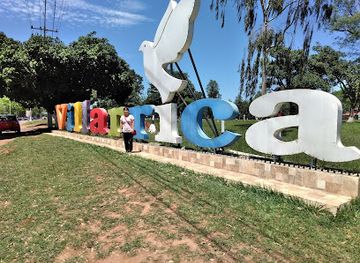
Bienvenido A Villarrica, Villarrica
Explore the natural beauty and rich culture of Villarrica, a charming Paraguayan town offering unforgettable experiences and breathtaking landscapes.
8 min walk · 0.7 km from city centre
-
Tourist attraction
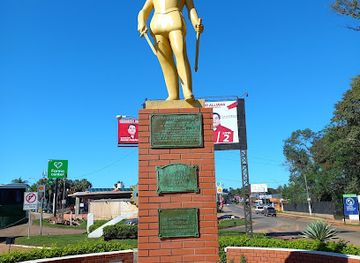
Homenaje al Centenario de fundación de Villarrica
Explore the Homenaje al Centenario de fundación de Villarrica, a monument celebrating local history and culture in the heart of Paraguay.
5 min drive · 1.7 km from city centre
Best landmarks in Villarrica
The Catedral de Villarrica del Espíritu Santo is the city’s principal religious landmark and an enduring focal point for civic life, its presence reflecting the role of Catholic institutions in the town’s historical development. The former Estación del Ferrocarril de Villarrica represents a later phase of national modernisation, when railways connected regional towns with Paraguay’s commercial network; its significance today is largely historical rather than functional. Parque Manuel Ortiz Guerrero serves as a civic landscape linked to the memory of one of Paraguay’s major poets, Manuel Ortiz Guerrero, and gives cultural meaning to an otherwise everyday public space. The Museo Municipal Maestro Fermín López preserves local historical and artistic memory, while Casa de la Cultura represents Villarrica’s continuing investment in literature, music and community activity. Together, these places reveal a city defined as much by cultural institutions as by monumental architecture.
-
 Hotel
Villarrica Palace Hotel
Discover luxury and breathtaking views at Villarrica Palace Hotel, your perfect escape in the heart of Villarrica, Paraguay.
6 min drive · 1.9 km from city centre
-
Hotel
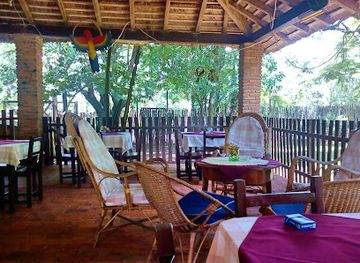
Hotel Restaurant Paraiso
Experience tranquility and gourmet dining at Hotel Restaurant Paraiso in Villarrica del Espiritu Santo, a perfect retreat for every traveler.
3 min walk · 0.3 km from city centre
-
Tourist attraction
Bienvenido A Villarrica, Villarrica
Experience the scenic beauty and rich culture of Villarrica, Paraguay's hidden gem by the lake, perfect for adventurers and culture enthusiasts alike.
8 min walk · 0.7 km from city centre
-
Tourist attraction
Homenaje al Centenario de fundación de Villarrica
Explore Villarrica's rich heritage at the Homenaje al Centenario, a stunning monument celebrating a century of history in Paraguay's vibrant culture.
5 min drive · 1.7 km from city centre


Explore Villarrica on the map
Plan your Villarrica trip on one map. See where the top attractions, landmarks, restaurants, bars and hotels are, find what's near where you're staying, and book hotels and experiences in a few clicks.
Best hotels in Villarrica
Best restaurants in Villarrica
Villarrica’s food scene reflects the everyday cooking of Paraguay’s eastern interior, with family restaurants, cafés, bakeries and informal eateries serving dishes built around maize, manioc, cheese and meat. Sopa paraguaya is a firm savoury cornbread rather than a liquid soup, while chipa, mbejú and mandioca are familiar accompaniments or snacks. Vori vori, a broth with small maize-and-cheese dumplings, is associated with comforting home-style cooking, and grilled meat appears widely in Paraguayan dining. In cafés, cocido quemado and tereré connect food with local social habits. The central area is the most convenient place to look for casual meals and baked goods, while markets and small neighbourhood businesses provide a less formal setting for tasting regional staples. Menus may be simpler than in Asunción, with freshness and family recipes often more significant than elaborate presentation.
-
Restaurant
Restaurant Paraiso
Experience authentic Paraguayan cuisine at Restaurant Paraiso in Villarrica—where every dish tells a story of tradition and flavor.
3 min walk · 0.3 km from city centre
-
Restaurant
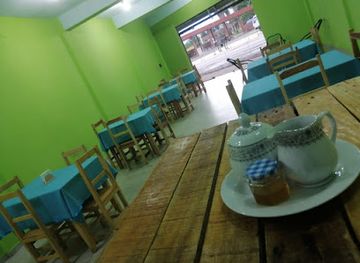
Restaurant El Manjar
Experience authentic Paraguayan cuisine at Restaurant El Manjar in Villarrica – where every dish tells a story of local flavors.
6 min drive · 1.9 km from city centre
Get your free copy of our complete guide to Villarrica, delivered straight to you.
Everything on this page, from attractions and restaurants to essentials and local phrases, in one PDF you can read offline, print or share.
Already have an account? Sign in
Your Villarrica guide is ready.
We'll send it to · Not you? Sign out

Getting your guide ready…
We are putting together a fresh copy of the Villarrica guide. This can take up to a minute.
This can take a few moments. If your browser asks, choose Allow so the download can start. You'll find the guide in your Downloads folder.
Nothing happened? Download it again
Sorry, the guide is taking longer than usual. Please try again in a minute, or get it by email instead.
Villarrica essentials
Currency and Payment
Safety
Emergency Situations
Do's and Don'ts
Local Tips
From Eve
Local phrases worth knowing
You don't need to get them perfect. A few words go a long way, and locals appreciate the effort.
Basics
| English | Local | Say it |
|---|---|---|
| Hello | Hola | [oh-lah] |
| Goodbye | Adiós | [ah-dee-ohs] |
| Yes | Sí | [see] |
| No | No | [noh] |
| Please/You're welcome | Por favor/De nada | [pohr fah-vohr/deh nah-dah] |
| Thank you | Gracias | [grah-see-ahs] |
| Excuse me/Sorry | Disculpe/Perdón | [dees-kool-peh/pehr-dohn] |
| How are you? | ¿Cómo estás? | [koh-moh ehs-tahs] |
| Fine. And you? | Bien. ¿Y tú? | [byen. ee too] |
| Do you speak English? | ¿Hablas inglés? | [ah-blahs een-glehs] |
| I don't understand | No entiendo | [noh ehn-tee-ehn-doh] |
Eating & Drinking
| English | Local | Say it |
|---|---|---|
| I'd like to see the menu, please | Me gustaría ver el menú, por favor | [meh goos-tah-ree-ah behr ehl meh-noo, pohr fah-vohr] |
| I don't eat meat | No como carne | [noh koh-moh kahr-neh] |
| Cheers! | ¡Salud! | [sah-lood] |
| I would like to pay, please | Me gustaría pagar, por favor | [meh goos-tah-ree-ah pah-gahr, pohr fah-vohr] |
Emergencies
| English | Local | Say it |
|---|---|---|
| Help! | ¡Ayuda! | [ah-yoo-dah] |
| Go away! | ¡Vete! | [veh-teh] |
| Call the Police! | ¡Llama a la policía! | [yah-mah ah lah poh-lee-see-ah] |
| Call a doctor! | ¡Llama a un médico! | [yah-mah ah oon meh-dee-koh] |
| I'm lost | Estoy perdido | [ehs-toy pehr-dee-doh] |
| I'm ill | Estoy enfermo | [ehs-toy ehn-fehr-moh] |
Shopping
| English | Local | Say it |
|---|---|---|
| I'd like to buy... | Me gustaría comprar... | [meh goos-tah-ree-ah kohm-prahr] |
| I'm just looking | Solo estoy mirando | [soh-loh ehs-toy mee-rahn-doh] |
| How much is it? | ¿Cuánto cuesta? | [kwan-toh kwehs-tah] |
| That's too expensive | Esto es demasiado caro | [ehs-toh ehs deh-mah-syah-doh kah-roh] |
| Can you lower the price? | ¿Puedes bajar el precio? | [pweh-dehs bah-hahr ehl pree-syoh] |
Time & Numbers
| English | Local | Say it |
|---|---|---|
| What time is it? | ¿Qué hora es? | [keh oh-rah ehs] |
| It's one o'clock | Es la una | [ehs lah oo-nah] |
| Half past (10) | Media (10) | [meh-dee-ah (diez)] |
| Morning | Mañana | [mah-nyah-nah] |
| Afternoon | Tarde | [tahr-deh] |
| Evening | Noche | [noh-cheh] |
| Yesterday | Ayer | [ah-yehr] |
| Today | Hoy | [oy] |
| Tomorrow | Mañana | [mah-nyah-nah] |
| 1 | Uno | [oo-noh] |
| 2 | Dos | [dohs] |
| 3 | Tres | [trehs] |
| 4 | Cuatro | [kwah-troh] |
| 5 | Cinco | [seen-koh] |
| 6 | Seis | [seys] |
| 7 | Siete | [syeh-teh] |
| 8 | Ocho | [oh-choh] |
| 9 | Nueve | [nweh-veh] |
| 10 | Diez | [dee-ehs] |
Transport & Directions
| English | Local | Say it |
|---|---|---|
| Where's a/the...? | ¿Dónde está...? | [dohn-deh ehs-tah] |
| What's the address? | ¿Cuál es la dirección? | [kwal ehs lah dee-rek-syohn] |
| Can you show me (on the map)? | ¿Puede mostrarme (en el mapa)? | [pweh-deh mohs-trar-meh (ehn ehl mah-pah)] |
| When's the next (bus)? | ¿Cuándo es el próximo (autobús)? | [kwan-doh ehs ehl proh-see-moh (ow-toh-boos)] |
| A ticket (to ....) | Un boleto (a ...) | [oon boh-leh-toh (ah ...)] |
History of Villarrica
Foundation on the Colonial Frontier
Villarrica was founded on 14 May 1570 by Ruy Díaz de Melgarejo as Villa Rica del Espíritu Santo, during Spain’s efforts to establish settlements in the eastern reaches of the Río de la Plata territories. Its name expressed hopes of discovering mineral wealth, although the settlement’s long-term importance came more from agriculture, trade and its position on a difficult frontier. The original town was not located on the site occupied today. Pressures from attacks, unstable communications and changing colonial conditions made permanent settlement difficult, beginning a long history in which Villarrica repeatedly shifted its location while retaining its civic identity and name.
Seven Movements Towards Stability
Villarrica is traditionally remembered as having been moved seven times before reaching its present site. The relocations reflected the insecurity of the colonial eastern frontier, where settlements faced attacks, isolation, difficult routes and competition for territory. During this period, the community developed a durable regional identity rather than disappearing with each move. Its final establishment in the area of present-day Guairá allowed a more stable urban life and closer links with surrounding agricultural districts. The unusual history of repeated migration remains central to the city’s historical character and distinguishes Villarrica from Paraguayan towns whose urban locations remained fixed from their foundation.
A Regional Centre in Guairá
After settlement in its current area, Villarrica grew as an administrative, commercial and agricultural centre for the surrounding Guairá countryside. Rural production, local markets and overland connections supported the town’s development, while religious and civic institutions gave shape to its central district. The city’s history was tied to Paraguay’s wider experience of frontier settlement: communities relied on close regional networks, and political changes in the capital affected commerce and public life far beyond Asunción. The cathedral, civic buildings and surviving urban layout reflect the gradual consolidation of a town that became an important reference point for eastern Paraguay.
Railways and Nineteenth-Century Change
The arrival of the railway in Villarrica in the late nineteenth century connected the city more directly with Paraguay’s national transport and commercial system. Rail travel altered the movement of people, agricultural products and correspondence, reducing some of the isolation that had shaped earlier development. The railway station became both a practical gateway and a symbol of modernisation, although rail service later declined and ceased to structure everyday travel as it once had. The station and railway heritage now help visitors understand the transition from a largely overland regional economy to a more connected, modern Paraguayan town.
War, Reconstruction and Civic Memory
Like the rest of Paraguay, Villarrica was affected by the War of the Triple Alliance from 1864 to 1870, a conflict that caused profound demographic, economic and political disruption across the country. The city’s subsequent development belonged to a national period of reconstruction in which local government, commerce, religious institutions and education gradually resumed their roles. Later modernisation brought new roads, public services and expanded links with the surrounding department. Villarrica’s historic identity therefore combines colonial origins with the memory of national devastation and the slow rebuilding of civic life during the nineteenth and twentieth centuries.
The Rise of a Literary Tradition
During the twentieth century, Villarrica strengthened its reputation as a centre of Paraguayan letters and music. Manuel Ortiz Guerrero, born in the city in 1894, became one of Paraguay’s most important poets, writing in Spanish and Guaraní and giving lasting expression to rural life, love and social feeling. Félix Pérez Cardozo, born nearby in the Guairá region, helped popularise Paraguayan harp music internationally. Their work contributed to a local cultural identity that values poetry, music and bilingual expression alongside formal history. Museums, cultural spaces and public commemorations continue to connect contemporary Villarrica with these influential figures.
Villarrica in Photos
Browse through our photo collection highlighting the charm and character of the destination.
Cities near Villarrica
The closest cities to Villarrica, if you have time for more than one stop.
-

-

-

-
-


Swipe for more cities
Explore more

Explore more of Paraguay
Discover Paraguay: A blend of history, culture, and natural beauty in the heart of South America. Visit Asunción, explore Jesuit ruins, and experience the local cuisine.
Explore Paraguay