Ermita de San Antonio de la Florida, Madrid Travel Guide
Free Guide: Where Goya's revolutionary genius transforms a chapel into an intimate masterpiece of Spanish Baroque art.


A brief summary of Ermita de San Antonio de la Florida
Where Goya's revolutionary genius transforms a chapel into an intimate masterpiece of Spanish Baroque art.
A stunning 18th-century hermitage crowned by one of Francisco Goya's most celebrated frescoes. This intimate chapel in Madrid's Moncloa district showcases the Spanish master's visionary artwork depicting the miraculous Saint Anthony, drawing art lovers and history enthusiasts to witness one of Spain's most important Baroque treasures.
On-site amenities
 Restrooms
 Drinking water
 Seating areas
 Information boards
 Visitor centre
Opening hours
- MonClosed
- Tue9:30 am–8 pm
- Wed9:30 am–8 pm
- Thu9:30 am–8 pm
- Fri9:30 am–8 pm
- Sat9:30 am–8 pm
- Sun9:30 am–8 pm
Opening hours as listed on the venue’s Google Business Profile. Hours can change for services and special events, so check with the venue before you go.
- Address
- Gta. de San Antonio de la Florida, 5, Moncloa - Aravaca, 28008 Madrid
- Phone
- Website
Getting there
Metro + Walk
Bus
Taxi or Ride-Share
Bicycle
Discover more about Ermita de San Antonio de la Florida
A Baroque Gem with Goya's Vision
The Ermita de San Antonio de la Florida stands as one of Madrid's most significant artistic landmarks, housing Francisco Goya's extraordinary frescoes that revolutionized Spanish religious art in the late 18th century. Built between 1792 and 1798, this small hermitage chapel represents the pinnacle of Goya's artistic achievement and remains one of the most important examples of Baroque religious decoration in Spain. The building's neoclassical exterior belies the visual drama contained within its intimate interior.
Goya's Revolutionary Frescoes
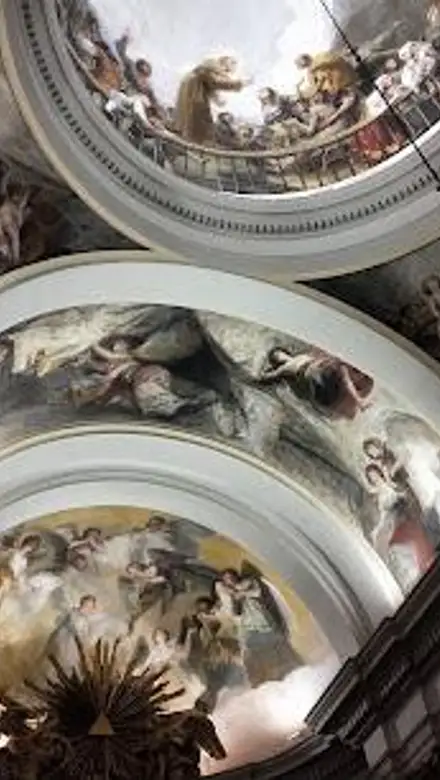
The chapel's interior is dominated by Goya's magnificent ceiling fresco depicting the miracle of Saint Anthony of Padua, where the saint resurrects a murdered man to prove his innocence. Rather than employing traditional religious iconography, Goya populated the scene with contemporary Madrid society—common people, soldiers, and everyday figures—creating an unprecedented democratization of religious art. The fresco's dynamic composition, innovative use of light and shadow, and psychological depth mark a decisive break from rigid religious convention. The surrounding walls feature additional frescoes and decorative elements that complement the central narrative, creating an immersive artistic environment.
Historical Significance and Restoration
Originally constructed as a hermitage dedicated to Saint Anthony, the chapel underwent significant restoration in the 1990s to preserve Goya's deteriorating frescoes. These conservation efforts revealed the full brilliance of the artist's original vision, allowing visitors to appreciate the subtle color palette and technical mastery that had been obscured by centuries of accumulated grime and damage. The restoration work stands as a testament to the painting's cultural importance and Spain's commitment to preserving its artistic heritage.
The Artist's Connection
Goya's personal connection to this chapel deepened after his death—his remains were transferred here in 1919, making the hermitage not only a showcase of his genius but also his final resting place. This intimate connection between artist and artwork creates a poignant atmosphere that transcends typical museum experiences. Visitors stand in the presence of both Goya's visionary imagination and his physical legacy.
Architectural Setting
The chapel's location along the Manzanares River in the Moncloa district provides a serene setting removed from Madrid's urban bustle. The building's modest exterior and intimate scale create an atmosphere of contemplation and reverence, allowing the interior frescoes to command complete attention. The chapel functions as a working religious space as well as a museum, maintaining its original spiritual purpose alongside its role as an art historical monument.
Visitor Experience
The hermitage operates as part of Spain's National Heritage system, offering guided visits that provide context for understanding Goya's revolutionary approach to religious art. The small interior space creates an immediate, almost overwhelming encounter with the frescoes—visitors find themselves surrounded by the artist's vision rather than observing it from a distance. This intimacy distinguishes the experience from larger museums and creates a memorable connection to both the artwork and the historical moment it represents.
Evendo Review Centre
 Google
Guest reviews
Best time to go
Quietest: Jan, Feb & Mar · before 11am or from 7pm
Busy times are Evendo estimates for a typical year, to help you plan. Actual crowds vary with events, school holidays and the weather.
Explore Ermita de San Antonio de la Florida on the map
A handpicked selection of must-see spots near Ermita de San Antonio de la Florida, mapped for you.
Get your free copy of our complete guide to Ermita de San Antonio de la Florida, delivered straight to you.
Everything on this page, from opening hours and how to get there to Eve’s tips and the best time to go, in one PDF you can read offline, print or share.
Already have an account? Sign in
Your Ermita de San Antonio de la Florida guide is ready.
We'll send it to · Not you? Sign out

Getting your guide ready…
We are putting together a fresh copy of the Ermita de San Antonio de la Florida guide. This can take up to a minute.
This can take a few moments. If your browser asks, choose Allow so the download can start. You'll find the guide in your Downloads folder.
Nothing happened? Download it again
Sorry, the guide is taking longer than usual. Please try again in a minute, or get it by email instead.
Unlock the best of Ermita de San Antonio de la Florida
Skip-the-line tickets, guided tours with entry, and walking tours of the area, booked in a few clicks.
 Tour with entry
Self-Guided Tours In Madrid With 100 Captivating Audio Stories
from $3.19 Tour with entry
Madrid Mystery Quest: Self-Guided Surreal Adventure Game
from $7.19 Tour with entry
Madrid Parks & Riverside Bike Tour
from $67.21 Tour with entry
5-6 pax Tuk Tuk Tour 120 mins + Natural Limonade
from $277.36

Other nearby places you may find interesting
The closest places of the same kind, if this one is not quite what you had in mind.
-
-
-
-
-


Swipe for more places
More to explore near Ermita de San Antonio de la Florida
-
 Best experiences near Ermita de San Antonio de la Florida
-
 Best hotels near Ermita de San Antonio de la Florida
-
 Best landmarks near Ermita de San Antonio de la Florida
-
 Best attractions near Ermita de San Antonio de la Florida
-
 Best shops near Ermita de San Antonio de la Florida
-
 Best restaurants near Ermita de San Antonio de la Florida
-
 Best bars near Ermita de San Antonio de la Florida


Do you manage this location?
Take control to get all the benefits, like improved information, better appearance, and stronger visibility across AI-powered discovery.
Explore more

Explore more of Madrid
Discover Madrid: A city of art, culture, and culinary delights, where history and modern vibrancy meet in the heart of Spain.
Explore Madrid
Explore more of Spain
Discover Spain: A vibrant tapestry of culture, history, and breathtaking landscapes, where every city offers a unique adventure and unforgettable experiences.
Explore Spain