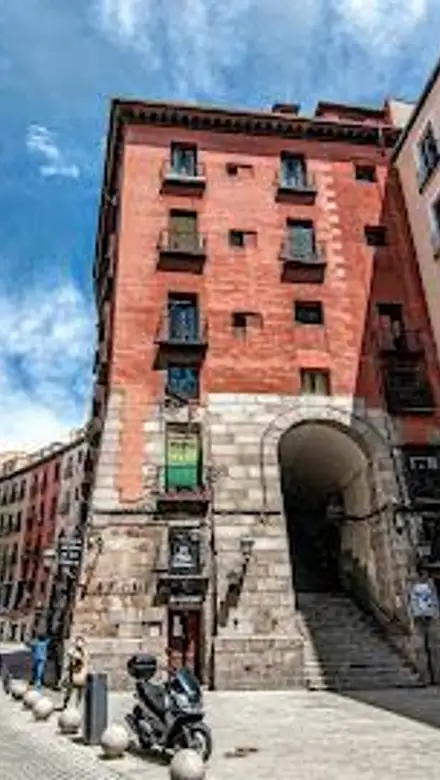
Arco de Cuchilleros, Madrid Travel Guide
Free Guide: Madrid's medieval stone archway unlocks La Latina's ancient alleys, where cutlers' echoes meet flamenco nights and Plaza Mayor's timeless square.


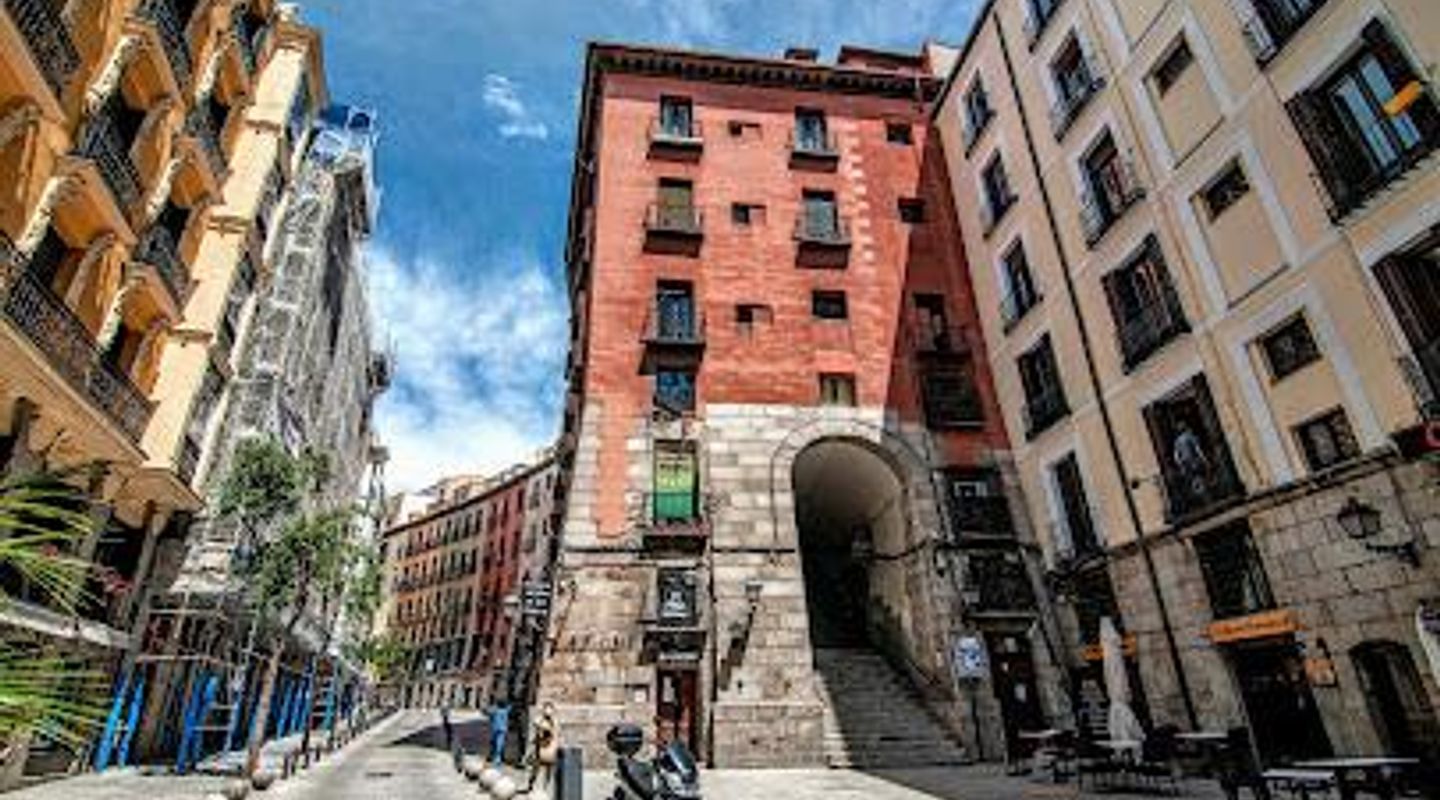
A brief summary of Arco de Cuchilleros
Madrid's medieval stone archway unlocks La Latina's ancient alleys, where cutlers' echoes meet flamenco nights and Plaza Mayor's timeless square.
Step beneath the Arco de Cuchilleros, Madrid's oldest surviving medieval arch, where narrow cobblestone alleys whisper tales of cutlers, thieves, and royal intrigue in the heart of La Latina. This atmospheric stone gateway frames the vibrant Plaza Mayor, blending history with the pulse of modern Madrid life.
On-site amenities
 Restrooms
 Food options
 Drinking water
 Seating areas
 Trash bins
 Information boards
Opening hours
- MonOpen 24 hours
- Tue12 am–5:30 am
- WedClosed
- Thu12 am–5:30 am
- Fri12 am–5:30 am
- Sat12 am–5:30 am
- SunOpen 24 hours
Opening hours as listed on the venue’s Google Business Profile. Hours can change for services and special events, so check with the venue before you go.
- Address
- C. de Cuchilleros, 7, Centro, 28005 Madrid
- Phone
- Website
Getting there
Metro
Walking
Bus
Discover more about Arco de Cuchilleros
Historical Gateway to Old Madrid
The Arco de Cuchilleros stands as one of the few remaining medieval arches from Madrid's 15th-century walls, named after the cuchilleros—cutlers—who once crafted knives and blades in its shadowy alleys. Built around 1590 as part of the city's expansion under Philip II, this stone passage connected the bustling Plaza Mayor to the working-class Cava de San Miguel neighborhood. Its vaulted structure, weathered by centuries, bears witness to Madrid's transformation from a modest village to Spain's capital.
During the Spanish Golden Age, the arch's dimly lit corridors were notorious for cutpurses, gamblers, and underground taverns, earning a reputation as a den of vice amid the grandeur of Habsburg rule. Literary figures like Francisco de Quevedo immortalized these streets in picaresque tales, capturing the raw energy of 17th-century Madrid. Today, the arch preserves that gritty authenticity, offering a portal to the city's layered past.
Architectural and Cultural Significance
Constructed from robust granite, the arch features a distinctive semi-circular vault rising over 6 meters, flanked by uneven stone facades scarred by time and urban evolution. It forms part of the original nine arches encircling Plaza Mayor, though urban reforms in the 19th century demolished most siblings. Restoration efforts in the 20th century highlighted its Mudéjar influences—subtle Islamic architectural motifs blending with Castilian solidity.
Culturally, the site ties into flamenco traditions; nearby venues like Tablao La Quimera channel the passionate rhythms born from Andalusian migrants who settled these quarters. The arch's location in La Latina, Madrid's oldest barrio, underscores its role in preserving intangibles like the verbena festivals and tavern culture that define madrileño identity.
Atmosphere and Visitor Experience
Descending under the arch feels like slipping into a time capsule: cool damp air, echoing footsteps on uneven cobblestones, and the faint aroma of frying churros from adjacent bars. By day, sunlight filters through, illuminating graffiti-scarred walls; at night, it transforms into a dramatic threshold to nightlife, with laughter spilling from cave-like mesones serving vermouth and jamón.
Visitors encounter street performers strumming guitars, locals haggling at markets, and tour groups decoding plaques recounting legends of hidden tunnels linking to the Royal Palace. The vibe shifts seasonally—summer patios buzz with terrazas, while winter fog adds mystery. It's a spot where history intersects daily life, rewarding photographers and historians alike with authentic, unpolished Madrid.
Surrounding Neighborhood Vibes
Emerging from the arch lands you in Cava de San Miguel, a pedestrian-only warren of 16th-century buildings housing tapas bars and boutique shops. This micro-neighborhood pulses with authenticity, far from tourist traps, where elderly castizo Madrileños sip cañas alongside international backpackers. The area's UNESCO-recognized historic fabric ensures a preserved urban theater of Spanish customs.
Expect sensory immersion: sizzling calderetas from century-old eateries, flamenco guitar riffs echoing off walls, and the chatter of Sunday Rastro market spillover. The arch serves as a narrative anchor, explaining La Latina's evolution from medieval trades quarter to bohemian enclave.
Practical Insights for Exploration
Navigating the arch reveals hidden vantage points overlooking Plaza Mayor's arcades, ideal for people-watching. Pair a visit with a self-guided walk tracing the old city walls' remnants or a deeper dive into Habsburg-era maps. The site's intimacy suits contemplative strolls, revealing details like carved mason marks invisible at first glance. In Madrid's expansive tapestry, Arco de Cuchilleros distills the capital's soul into a single, storied passage.
Evendo Review Centre
 Google
Guest reviews
Best time to go
Quietest: Jan, Feb & Mar · at 1am or at 2am or at 3am
Busy times are Evendo estimates for a typical year, to help you plan. Actual crowds vary with events, school holidays and the weather.
Explore Arco de Cuchilleros on the map
A handpicked selection of must-see spots near Arco de Cuchilleros, mapped for you.
Get your free copy of our complete guide to Arco de Cuchilleros, delivered straight to you.
Everything on this page, from opening hours and how to get there to Eve’s tips and the best time to go, in one PDF you can read offline, print or share.
Already have an account? Sign in
Your Arco de Cuchilleros guide is ready.
We'll send it to · Not you? Sign out

Getting your guide ready…
We are putting together a fresh copy of the Arco de Cuchilleros guide. This can take up to a minute.
This can take a few moments. If your browser asks, choose Allow so the download can start. You'll find the guide in your Downloads folder.
Nothing happened? Download it again
Sorry, the guide is taking longer than usual. Please try again in a minute, or get it by email instead.
Unlock the best of Arco de Cuchilleros
Skip-the-line tickets, guided tours with entry, and walking tours of the area, booked in a few clicks.
 Tour with entry
Madrid Essential: Historic Center, Plaza Mayor & Royal Palace
from $3.19 Tour with entry
Discover Madrid's Hidden Gems on Walking Tour
from $10.65 Tour with entry
Discover the Hidden History of Madrid and Toledo
from $10.66 Tour with entry
Madrid Old City Guided Exclusive Guided Walking Tour
from $27.50


Other nearby places you may find interesting
The closest places of the same kind, if this one is not quite what you had in mind.
-
-
-
-
-


Swipe for more places
More to explore near Arco de Cuchilleros

 Best experiences near Arco de Cuchilleros
 Best hotels near Arco de Cuchilleros
 Best landmarks near Arco de Cuchilleros
 Best attractions near Arco de Cuchilleros
 Best shops near Arco de Cuchilleros
 Best restaurants near Arco de Cuchilleros
 Best bars near Arco de Cuchilleros
Do you manage this location?
Take control to get all the benefits, like improved information, better appearance, and stronger visibility across AI-powered discovery.
Explore more

Explore more of Madrid
Discover Madrid: A city of art, culture, and culinary delights, where history and modern vibrancy meet in the heart of Spain.
Explore Madrid
Explore more of Spain
Discover Spain: A vibrant tapestry of culture, history, and breathtaking landscapes, where every city offers a unique adventure and unforgettable experiences.
Explore Spain