Pl. de la Paja, Madrid Travel Guide
Cobblestone medieval square in La Latina where Madrid's 10th-century farming roots meet weekend artisan markets and Baroque church spires.
Tucked in the historic La Latina district, Plaza de la Paja captivates with its cobblestone charm, ancient church, and lively market vibe. This medieval square whispers Madrid's origins through its 17th-century fountain, vine-draped facades, and weekend artisan stalls brimming with crafts and tapas aromas. A timeless spot where history meets everyday Madrileño life.
A brief summary to Pl. de la Paja
- Madrid, Centro, Madrid, 28005, ES
- Free
-
 Outdoor
- Mobile reception: 5 out of 5

Know before you go
Hi, I'm Eve. Here are a few practical things to know before exploring Pl. de la Paja.
- Visit on Sunday mornings for the artisan market, featuring local crafts and food stalls before the nearby Rastro flea market crowds arrive.
- Combine with a tapas crawl along Cava Baja; start here for vermouth at traditional bars to experience authentic Madrileño socializing.
- Climb to Iglesia de San Andrés viewpoints at dusk for skyline vistas blending historic domes with modern Madrid silhouettes.
- Wear comfortable shoes for the uneven cobblestones, especially if exploring the surrounding pedestrian alleys on foot.
Do you manage this location?
Take control to get all the benefits, like improved information, better appearance, and stronger visibility across AI-powered discovery. Learn more about listing your business on Evendo
Activate your presenceOther nearby places you may find interesting
The closest places of the same kind, if this one is not quite what you had in mind.
Explore Pl. de la Paja on the Map
A handpicked selection of must-see spots near Pl. de la Paja, mapped for you.
Unlock the Best of Pl. de la Paja
Buy tickets
-
No tickets available
Book tours with entry


Book tours without entry

Getting There
-
Metro
Take Metro Line 5 to La Latina station (10-15 min from Sol), 300m walk; €1.50-2 single ticket.
-
Walking
From Puerta del Sol, 20-min downhill stroll through pedestrian zones; free, scenic route via Calle Mayor.
-
Bus
Lines 3 or 17 from central stops like Plaza Mayor (10 min), €1.50; frequent service, alight at La Latina.
For the on-the-go comforts that matter to you
-
 Restrooms
-
 Food Options
-
 Seating Areas
-
 Sheltered Areas
-
 Trash Bins
-
 Information Boards
Discover more about Pl. de la Paja
Historical Roots in Madrid's Oldest Quarter
Plaza de la Paja stands as one of Madrid's most evocative medieval squares, located in the La Latina neighborhood, which traces its origins to the 10th century as a farming outpost. Named after the straw (paja) once stacked here for market trade, the plaza evolved into a bustling hub during the Middle Ages. Its centerpiece, the 17th-century Fuente de la Paja, features a stone basin fed by underground springs, symbolizing the area's agricultural past. Surrounding 16th- and 17th-century buildings with wooden balconies and wrought-iron grilles frame the space, evoking the era when Madrid rose from village to capital under Philip II.Architectural Gems and Sacred Spaces
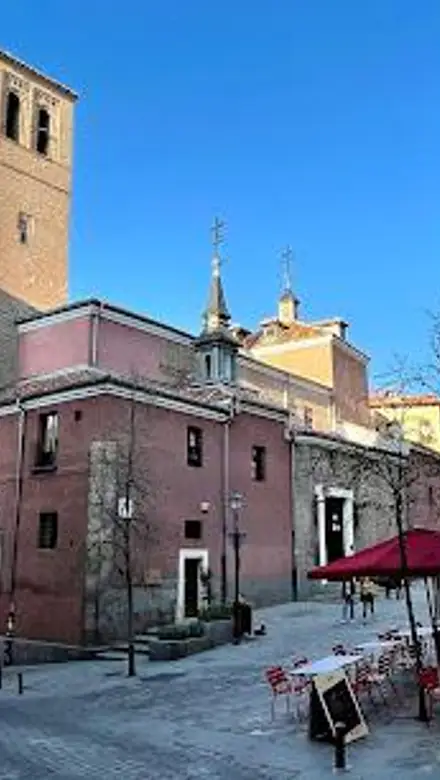
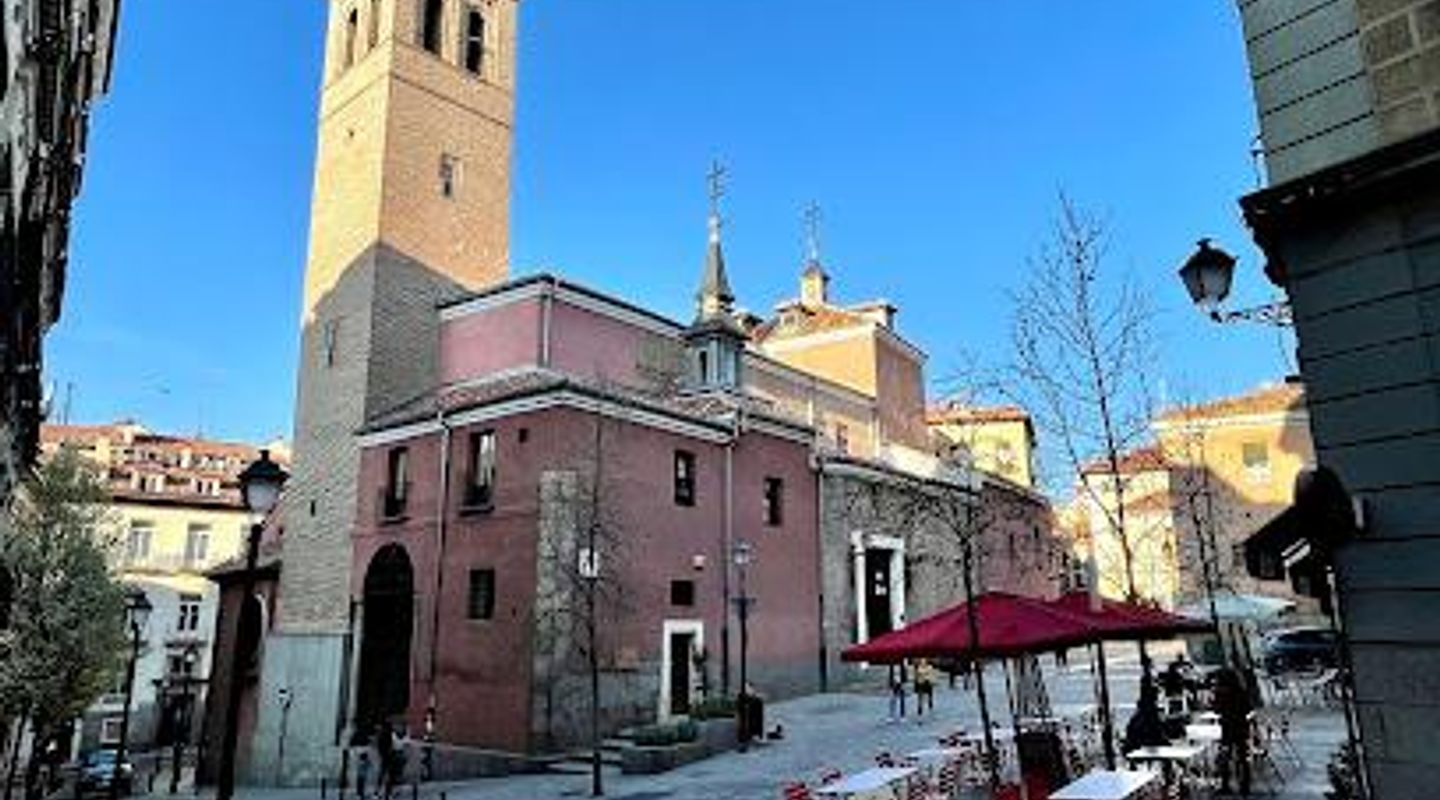
Dominating the eastern side is the Iglesia de San Andrés, a striking Baroque church built atop a 9th-century Mozarabic hermitage dedicated to San Andrés. The current structure, from the 17th century, boasts a slate dome and ornate portal sculpted by Francisco de Herrera the Elder. Inside, visitors encounter Mudéjar horseshoe arches blending Christian and Islamic influences, remnants of Madrid's multicultural history. Adjoining the church, the Origen del Humor museum occupies a former palace, offering quirky insights into Spanish caricature art amid historic vaults.Vibrant Atmosphere and Daily Life
By day, the plaza hums with locals sipping coffee at outdoor cafés, their chatter mingling with the clink of glasses and scent of fresh churros. Narrow alleys radiate outward, leading to tapas bars where vermouth flows freely. On weekends, the Mercado de la Paja transforms the square into an artisan fair, with stalls displaying handmade jewelry, leather goods, and organic produce. Street musicians and performers add to the festive air, making it a microcosm of Madrid's blend of tradition and spontaneity.Cultural Significance and Hidden Corners
The plaza's irregular shape and uneven cobblestones reflect organic medieval growth, contrasting the gridiron precision of later Habsburg expansions. It served as a communal washing area until the 20th century, with women scrubbing linens at the fountain. Today, it hosts occasional open-air concerts and processions during Holy Week, linking past rituals to present celebrations. Vine-covered walls and potted plants soften the stone, creating intimate nooks for quiet reflection amid the urban pulse.Gateway to La Latina's Labyrinth
Positioned at the epicenter of La Latina, Plaza de la Paja opens onto Calle de la Cava Baja, famed for its gourmet shops and century-old tabernas. Nearby, the 13th-century Iglesia de San Pedro preserves a Mudejar tower, while the district's Sunday Rastro flea market spills energy into adjacent streets. This location embodies Madrid's layered identity: a place where Visigothic foundations support Renaissance facades, and where tourists mingle seamlessly with residents living above the square.












Your all‑in‑one travel companion app
Explore expert travel guides, compare and book tours, experiences, hotels, and more—all from the palm of your hand. Download now for seamless trip planning wherever your wanderlust takes you.


Explore More of Madrid
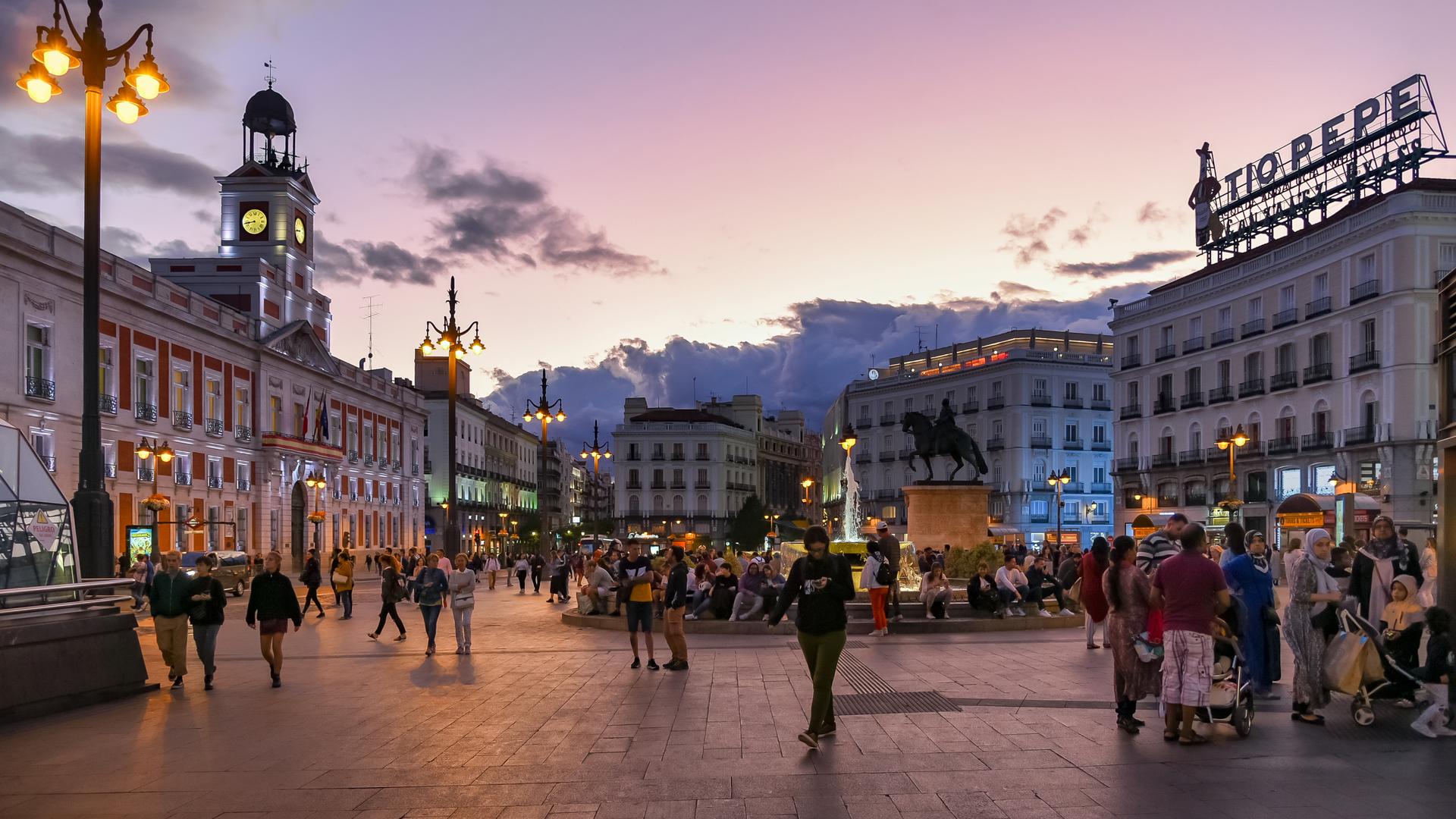
Looking beyond Pl. de la Paja? Discover Madrid for broader travel guides, local hot-spots, and regional highlights.
Explore Madrid
17th-century Madrid parish blending Mudéjar tower, Gothic cloister, and Baroque altarpiece for intimate sacred encounters in Centro's historic weave.
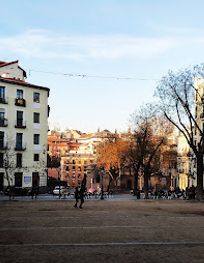
Discover the enchanting Plaza de la Paja, a historical landmark in Madrid's Centro district, rich in culture and charm.