

Pl. de la Provincia, Madrid Travel Guide
Free Guide: Plaza de la Provincia stands as Madrid Centro's understated civic square, where neoclassical grandeur meets daily local rhythms around a central fountain.


A brief summary of Pl. de la Provincia
Plaza de la Provincia stands as Madrid Centro's understated civic square, where neoclassical grandeur meets daily local rhythms around a central fountain.
Tucked in Madrid's bustling Centro district, Plaza de la Provincia offers a serene escape amid grand architecture. Flanked by the historic Palacio de Justicia and Archbishop's Palace, this intimate square captures the essence of local life with its fountain centerpiece and everyday rhythms. Perfect for pausing between iconic sights, it reveals the city's layered civic heritage in a compact, atmospheric setting.
On-site amenities
 Restrooms
 Seating areas
 Trash bins
 Information boards
- Address
- Centro, 28012 Madrid
Getting there
Metro
Walking
Bus
Discover more about Pl. de la Provincia
Historical Foundations
Plaza de la Provincia emerged in the 19th century as part of Madrid's urban expansion during the reign of Isabel II. Originally designed to house key administrative buildings, the square became the forecourt for the Palacio de Justicia, completed in 1843 by architect Juan de Villanueva. This neoclassical masterpiece anchors the plaza's northern edge, its imposing facade symbolizing Spain's judicial authority. Adjacent stands the Palacio del Arzobispado, the Archbishop's Palace, relocated here in the 1890s after fires destroyed its prior site. These structures frame a space that has witnessed royal decrees, ecclesiastical ceremonies, and public gatherings, evolving from a utilitarian plaza into a cherished civic landmark.
Architectural Harmony
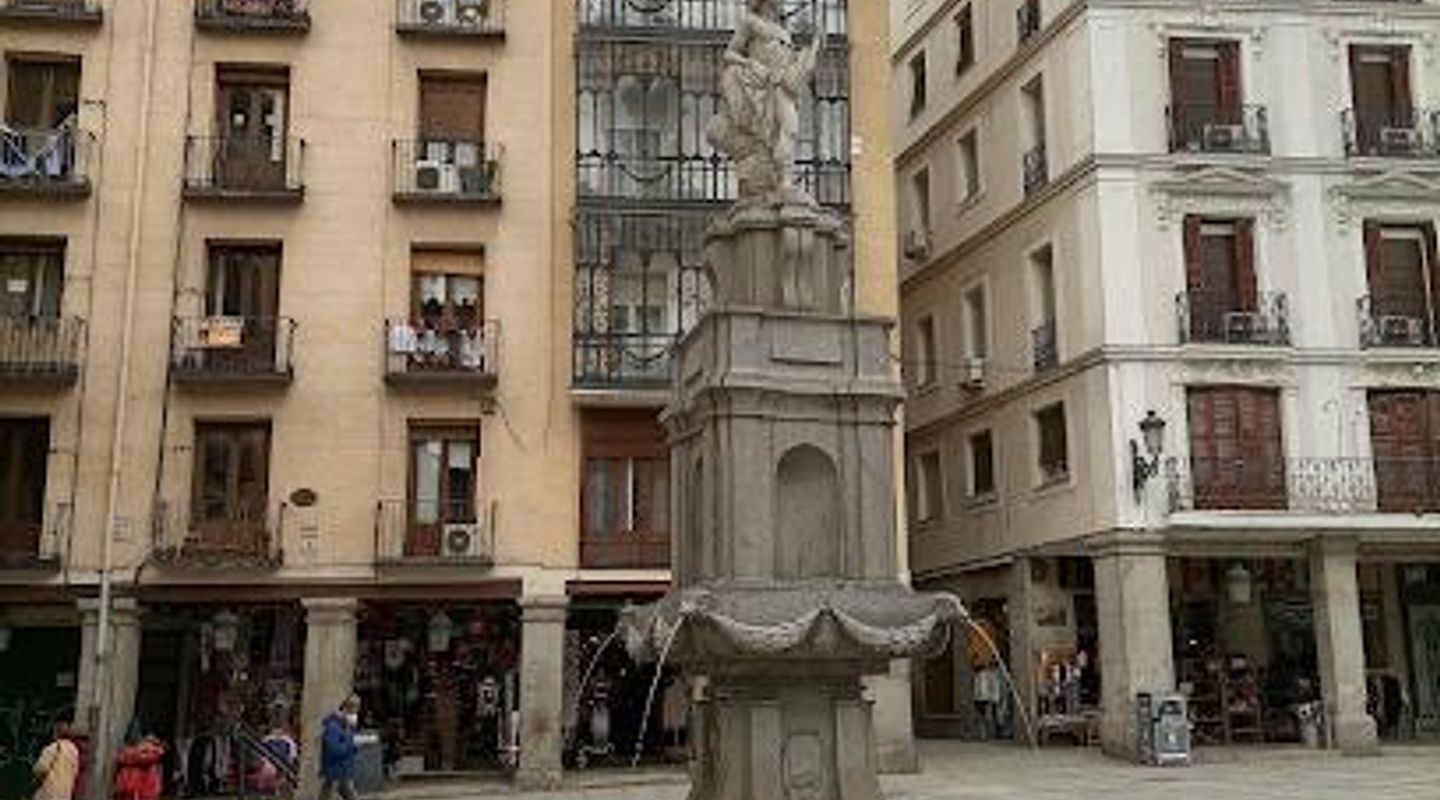
The plaza's design emphasizes symmetry and restraint, characteristic of 19th-century Spanish urban planning. At its center, a modest fountain provides a gentle water feature, surrounded by carefully tended trees and iron benches. The Palacio de Justicia dominates with Corinthian columns and a pedimented entrance, while the Archbishop's Palace adds Renaissance-inspired elegance with arched windows and ornate balconies. Surrounding buildings blend eclectic styles, from baroque remnants to modern restorations, creating a microcosm of Madrid's architectural timeline. Stone paving underfoot bears the patina of centuries, inviting visitors to trace the city's development through its built environment.
Daily Life and Atmosphere
Unlike Madrid's grander plazas, Plaza de la Provincia maintains an understated vibe, serving locals more than tourists. Court employees, clergy, and residents crisscross the space during breaks, fostering a genuine neighborhood pulse. Mornings bring delivery vans and early risers; afternoons fill with office chatter around the fountain. Evenings soften into quiet reflection, with lampposts casting warm glows on the facades. This authenticity contrasts with nearby tourist hubs, offering a glimpse into Madrid's working core where bureaucracy meets tradition.
Cultural Significance
The square's dual role as judicial and ecclesiastical hub underscores Madrid's intertwined secular and religious histories. It has hosted protests, celebrations, and solemn processions, embedding it in the city's collective memory. Proximity to Plaza Mayor and Puerta del Sol amplifies its role as a transitional space, linking commercial frenzy to institutional gravity. Literary references in works by Benito Pérez Galdós nod to its presence in Madrid's cultural narrative, portraying it as a stage for everyday dramas.
Visitor Experience
Wanderers find respite here, drawn by the scale that feels human rather than monumental. Photograph the interplay of light on column shadows or watch pigeons scatter from the fountain. It's ideal for contemplation after exploring Centro's denser attractions, providing context on how Madrid balances pomp with practicality. The plaza encourages lingering, rewarding those who attune to its subtle rhythms over overt spectacles.
Evendo Review Centre
 Google
Guest reviews
Best time to go
Quietest: Jan, Feb & Mar · before 3am
Busy times are Evendo estimates for a typical year, to help you plan. Actual crowds vary with events, school holidays and the weather.
Explore Pl. de la Provincia on the map
A handpicked selection of must-see spots near Pl. de la Provincia, mapped for you.
Get your free copy of our complete guide to Pl. de la Provincia, delivered straight to you.
Everything on this page, from opening hours and how to get there to Eve’s tips and the best time to go, in one PDF you can read offline, print or share.
Already have an account? Sign in
Your Pl. de la Provincia guide is ready.
We'll send it to · Not you? Sign out

Getting your guide ready…
We are putting together a fresh copy of the Pl. de la Provincia guide. This can take up to a minute.
This can take a few moments. If your browser asks, choose Allow so the download can start. You'll find the guide in your Downloads folder.
Nothing happened? Download it again
Sorry, the guide is taking longer than usual. Please try again in a minute, or get it by email instead.
Unlock the best of Pl. de la Provincia
Skip-the-line tickets, guided tours with entry, and walking tours of the area, booked in a few clicks.


Other nearby places you may find interesting
The closest places of the same kind, if this one is not quite what you had in mind.
-
-
-
-
-


Swipe for more places
More to explore near Pl. de la Provincia

 Best experiences near Pl. de la Provincia
 Best hotels near Pl. de la Provincia
 Best landmarks near Pl. de la Provincia
 Best attractions near Pl. de la Provincia
 Best shops near Pl. de la Provincia
 Best restaurants near Pl. de la Provincia
 Best bars near Pl. de la Provincia
Do you manage this location?
Take control to get all the benefits, like improved information, better appearance, and stronger visibility across AI-powered discovery.
Explore more

Explore more of Madrid
Discover Madrid: A city of art, culture, and culinary delights, where history and modern vibrancy meet in the heart of Spain.
Explore Madrid
Explore more of Spain
Discover Spain: A vibrant tapestry of culture, history, and breathtaking landscapes, where every city offers a unique adventure and unforgettable experiences.
Explore Spain
