

Pl. de Tirso de Molina, Madrid Travel Guide
Free Guide: Madrid's beating pulse in La Latina: equestrian statue, tapas buzz, Sunday Rastro market thrills, and theater legacy where locals live the city's true rhythm.


A brief summary of Pl. de Tirso de Molina
Madrid's beating pulse in La Latina: equestrian statue, tapas buzz, Sunday Rastro market thrills, and theater legacy where locals live the city's true rhythm.
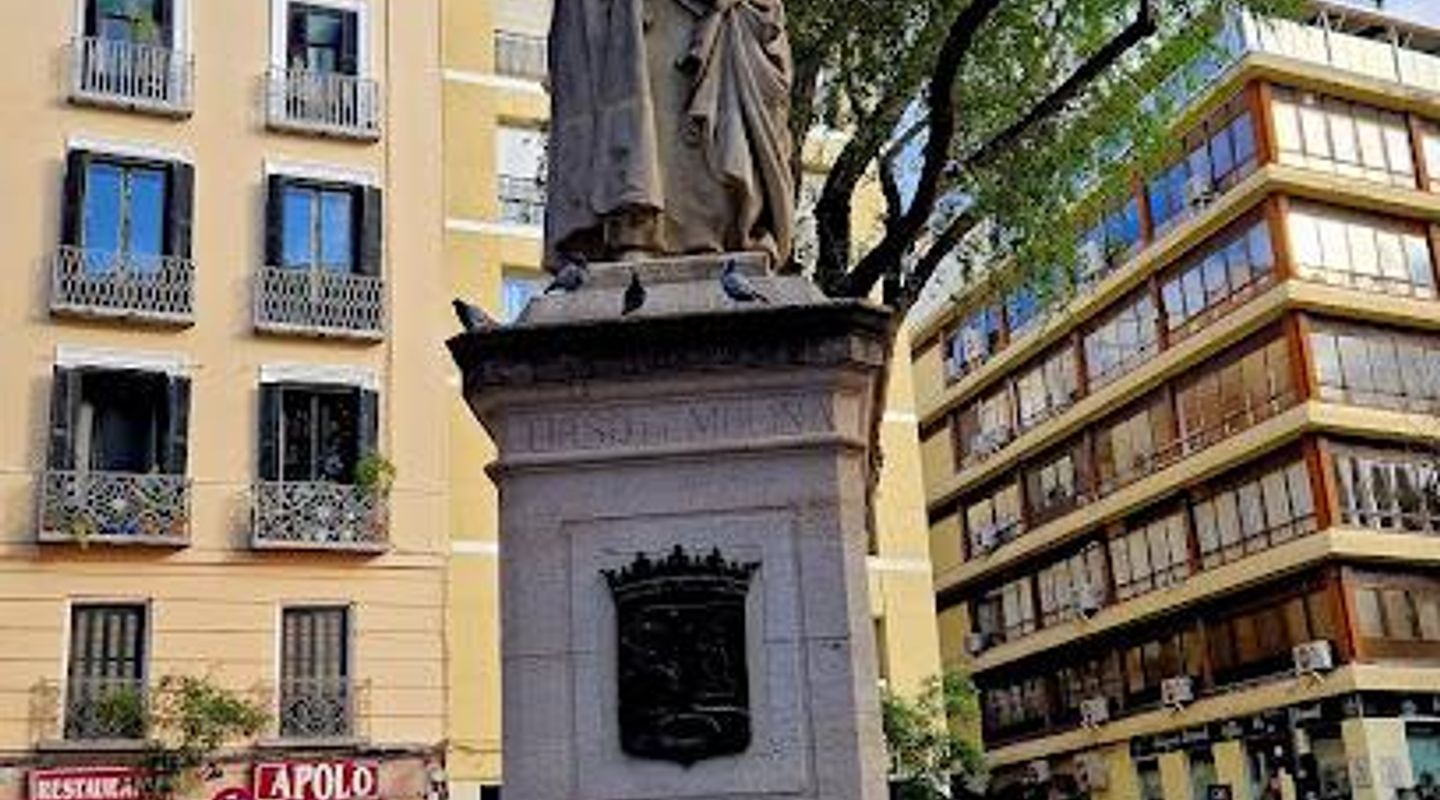
In the heart of Madrid's La Latina neighborhood, Plaza de Tirso de Molina buzzes with authentic Spanish life. This lively square honors the Golden Age playwright with a grand equestrian statue at its center, surrounded by historic buildings, tapas bars, and a vibrant Sunday flea market. Cafés spill onto the pavement, street performers entertain crowds, and locals gather under leafy trees, making it a perfect spot to soak up the city's unfiltered energy and rhythm.
On-site amenities
 Restrooms
 Drink options
 Food options
 Seating areas
 Trash bins
 Information boards
- Address
- Centro, 28012 Madrid
Getting there
Metro
Walking
Bus
Discover more about Pl. de Tirso de Molina
Historical Heart of La Latina
Plaza de Tirso de Molina sits at the crossroads of Madrid's Centro district, a public space that has pulsed with life since the 17th century. Named after the prolific playwright and monk Gabriel Téllez, known by his pseudonym Tirso de Molina, the square commemorates his contributions to Spanish Golden Age theater, particularly his creation of the iconic character Don Juan in 'El Burlador de Sevilla.' The centerpiece is an imposing bronze equestrian statue erected in 1880 by sculptors José Alcoverro and Miguel Fernández Pescador, depicting Tirso in dynamic pose atop his horse, sword raised triumphantly. This monument anchors the plaza amid a ring of 19th-century architecture, including the Baroque facade of the Church of San Pedro Mártir and the tiled emblematic building at the corner of Calle de Embajadores, which proudly displays the plaza's name in vibrant azulejos.
Vibrant Daily Atmosphere
Day and night, the square embodies Madrid's spirited character. By day, it's a hive of local activity: elderly men play dominoes on outdoor tables, children chase pigeons around the central fountain, and vendors hawk fresh churros from nearby stalls. The air carries the aroma of coffee from traditional cafés like those lining the perimeter, where terrazas overflow with patrons sipping cortados. In the evenings, the vibe shifts to lively revelry as tapas bars and bodegas light up, drawing crowds for vermouth on tap and plates of jamón ibérico. Street musicians strum flamenco guitars, and the chatter of Madrileños mixes with laughter, creating an electric atmosphere that feels worlds away from tourist-heavy zones like Puerta del Sol.
Rastro Market on Sundays
Sundays transform the plaza into the epicenter of El Rastro, Madrid's legendary flea market that sprawls across surrounding streets. Stretching from here to Ribera de Curtidores, the market offers a treasure trove of antiques, vintage clothing, leather goods, books, and quirky souvenirs. Haggling is the norm as locals and visitors weave through narrow aisles under the watchful eyes of pickpocket-aware crowds. The plaza itself hosts prime stalls selling everything from old postcards to handmade jewelry, with the statue serving as a handy landmark amid the chaos. This weekly ritual dates back to the 19th century, when it began as a rag-and-bone affair and evolved into one of Europe's largest open-air markets.
Cultural and Neighborhood Role
Beyond commerce, the plaza serves as a cultural nexus. It's a gateway to La Latina, famed for its bar-hopping scene, and connects to the vibrant nightlife of Calle de la Cava Baja. The nearby Teatro de la Abadía stages contemporary plays, echoing Tirso's dramatic legacy, while the Church of San Pedro hosts occasional concerts in its cloister. The square's layout, with its asymmetrical shape and central green space dotted by benches and plane trees, encourages lingering. It's a place where history layers upon modern life: traces of the old city walls nearby remind of medieval origins, and the metro station below facilitates easy access without diminishing its pedestrian charm.
Iconic Landmarks and Surroundings
Flanking the plaza are architectural gems like the Casa de las Siete Chimeneas, a Renaissance mansion with a mysterious history of disappearances, now part of a luxury hotel. The tiled building at number 1, with its green-and-white facade, stands as a photo-worthy icon. Views extend to the bustling Calle de Tirso de Molina, lined with shops and eateries, and uphill to the lively Plaza de la Cebada. This interconnectedness makes it ideal for exploring on foot, blending sightseeing with spontaneous tapas crawls. The plaza's enduring appeal lies in its authenticity—no glossy facades, just raw Madrid energy.
Evendo Review Centre
 Google
Guest reviews
Best time to go
Quietest: Jan, Feb & Mar · before 7am
Busy times are Evendo estimates for a typical year, to help you plan. Actual crowds vary with events, school holidays and the weather.
Explore Pl. de Tirso de Molina on the map
A handpicked selection of must-see spots near Pl. de Tirso de Molina, mapped for you.
Get your free copy of our complete guide to Pl. de Tirso de Molina, delivered straight to you.
Everything on this page, from opening hours and how to get there to Eve’s tips and the best time to go, in one PDF you can read offline, print or share.
Already have an account? Sign in
Your Pl. de Tirso de Molina guide is ready.
We'll send it to · Not you? Sign out

Getting your guide ready…
We are putting together a fresh copy of the Pl. de Tirso de Molina guide. This can take up to a minute.
This can take a few moments. If your browser asks, choose Allow so the download can start. You'll find the guide in your Downloads folder.
Nothing happened? Download it again
Sorry, the guide is taking longer than usual. Please try again in a minute, or get it by email instead.
Unlock the best of Pl. de Tirso de Molina
Skip-the-line tickets, guided tours with entry, and walking tours of the area, booked in a few clicks.


Other nearby places you may find interesting
The closest places of the same kind, if this one is not quite what you had in mind.
-
-
-
-
-


Swipe for more places
More to explore near Pl. de Tirso de Molina

 Best experiences near Pl. de Tirso de Molina
 Best hotels near Pl. de Tirso de Molina
 Best landmarks near Pl. de Tirso de Molina
 Best attractions near Pl. de Tirso de Molina
 Best shops near Pl. de Tirso de Molina
 Best restaurants near Pl. de Tirso de Molina
 Best bars near Pl. de Tirso de Molina
Do you manage this location?
Take control to get all the benefits, like improved information, better appearance, and stronger visibility across AI-powered discovery.
Explore more

Explore more of Madrid
Discover Madrid: A city of art, culture, and culinary delights, where history and modern vibrancy meet in the heart of Spain.
Explore Madrid
Explore more of Spain
Discover Spain: A vibrant tapestry of culture, history, and breathtaking landscapes, where every city offers a unique adventure and unforgettable experiences.
Explore Spain
