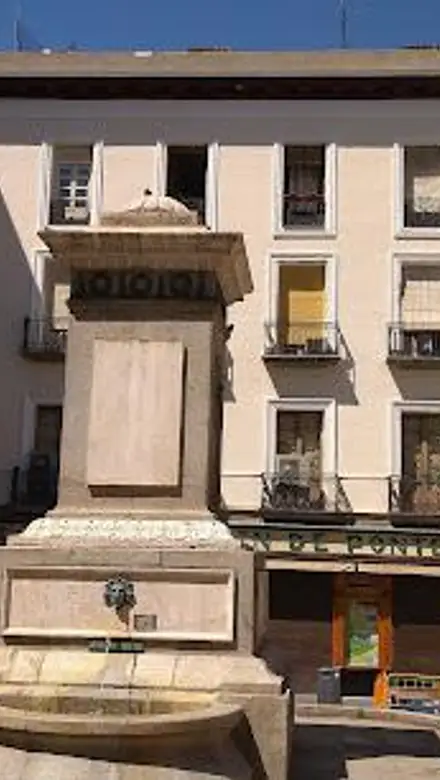
Plaza de Pontejos, Madrid Travel Guide
Free Guide: Madrid's 1840 neoclassical plaza where Bank of Spain grandeur meets fountain-cooled tranquility and Felipe IV's bronze gaze in Centro's historic core.


A brief summary of Plaza de Pontejos
Madrid's 1840 neoclassical plaza where Bank of Spain grandeur meets fountain-cooled tranquility and Felipe IV's bronze gaze in Centro's historic core.
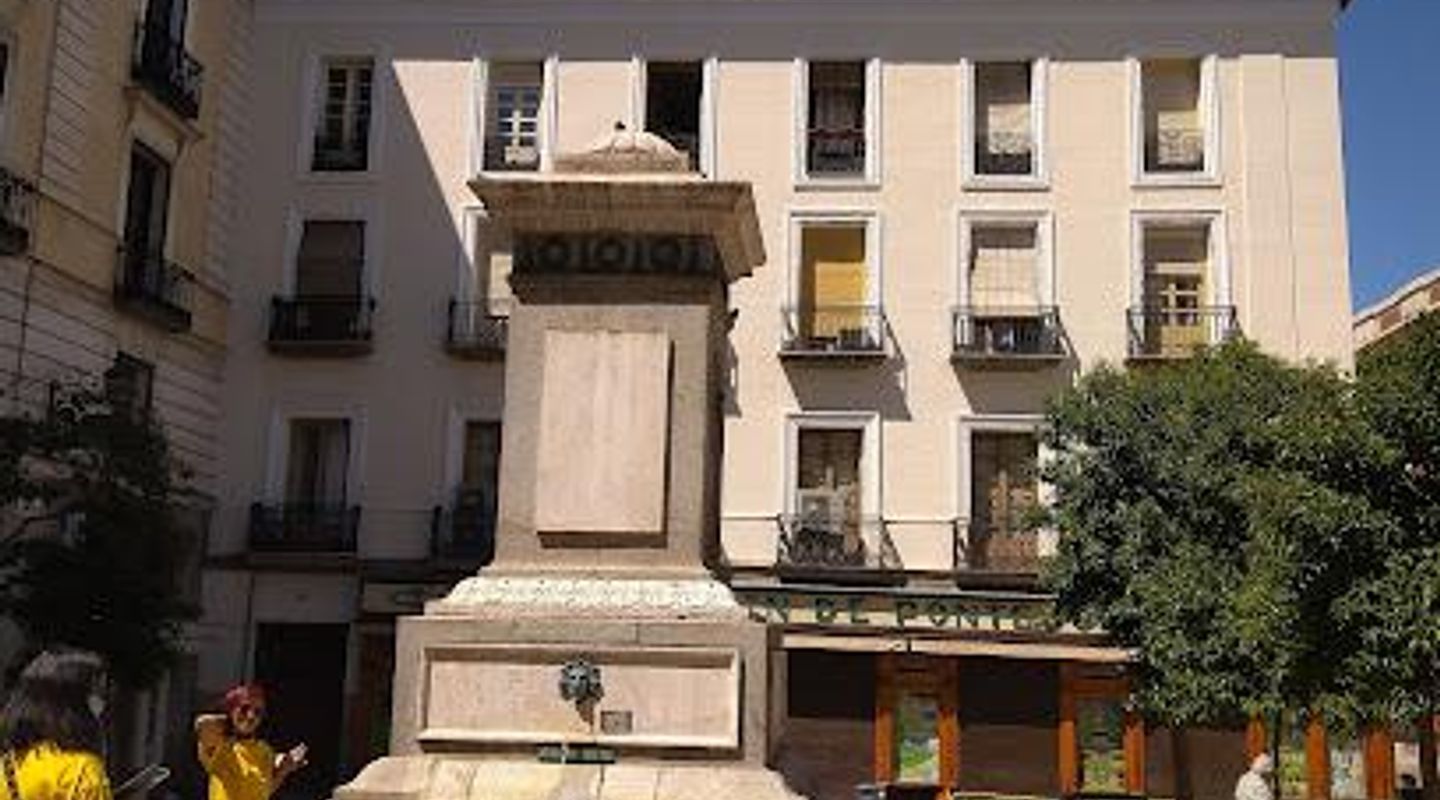
Tucked in Madrid's bustling Centro, Plaza de Pontejos captivates with its 1840 neoclassical facades, central fountain, and equestrian statue of King Felipe IV. This intimate square blends historic grandeur with vibrant street life, offering a serene pause amid the city's energy. Surrounded by ornate buildings housing the Bank of Spain and cultural gems, it invites contemplation of Madrid's layered past while locals and visitors mingle under leafy trees.
On-site amenities
 Restrooms
 Food options
 Seating areas
 Trash bins
- Address
- Centro, 28012 Madrid
Getting there
Metro
Walking
Bus
Discover more about Plaza de Pontejos
Historical Foundations
Plaza de Pontejos emerged in the early 19th century as a planned urban space amid Madrid's expansion. Named after Pedro de Pontejos, a key figure in its development, the square was formalized around 1840 with neoclassical designs that reflect the era's architectural ambitions. Its creation coincided with the Bourbon monarchy's efforts to modernize the capital, transforming irregular medieval plots into orderly public realms. The central fountain, a modest yet elegant feature, draws from traditional Spanish plaza typology, serving as a communal gathering point since inception.
Architectural Highlights
Dominating the scene are the uniform three-story facades with rhythmic balconies and pilasters, exemplifying Madrid's 19th-century neoclassicism. At the northern edge stands the Bank of Spain's original headquarters, its restrained opulence symbolizing Spain's financial resurgence post-Napoleonic Wars. To the south, the Baroque tower of the Iglesia de San Ginés anchors the square, its weathered stone contrasting the newer structures. A bronze equestrian statue of King Felipe IV, relocated here in the 19th century, commands attention, evoking the monarch's patronage of Velázquez and the arts.
Cultural and Social Vibe
The plaza pulses with Madrid's unhurried rhythm, where office workers sip coffee at outdoor cafés and street performers add spontaneous flair. Leafy plane trees provide dappled shade, fostering an intimate atmosphere rare in the dense Centro district. It serves as a crossroads between Puerta del Sol's frenzy and the literary haunts of Calle Mayor, drawing history buffs, photographers, and locals alike. Evenings bring a subtle glow from lanterns, softening the stone and inviting quiet reflection.
Artistic and Symbolic Layers
Felipe IV's statue, cast in the 17th century, represents continuity between Spain's Golden Age and modern identity. The fountain's gentle trickle underscores the plaza's role as a micro-oasis, mirroring Retiro Park's grandeur on a human scale. Nearby, the Real Casa de Correos on Puerta del Sol echoes this heritage, making Pontejos a pivotal node in Madrid's historic core. Its preservation amid urban evolution highlights its enduring appeal as a lived-in monument.
Visitor Expectations
Expect a compact space alive with layered details: trace balcony ironwork, observe architectural symmetries, and feel the transition from commercial buzz to contemplative pause. The plaza rewards slow exploration, revealing how 19th-century planners harmonized utility with beauty. Free of crowds compared to nearby icons, it offers authentic Madrid—elegant, approachable, and steeped in stories of finance, faith, and royalty.
Evendo Review Centre
 Google
Guest reviews
Best time to go
Quietest: Jan, Feb & Dec · before 3am
Busy times are Evendo estimates for a typical year, to help you plan. Actual crowds vary with events, school holidays and the weather.
Explore Plaza de Pontejos on the map
A handpicked selection of must-see spots near Plaza de Pontejos, mapped for you.
Get your free copy of our complete guide to Plaza de Pontejos, delivered straight to you.
Everything on this page, from opening hours and how to get there to Eve’s tips and the best time to go, in one PDF you can read offline, print or share.
Already have an account? Sign in
Your Plaza de Pontejos guide is ready.
We'll send it to · Not you? Sign out

Getting your guide ready…
We are putting together a fresh copy of the Plaza de Pontejos guide. This can take up to a minute.
This can take a few moments. If your browser asks, choose Allow so the download can start. You'll find the guide in your Downloads folder.
Nothing happened? Download it again
Sorry, the guide is taking longer than usual. Please try again in a minute, or get it by email instead.
Unlock the best of Plaza de Pontejos
Skip-the-line tickets, guided tours with entry, and walking tours of the area, booked in a few clicks.


Other nearby places you may find interesting
The closest places of the same kind, if this one is not quite what you had in mind.
-
-
-
-
-


Swipe for more places
More to explore near Plaza de Pontejos

 Best experiences near Plaza de Pontejos
 Best hotels near Plaza de Pontejos
 Best landmarks near Plaza de Pontejos
 Best attractions near Plaza de Pontejos
 Best shops near Plaza de Pontejos
 Best restaurants near Plaza de Pontejos
 Best bars near Plaza de Pontejos
Do you manage this location?
Take control to get all the benefits, like improved information, better appearance, and stronger visibility across AI-powered discovery.
Explore more

Explore more of Madrid
Discover Madrid: A city of art, culture, and culinary delights, where history and modern vibrancy meet in the heart of Spain.
Explore Madrid
Explore more of Spain
Discover Spain: A vibrant tapestry of culture, history, and breathtaking landscapes, where every city offers a unique adventure and unforgettable experiences.
Explore Spain