
Puente de Segovia, Madrid Travel Guide
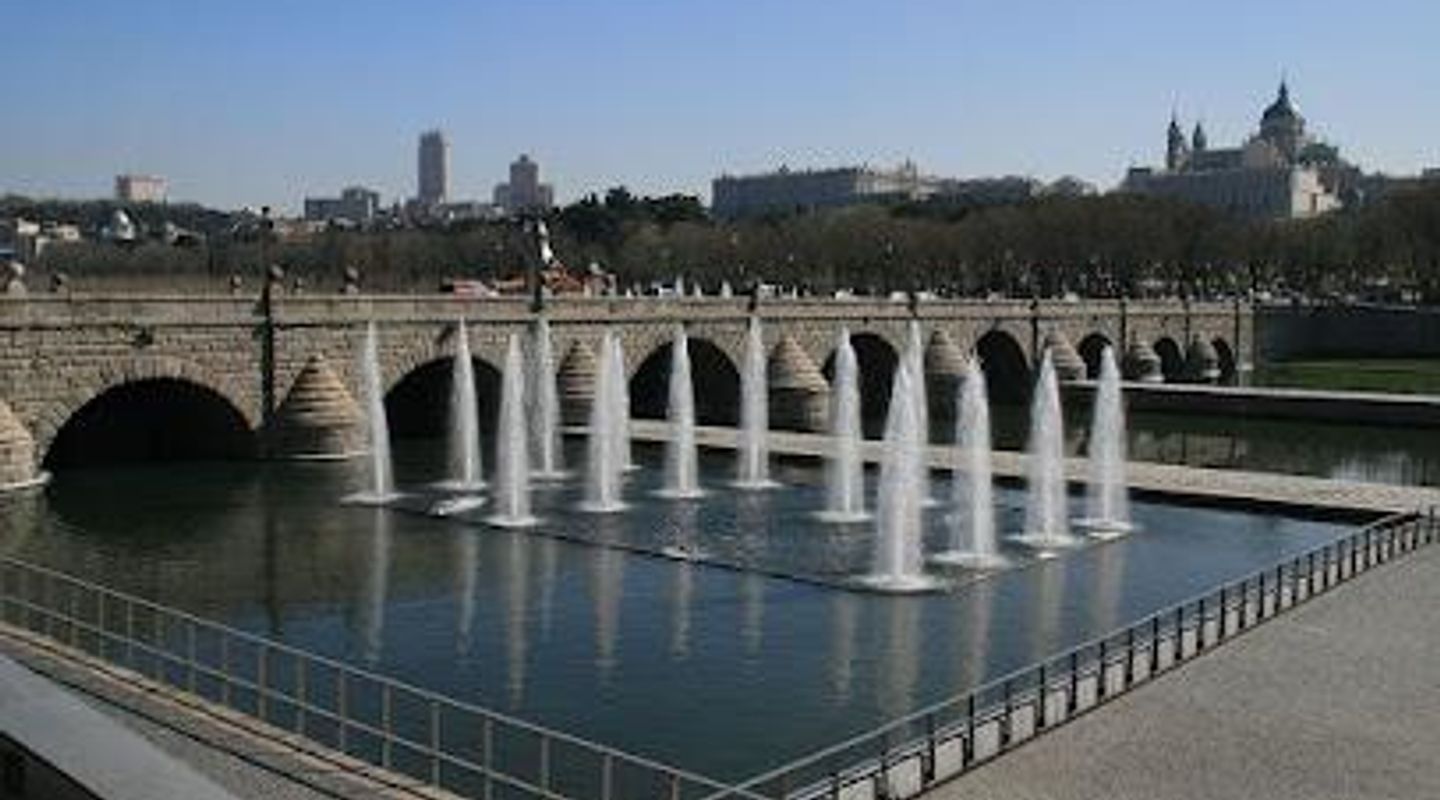
Granite arches of Felipe II's Puente de Segovia carry Madrid's river legacy, framing palace vistas and Casa de Campo expanses for enduring walks over the Manzanares.
The Puente de Segovia stands as a majestic 16th-century granite bridge spanning the Manzanares River, linking Madrid's historic core to the Royal Palace grounds. Its robust Baroque arches and sturdy design embody the city's engineering prowess, offering walkers sweeping views of the verdant Casa de Campo and the palace's golden domes against the skyline. A vital relic of Felipe II's era, it blends seamlessly into Madrid's urban tapestry, inviting contemplation amid the flow of modern life.
A brief summary to Puente de Segovia
- Madrid, Madrid, ES
- Free
-
 Outdoor
- Mobile reception: 5 out of 5

Know before you go
Hi, I'm Eve. Here are a few practical things to know before exploring Puente de Segovia.
- Cross at dusk when lights illuminate the arches, enhancing the dramatic silhouette against the palace skyline.
- Combine with a riverside path walk into Casa de Campo for extended nature immersion without crowds.
- Seek out the central viewpoint for unobstructed photos of the Royal Palace domes reflecting in the water.
- Visit post-rain when the Manzanares flows stronger, accentuating the bridge's engineering against the current.
Do you manage this location?
Take control to get all the benefits, like improved information, better appearance, and stronger visibility across AI-powered discovery. Learn more about listing your business on Evendo
Activate your presenceOther nearby places you may find interesting
The closest places of the same kind, if this one is not quite what you had in mind.
Explore Puente de Segovia on the Map
A handpicked selection of must-see spots near Puente de Segovia, mapped for you.
Unlock the Best of Puente de Segovia
Buy tickets
-
No tickets available
Book tours with entry
-
No tours available
Book tours without entry

Getting There
-
Metro
Take Metro Line 2 to Santo Domingo station, then 15-minute walk west; €1.50-2 single ticket, frequent service every 3-5 minutes.
-
Bus
Board bus lines 25 or 39 from Sol or Plaza Mayor, 10-12 minute ride to nearby stop; €1.50 fare, runs every 8-10 minutes daytime.
-
Walking
From Puerta del Sol, 25-minute stroll via Calle Bailén; free, flat paths through historic streets, ideal for sightseeing.
-
Taxi
Hail taxi from city center, 8-10 minute trip covering 3km; €8-12 fare depending on traffic, available 24/7.
For the on-the-go comforts that matter to you
-
 Restrooms
-
 Seating Areas
-
 Information Boards
Discover more about Puente de Segovia
Historical Foundations
Constructed between 1582 and 1584 under the orders of King Philip II, the Puente de Segovia replaced a medieval wooden structure prone to flooding from the Manzanares River. Designed by Juan de Herrera, the architect behind the Escorial Monastery, the bridge showcases Spanish Renaissance engineering with its 25 robust granite arches. This monumental project ensured reliable access between central Madrid and the expansive Casa de Campo park, facilitating royal processions and daily commerce during the Spanish Golden Age.Architectural Mastery
The bridge's design emphasizes durability and symmetry, with a main span of 120 meters and a total length approaching 400 meters. Its rusticated stonework and triangular cutwaters protect against river currents, while the central arch rises prominently for dramatic effect. Pedestrians traverse its wide deck, flanked by stone balustrades adorned with heraldic motifs, evoking the grandeur of Habsburg rule. At night, subtle lighting accentuates the stone's texture, transforming it into a luminous silhouette.Strategic Riverside Position
Positioned just west of the Palacio Real, the bridge serves as a gateway to Madrid's green lung, the Casa de Campo. From its vantage, visitors gaze upon the river's gentle bend, the palace's opulent facades, and the distant peaks of the Sierra de Guadarrama. The surrounding area blends manicured gardens with urban paths, where joggers, cyclists, and sightseers converge. Seasonal changes paint the scene: spring blooms along the banks, autumn leaves drift in the water, and winter mists add mystery.Cultural and Symbolic Role
Beyond utility, the Puente de Segovia symbolizes Madrid's evolution from a fortress town to a European capital. It has witnessed royal ceremonies, military parades, and the city's growth through industrialization and modernity. Artists and photographers have long captured its form, from Goya's contemporaries to contemporary drone shots. Today, it stands resilient amid traffic hum and pedestrian chatter, a touchstone for Madrileños reflecting on their heritage.Visitor's Journey
Crossing the bridge on foot reveals its scale and craftsmanship up close. The rhythmic archways create a tunnel-like progression, opening to panoramic rewards. Nearby, the Jardines de las Vistillas offer elevated perspectives, while the riverbank paths invite leisurely strolls. Integrate it into a palace visit or park exploration for a multifaceted experience, where history unfolds layer by layer against Madrid's vibrant backdrop.












Your all‑in‑one travel companion app
Explore expert travel guides, compare and book tours, experiences, hotels, and more—all from the palm of your hand. Download now for seamless trip planning wherever your wanderlust takes you.


Explore More of Madrid
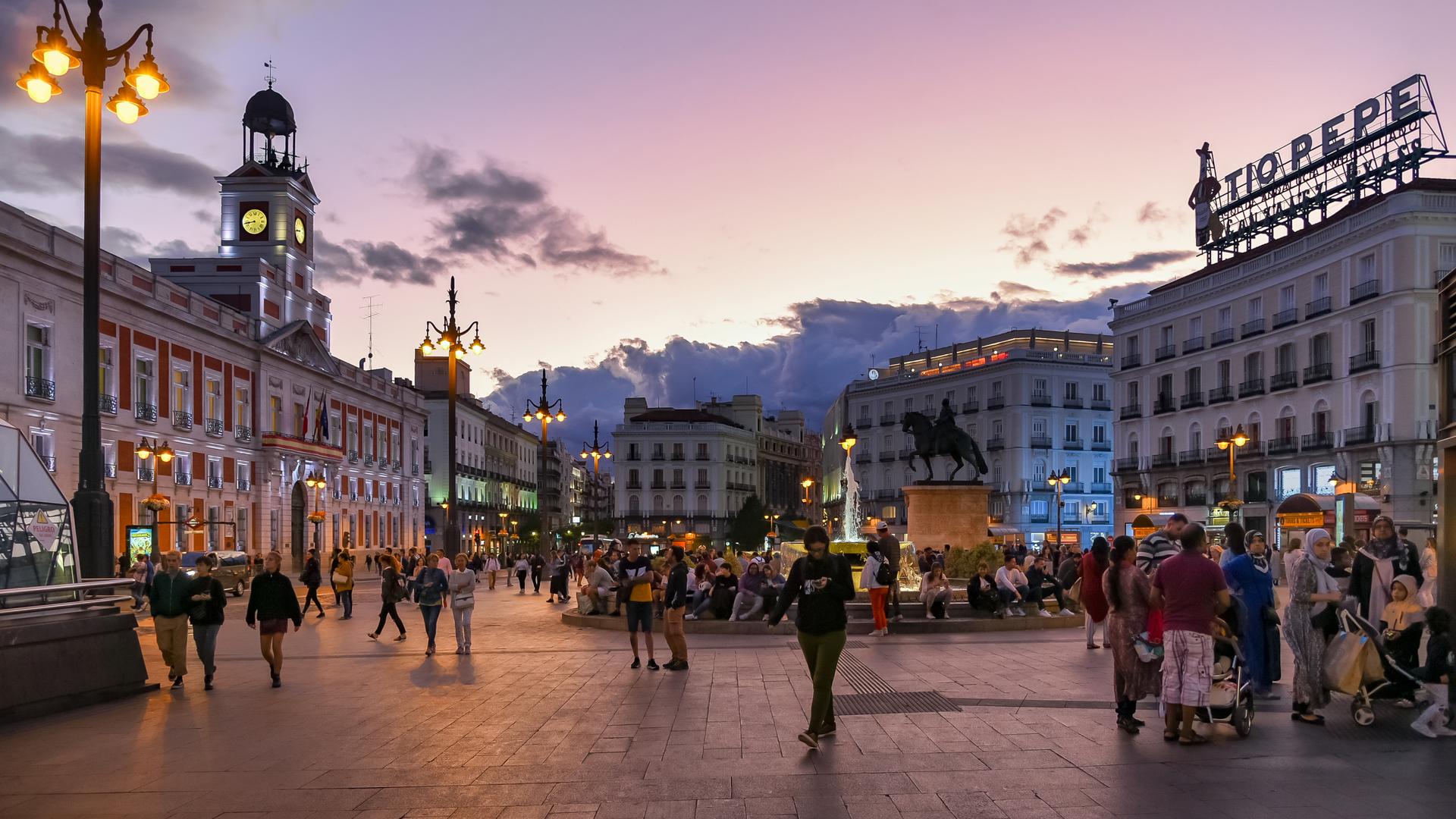
Looking beyond Puente de Segovia? Discover Madrid for broader travel guides, local hot-spots, and regional highlights.
Explore Madrid
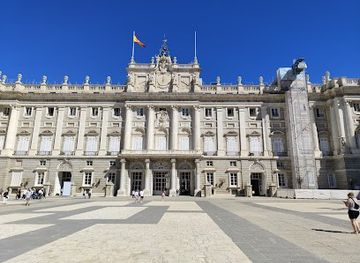
Experience the stunning architectural beauty and rich history of Plaza de la Armería, nestled between Madrid's Royal Palace and Cathedral de Santa Maria.

Madrid's granite testament to Roman ingenuity, where 16th-century arches frame the Manzanares and link eras across the river's steady flow.
