

Toledo Gate, Madrid Travel Guide
Free Guide: Madrid's neoclassical triumphal arch at La Latina's edge, honoring Fernando VII amid stone eagles, battle reliefs, and the thrum of tapas streets leading from historic Centro.


A brief summary of Toledo Gate
Madrid's neoclassical triumphal arch at La Latina's edge, honoring Fernando VII amid stone eagles, battle reliefs, and the thrum of tapas streets leading from historic Centro.
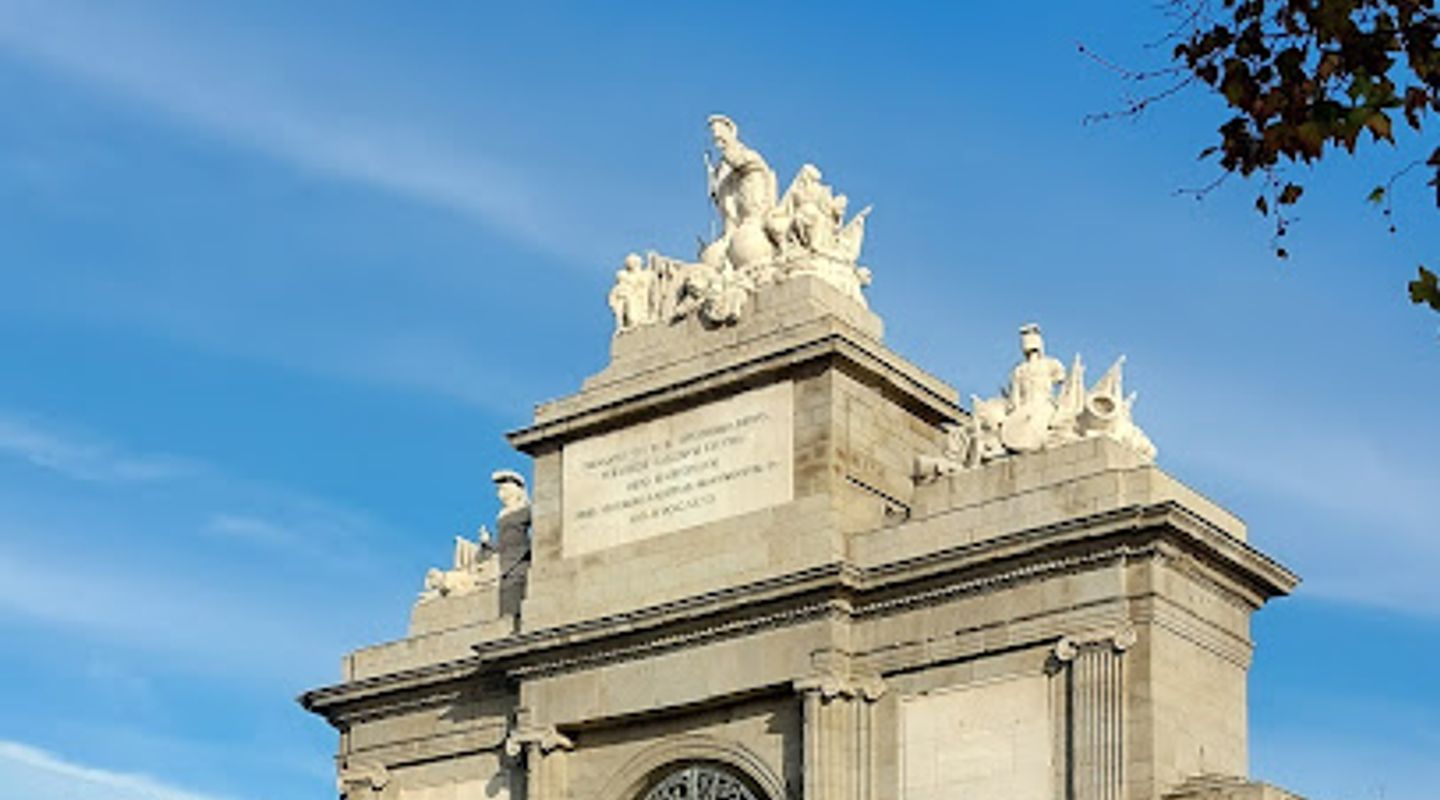
Standing majestically at the southern edge of Madrid's historic center, the Toledo Gate is a neoclassical masterpiece built to honor Fernando VII's return. This grand triumphal arch frames the city's vibrant entryway, blending architectural grandeur with the pulse of La Latina's bustling streets. Visitors pass beneath its soaring 19th-century stonework, where intricate reliefs depict Spanish military triumphs, connecting past glories to modern Madrid life.
On-site amenities
 Restrooms
 Seating areas
 Trash bins
 Information boards
Opening hours
- Every dayOpen 24 hours
Opening hours as listed on the venue’s Google Business Profile. Hours can change for services and special events, so check with the venue before you go.
- Address
- Gta. de la Prta de Toledo, s/n, Centro, 28005 Madrid
- Phone
- Website
Getting there
Metro
Bus
Walking
Discover more about Toledo Gate
Historical Foundations
The Toledo Gate, or Puerta de Toledo, rises as a pivotal monument in Madrid's urban landscape, constructed between 1813 and 1827 under the directive of King Fernando VII. Designed by architect Antonio López Aguado in a neoclassical style inspired by Roman triumphal arches, it commemorates the restoration of absolutist rule following the Peninsular War. Positioned at the endpoint of Toledo Street, it served as the primary southern gateway to the city before modern expansions, symbolizing Madrid's resilience amid Napoleonic invasions. Its erection marked a deliberate revival of imperial motifs, drawing from antiquity to assert Spanish sovereignty.
Architectural Marvel
Dominating the Glorieta de la Puerta de Toledo, the arch spans 19 meters in height and features a robust Doric colonnade supporting an attic adorned with military trophies and allegorical sculptures. The central passageway, flanked by smaller arches, allows pedestrian and vehicular passage, while the facade bears inscriptions praising Fernando VII. Sculptures by Francisco Gutiérrez Solomon capture dynamic scenes of victory, including soldiers and standards, executed in white stone that contrasts against the urban backdrop. The structure's symmetry and scale evoke the Arch of Titus in Rome, adapted to Madrid's context as a statement of national pride.
Cultural and Symbolic Role
Beyond its physical presence, the Toledo Gate anchors Madrid's cultural memory, linking the Centro district to the lively La Latina neighborhood. It frames views toward the Royal Basilica of Our Lady of Atocha, integrating into a corridor of religious and civic landmarks. Historically, it witnessed royal processions and public celebrations, evolving into a backdrop for contemporary events like markets and festivals. The gate's location at the intersection of major thoroughfares underscores its role as a transitional point between Madrid's medieval core and expansive suburbs.
Artistic Details and Surroundings
Examine the reliefs closely: the eastern face illustrates the Battle of Bailén, a key Spanish victory, while the western side honors the Trocadero triumph. Four massive stone eagles perch atop, symbolizing imperial might, their wings outstretched in eternal vigilance. The surrounding plaza buzzes with local life, from street performers to tapas bars, offering a sensory immersion in Madrid's unfiltered energy. At dusk, the arch's illumination casts dramatic shadows, enhancing its monumental aura against the evening sky.
Visitor Experience
Approaching from the north along Calle de Toledo reveals the gate's full imposing profile, inviting exploration of its bases where plaques recount its dedication. The open plaza provides unobstructed photography angles, capturing the arch against Madrid's skyline. Nearby, the vibrant Mercado de San Fernando adds gastronomic allure, while walking paths lead to emblematic sites like Plaza Mayor. The gate's enduring appeal lies in its accessibility, blending historical gravitas with everyday urban rhythm for an authentic Madrid encounter.
Legacy in Modern Madrid
Today, the Toledo Gate endures as a testament to 19th-century ambition, preserved amid metro lines and high-rises. It influences local identity, appearing in literature and film as a symbol of continuity. Free public access ensures its democratic spirit, allowing all to trace Madrid's layered history through this steadfast sentinel at the city's southern threshold.
Evendo Review Centre
 Google
Guest reviews
Best time to go
Quietest: Jan, Feb & Dec · at 1am or at 2am or at 3am
Busy times are Evendo estimates for a typical year, to help you plan. Actual crowds vary with events, school holidays and the weather.
Explore Toledo Gate on the map
A handpicked selection of must-see spots near Toledo Gate, mapped for you.
Get your free copy of our complete guide to Toledo Gate, delivered straight to you.
Everything on this page, from opening hours and how to get there to Eve’s tips and the best time to go, in one PDF you can read offline, print or share.
Already have an account? Sign in
Your Toledo Gate guide is ready.
We'll send it to · Not you? Sign out

Getting your guide ready…
We are putting together a fresh copy of the Toledo Gate guide. This can take up to a minute.
This can take a few moments. If your browser asks, choose Allow so the download can start. You'll find the guide in your Downloads folder.
Nothing happened? Download it again
Sorry, the guide is taking longer than usual. Please try again in a minute, or get it by email instead.
Unlock the best of Toledo Gate
Skip-the-line tickets, guided tours with entry, and walking tours of the area, booked in a few clicks.
 Tour with entry
Madrid Tuk Tuk & Olé Experience – Private 1.5h Cultural Tour
from $148.16 Tour with entry
Madrid Sightseeing Tuk Tuk Tours
from $213.19 Tour with entry
Welcoming Tuk Tuk Tour of Madrid For up to 6 People
from $233.44 Tour with entry
Private Guided Walking tour in Toledo (2 or 3 or 6 hours)
from $266.48



Other nearby places you may find interesting
The closest places of the same kind, if this one is not quite what you had in mind.
-
-
-
-
-


Swipe for more places
More to explore near Toledo Gate

 Best experiences near Toledo Gate
 Best hotels near Toledo Gate
 Best landmarks near Toledo Gate
 Best attractions near Toledo Gate
 Best shops near Toledo Gate
 Best restaurants near Toledo Gate
 Best bars near Toledo Gate
Do you manage this location?
Take control to get all the benefits, like improved information, better appearance, and stronger visibility across AI-powered discovery.
Explore more

Explore more of Madrid
Discover Madrid: A city of art, culture, and culinary delights, where history and modern vibrancy meet in the heart of Spain.
Explore Madrid
Explore more of Spain
Discover Spain: A vibrant tapestry of culture, history, and breathtaking landscapes, where every city offers a unique adventure and unforgettable experiences.
Explore Spain
