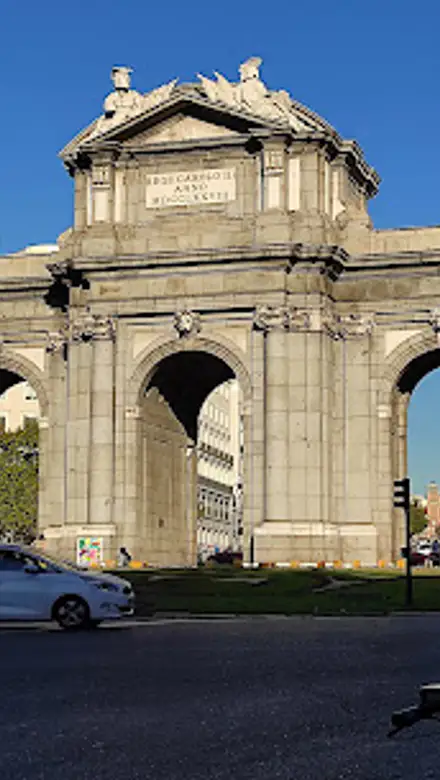
Puerta de Alcalá, Madrid Travel Guide
Free Guide: Madrid's defining neoclassical arch where 18th-century elegance meets urban vitality at the city's historic eastern gateway.


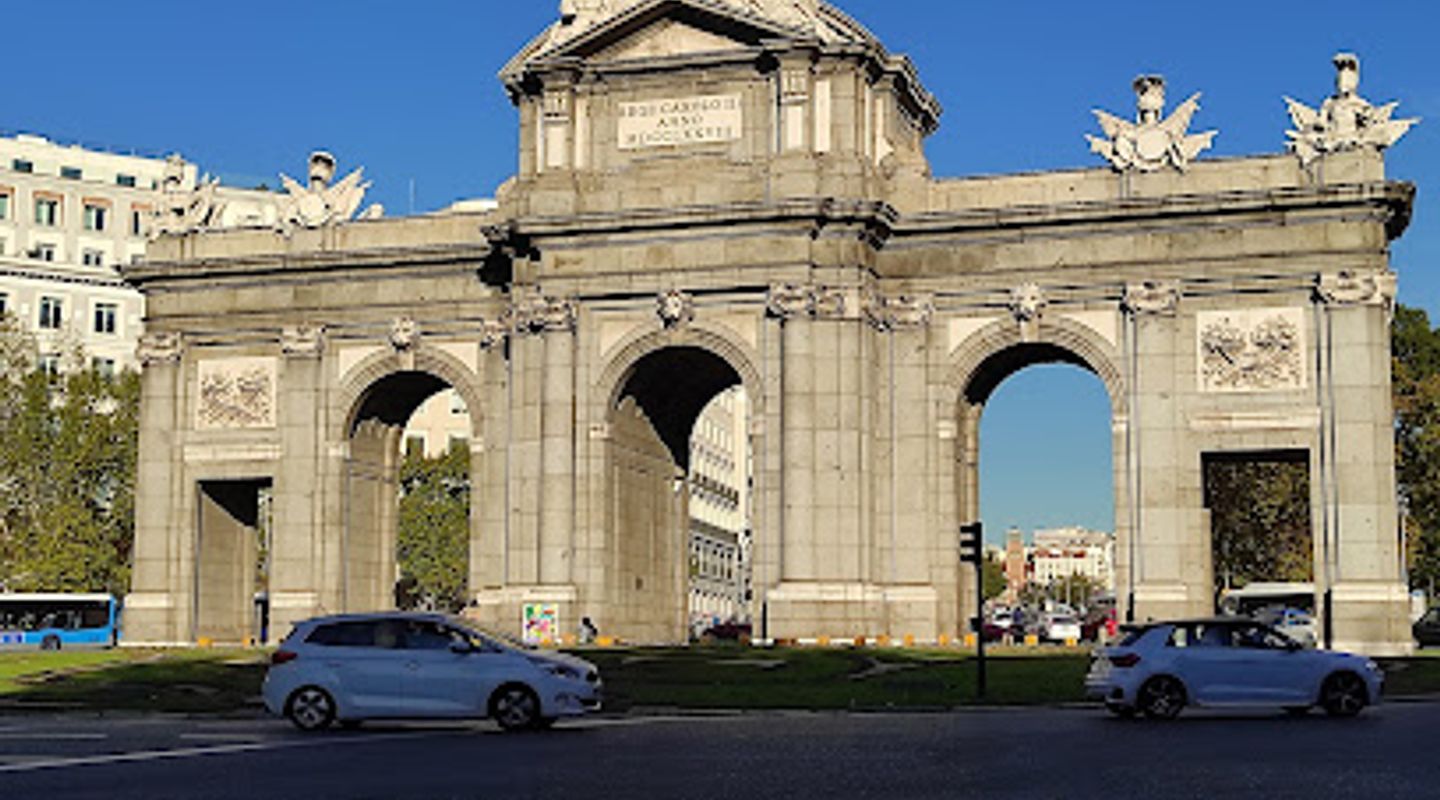
A brief summary of Puerta de Alcalá
Madrid's defining neoclassical arch where 18th-century elegance meets urban vitality at the city's historic eastern gateway.
Standing majestically at Plaza de la Independencia, Puerta de Alcalá is one of Madrid's most recognizable monuments. This stunning neoclassical triumphal arch, built in the 18th century, marks the entrance to the city's historic east side and remains a symbol of Madrid's architectural heritage and urban evolution.
On-site amenities
 Restrooms
 Drink options
 Food options
 Seating areas
 Information boards
 Trash bins
Opening hours
- Every dayOpen 24 hours
Opening hours as listed on the venue’s Google Business Profile. Hours can change for services and special events, so check with the venue before you go.
- Address
- Pl. de la Independencia, s/n, Retiro, 28001 Madrid
- Website
Getting there
Metro
Bus
Walking
Taxi or Ride-Share
Discover more about Puerta de Alcalá
A Monument to Madrid's Grandeur
Puerta de Alcalá is one of Madrid's most iconic landmarks, commanding attention at Plaza de la Independencia in the Retiro district. This magnificent neoclassical triumphal arch was constructed between 1769 and 1778 under the reign of King Charles III, designed by architect Sabatini. The gate originally served as one of the five main entrances to Madrid during the 18th century, welcoming travelers and dignitaries arriving from the eastern regions of Spain. Today, it stands as a testament to Madrid's architectural ambitions during the Enlightenment period and remains one of the city's most photographed monuments.
Architectural Excellence and Design
The structure showcases quintessential neoclassical design with its symmetrical composition and refined proportions. The monument features five arches—a grand central arch flanked by two smaller arches on each side—creating an impressive 43-meter-wide facade. Intricate stonework, decorative reliefs, and sculptural elements adorn the structure, reflecting the sophisticated artistic standards of 18th-century Madrid. The gate's design draws inspiration from classical Roman triumphal arches, reimagined through the lens of Enlightenment aesthetics. The monument's pale stone exterior gleams in daylight, making it particularly striking during golden hour when photographers and visitors converge to capture its beauty.
Historical Significance and Urban Context
Originally constructed as a functional city gate, Puerta de Alcalá witnessed Madrid's transformation from a medieval fortress town into a modern European capital. The gate marked the boundary between the city proper and the countryside beyond, controlling commerce and movement in and out of Madrid. As the city expanded and urban planning evolved, the gate transitioned from a practical structure to a symbolic monument. Its location at Plaza de la Independencia, surrounded by tree-lined avenues and modern urban infrastructure, creates an interesting juxtaposition between historical preservation and contemporary city life. The plaza itself has become a central hub for Madrid's traffic and pedestrian movement, with the gate serving as a visual anchor in the urban landscape.
Visitor Experience and Accessibility
Puerta de Alcalá is freely accessible to the public and can be viewed from multiple angles around Plaza de la Independencia. The monument is particularly impressive when approached from different directions, each perspective revealing different architectural details and proportions. The surrounding plaza offers space for visitors to stand back and appreciate the full scale of the structure. The gate's prominence in Madrid's geography makes it easily reachable via public transportation, and its location near the Retiro Park and other major attractions makes it a natural stop on most Madrid itineraries. The monument is equally striking during day and night, with evening illumination highlighting its architectural features.
Cultural Importance and Recognition
Puerta de Alcalá has become synonymous with Madrid itself, appearing in countless photographs, films, and artistic representations. It represents a pivotal moment in Spanish history when Madrid was being reimagined as a capital worthy of European prominence. The gate embodies the values of the Enlightenment—reason, symmetry, and classical beauty—that influenced Spanish urban development during the 18th century. Its enduring popularity among visitors and locals alike reflects its status as a cultural icon that transcends its original utilitarian purpose. The monument continues to inspire artists, photographers, and architects who study its proportions and design principles.
Evendo Review Centre
 Google
Guest reviews
Best time to go
Quietest: Feb, Mar & Nov · before 3am
Busy times are Evendo estimates for a typical year, to help you plan. Actual crowds vary with events, school holidays and the weather.
Explore Puerta de Alcalá on the map
A handpicked selection of must-see spots near Puerta de Alcalá, mapped for you.
Get your free copy of our complete guide to Puerta de Alcalá, delivered straight to you.
Everything on this page, from opening hours and how to get there to Eve’s tips and the best time to go, in one PDF you can read offline, print or share.
Already have an account? Sign in
Your Puerta de Alcalá guide is ready.
We'll send it to · Not you? Sign out

Getting your guide ready…
We are putting together a fresh copy of the Puerta de Alcalá guide. This can take up to a minute.
This can take a few moments. If your browser asks, choose Allow so the download can start. You'll find the guide in your Downloads folder.
Nothing happened? Download it again
Sorry, the guide is taking longer than usual. Please try again in a minute, or get it by email instead.
Unlock the best of Puerta de Alcalá
Skip-the-line tickets, guided tours with entry, and walking tours of the area, booked in a few clicks.


Other nearby places you may find interesting
The closest places of the same kind, if this one is not quite what you had in mind.
-
-
-
-
-


Swipe for more places
More to explore near Puerta de Alcalá

 Best experiences near Puerta de Alcalá

 Best hotels near Puerta de Alcalá

 Best landmarks near Puerta de Alcalá

 Best attractions near Puerta de Alcalá

 Best shops near Puerta de Alcalá

 Best restaurants near Puerta de Alcalá

 Best bars near Puerta de Alcalá
Do you manage this location?
Take control to get all the benefits, like improved information, better appearance, and stronger visibility across AI-powered discovery.
Explore more
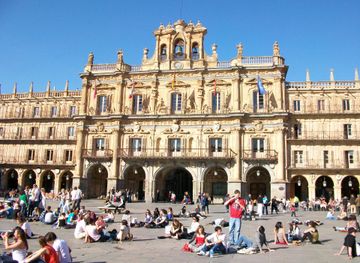
Explore more of Salamanca
Discover Salamanca in Madrid, a neighborhood where luxury meets culture. Explore high-end shopping, exquisite dining, and art galleries in a prestigious setting.
Explore Salamanca
Explore more of Madrid
Discover Madrid: A city of art, culture, and culinary delights, where history and modern vibrancy meet in the heart of Spain.
Explore Madrid