Hemsö Fortress Travel Guide
Free Guide: Delve 40 meters underground into Sweden's mightiest Cold War bastion, where nuclear-proof tunnels hide a self-contained world of artillery might and soldier life on secretive Hemsön.


A brief summary of Hemsö Fortress
Delve 40 meters underground into Sweden's mightiest Cold War bastion, where nuclear-proof tunnels hide a self-contained world of artillery might and soldier life on secretive Hemsön.
Hemsö Fortress stands as Sweden's largest Cold War-era coastal defense installation, carved 40 meters into the bedrock of Hemsön island. This top-secret facility, designed to withstand nuclear attacks, housed 340 soldiers in self-sufficient underground quarters complete with gun turrets, command centers, hospitals, and workshops. Today, guided tours reveal its preserved 1950s-1960s military world, offering a chilling glimpse into Sweden's strategic defenses along the northern coast.
On-site amenities
 Restrooms
 Drink options
 Food options
 Seating areas
 Trash bins
 Information boards
Opening hours
- Every day11 am–5 pm
Opening hours as listed on the venue’s Google Business Profile. Hours can change for services and special events, so check with the venue before you go.
- Address
- 870 10 Älandsbro
- Phone
- Website
Getting there
Car
Bus
Boat
Discover more about Hemsö Fortress
Strategic Birth Amid Rising Tensions
The origins of Hemsö Fortress trace back to the late 19th century, when military planners recognized the vulnerability of the Ångerman River estuary. Formal development began with the 1914 defense decision, establishing the Hemsön Coastal Artillery Corps to safeguard naval movements and the economically vital inlet. Construction kicked off in 1916 with Battery Dalom, featuring two 15 cm cannons blasted into the northern mountainside, completed by 1922. Though placed in reserve by 1925, World War II reactivation in 1939 and the pivotal 1942 decision transformed it into Sweden's grandest fortress, bolstering coastal artillery amid escalating threats.
Cold War Expansion into the Mountain
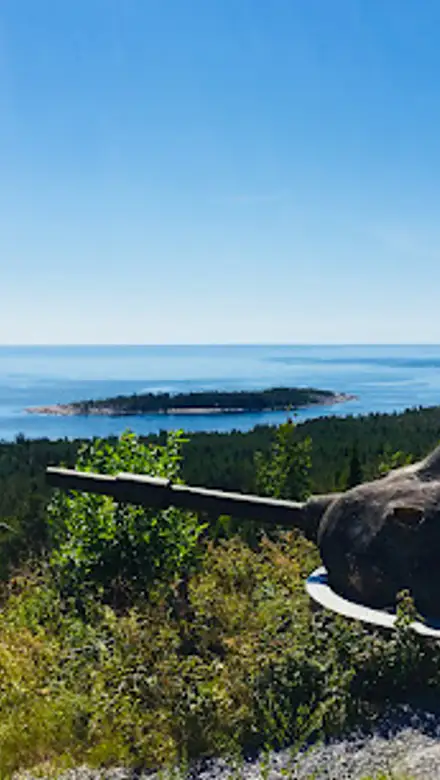
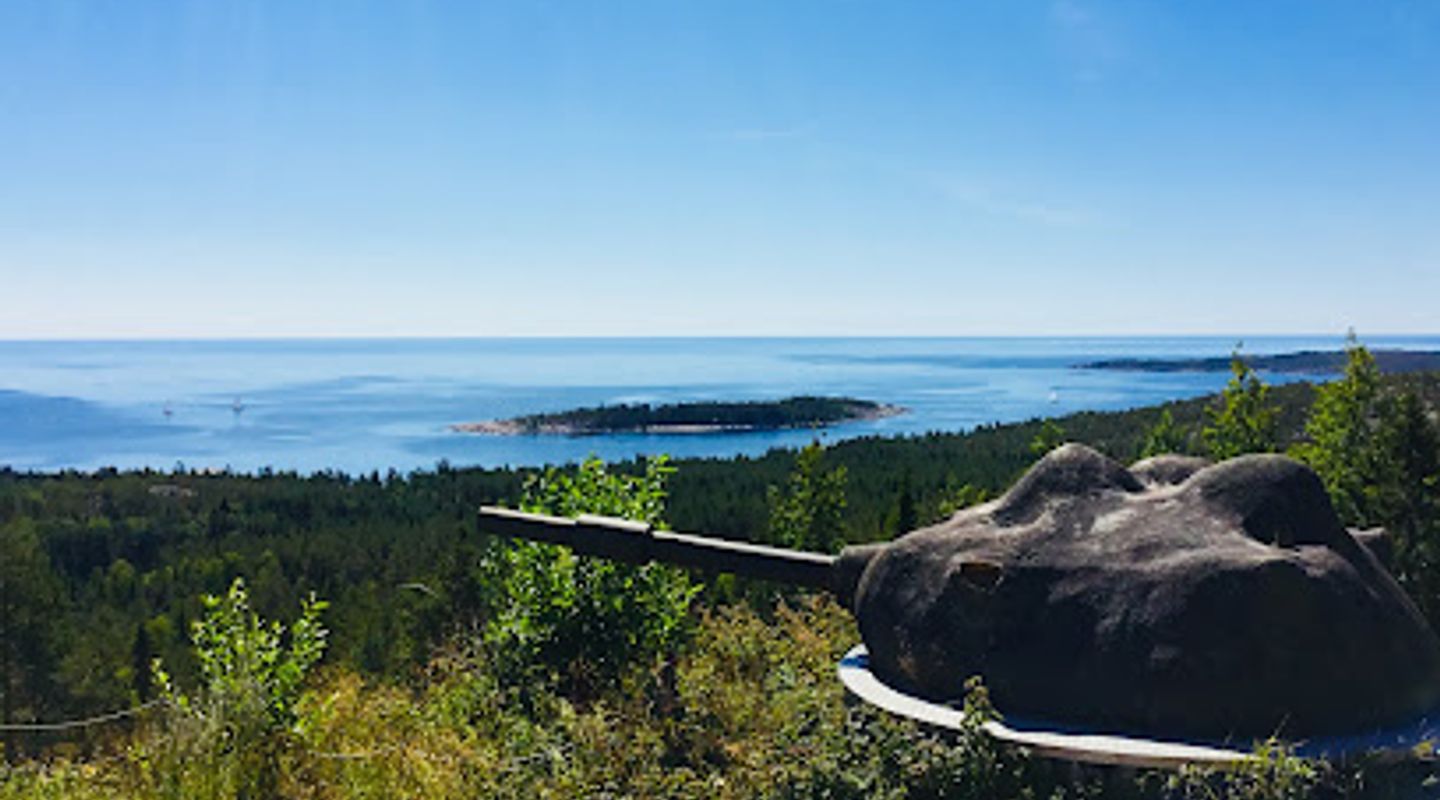
The true scale emerged in the 1950s, driven by Cold War fears of Soviet naval incursions. Between 1953 and 1957, the heavy battery at Storråberget took shape—three twin 15.2 cm gun turrets capable of 22 km range, protected by anti-aircraft defenses. A light battery at Havstoudd followed from 1961-1963, with seven 7.5 cm cannons, and the Kläffsön measurement station completed the trio in 1967-1968. Buried 40 meters deep, the complex featured angled tunnels, airlocks against nuclear fallout, radar, laser rangefinders, and fire control rooms blending post-war tech.
Self-Sufficient Underground World
Engineered for three months of isolation, the 5,000 sqm facility sustained 340 personnel with power plants, water purification, vast kitchens stocking freeze-dried rations, medical bays with operating theaters, workshops, dining halls, showers, and even leisure spaces furnished in 1960s style. Sleeping quarters accommodated six per room in compartmentalized bunkers, while surface elements included massive turrets crowning the hill. Close-defense bunkers dotted the landscape against ground assaults, embodying total preparedness.
Secrets and Spies in the Shadows
Hemsön's secrecy was absolute—no foreigners allowed, locals hush-hush about the island's core. Yet irony stalked its builders: Soviet spy Stig Wennerström, a high-ranking officer during construction, and later Stig Bergling, who pilfered documents from the site. These breaches underscored the fortress's role in Sweden's covert coastal barrier, one of 89 sites from Gävle to Luleå, shielding Härnösand's harbor and Gustavsvik naval depot.
Decommissioning and Preservation Legacy
Operational until 1989 for conscripts from KA 5 in Härnösand, the fortress shuttered fully in 1992. Remarkably preserved, installations remain untouched—cans in pantries, boots aligned, equipment ready—as if soldiers might return. This time capsule contrasts the Ice Age geology of Höga Kusten UNESCO site with Cold War ingenuity, inviting exploration of a frozen military epoch.
Evendo Review Centre
 Google
Guest reviews
Best time to go
Quietest: Jan, Feb & Mar · before 9am or from 9pm
Busy times are Evendo estimates for a typical year, to help you plan. Actual crowds vary with events, school holidays and the weather.
Explore Hemsö Fortress on the map
A handpicked selection of must-see spots near Hemsö Fortress, mapped for you.
Get your free copy of our complete guide to Hemsö Fortress, delivered straight to you.
Everything on this page, from opening hours and how to get there to Eve’s tips and the best time to go, in one PDF you can read offline, print or share.
Already have an account? Sign in
Your Hemsö Fortress guide is ready.
We'll send it to · Not you? Sign out

Getting your guide ready…
We are putting together a fresh copy of the Hemsö Fortress guide. This can take up to a minute.
This can take a few moments. If your browser asks, choose Allow so the download can start. You'll find the guide in your Downloads folder.
Nothing happened? Download it again
Sorry, the guide is taking longer than usual. Please try again in a minute, or get it by email instead.
Other nearby places you may find interesting
The closest places of the same kind, if this one is not quite what you had in mind.
-
-
-


Swipe for more places
More to explore near Hemsö Fortress

 Best experiences near Hemsö Fortress
 Best hotels near Hemsö Fortress
 Best landmarks near Hemsö Fortress
 Best attractions near Hemsö Fortress
 Best shops near Hemsö Fortress
 Best restaurants near Hemsö Fortress
 Best bars near Hemsö Fortress
Do you manage this location?
Take control to get all the benefits, like improved information, better appearance, and stronger visibility across AI-powered discovery.
Explore more

Explore more of Ångermanland
Discover Ångermanland: A blend of stunning natural landscapes, rich cultural heritage, and outdoor adventures in the heart of northern Sweden.
Explore Ångermanland
Explore more of Sweden
Discover Sweden's breathtaking landscapes, vibrant cities, and rich cultural heritage. From the Northern Lights to historic castles, experience the essence of Scandinavia.
Explore Sweden